
During the summer I flatted Whimbrel’s battery after leaving the nav lights on during a passage that began in the dark. The boat runs on only one battery of 85 Amps. It is backed up with a battery booster engine start module which is maintained in a state of charge. The supplier was very helpful with my pre ordering questions too. (Advanced Battery supplies of Stockport)
The old battery was two years beyond its guarantee date and was a standard marine/caravan multi-use type commonly found at chandleries The new one is also multi-use but has a stated five year guarantee. We’ll see.
I discovered too, around the same time, that our plus twenty-five year old solar panel appeared to be non functional. I checked its output on a sunny day – nothing, it had failed!
A new battery was ordered, received and fitted at the end of August. Investigations into a new solar panel opened an Aladdin’s cave of wonders to choose from.
I alighted on a unit sold by Seasolutions of Chichester (sold by others too) as a unit stated to be fitted for marine use and could be fixed to the cabin top – it being a semi-flexible unit.
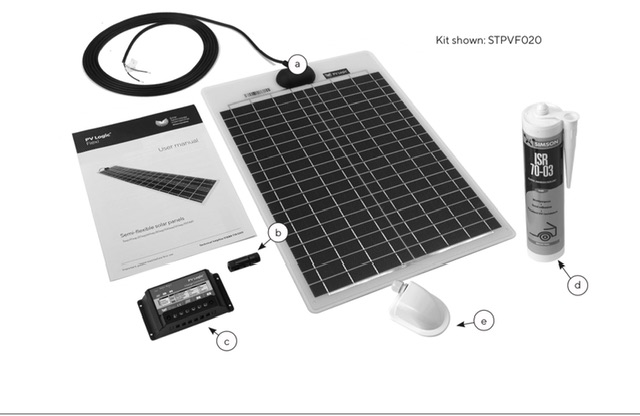
After a run of clarification questions, it was ordered.
The unit has a 20 W output and comes with a regulator to protect battery from over charge. It is from the low output end of the range. We now have two additional green led’s (one winking) lighting up the main cabin. A piece of tape will be called for. Why is it they are so bright?
A cable run and location for the regulator were worked out after some thought, rather than a cable snaking across the cabin top. Once done, I measured what length of flashing was needed to hide cable – my home stock was dry, so I searched for some angled batten which was ordered – not quite what I wanted, but it worked! Its stated use was for floor edgings to skirting boards… Once varnished, the colour proved to be a good match.
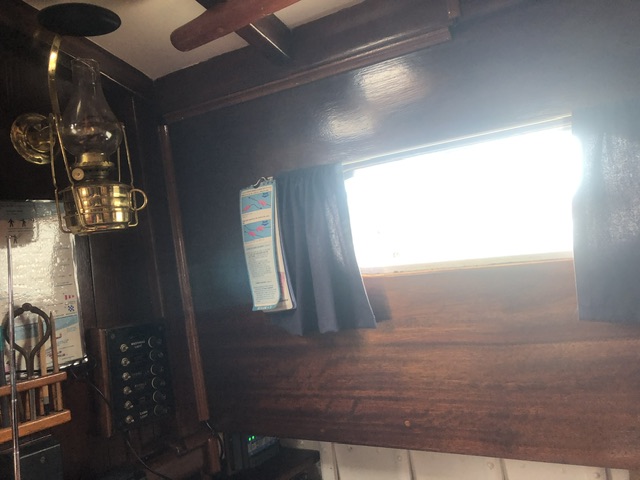
Note the angled flashing to cabin side corners of structure.
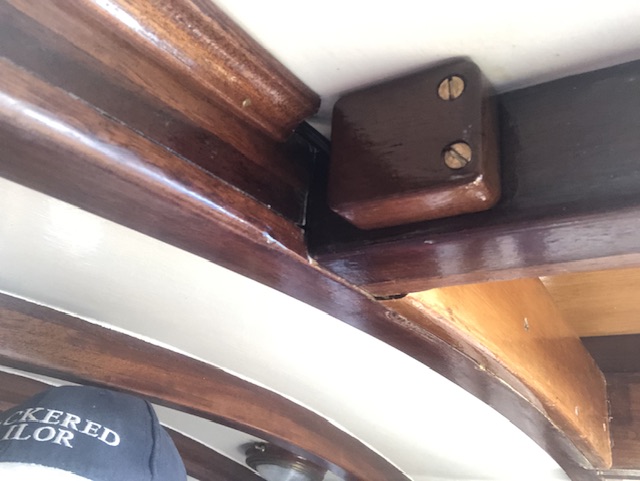
Above is an end of flashing and the cover for junction terminals.
The cable was brought through the hatch runner and sealed.
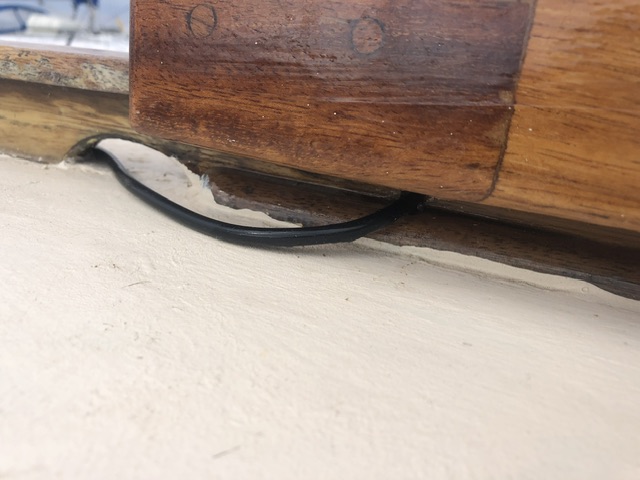
The cable was fed through a drilled way in hatchway beam and the u-loop covered by a cap, leaving everything neat and tidy.
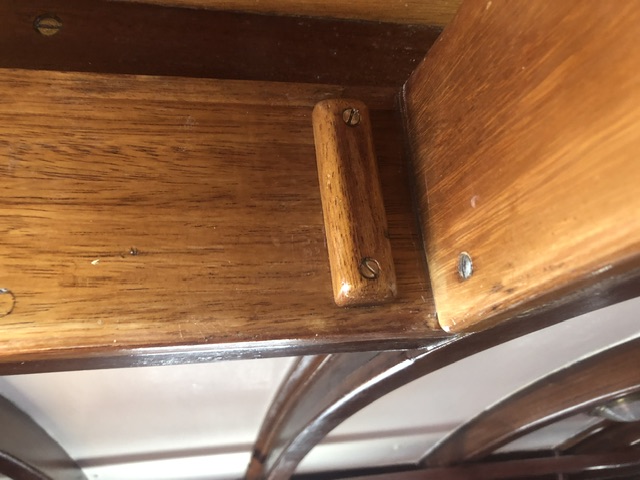
The capping now also acts as a hatch stop as. This arrangement has avoided a cable passage through the actual cabin top. The capping will likely have to be removed when I next wish to remove the hatch.
For interest, the capping was made from a piece of scrap iroko (as junction cover was). Follow the evolution below!
Ends glued in ready for shaping up, sanding and finished with several coats of varnish.
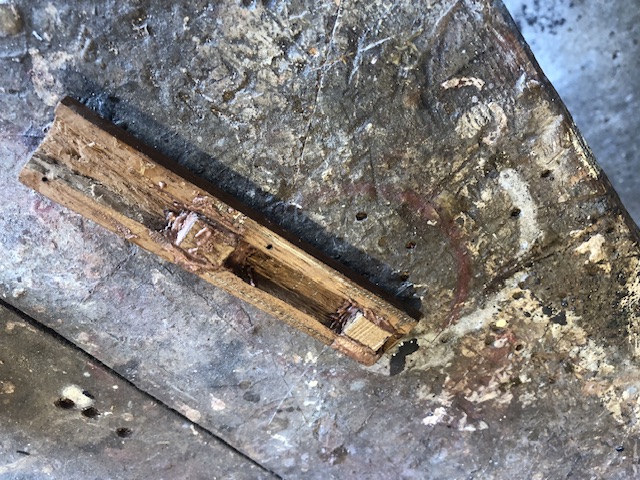
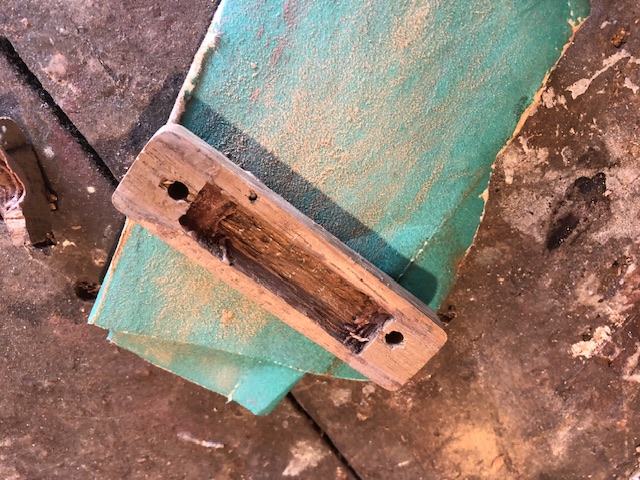
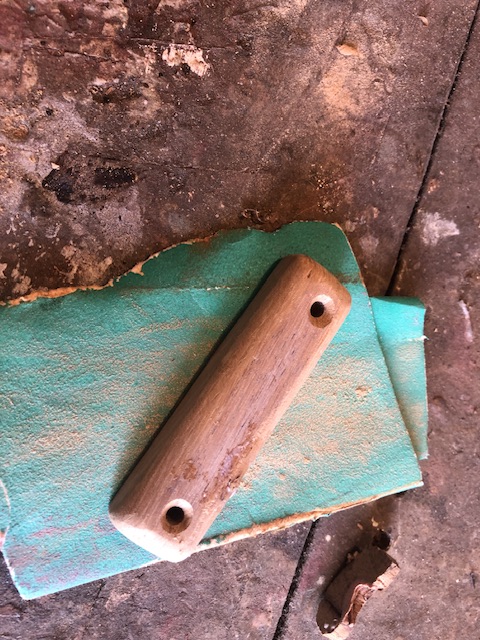
I rarely if ever throw away a bit of ‘useful’ wood. The piece was once was a cable cover to our long defunct Pilot Gas Detectors – very expensive units against common household carbon monoxide alarms available which have an internal battery and lasts seven years. The gas alarm is a ‘caravan’ unit costing a third of a ‘Pilot’ and is standing the test of time!
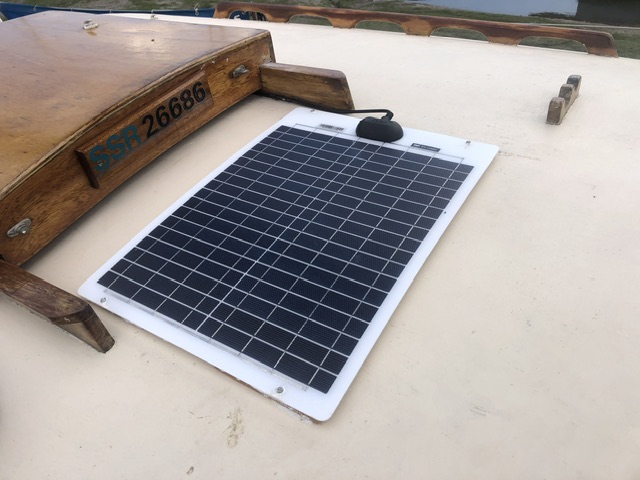
Although the unit fitting instructions allowed deck contact on a curved seating, I sat it down on 6 mm thick cork strips set in the fixing compound supplied. The instructions with a ‘plan’ stated that an air gap was preferred to allow heat dissipation. I decided to peg the outer ends with screws. (Info said unit was pre drilled, but wasn’t!) but a wide edge clear of the solar works was available, as seen.
The panel info said it is able to be stood on and has a non slip surface… I shall avoid – boat crews note!
The new battery is now sitting at 12.8 volts on cabin indicator on my last visit to Whimbrel.
Oh yes, the two sailing lights have also been fitted with led lamps, greatly reducing the power demand too – not worried about masthead as engine would be on if on. These were obtained from ‘Boatlamps’ on line – correct type lamps for bi-colour and stern lights must be fitted as advised.
Gota just remember to switch off!
Gereat!!