It was in the early part of the new year just a few years ago that I was alerted to the evils of Prostate Cancer while listening to BBC Radio 4’s morning programme. Again, this year there was a fresh ‘bash’ at the subject with a strong message for men.
The current UK total of cancer cases stands at around 380,000 cases per year, of that 40,000 are of the ‘Man Disease’ – Prostate Cancer. That is a little above 10% of all cancer cases.
The rough split is Men 53% of cancer cases and Women 47% of cancer cases.
(2018 Statistics).
How often do you see men as advertising targets – NOT BLOODY OFTEN.
It is about time the NHS bucks up and calls men in for testing, as women are for cervical and breast screening.
It is tragic.
Many of you will know of my story, or some of it. The whole is contained in a link below:
The BBC Radio 4 programme had a lady from a leading research charity speaking and later a ‘boffin’ who filled in the details.
There seems to be a ‘post code lottery’ but I believe this more down to reticence on the part of men.
Generally, Scotland has 1 in 3 men who when tested find that it has reached the metastatic stage – Gleason level 3 to 4. In Yorkshire and the North East of England the figure is around 1 in 5. The rest of England and Wales varied towards 1 in 8 in London. The eastern region has the more savvy men!
The cancer charity spokes person said: ‘Men should get a test regularly from around age of 45 and if a known family problem form age 40.’
Caught in the early stages, prostate cancer is highly treatable – specialist used the word curable…
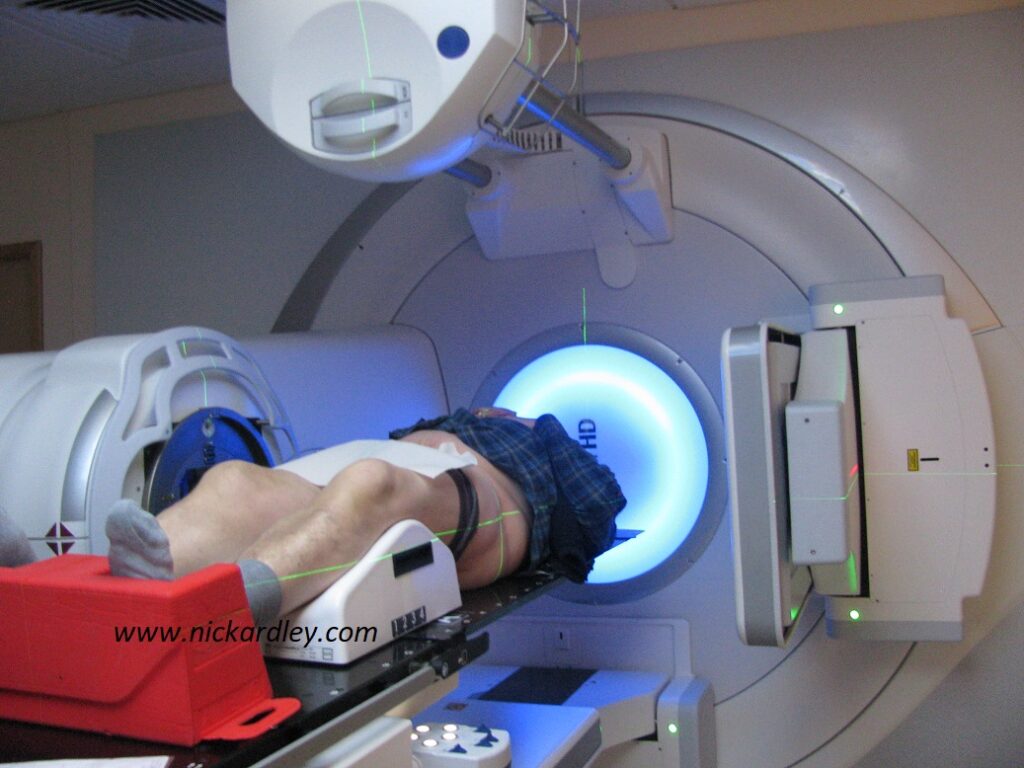
Me on the ‘slab’ undergoing radiotherapy… Early stage treatment is often by drugs alone.
The specialist said that the biggest problem rests with GP practices. They do not like invasive testing. Been there! Christobel was in tears at this point…
Both guests said that although the NHS and other cancer web sites give a list of symptoms, however, it is more often than not men who have no symptoms who have the greater level of cancer when finally tested.
I had no symptoms, just a gut feeling. The information needs changing…
Now: the first test is a simple test of a blood sample – this should be offered (done) when one is called for blood tests or for any other test as a matter of course, cost is infinitely small.
If the test proves positive, a second blood test is likely. Then a knowing finger up bum feeling just inside close to the prostate is carried out. Enlargement can be detected here as well as any lumps on side felt.
Next a biopsy is carried out. Clearly, this is the test for a yay or nay… You leave the clinic smiling or bloody frightened.
NHS Wales has been carrying out a one day screening programme – probably as a trial for UK wide expansion. I don’t know how that has progressed.
The specialist also went on to say that men should ask and be demanding (I was told not allowed, so I banged the health nurses desk – that made her sit up!)
The specialist reiterated the need for men to get this test regularly to catch at earliest stage: then it often means a curative outcome.
Once the level 4 region has been reached, it is curtains.
The start of 2023 came in wild, damp and depressing, weather-wise. It also ended a very good year afloat aboard Whimbrel and I haven’t much to complain about.
2023 also marks a milestone for Whimbrel: she was ordered and largely built during 1983, forty years ago. There will be more of this later in the year.
A large job looms over us this year, well, as soon as the weather allows, for Whimbrel is to come out so that we can strip the varnish from her coach roof, sheer strake, transom and rudder.
However there is a glitch in all of this: I have been nursing a ‘poorly’ right knee for some time. To cut a long story short, at the beginning of December 2022 a knee specialist booked me in for a knee replacement – in two to three months he said…
I have ‘bone on bone’ contact in my right knee… Pain killers have been keeping me relatively mobile, if a little fractious at time!
So, I am hoping for as early a date with the saws as is possible for one can’t, or aren’t meant to, even drive for two whole months afterwards. Sailing? The ‘law’ is already being laid down…
Bloody Heck!
Knowing only a little about the procedure, I went in search on the web for some pictures!
Courtesy of Zain Ritchie -a type of replacement…
A friend has advised me not to watch a video available on the NHS web site – quite frankly, I don’t want to know…
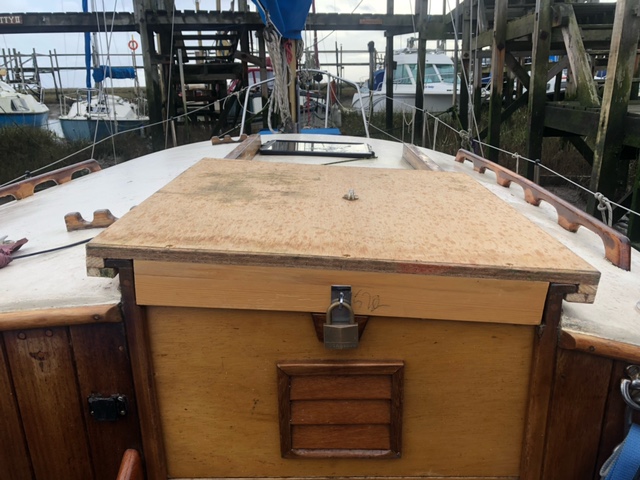
As the New Year ticked round, I popped down to the boat on a dry period during a miserable windy and dank week to remove Whimbrel’s main hatch and fit a temporary affair I made up some time ago. I have ‘spares’ for both.
Whimbrel fitted with her spare main hatch.
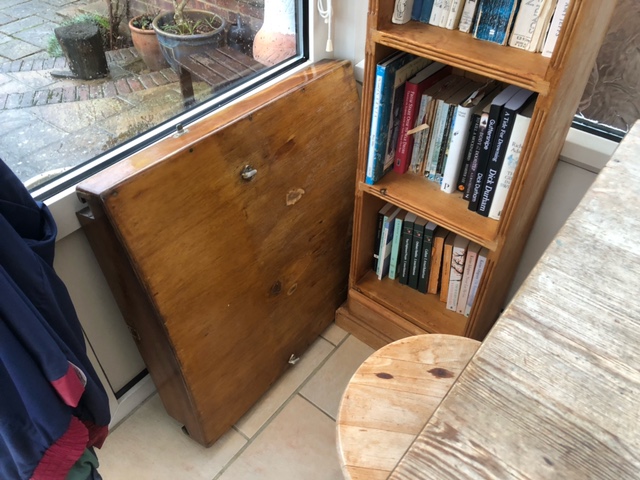
It has a little work needing to be done and the outer surfaces will be stripped back to bare before re-varnishing. It has never been completely stripped…
Hatch drying out in the comfort of our conservatory!
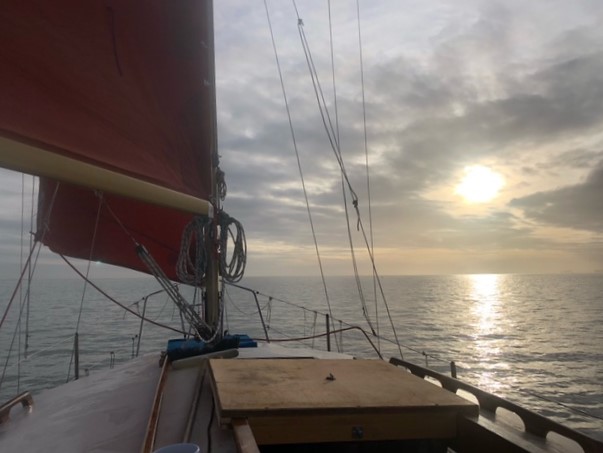
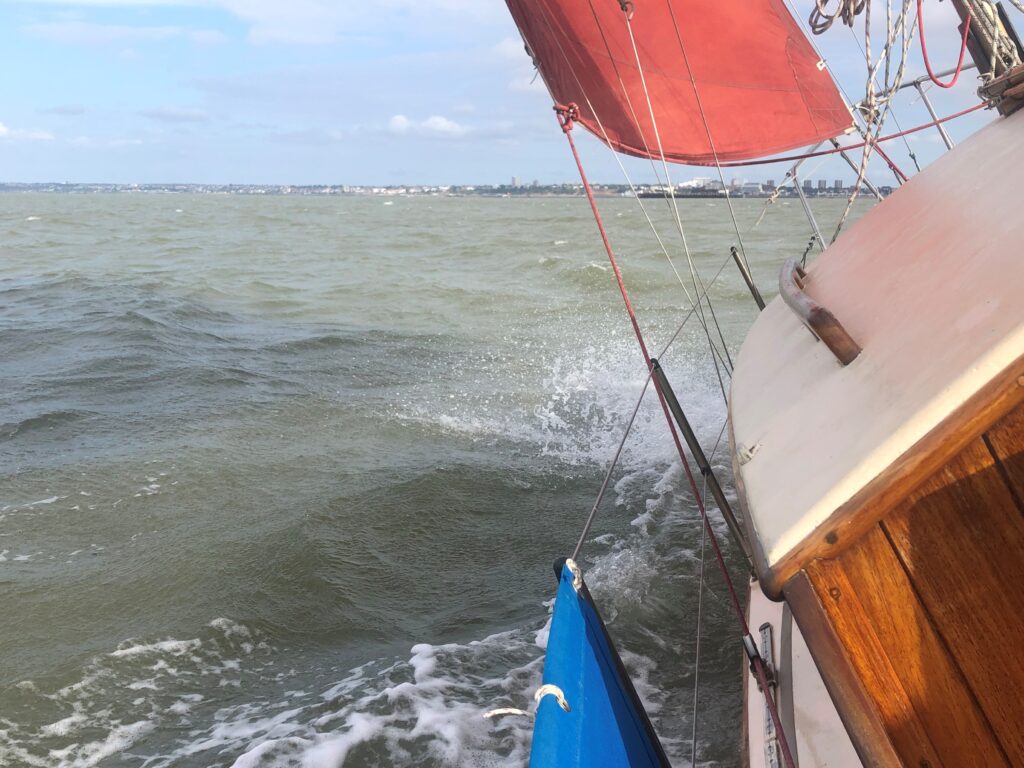
Any way, after the poor weather during first few days of the new year, a window opened with a decent SW 3-4. It was due to increase later but after my return, so I got out afloat…
It was virtually windless in actual fact, but enough to make over the tide out of the creek. Dozens of Brent geese kept swimming across the boat’s bow, in the creek and as the moorings were left astern. I saw a Little Grebe in amongst the ochre-grey withered stalks of last year’s cord grass, hunting for its lunch.
The water’s surface was all but glass, but in the near distance a ruffling on the surface indicated greater breeze – there was.
Leaving the creek.
There was sufficient wind to get across the Leigh Flats to near the Essex Yacht Club. I reached west to the cockle sheds to get a good slant back out to the Ray. Indeed, the breeze increased somewhat and Whimbrel clipped along in flat water.
Reaching out to the Ray Channel.
A few short tacks soon had Whimbrel inside the Island’s marsh point where sails were stowed. On the way in, I tried to get at a wandering creek buoy which had lodged up against the saltings just down from my mooring a week or so ago.
Unfortunately, there was insufficient water and allied to an onshore draft, I abandoned the attempt. With a crew, I might have succeeded in hooking it clear! Hey Ho.
It was great to get out, but I missed my mate who was suffering from a bit of a cold…
Statistics from Whimbrel’s log show that 982 N. miles were covered. 45 litres of diesel were purchased and the boat was in use for 105 days of 2022. Seven different individuals have crewed aboard, plus usual two of course…
Between Christmas and New Year the BBC Radio 4 breakfast programme has a guest editor each day. Their job is to work with the programme team and introduce a subject or subjects that interest or concern them.
There were three that particularly caught my attention: Nazanin Zaghari-Ratcliffe, The Head of UK Intelligence Services at GCHQ, Sir Jeremy Flemming and The Swedish singer-songwriter Bjorn Ulvaeus (ABBA).
All three had one commonality: the power of communication.
Nazanin recounted being allowed a television restricted to safe channels … except one safe channel showed a day at Wimbledon on the day Andy Murray won the men’s challenge cup. It gave her huge hope…
The others had far deeper communications thoughts. I loved a section where the head of UK ‘spying’ interviewed the head of US ‘spying’ – with an interesting discussion on why they both agreed to alert the world to Putin’s invasion plans earlier this year…
But, it was Bjorn Ulvaeus who caught my ear, keeping it riveted. He was having an interesting conversation with an ‘unlikely’ guest: Sir Ben Ainslie.
Now, what do the two men have in common. Not a lot at first glance, however, they do in so many ways: communications. The use of AI (a recurrent feature during the week).
Sir Ben began to outline the use of modern communications and electronic wizardry in sailing – his type of sailing.
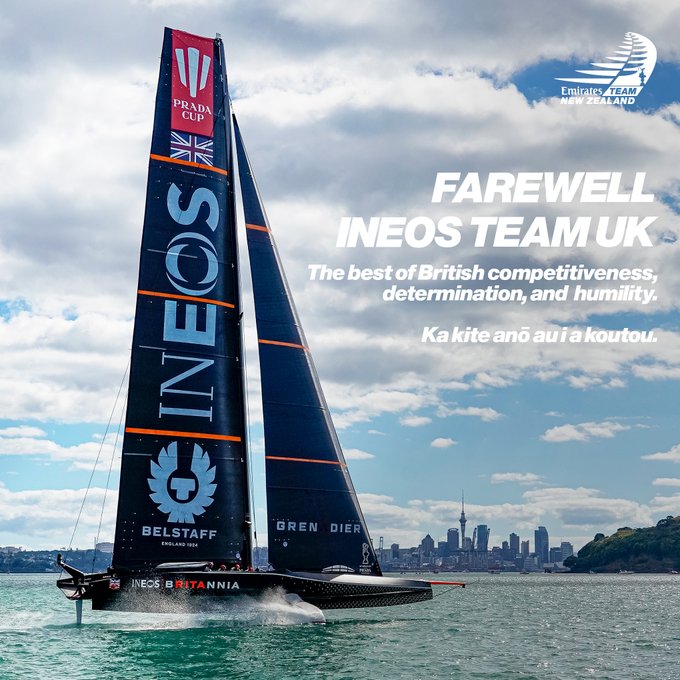
Recent British America’s Cup entry skippered by Sir Ben Ainslie – courtesy of a Team New Zealand post.
As all or most (for I hate the term all – such as ‘…we all love football.’ No, we don’t all love football!), so, most sailing folk know a little about the America’s Cup and the fact that having lost it in the inaugural race ‘we’ have never again held it. Sir Ben was explaining the intricacies of marrying a sailing vessel to AI and what he called ‘human machine interfaces…’
Sir Ben said tech was used to improve a boat’s performance to maximise potential – my words.
The boat though isn’t really a boat. Yes it floats, but a boat in normal language, no these ‘things’ aren’t. They are machines. Flying boats or aircraft if you like, but not, to my mind, a boat.
Yes, I know one has to have a broad outlook to ‘the sport’ and some good stuff filters down, but this form of ‘sailing’ is as much connected to the run of the mill boater as Formula One motor racing is to driving a family car, even though there are numb-nuts out there who think otherwise…
And, there is a similar breed afloat now. One can see them when out on the water. They stand at the wheel of a yacht of ever greater length and girth, staring fixedly at the big screen in front of the wheel, oblivious to craft around them and their need to obey the Rule of the Road.
In the past couple of years we have had to take avoiding action to preserve our wellbeing on several occasions!
That human machine interface needs a proximity alarm that cannot be switched off…
As my good mate remarked, having heard a piece of the interview: ‘…interface…’ she quipped, ‘that’s when I’m calling the depth when you drop the anchor…’
Indeed!
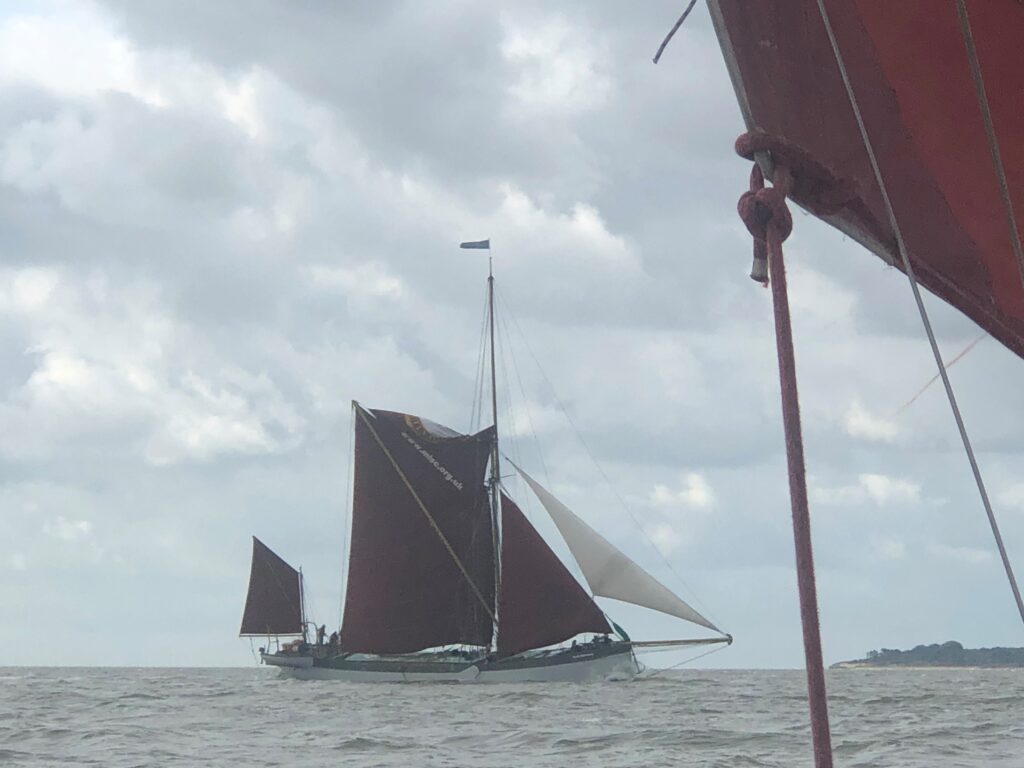
One of my favourite moments and pictures of the past season: Whimbrel in close quarters with the spritsail barge Blue Mermaid. Real sailing…
Aha, here comes a little addition for on New Year’s Eve, the Today programme continuing the theme of the week had the brilliant British-Nigerian computer scientist, Anne-Marie Imafidon guest editing. She first appeared on the programme some years ago – being a child prodigy in science, maths and languages – when she took he GCSE’s at 11.
Now, we were in for a stormer: there was a preamble about the fact that so much of our lives depends on SatNav – the Global Positioning System or GPS. The mathematics for this was largely proved by Dr Glady’s Mae West (b. 1930) from West Virginia, who first came to prominence during early NASA missions. Anne-Marie talked to the great lady’s daughter and there was a snip of an interview with the venerable doctor.
Two great ladies indeed and when one considers what the Taleban in Afghanistan are doing to women and girls’ education, who knows what minds are being stunted…
The GPS system was one bit of gadgetry that has benefited us yachtsmen to a level my grandfather could never have dreamed…
But, thank you BBC Radio 4 – it has been an enjoyable week listening over breakfast whilst champing at the bit to get out o the water.
Being prevented from grabbing a sail by damned weather…
AI can’t fix that!
Happy New Year to all my readers. We both wish you well for 2023.
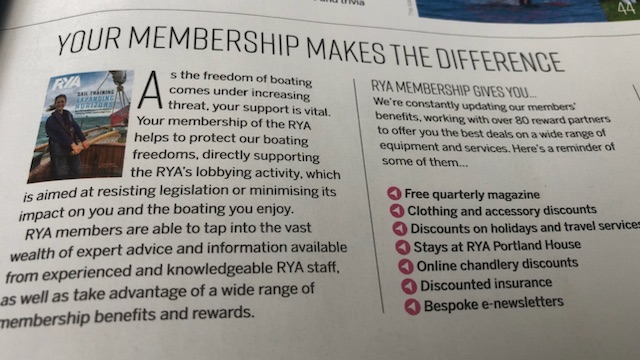
Although Christobel cancelled our subscription to the Royal Yachting Association when I decided to close our membership down over their total indifference and lack of care regarding the extreme shortage of bottled LPG and Butane gas cylinders of the most common used sizes over past two or more years, the quarterly magazine continues to arrive. I suspect it’ll not stop until the spring-time renewal period.
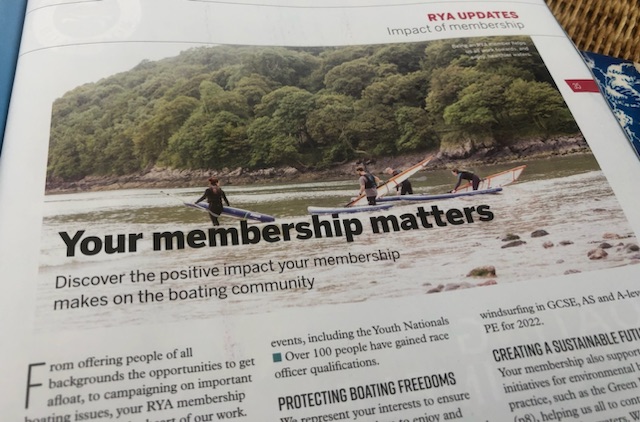
anyway, absently leafing through before chucking into the recycle bin, I spotted this headline: ‘Your membership makes a difference.’
Courtesy of RYA.
Then further in I found a longer article headlined: ‘Your membership matters.’
Courtesy of RYA.
Of course, our experience of this self-congratulatory organisation is far, far different.
If the Royal Yachting Association REALY cared then the head honcho would have come back to me as promised by her PA earlier this year.
The front piece rattles on about lobbying (I sense ‘gravy trains’ here) assisting with proposed legislation – possibly the only plus – and all the benefit advantages of being a member with over eighty partners who would love us to entangle ourselves, none of which we have ever wished to us: I don’t want a Volvo, expensive insurance or stay at Portland House for instance!
I only ever asked the Royal Yachting Association to do something about the paucity of bottled gas. It affected many boaters and caravaners alike. They failed.
The second piece warbles on about getting the mist out of your chosen activity, inclusivity- which has been gradually covered more, but look at adverts for holidays and they are still showing blond he men and women on the whole – protecting freedoms ( severely curtailed for those unable to change an empty calor bottle over recent years), sustainability and growing together.
Excuse my language, but, Bollocks!
The Royal Yachting Association has not an iota of care for the common sailor. They are all about themselves, endeavouring to boost Royal Yachting Association membership and what they do for ‘the Nationals’, the Olympic team and other high profile events – largely based down south near where they hang out.
I’m not prejudiced. Observation is the key: I have been a member of the Royal Yachting Association for over four decades and I see what I see.
A straw poll of my club’s work party (sailors and motor-boaters alike) shows a dearth of Royal Yachting Association membership.
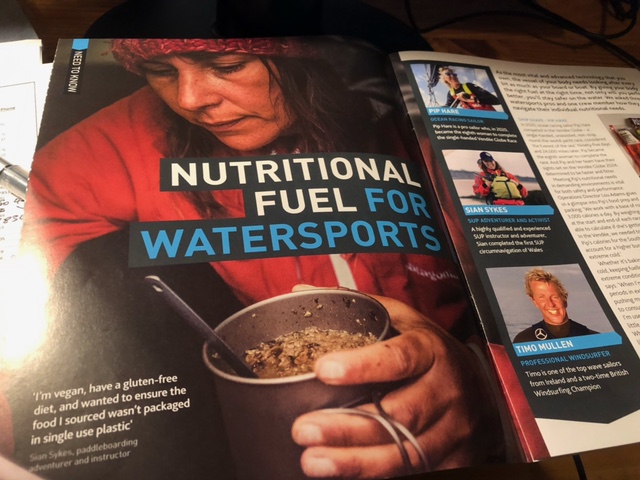
My RNLI winter 2022 magazines pitched up today in the mail. I was struck by he front cover headline on the ‘Offshore‘ section: ‘Fuel For Watersports – the food athletes and lifesavers choose’
Inside there is a rundown on the activities of three ‘Adventurers’ – Pip Hare, ocean racing sailor; Sian Sykes, SUP Adventurer and Activist; and Timo Mullen, professional windsurfer…
Where ‘Lifesaver’ comes in I couldn’t work out.
What the heck is the benefit of this article for the ‘common’ sailor, I am asking myself.
Section of magazine – RNLI.
These are sports professionals, far far away from the people who have a boat, canoe, paddle board or dinghy.
The only tangible piece of information was in a comment by an RNLI crew person who mentions the use of cereal bars. Well yes, they have been around for years and are used by everyday sailors, walkers and such. Even by people as a substitute for a proper breakfast.
Pip Hare adds electrolytes, multivitamins, supplements and minerals are added to specialist vegan dehydrated products to produce a meal…
Section of magazine – RNLI.
Sian Sykes talks of working with a firm producing specialist dehydrated meals too with a requirement for compostable packaging. Great, but I’d say a dehydrated meal aboard a cruising yacht was a rarity – unless of the pot noodle variety of snacks.
Timo Mullen waxes lyrical about not taking supplements, ‘I don’t take supplements or use gels, protein shakes or electrolytes…’ I feel a bit lost here, I have to admit!
In conclusion the article says: ‘The physical demands of your particular watersport will vary depending on its type, intensity and duration as well as your unique body…’
Christobel said, ‘I wish they’d write about ordinary things … I really can’t be bothered with this…’
Yes well, me too. I just cannot understand the relevance.
what I would call the basis of a nutritional meal after a good day’s sailing…
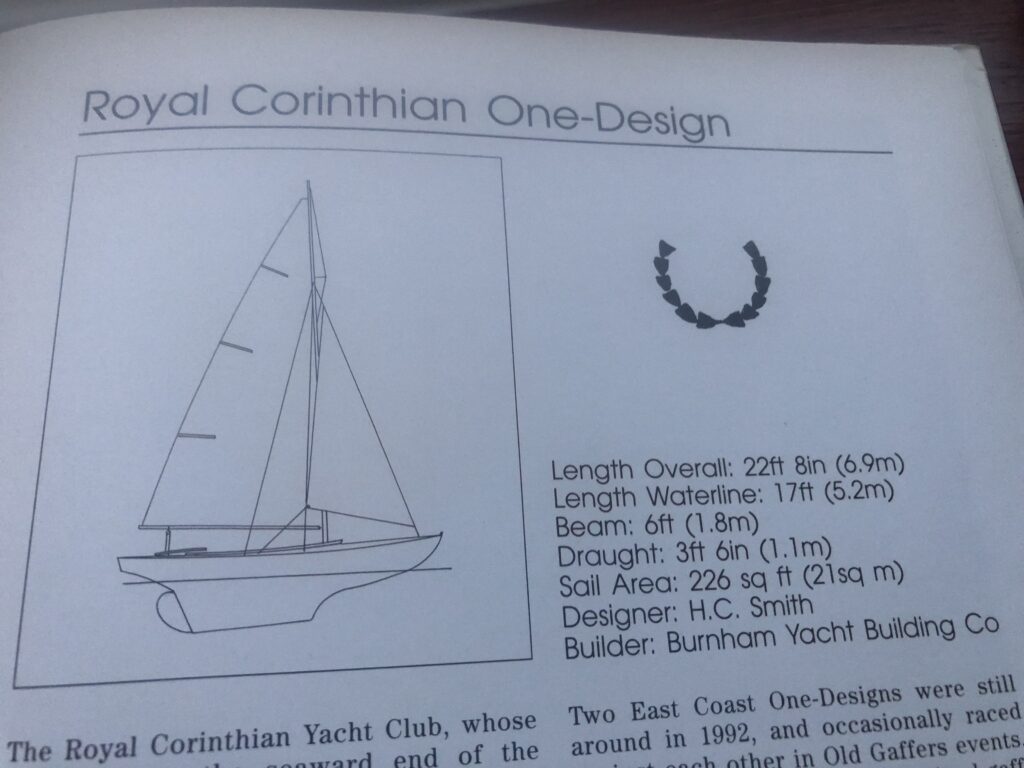
I was browsing in a second hand store while Christobel was chasing down ‘name’ skirts when I came upon this classic by Jack Coote, the inimitable author of the long standing bible of the east coast – East Coast Rivers.
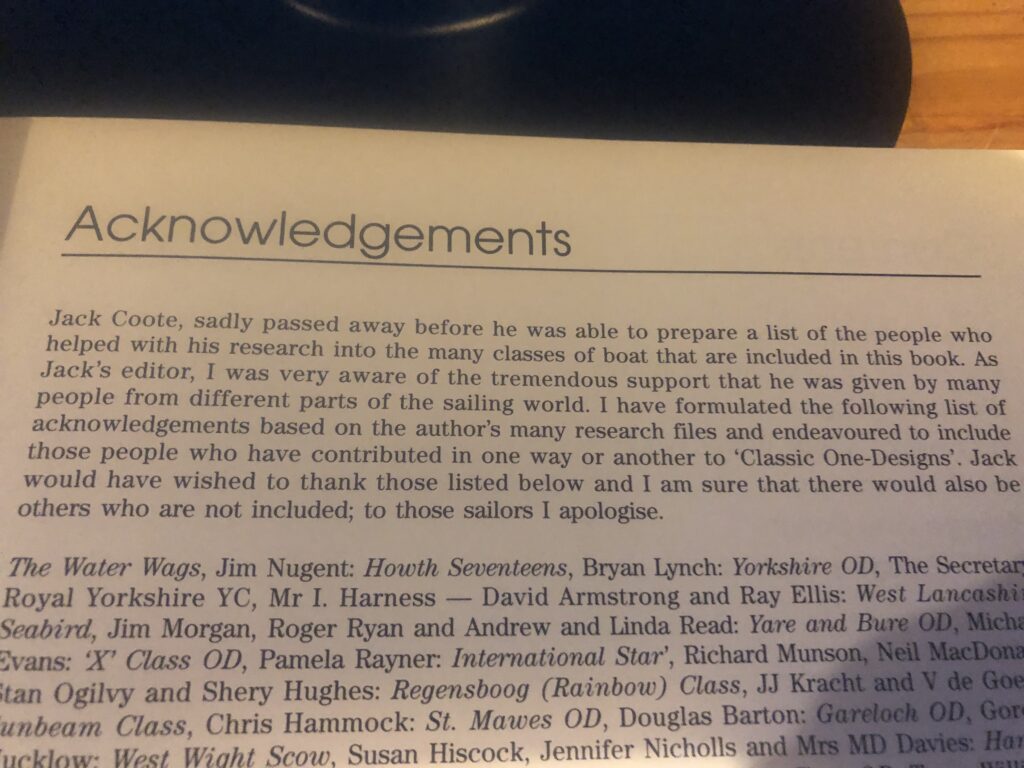
The book, Classic One-Designs, was published by Waterline Books in 1994. Sadly, Jack wasn’t to see the results of many years work: he died before final editing and publication.
All pictures with courtesy of Jack’s family and the publisher.
Front Cover.
The acknowledgements page laments Jack’s loss during the editorial stages of the book’s production: there wasn’t a complete list of contributors – so I will add my thanks too to those that were accidentally missed out!
The book covers a gamut of one designs from around the world. There were and are many, many, more, however his choice is pretty extensive.
Strangely, for it has become a world classic, the Mirror Dinghy wasn’t included. Of the type, the Cadet and Optimist were. The Optomist, of course, is probably the classiest trainer ever designed. On the east coast, the West Mersea cadet week brings ‘hundreds’ out onto the water with their attending fleet of parent trainers – they make a colourful scene.
A little story here: Whimbrel was moored in the Quarters between Packing Marsh and Cob Islands during cadet week. A line of ‘Oppies’ slowly made their way over a tide down the fleet. We were having tea in the cockpit…
One, helmed by a young girl called to her friend; ‘Clara’ why are you going faster? No answer. Question repeated to a ‘Samantha’ coming up on the girl’s boat and overtaking.
Now, the iconic sprit main was sheeted in tight. I’d heard trainers telling youngsters to ease their sheets … so I called quietly, let the sheet out. The lass looked at me, then at Christobel, looked around and esed her sheet.
The boat picked up speed… Brilliant!
One design classes began in various locations where yachting was taking place at around the same time. The earliest is said to be a Dublin class – Water Wag – in 1886. These boats were the means for the ‘average’ middle class sailor to get class racing against like minded sailors.
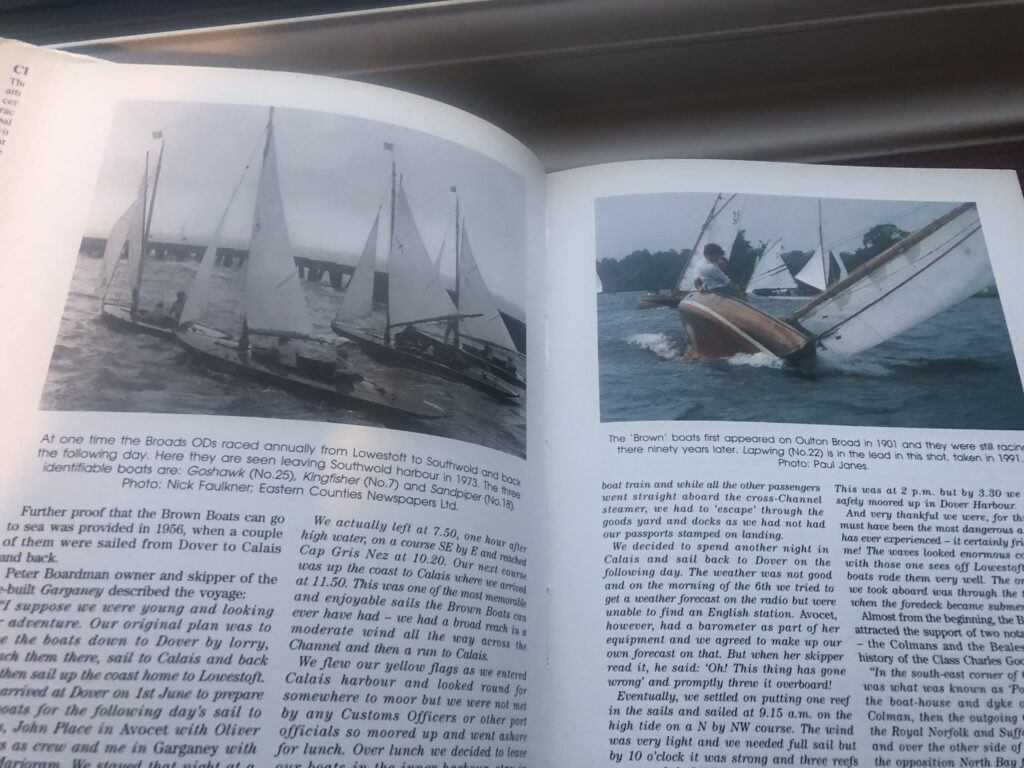
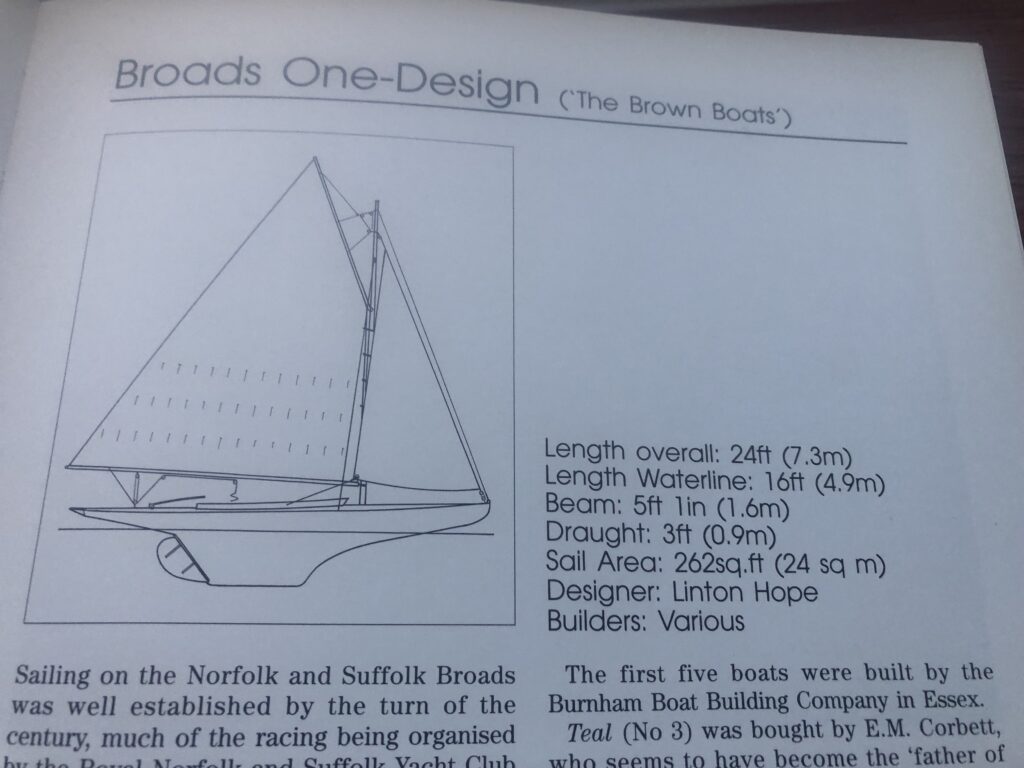
Broads One Designs – the ‘Brown’ boats, date from 1901.
The ‘Brown’ boats have the appearance of yachts of much larger size as raced by the rich of the day.
The Brown boat details.
This class of boat has continued to flourish in GRP.
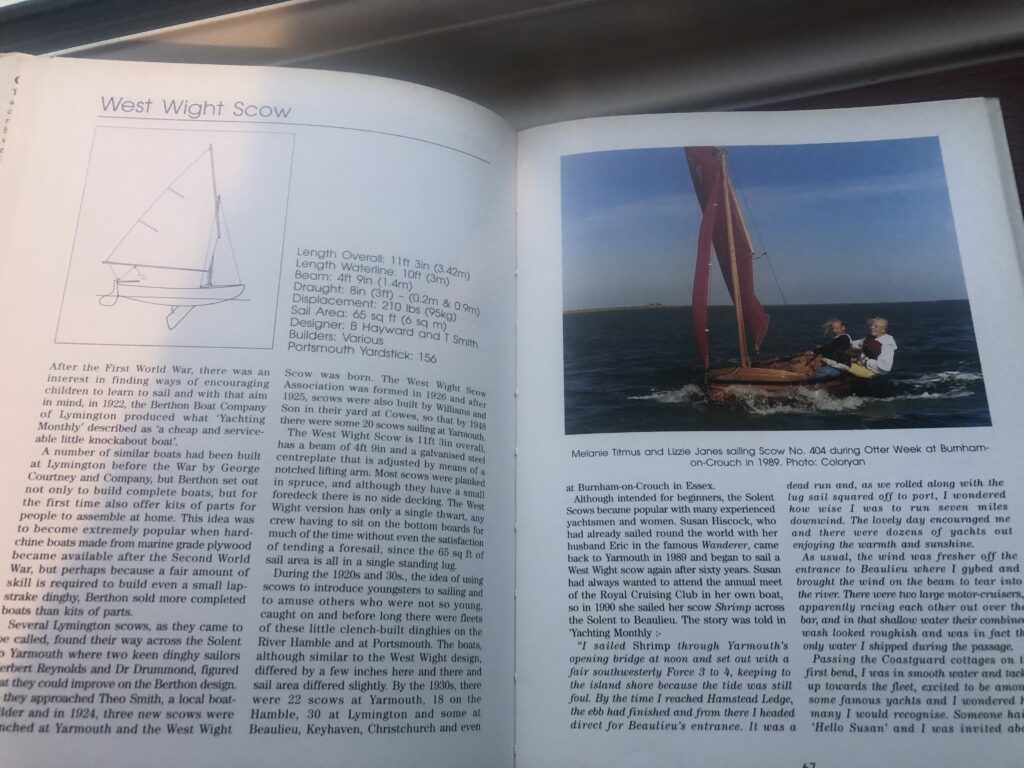
A smaller boat by far is the West Wight Scow which came into being in 1922. They are based on a few boats that were sailing prior to the First World War. Yachting Monthly called it as ‘a cheap and serviceable little knockabout boat’. Yes, well, they’re still sailing!
West Wight Scow.
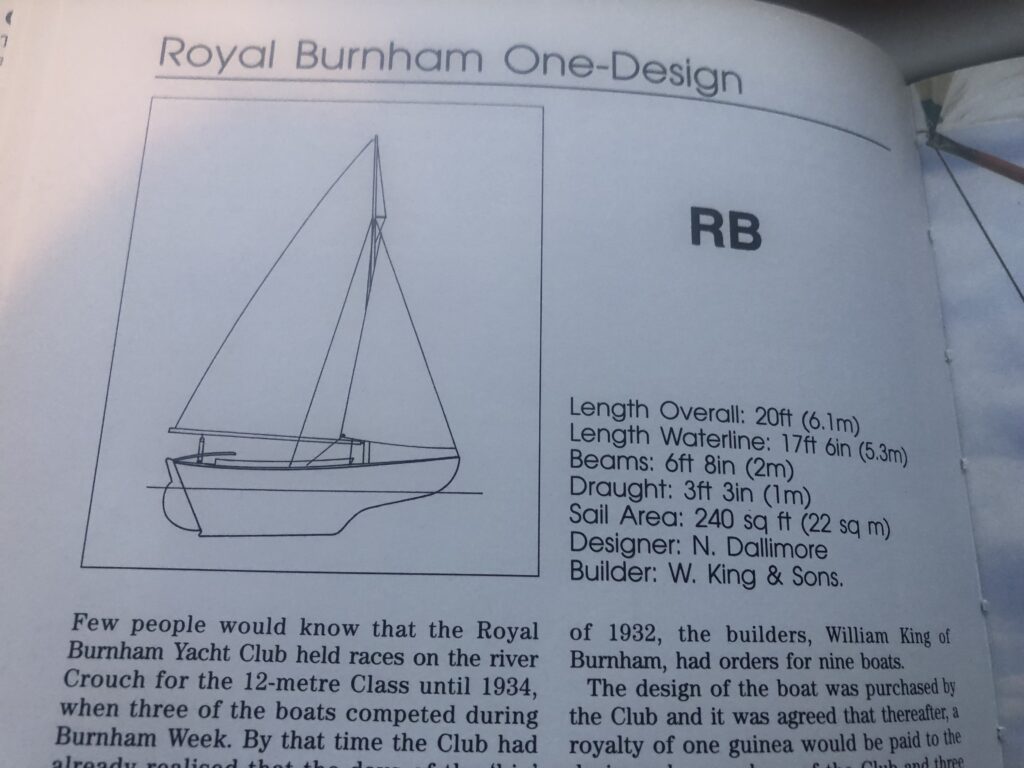
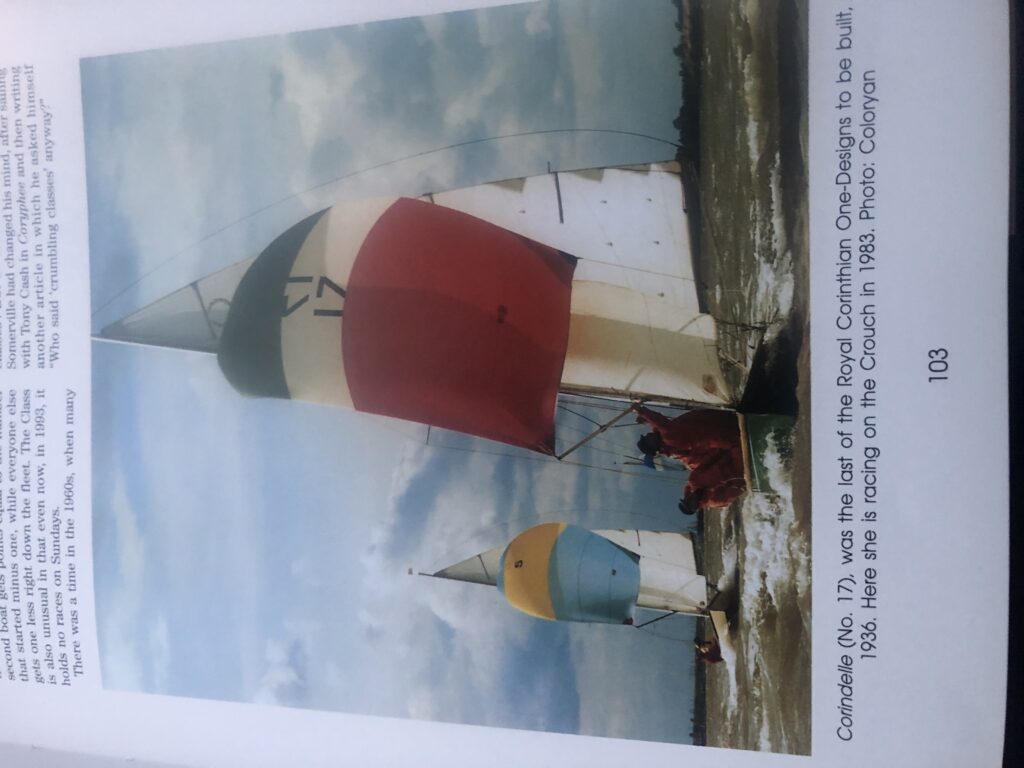
The two Royal clubs on the River Crouch produced two very similar craft, which in many respects is not very surprising: the river is the same for both sets of sailors.
The differences are minor indeed. This is true for another class I will come onto as well.
The pictures throughout tell their own stories. Anyone who has been on the River Crouch over a race weekend will have, like me, marvelled at these beauties…
Corinthians roaring downstream with a decent westerly behind them…
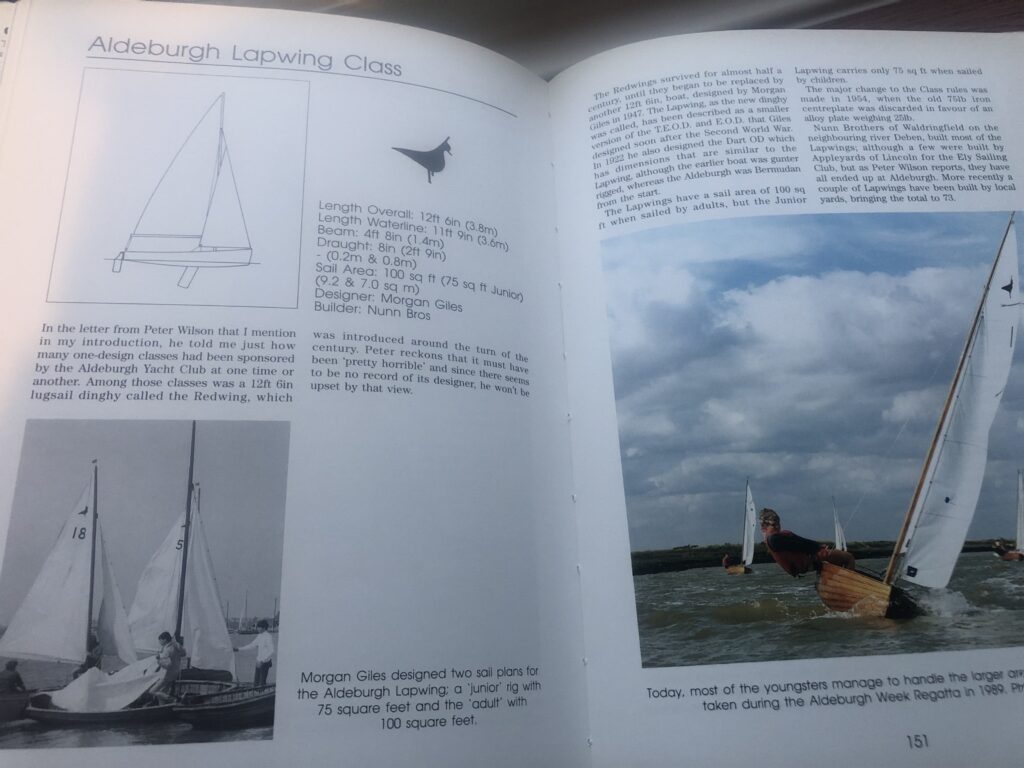
The Aldeburgh Lapwing class are known to all yachting folk who sail into the Ore and Alde. They’re often to be seen sailing over a summer weekend. The boat featured in a novel by Libby Purves – Regatta published in 1999 – a story in which a deprived child is given an ‘Aldeburgh Summer’ by a foster family. The book is brilliant…
These boats had a smaller rig for youngsters.
The boats often remain in a family for more than one generation, however, the class numbers have waned a little.
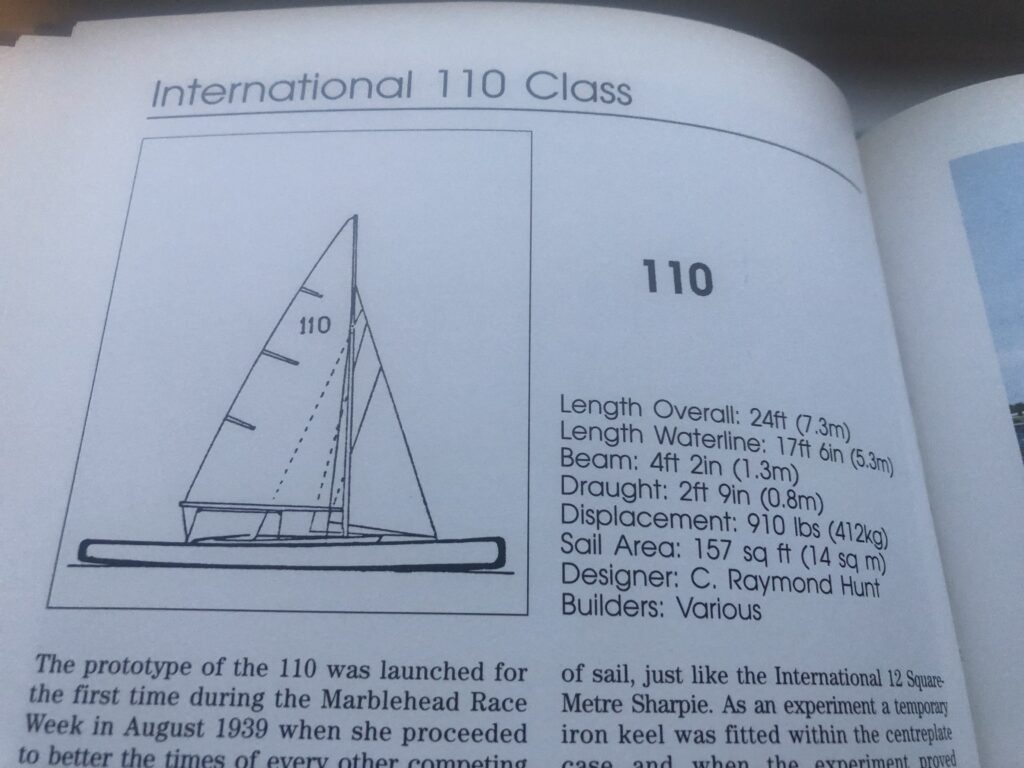
A class from the USA.
At first glance, these craft don’t look right, however they proved to be exceptionally popular and have survived for eighty years as a class racing dinghy.
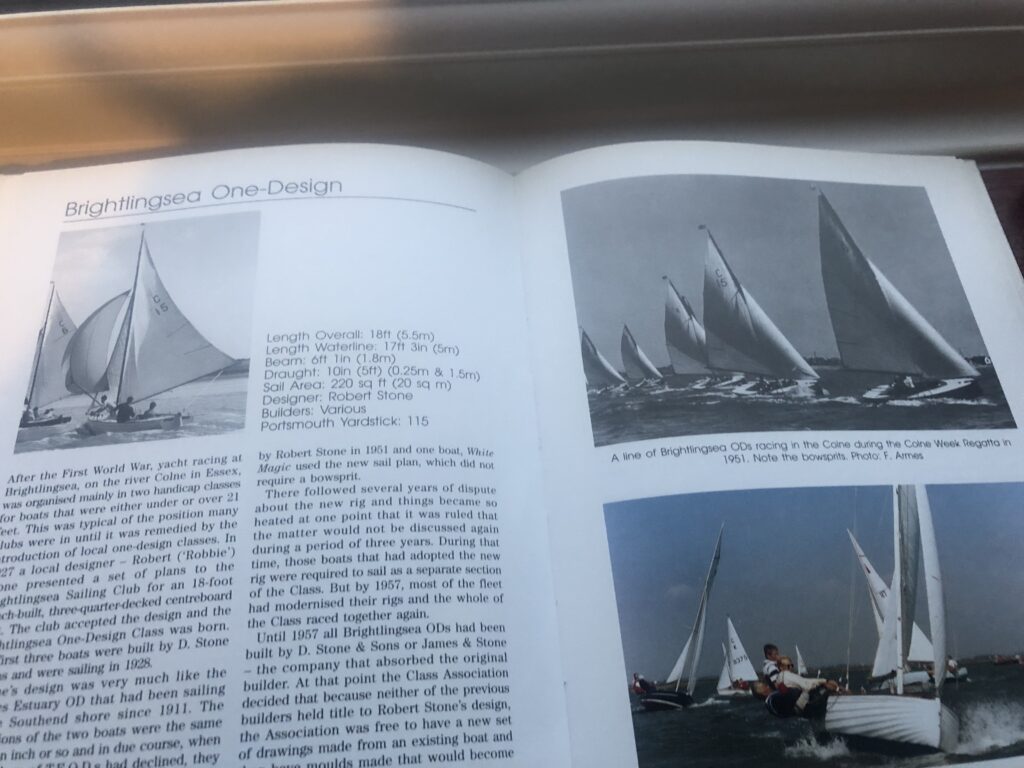
The ‘Brittlesea’ One Design.
Off the River Colne in Essex sits the creek-side village of Brightlingsea. It is an old fishing harbour and the dinghy class that sprung out of the end of the First World War has many ‘fishing attributes’ – sturdy, wide firm bilges and of clinker construction. I just love to see these boats working out of the creek and then later back to their moorings.
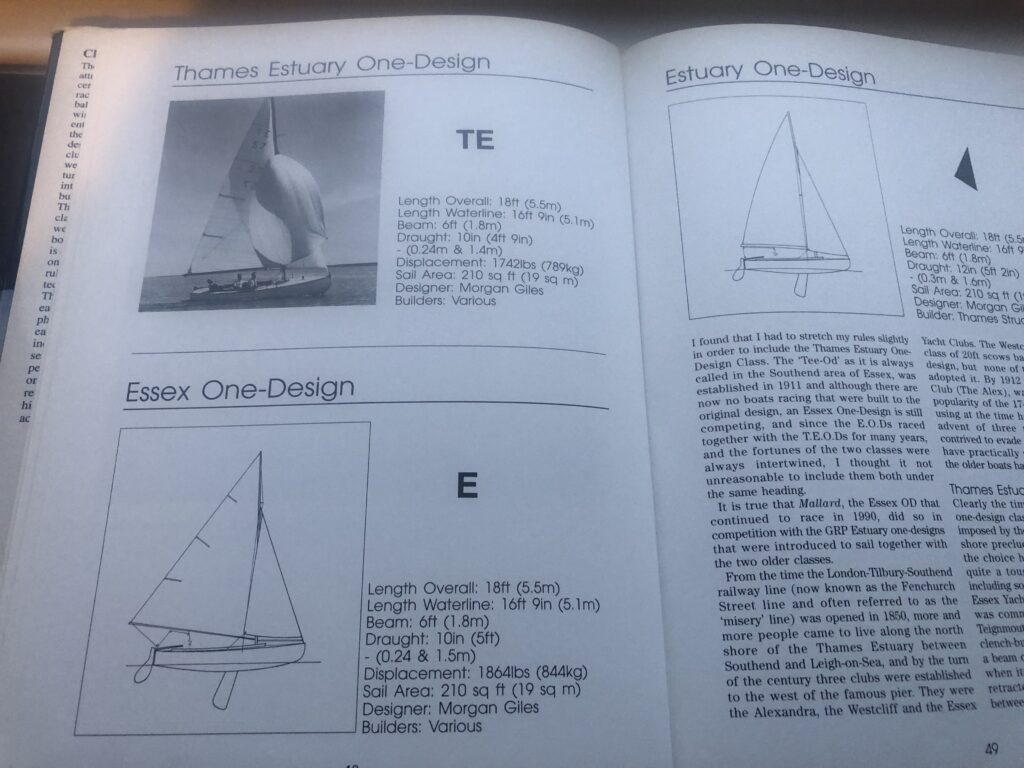
Down on the Thames shore of South Essex, two classes sprang from the drawing board of Morgan Giles. The Thames Estuary and the Essex – belonging largely to the clubs of those names.
The three ‘Estuary’ designs by Morgan Giles.
The two classes were redrawn by Morgan Giles and the result was the Estuary One Design. Many of these are still owned largely at the Essex Yacht Club and are keenly raced.
It is rare to see one of the two original designs – one is known to exist at The Essex…
I don’t as a general rule lend my books, but I did this one to a chap, new at my yacht club, who was brought up upon the River Ore & Alde sailing a Lapwing. His father is seen in a picture and the chap’s own boat too… No. 5, I believe!
Yes, fabulous. Thank you Jack for putting this book together. It was a joy to read.
And too, it was a revelation to just see some of the little craft that were born during those far off days before the advent of GRP and the clogging up of this world with under-used craft of all sizes.
Gravesend Town Pier: a magical facility in the heart of ‘Old Gravesend’ where private pleasure craft, spritsail barges, tall ships, small commercial craft, the Tilbury Ferry and more besides have been able to berth.
The facility has been managed for Gravesham Borough Council by a private management team. Ownership has been held by the local authority.
Change is afoot…
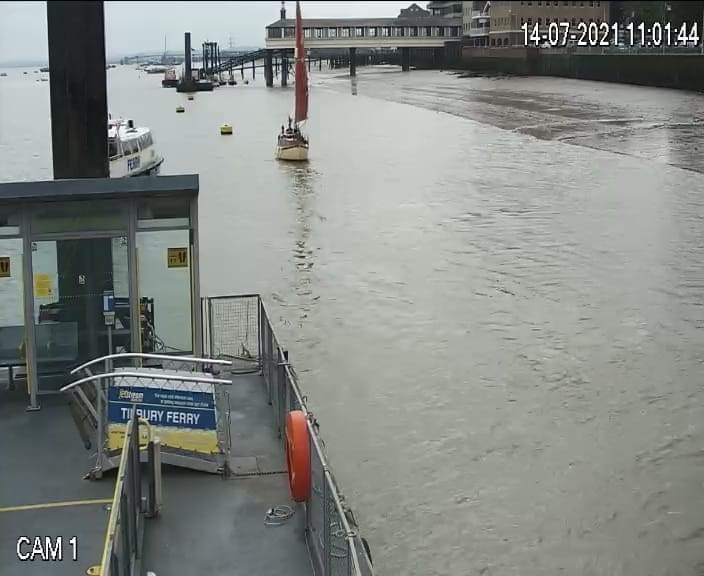
Whimbrel approaching the Gravesend Town Pier a little before low water during July 2021, creeping up under sail. I was told it was the first time a vessel had sailed on! Picture credit: Gravesend Town Pier.
A little while ago a little bird told me about the prospective sale of the Gravesend Town Pier, as reported later in Kent’s local press.
In conversation I was told that Thames Clippers has had a clause since 2000 to operate a service west of the pier towards London.
For Thames Clippers – now read UBER! The group have been in long discussions regarding the facility’s future.
At the time, my correspondent feared for the onward availability to other users. They would include, Tilbury/Gravesend ferry operated by Richard Bain, other pleasure boats and private pleasure craft (us yotties). This would also affect use by spritsail barges too, with a possibility of putting a bit of a kybosh on the Thames match contestants visiting etc…
Never mind the annual visit made by the paddle steamer Waverley!
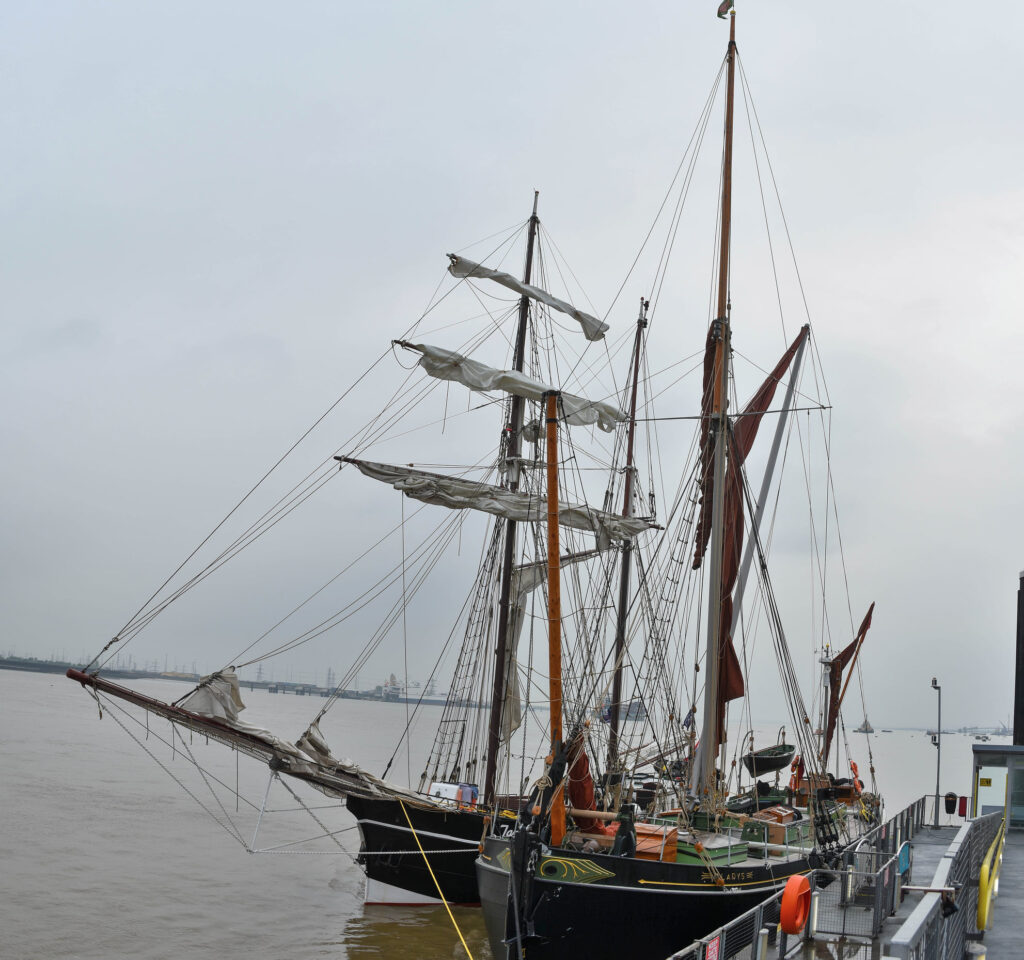
The Jante and spritsail barge Gladys on Town Pier in May 2022. Picture credit – Jason Arthur Photos – Gravesend Pier & the Boats Facebook page. www.jasonphotogrphy.co.uk
Anyway, for those interested, the story appeared in the Kent Messenger (Gravesend) back in the early days of this year. It was a great pity they used an old picture showing a bald headed pier without its modern pontoon end thus negating the strengths of this facility.
Then, ‘out of the blue’, a recent post appeared on the Gravesend Pier Facebook page telling of the pier’s imminent transfer to Thames Clippers – Uber Group – with great voicing fears for its loss to the community at large.
I thought surely not and there seemed to be huge gaps in knowledge, locally, about the ins and outs of this splendid facility.
It needed further investigation I felt, not just because for a number of seasons we (my wife and I) have berthed Whimbrel on the inside of the pontoon whilst transiting to and from London, and did so back in August of this year. Clearly we wanted to come back…
Whimbrel tucked onto the upstream end of the pontoon in August 2022.
The question ‘all’ are asking is essentially this: ‘Will yachts continue to be welcomed?’
My contact, one of the pier’s managing consultants (Gravesend Pontoon Ltd), said earlier this year that it was hoped UBER would allow the pier to run much as it had…
So before moving on, let’s look at Gravesend’s other piers, ignoring commercial ones upstream and downstream:
Royal Terrace Pier is used exclusively by the Port of London Authority.
West Street Railway Pier – demolished. Inshore stub remains.
The old Tilbury Ferry Pier – vehicles and foot passengers – demolished. Inshore pivot pylons still located just above Town Pier. Old access built over.
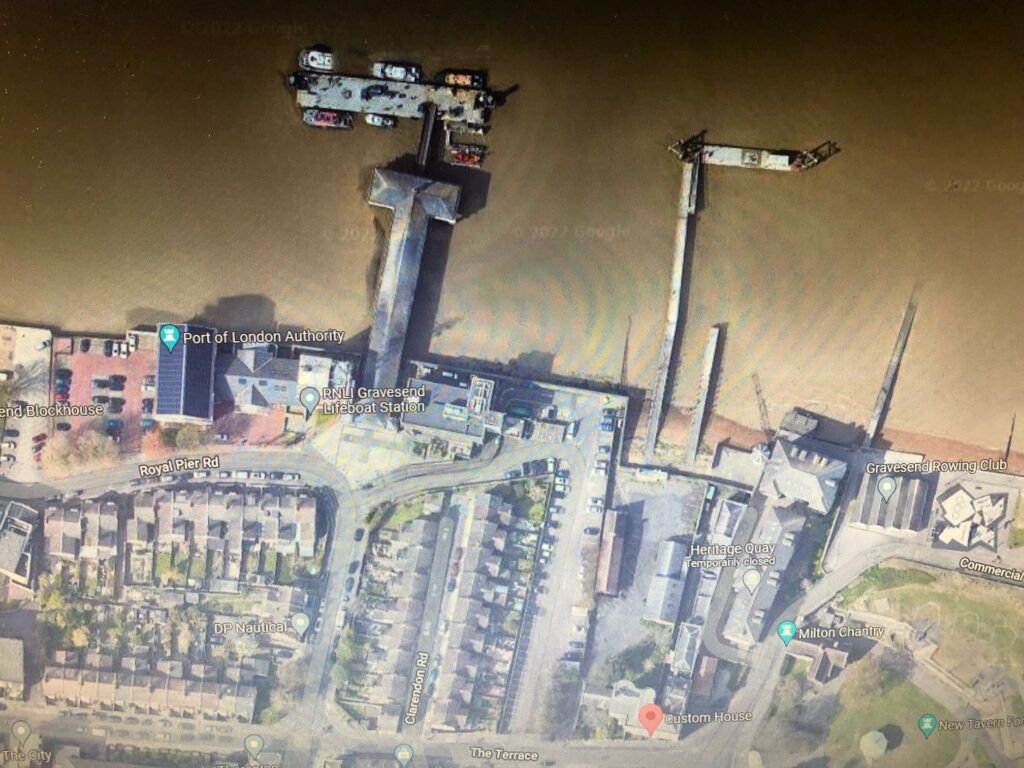
Pier located between Royal Terrace Pier and the Gravesend Rowing Club slipway.
Of the above, 2 & 3 are lost for any future use. And 1, the Royal Terrace Pier, is owned and exclusively used by the Port of London Authority’s vessels.
What about pier 4, located immediately down stream of the Royal Terrace (PLA) Pier? It doesn’t seem to have a real function – probably work boats?
View from Google Earth of ‘redundant’ pier…
The pier sits outside the flood barriers. Its access is from a yard with some buildings which appear to be disused. The Custom House sits at the road end of the plot and all belonged to the Excise Men until the building was sold for use as offices. I understand there are plans (2021) for conversion into flats. The building’s façade would at least be preserved…
Incidentally, the pier pontoon was refurbished around 2018 for a marine operator.
This is clearly a wasted asset! A little project for Gravesham Council perhaps?
So: what is the future. Well, exciting news: I have it on very good authority that the future is far from bleak!
Hot from one of the managing team:
The pier sale has been finalised.
Terms of the sale require Gravesham Borough Council to carry out know repairs to the ‘iron structure’ then Thames Clippers assume responsibility. Responsibility of the pontoon has already been passed over.
I was told that Gravesham BC have never had much interest in the maritime aspects of structures and such – due to a lack of understanding perhaps – but have always wanted to see water-borne visitors to the town.
However, they have to fix what is outstanding!
The very good news, in my own words and understanding:
Thames Clippers/UBER wish for the current management team to continue as they have been. There were some safety related discussions, I understand. There was no indication given to me that the pricing structure currently in place is to be altered – as with everything, a rise must be expected.
It was made abundantly clear to me that their wish is for the pontoon to be used as before.
Private pleasure craft (Yotties) continue to be welcomed on the inner sidewith booking made through the normal channels.
Thames spritsail barges remain welcome.
Sailing ships remain welcome.
The ferry will continue to operate.
The Waverley bookings will be honoured and any Clipper ops will work round this vessel.
Their operations will only be from the outer berth.
Currently plan Spring weekend excursions/school holiday times.
I understand that Thames Clippers/Uber reassured the management team of their value and respect for the facility and want to extend reassurance to the maritime community of continued access to this facility.
Thames Clippers apparently only had one major concern and that was use by the small commercial vessels sometimes seen alongside…
So there you have it.
I am sure there will be more in the press in time, maybe!
The future is shining brightly…
Just be fully aware of the wash and drawdown effects from the Clipper Boats when out on the river and alongside.
Happy Christmas!
Addendum:
A member of the pier pontoon management team attended the open meeting on Monday 21 November on the pier held by Thames Clippers.
He reports: ‘Reception was held in the ex-restaurant end of Town Pier. All cleaned up and lit, with drinks and buffet laid on via Three Daws. Mr Colins (from Thame Clippers) gave an introduction address then questions were invited on a one to ne basis to TC staff. All very positive and reassuring.’
Many thank to management duo, who themselves have been ‘long in the dark’ in many respects.
Calling all classic boat owners! We’re looking forward to hosting next year’s Classic Boat Festival on 16-17th September here in Queenborough.
If you have a classic boat that you would like to get involved and showcase at our event, please contact admin@queenborough-harbour.co.uk.
We’re looking forward to welcoming you all!
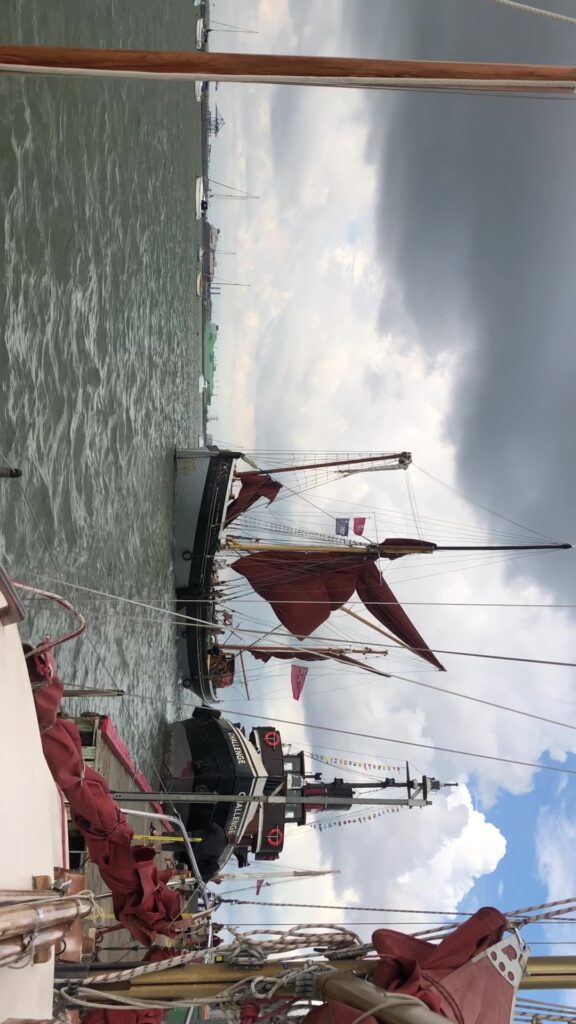
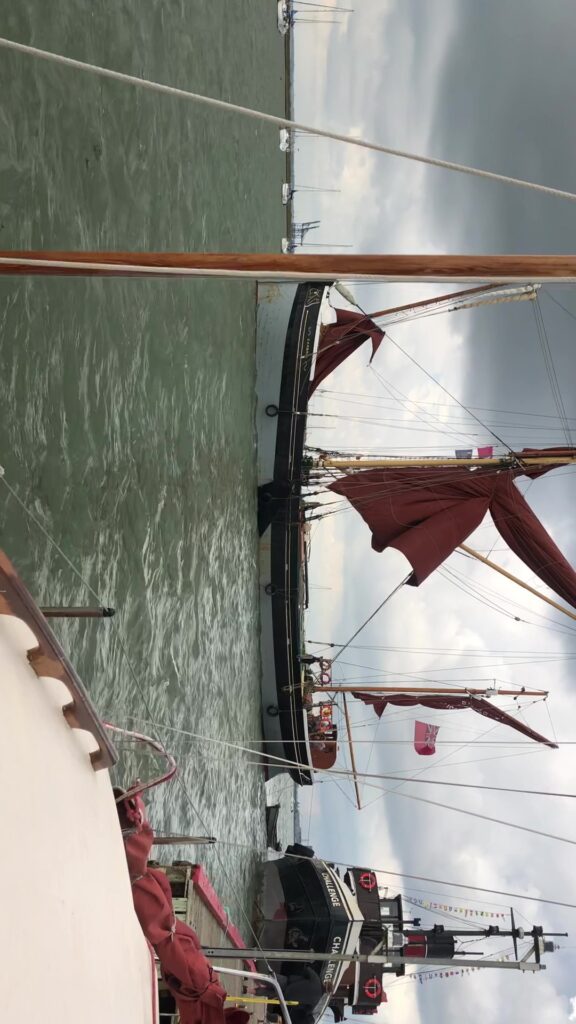
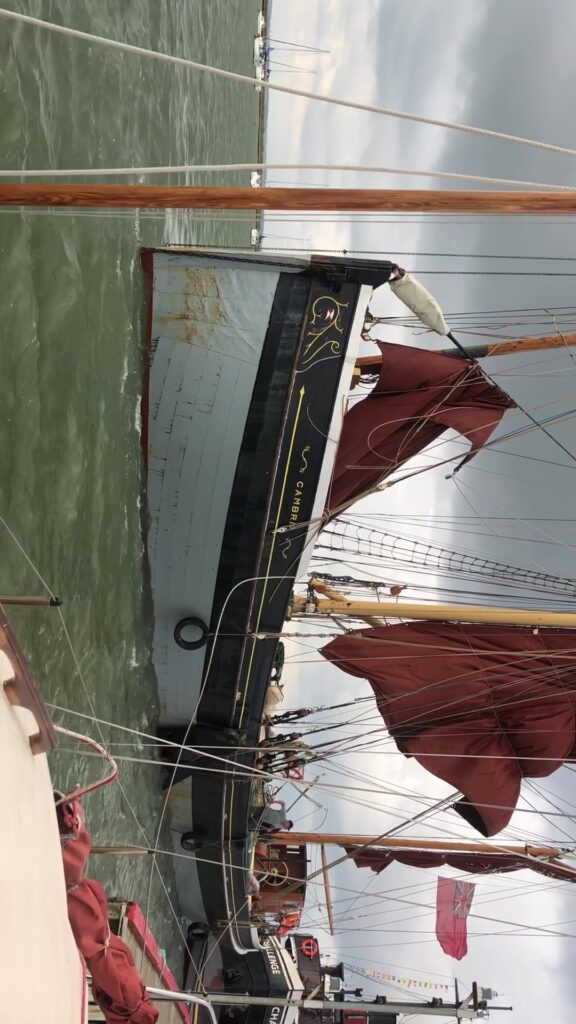
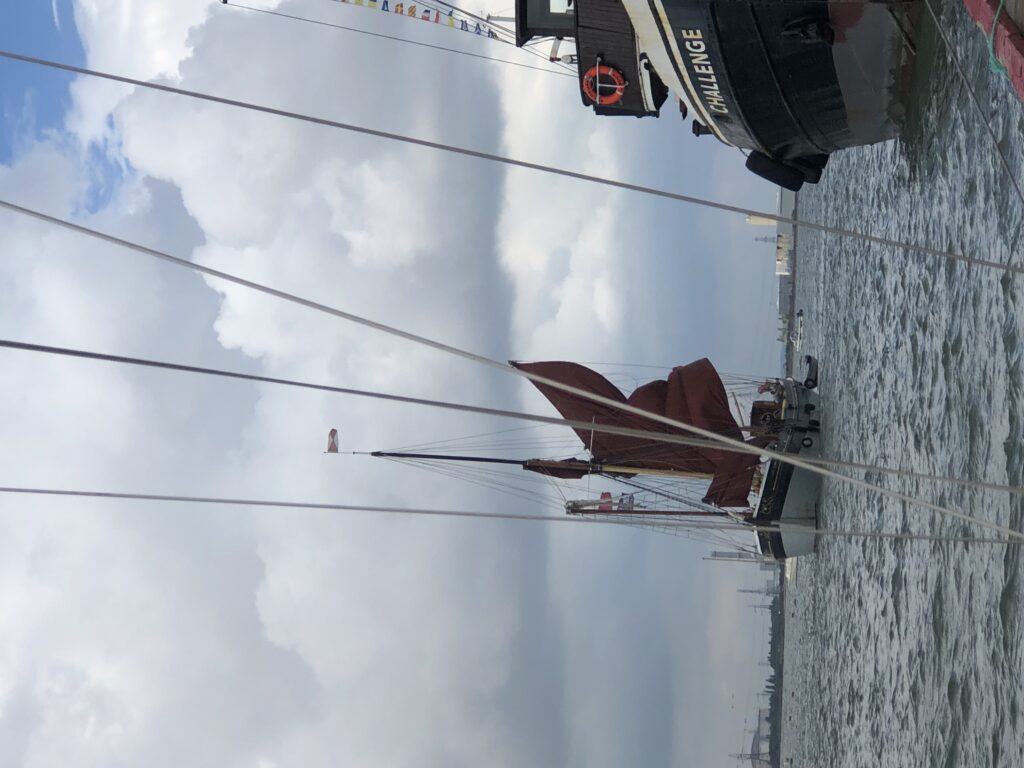
Aboard Whimbrel, this last September, I had the honour (being on the outside of the Queenborough YC finger) of witnessing and filming the spectacular arrival of the Thames spritsail barge Cambria.
Huge tug ‘sits in the way’…
The Cambria had to negotiate past the huge steam tug Challenge and drop into her allotted berth.
Past the Challenge, now for the next manoeuvre…
It was a timeless operation under sail: the dear old girl does not have any other means of propulsion apart from the wind in her sails…
Almost there…
The mate threw a ‘shiner’ and a light mooring line soon made its way to a forward bollard on the pontoon…
Punters would not normally see this sort of action unless watching through binoculars ashore. Early arrivals for the jamboree are privileged…
The weekend was saddened by the death of HM Queen Elizabeth II on the Thursday evening, but as vessels were already gathered or gathering the event went ahead – no bunting was flown.
Ensigns were left flying, even at night, in honour of our late Queen, however, for 24 hours on Saturday 1100 to Sunday 1100 ensigns were fully hoisted for King Charles III.
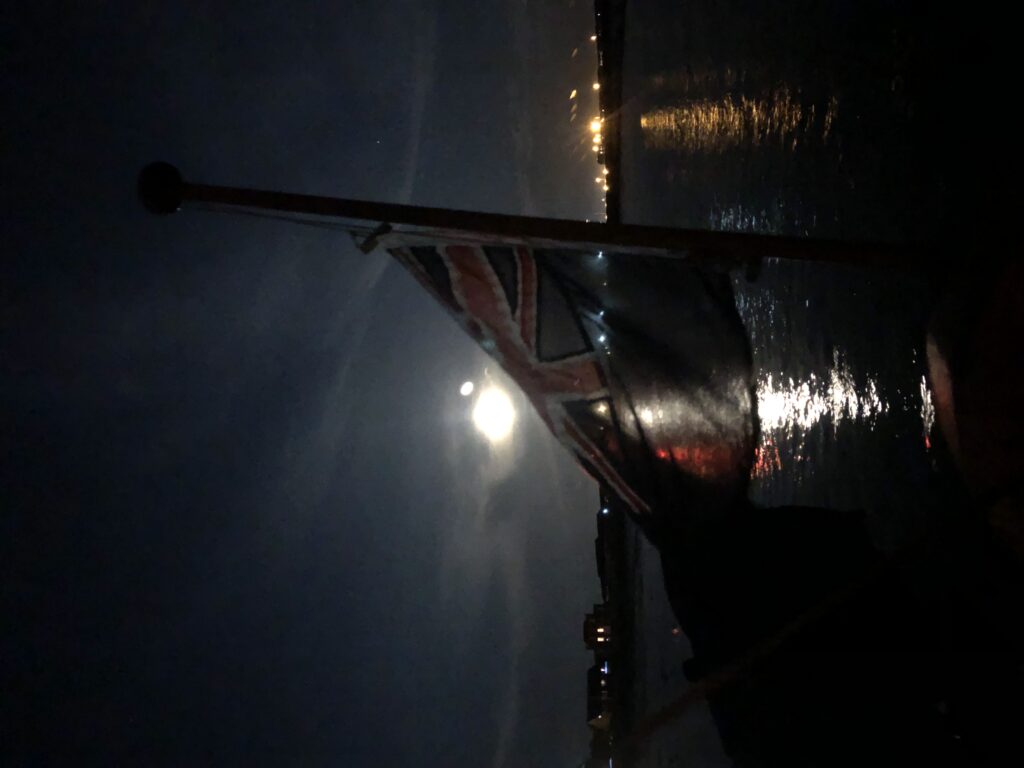
Whimbrel’s ensign lowered for our deceased Monarch.
It was an exceedingly busy event for the crew of Whimbrel. People by Saturday just wanted to get out and do something and talk to other people. Sunday was just as busy!
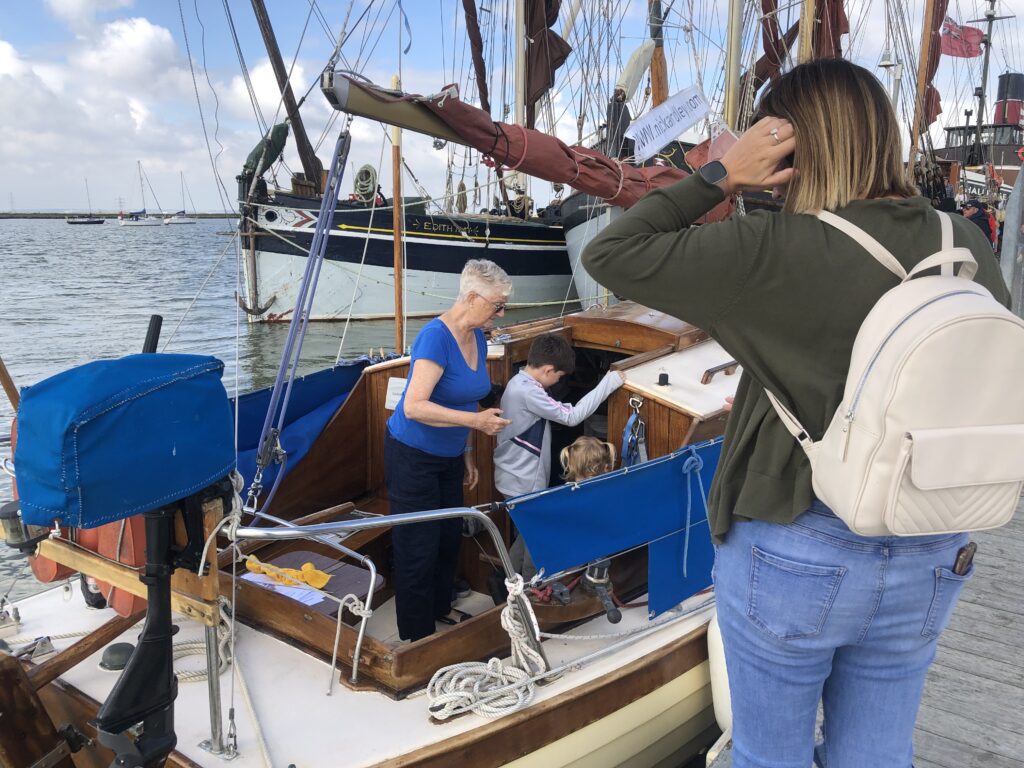
The Mate showing people around on Whimbrel.
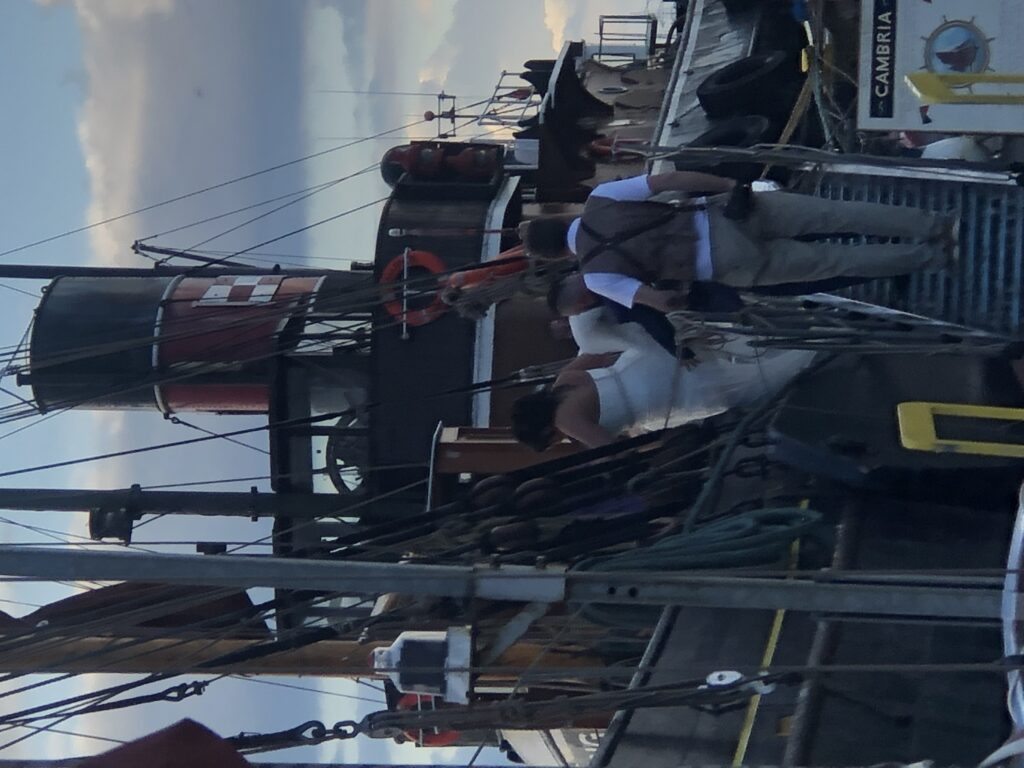
There was even a newly married couple seen clambering aboard the Cambria – luck old skipper Ruffles!
The groom eases his bride’s leg over…
There was though a dearth of smaller vessels. This has to be a priority for change.
So, come on classic boaters on the Medway, Swale and all the little ports hiding therein: come and join in…
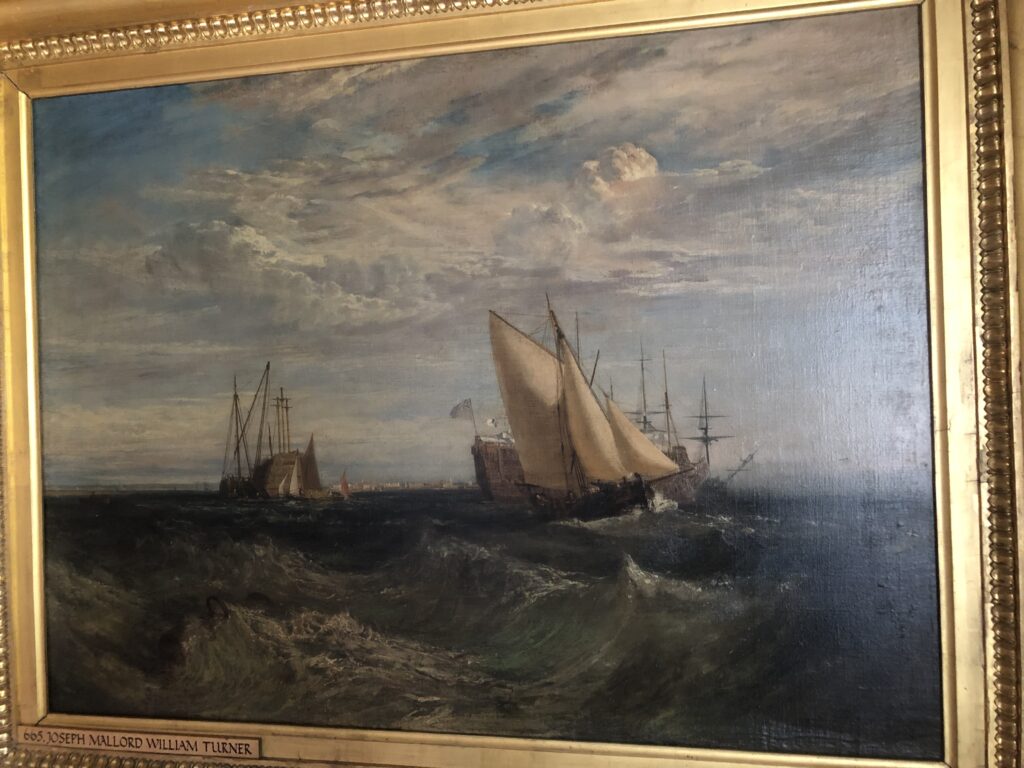
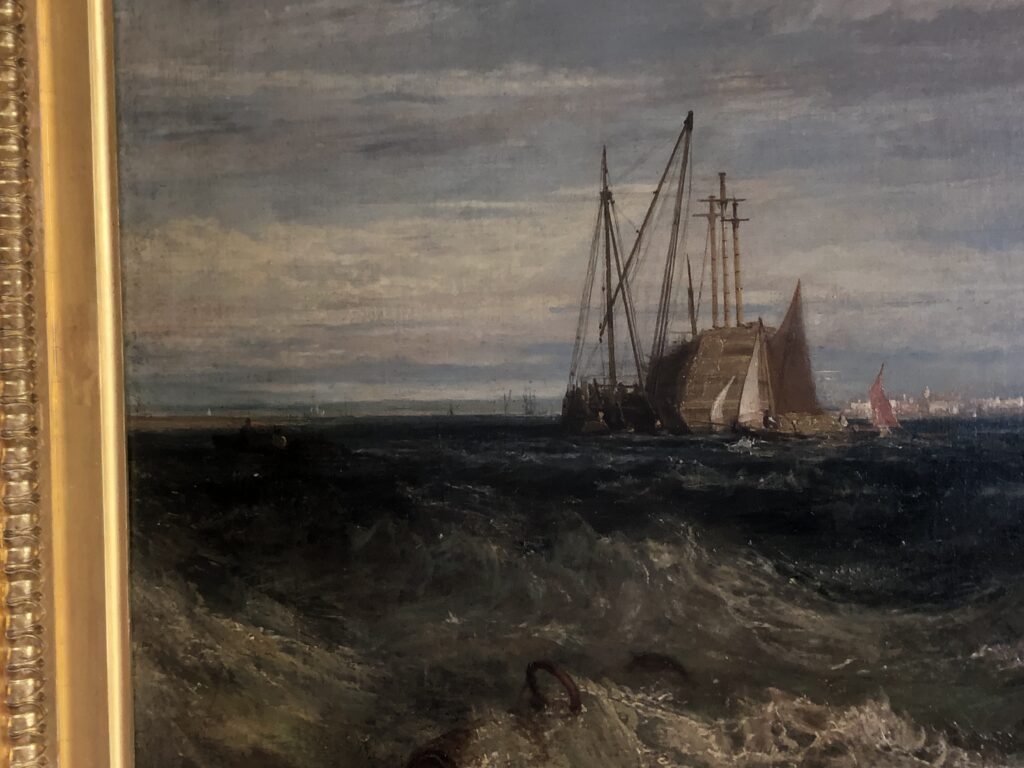
On a visit to Petworth House in West Sussex I viewed a painting by Turner depicting the ‘Confluence of the Thames and Medway‘ first exhibited in 1808.
Being a ‘celeb’ of his day Turner was oft sought after and he stayed at the house as a family guest on numerous occasions. There are a number of Turner paintings displayed in the house.
The house was the home of the Dukes of Somerset for generations until it passed to the National Trust in, I believe, 1947. The family remain the owners of various works and pieces of furniture. The Tate owns the Turner paintings, on the whole. The Government owns various pieces as does the National Trust, including the house…
Turner’s depiction of the confluence of the Thames and Medway – 1808.
I did the usual run over with the eyes, stood back and gazed for a little while soaking in the scene. Anyone who has departed from Sheerness Harbour in a bit of an easterly and sailed out into the run of the river as it flows – on the ebb – towards its confluence with the Thames, some three sea miles east, will recognise the turbulent scene with those short sharp choppy waters superbly depicted by Turner.
Before turning away and moving on … my turn was arrested by a buzz in my head about something that did not seem right.
I found a copy of the house’s art works. I read it with not a little consternation. I thought, ‘No you’ve got that wrong…’ what the art historian or whoever had written up on the work.
The art historian’s words of wisdom.
So, back to the picture.
The first thing I spotted was the sand bank on the left of the painting with vessels in ‘the river’ beyond in the distance. Now, if the artist was looking at Sheerness, then what was the sand bank to the east of the Medway’s entrance?
Sand spit can be clearly seen with vessels beyond.
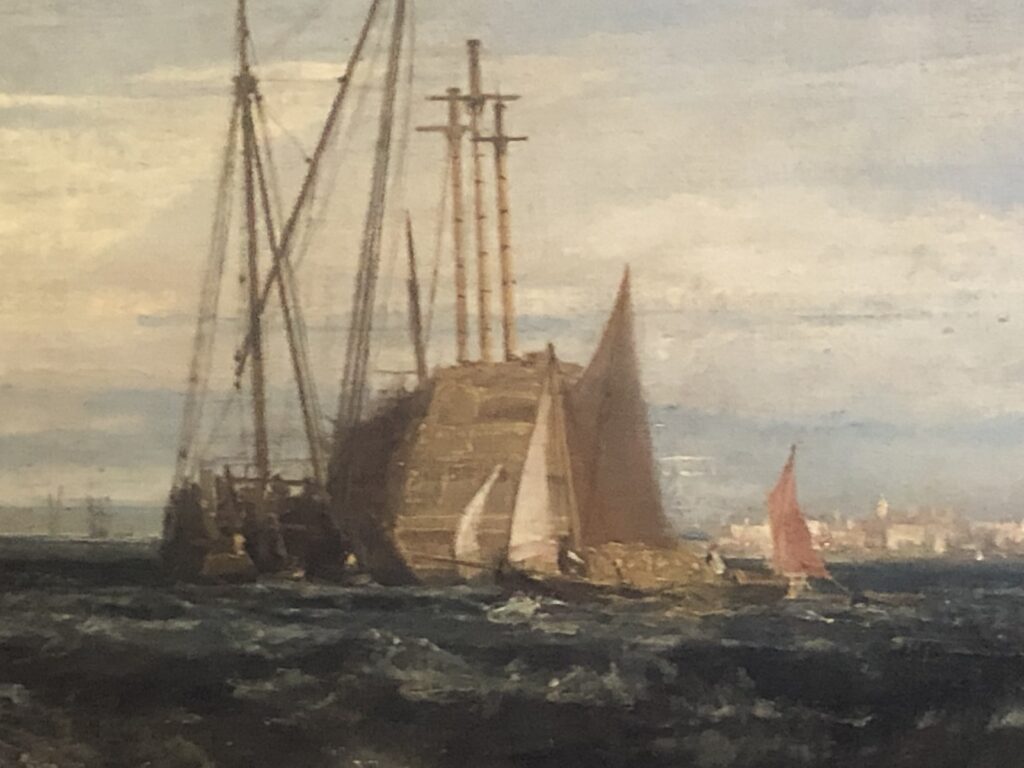
Secondly, there is a run of high ground going from right to left, built up on far right past the stern of war ship and ‘green’ all the way to the left. There is no high ground ‘behind’ Sheerness.
My last comment leads me to my third point. There weren’t and still aren’t the range of buildings clearly seen in the distance, elevated above the water horizon at Sheerness. There are over at Southend and Nelson, when Admiral of the Nore, had his mistress ensconced in one to the west of the high street…
Close up of the shore beyond the war ship. Built up (above the sea level) to east – rhs – and ‘green’ hills to the west – lhs.
I spoke to the room’s warden and explained what I could see and how it is in reality, pointing out that I have lived and sailed in the area all my life.
I was assured that he would raise the matter with the duty house curator later…
Walking on and after entering another room in the ol’ Dukes palatial house, I remembered that I had posted some pictures on Facebook looking towards the Essex shore when sailing home this autumn.
Over the Nore towards Southend.
I backtracked and collared the room’s volunteer curator.
We ran through the pictures standing in front of the painting. If he wasn’t convinced in anyway before the proof in print certainly made him more so!
Coming in towards Southend Pier.
And then there is the good old map of course.
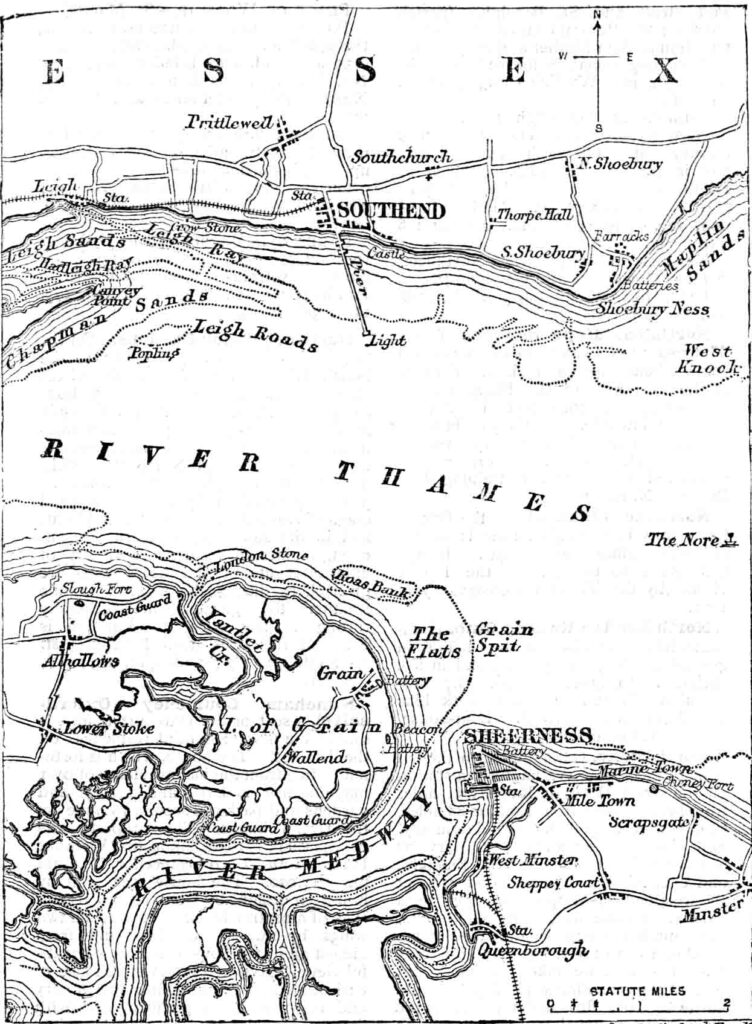
Now, I have bits and pieces of various maps and old charts of the Thames estuary gathered over the years and some years ago I was sent some bits of what is know as the ‘Dickens Map’ from the early to mid 1800s.
Section of the ‘Dickens’ map of lower Thames area, dated early 1800s. The pier was built in 1829.
The pier at Southend is shown as originally built in 1829, just 20 years after Turner’s painting. One only has to look at it briefly to see that in a line from Sheerness or even Mile Town across to Essex shore where Southend sits on the hill above the pier, there is the rather obvious area marked ‘The Flats’ of Grain Spit!
There are NO sand banks out to the east which are uncovered as the tide recedes. It is my view that the artist must have been on Sheerness beach to the east of Garrison Point in the area of Mile Town.
I rest my case…
Today, Turner could have painted an atmospheric of the gaunt masts of the Richard Montgomery rising above the swirling wreck wracked waters above the hulk just beneath the surface….
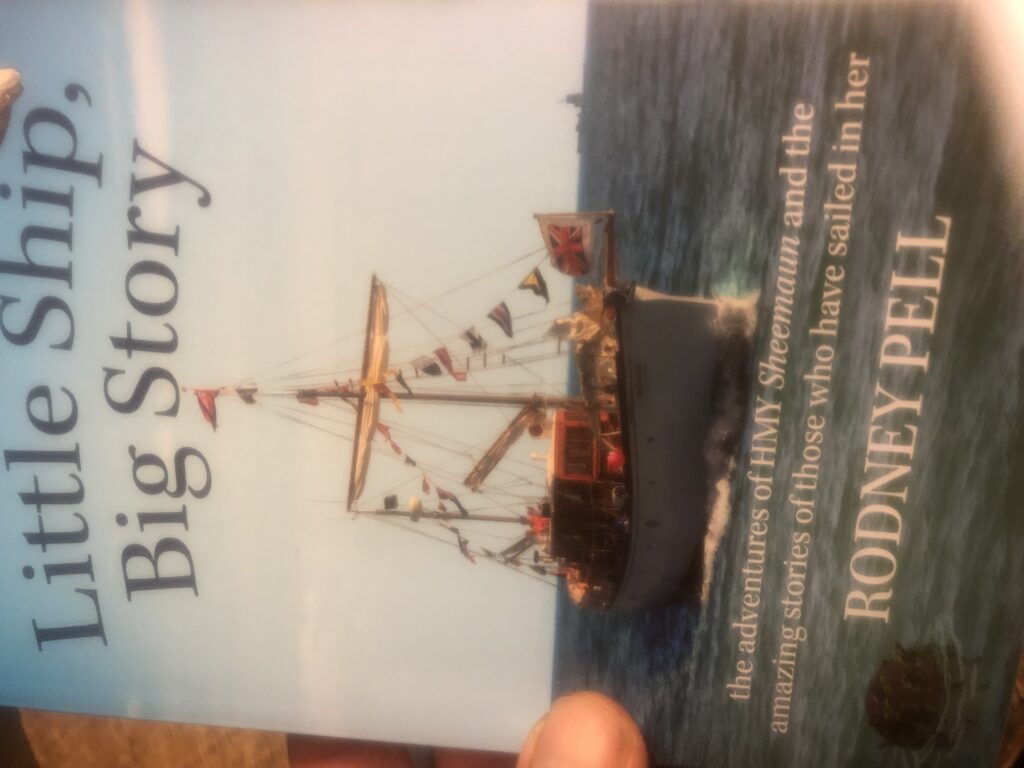
Little Ship, Big Story is subtitled, ‘the adventures of HMY Sheemaun and the amazing stories of those who have sailed on her.’ I came by my copy direct from the author, as a gift, for the enjoyment he and his wife have had through reading my own titles, here is the story…
I was attending the Queenborough Classic Boat Festival this September just gone (over the period of mourning for Queen Elizabeth II) and was berthed on the Queenborough YC pontoon. The engineless spritsail barge Cambria approached during the afternoon of the Friday before the event – which I filmed.
The Cambria had to pass a wide beamed steam tug and ‘drop’ onto the pontoon. It was brilliantly achieved by skipper, Ian Ruffles.
Within moments of her coming alongside a lady padded along the pontoon to Whimbrel, clutching a book. The lady, Maura Pell, came aboard asking if I could sign a copy of one of my books. Then, as I had a few copies of my last work aboard (Rochester to Richmond) she purchased a copy of that too.
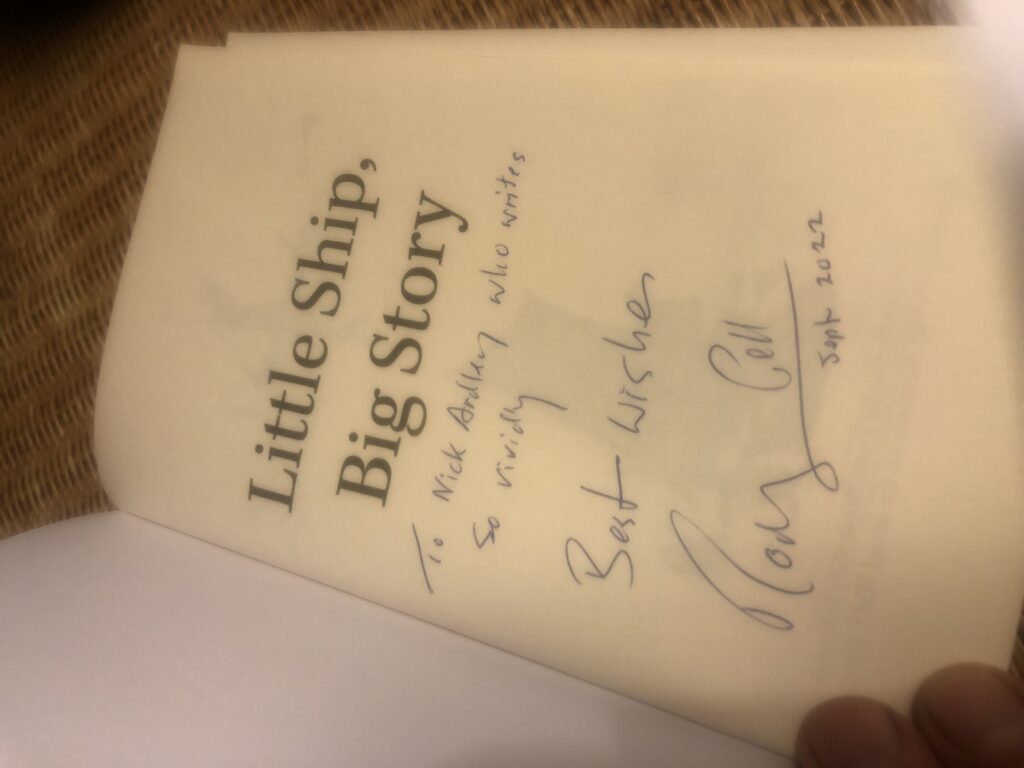
The following day, Saturday, Moara returned with a present from her husband, Rodney, owner of the motor yacht Sheermaun which is based at Ramsgate. Inside the cover Rodney wrote a short but touching dedication – ‘To Nick Ardley who writes so vividly. Best wishes, Rodney Pell, Sept 2022′
Thank you Rodney, and Maura too…
Dedication from Rodney Pell…
Continuing from the Friday. After Maura was ‘dragged away’ left – she had a taxi to catch for she’d been doing ‘cook’ duty on the Cambria – by Ian Ruffles, Ian told me that he’d had palpitations as he cleared the steam tug and thought Whimbrel was on the main pontoon. He soon realised we were tucked in at the outer end on the Queenborough YC section. Chuckling, he said, ‘I had visions of crushing you to matchsticks…’
It was then I told him I’d filmed Cambria’s whole approach and berthing. The Cambria’s mate later said I must have had strong nerves. Heck, I knew we were safe!
Cambria looms above us!
So to the book:
Front cover with its long sub title.
The book is published by the Conrad Press, 2019. ISBN: 978-1-911546-46-7
See: www.conradpress.com
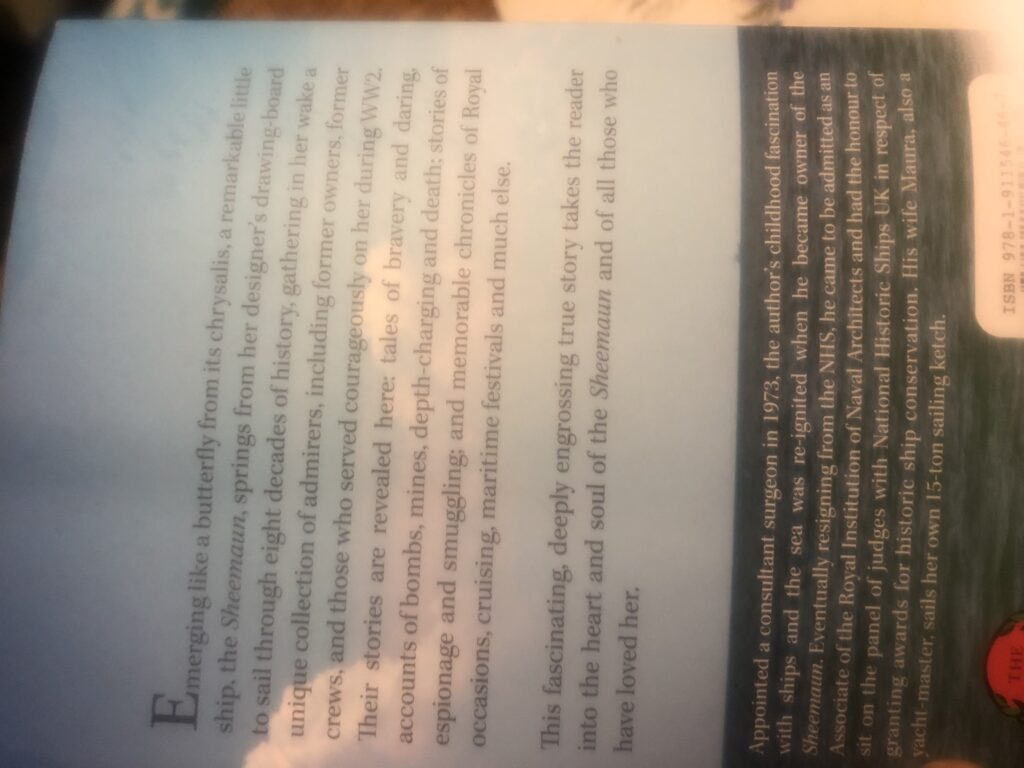
Rear cover with the blurb.
Rodney tells an engaging story of this little ship (Not one that went to Calais) from her birth to his acquisition. One is engaged from the beginning until with a potted run down of what he has done with her with various crews made up of friends and family.
The vessel seemed to have a run of owners after her build in 1935 with the Ministry of Defence (Navy) ultimately owning her for the longest period during the greater part of world war two, until 1950 when a period of stability of ownership came about.
The depth of detail Rodney has unearthed is fascinating and so very interesting. Pictures from the daughter of the first owner, right through.
The tales of the little ship’s life during those long wartime years between 1939 to 1945 and onto the Transport Department when sold out of service in 1949 held me riveted, devouring page after page, not wanting to put it down. Fortunately, convenient breaks helped: we were away sailing while I read much of the book!
The Sheermaun’s war years were largely spent in the Thames. She was based at a facility by Cliffe Fort on the Kent shore in Lower Hope Reach. From there she patrolled the Lower Thames watching for parachute mines and checking on the movement of vessels – many of which were spritsail barges. Nothing moved unless allowed. Nothing moved through the defence booms running from Shoeburyness to Minster on the Isle of Sheppey unless permission was given. Nothing moved unless the correct signal flags were flown…
Her waters were the waters sailed by all of those that sail the Thames estuary now and a remarkable lost history has been unearthed with this little ship’s story. It has helped me understand little bits of this and that which has teased my mind me for many years.
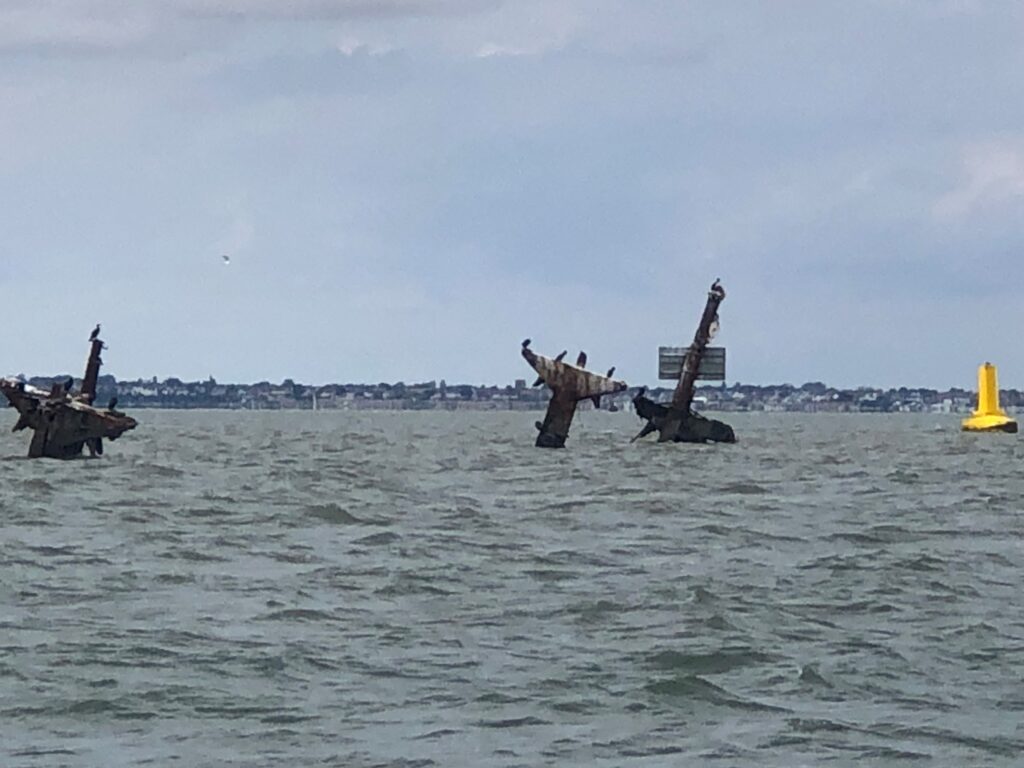
The Sheermaun was on station when the American liberty ship Richard Montgomery grounded and split, sinking on the edge of the Grain bank. She has a reputed remnant of around 4,500 tons of ammunition aboard still…
The Richard Montgomery’s masts seen from Whimbrel in July 2022. They are soon to be removed as wreck is disintegrating…
One of the details I found almost personal was the dishing out and collection of flags for vessel clearance purposes that took place. One of the inportant functions of a host of such craft.
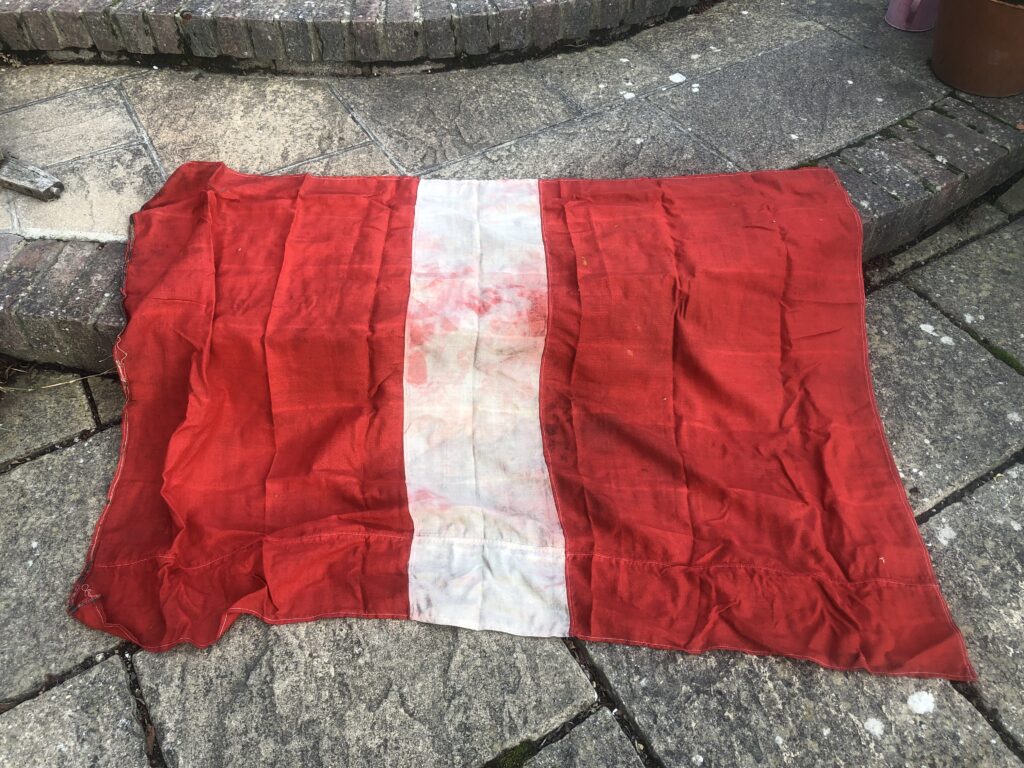
Apparently barge skipper’s would rant at the instruction to ‘heave to’ – in a barge! When my parents purchased the spritsail barge May Flower they found a flag of unknown origin with her papers.
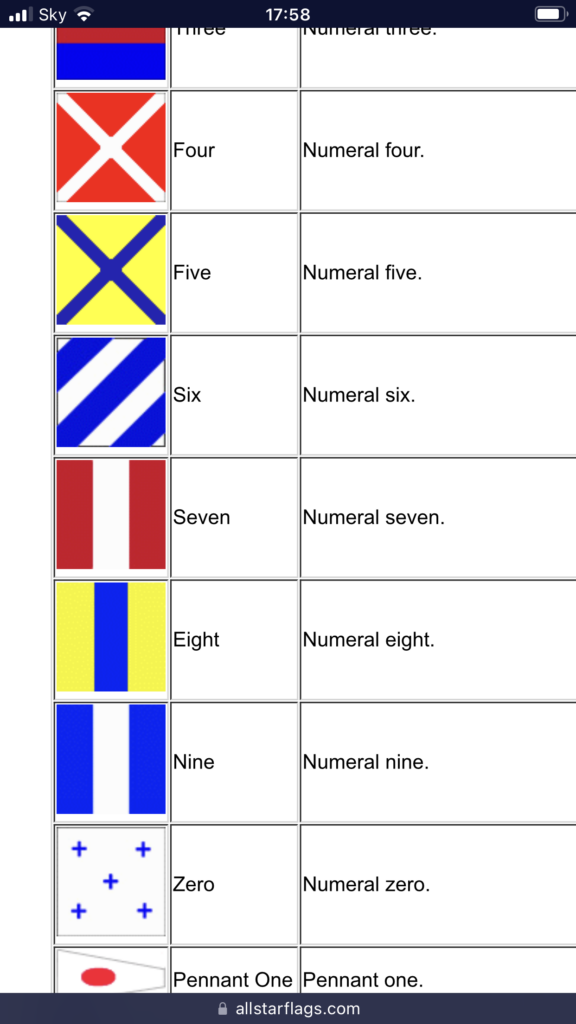
I have asked ‘the barge world’ about this but nothing came from it. However, I have since come across a world war two naval code of flags, of which I took a screen shot of a small section.
Section of WW2 naval code flags.
Below is the flag found by my parents – it is clearly a No.7!
So, were spritsail barges on regular runs between the east coast ports and the London River given coded flags?
I asked Rodney about this in an email. It would appear that there is no one left around who knows for certain. Rodney investigated the whereabouts of the records of the little ships of WW2 and as said in his book, it transpired that sometime in the 1950s the whole lot was destroyed – a wonton act of maritime vandalism, for sure!
The Sheermaun survived the war when so many little ships pressed into a service not built for did not. She has survived into this millennium and seems likely to make her centenary, not so many years away now.
In the tableaux of the vessel’s life there are so many little connections between people, events, and places that seem impossible, yet are true: Rodney painstakingly tracked them down. At times the connections are sad and thought provoking, others funny and light hearted…
Yes, a book for sailors. A book for those interested in history. A book for those who just like a damned good yarn…
Thank you again, Rodney…
One ask. It would be great if the Sheermaun could grace Queenborough , once a regular port of call 75 years ago, for a Classic Festival in the near future. Then I could visit!
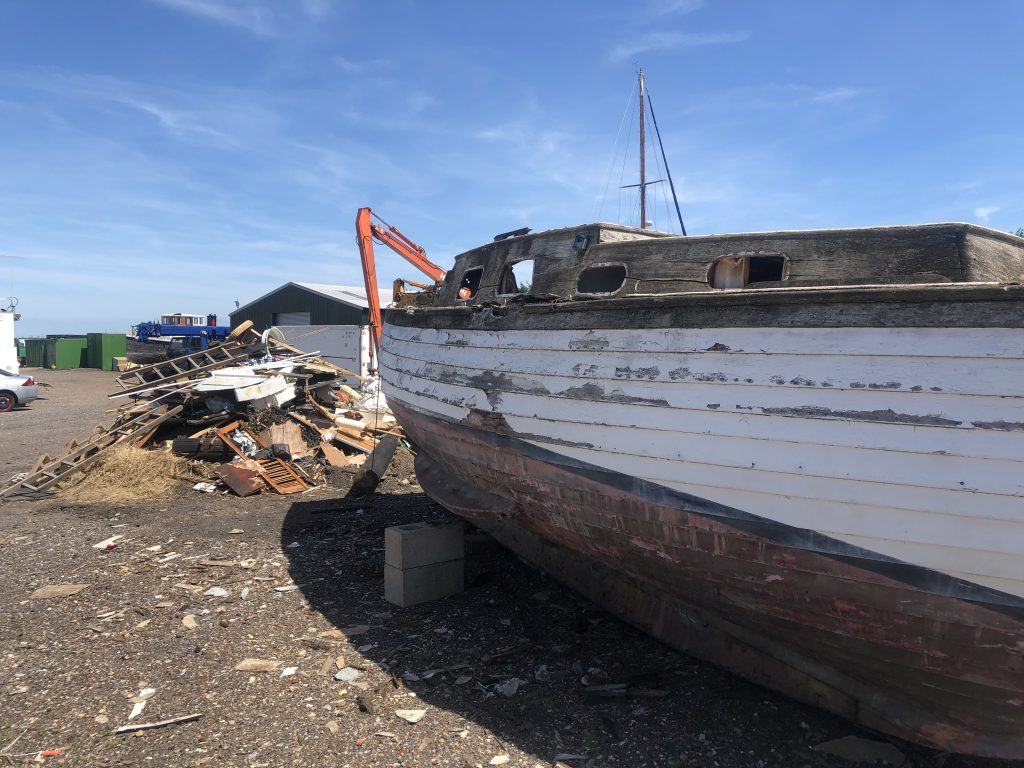
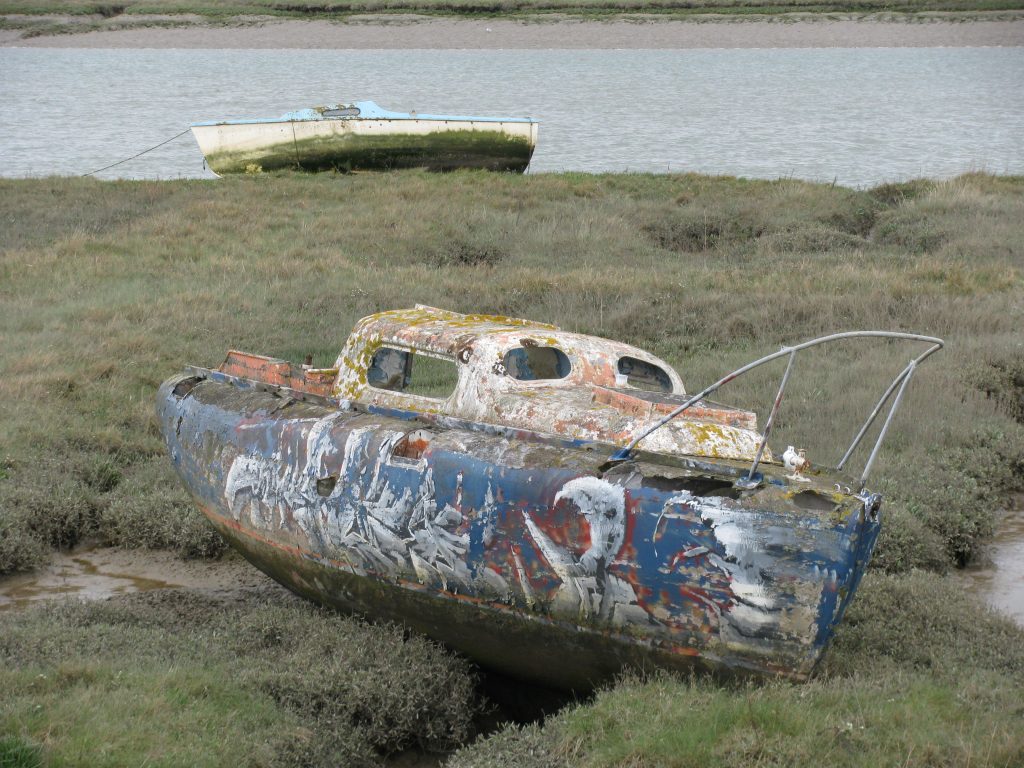
For at least two decades, if not longer, there has been increasing numbers of glass reinforced plastic (GRP) which have either been abandoned in ‘out of the way places’ or left on moorings until the vessel either sinks or breaks free and washes ashore to be wrecked. Vessels were increasingly abandoned in boatyards, clubs and other places too.
As a subscriber to news from ‘Leisure Marine’ I was pleased to see an article covering the problem and detailing a possible way to alleviate it too, by reclamation and reconstituting the product – GRP.
Allied to this I had heard of a BBC Wales programme about the increasing problem of the abandonment of craft around the Welsh river estuaries. This theme was also carried in a BBC West production too.
London, the East, Southeast and others not so, from evidence of a trawl of internet. All sailors, coastal walkers and environmentalist groups could have pointed in a myriad of directions.
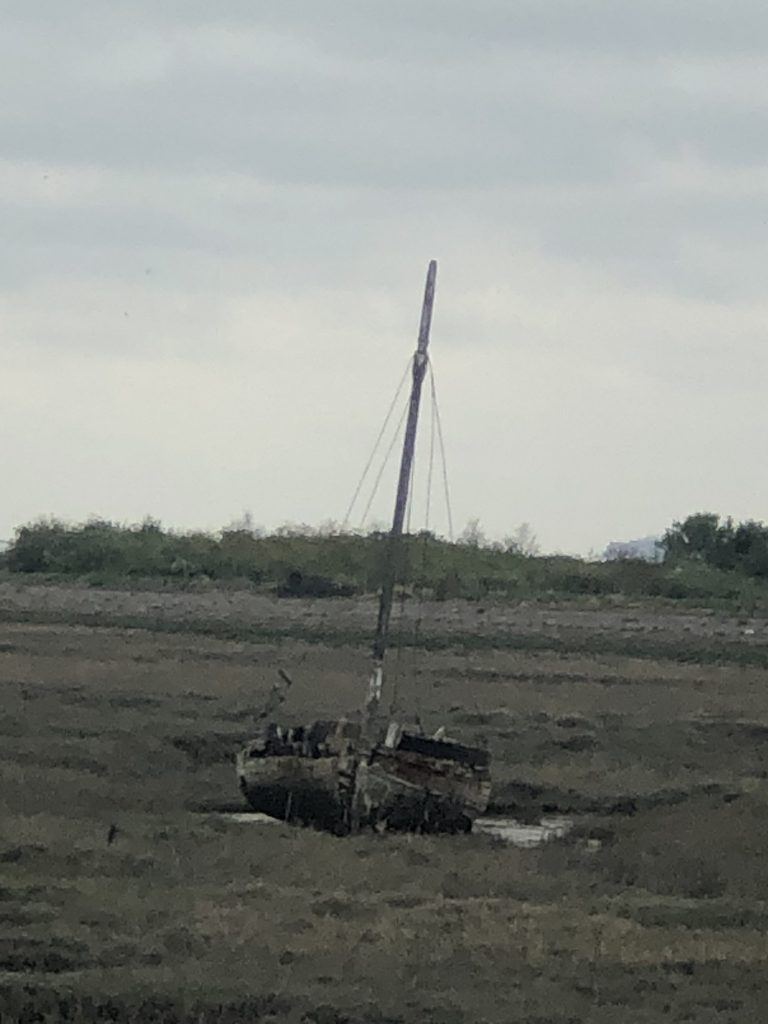
Locally, the Leigh-on-Sea saltings are dotted with abandoned vessels. One was set up as an art project – fine and dandy as that may have seemed, but its stem has torn out now ad the vessel’s mast is on the verge of collapse…
Hull of an old bawley placed in Leigh Saltings as an art piece.
The gist of the BBC Wales programme was along similar lines to what I have already written about. The BBC West programme home in more on the abandonment of old wooden vessels – fishing boat hulls – which still had antifouling present on their bottoms. The report stated tat TBT (Tri-butyl-tin) was found. Now that compound was discontinued and banned years ago…
That aside, wooden craft in the main provide a home for a myriad of marine life and perches for birds and even feeding stations. Eventually, the hulls decay returning organic compound back to source. Bottoms disappear into the mire and rot more slowly.
Of course, GRP is a totally different kettle of fish. Rotting is almost timeless, and here is the problem…
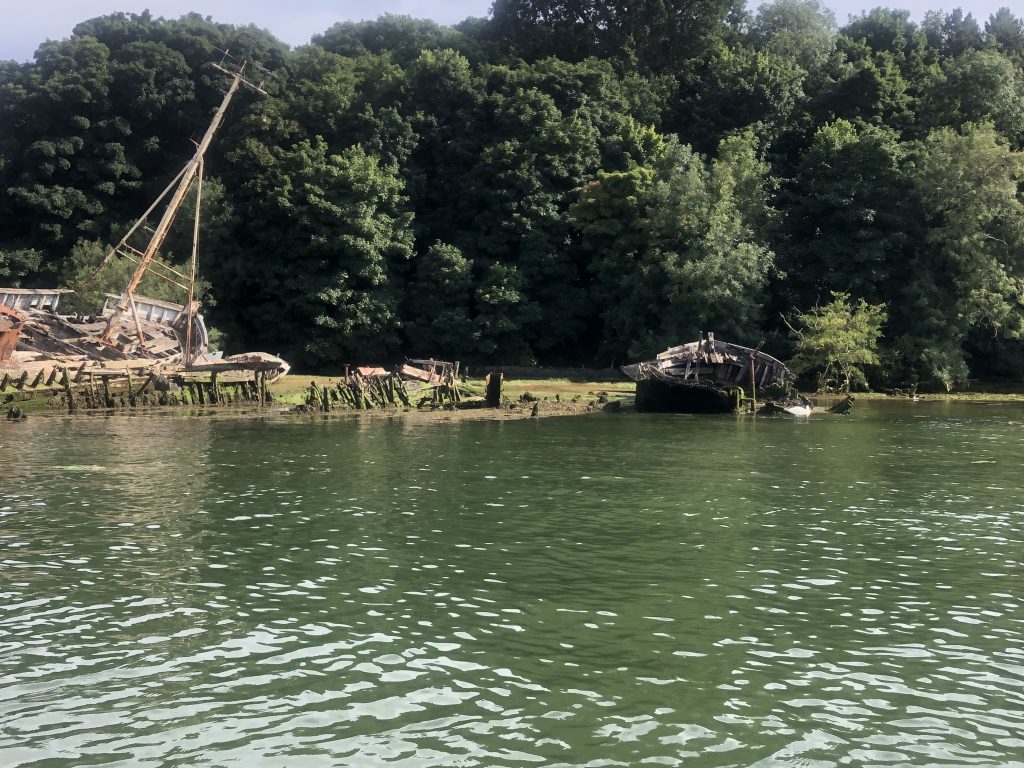
The foreshore under the National Trust woods downstream of Pin Mill Hard. Old Thames barges and other craft rotting away slowly. They were placed here to consolidate the foreshore to protect woods from sea attack… Steel mast and wheelhouse should have been removed from old fishing boat!
In the yard at Titchmarsh there has been a plethora of old vessels suffering neglect and abandonment. The proprietors have spent time and money stripping old wooden craft, breaking and burning them. Whilst a GRP boat can be stripped, it cannot be burnt!
Awaiting her final ignominy…
Wooden hulls can be easily, if expensively, stripped of metals and non burnable products and be cut up and burnt. This is not the case, other than stripping, for GRP hulls. Landfill has been the only option.
Two abandoned GRP vessels in a patch of saltings up Paglesham Creek. Another lay sunk just to the right.
So, what is to be done.
Well, a British company – consortium – has come up with what they believe to be workable solutions. It is described as ‘high-level composite waste processing, recycling and reuse’ as described by James SAcott-Anderson of Blue Composites.
Apparently in 2019 it has been estimated that £29 million was spent on commercial landfill of marine waste – boats! Something largely unacceptable, surely…
The company is running a investigative programme with Plymouth University to break GRP back down to its composite components and reuse the separated products in ‘new’ GRP… It has been termed Deecom technology.
Scott Bader are in on the game – a company we all know as producers of the stuff we either have boats made from or use in repairs, etc.
Kevin Mathews, CEO at Scott Bader said in the Leisure Marine article the process ‘…separates everything out – so you get fibres, gelcoat, glue and resins.’ It is believed that much of the ‘regained’ material can be reused.
The success of this system could be the answer to End of Life control of what happens to unwanted GRP craft, and other products.
A solution needs to be found: an EU Commission recently found that up to 130,000 recreational craft across Europe (probably includes the UK of GB & NI too…) reach end of life each year. Staggering, but probably why we all see so many abandoned craft…
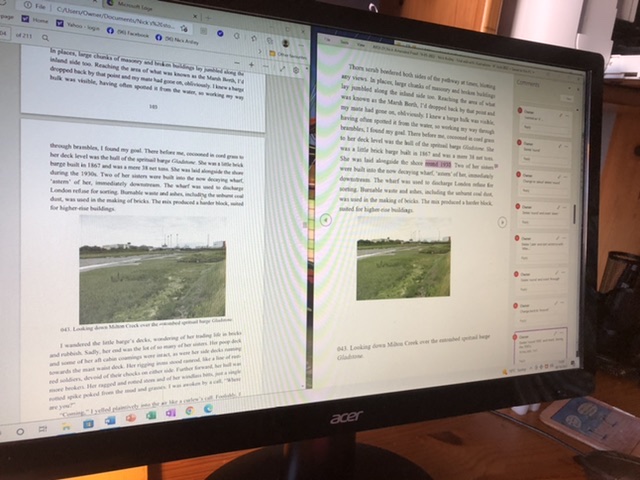
The document arrived yesterday – 6th October 2022 – and after down loading, it did not take long to run through what I asked for and see that all was well. Layout looks good too…
A page being cross referenced between edited on lhs and highlighted correction on the…
There were a few minor ‘house’ things I picked up on the way through…
There was a little fun too!
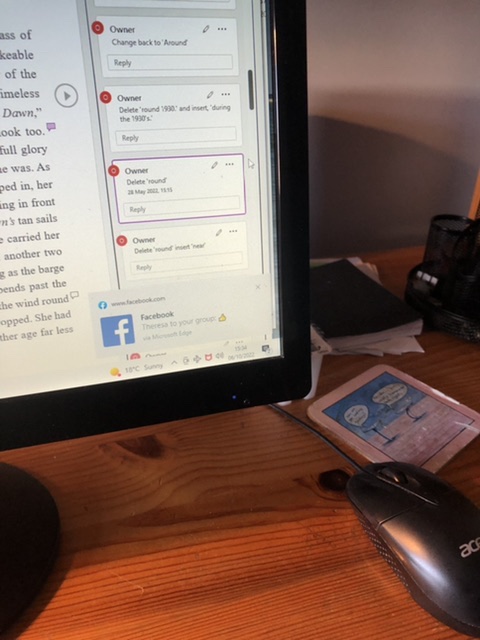
I was busy working away and a flourish of family messenger mail cascaded through blocking the corrections message bar!
I did send a message saying ‘go away…’ but it didn’t work.
So, the project is moving on which pleases me greatly for I was becoming a wee bit fractious.
The content has been cleared fitted for publication. Good news for a chapter deals with sailing in covid times.
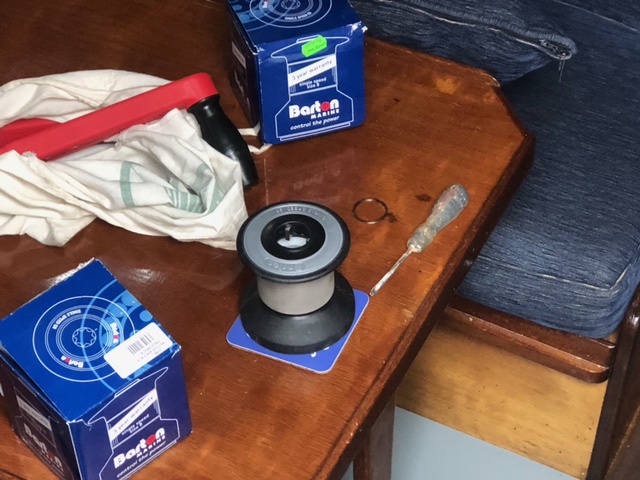
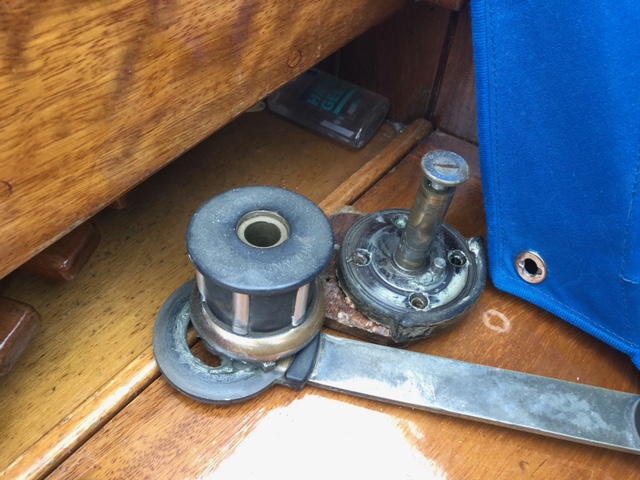
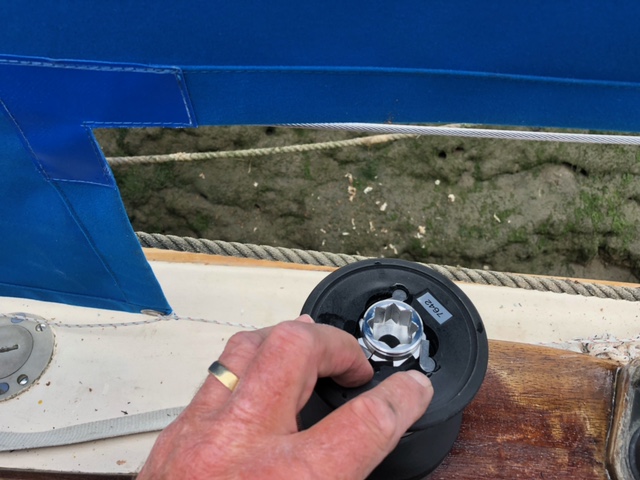
Both sheet winches aboard Whimbrel were opened out, cleaned and re-greased earlier in the year. I found a couple of the springs to be worn and replaced from spares obtained from Barton years ago.
Whimbrel’s as fitted at build – thirty-nine years ago – bottom action sheet winches manufactured by Barton.
That was when trying to obtain a set of pawls! Barton had stopped manufacture of the bottom action winches, but I was sent a clutch of springs ‘found in a drawer’ by a chap who responded to my enquiry!
So, I made up two sets of pawls – 4 – one set to use and a spare set.
During the season, the retaining screw on my port winch came loose whilst tacking into the Medway and West Swale. The winch jammed as we were making the last tack. Sails were doused and we motored the short distance to a mooring where the fault was rectified!
Later, the starboard winch jammed. Taking it apart I found one of the pawls and its spring had failed. My spare set was fitted…
The mate and I decided that, with the general wear of the shafts, it was time for new winches…
Barton winches were chosen and ordered with a set of ‘floating’ handles!
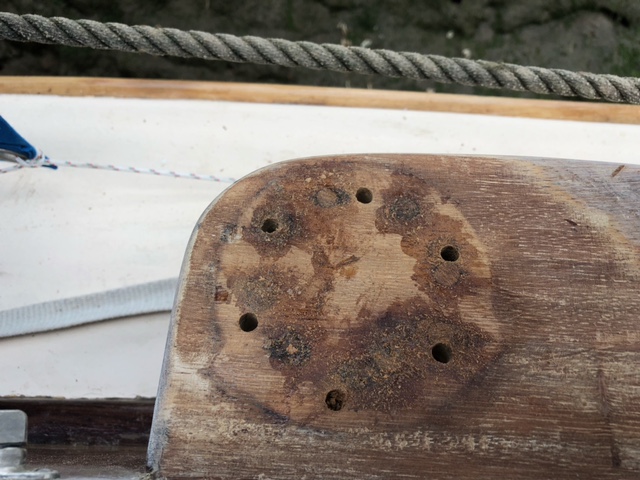
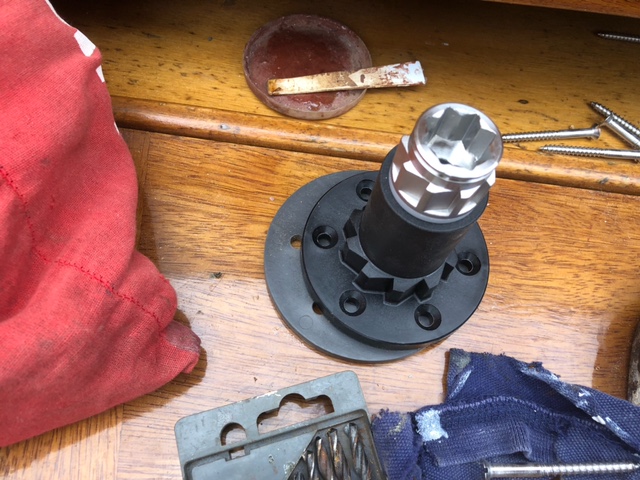
New Barton winches – barrel retaining spring clip removed.Old winch removal…Securing screw holes for old plugged, new holes drilled and seat sanded ready for varnishing.
The new winches are held together by a spring clip on the top which is easy to remove but more fiddly to fit. When removed the barrel and roller nit lifts off.
Winch base and shaft unit ready to be secured.Base unit secured.
The winches came with a backing plate for securing through a substrate of fibre glass for example. I used these to act as pads which lifts the winch clear of seating chock varnish work.
Engaging the upper pawls before fitting the top covers and spring clip.
All that was needed after fitting was a sea test.
The ‘boy’ came out for a sail with his ol’ dad and I had a bit of a play whilst the boat was tacked about…
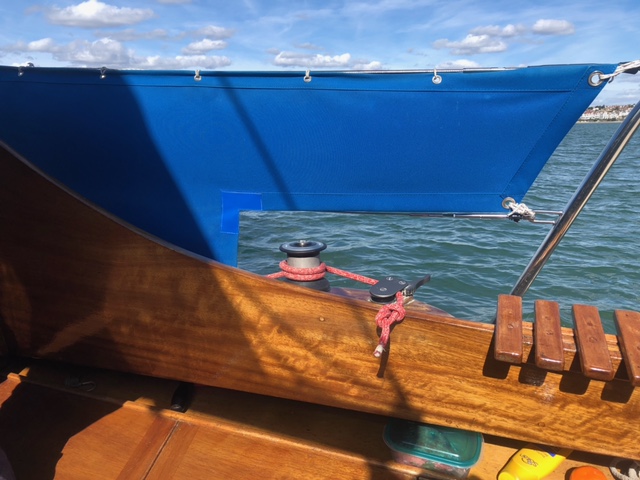
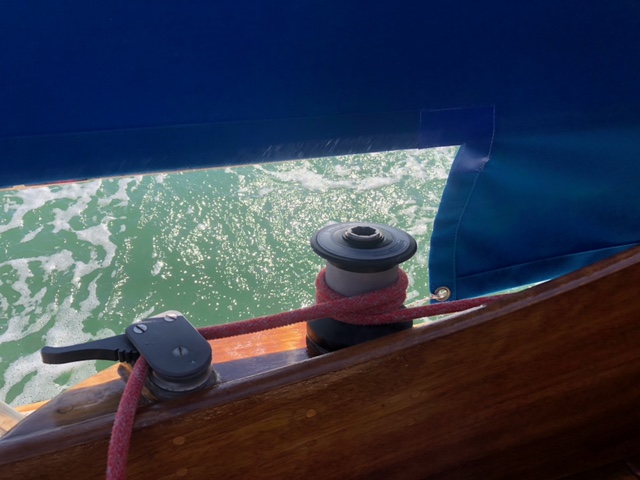
On the starboard side the lead is ‘correct’ in that the sheet tail feeds into the roller cleat. Note the winch handle under side deck… Two turns on the barrel did not cause jamming or over ride.On the port winch, the sheet tail comes off the inside and doesn’t ‘look’ right…
As the winches are not handed, the sheet tails come off on the barrel’s outside to starboard and inside to port.
Operationally, it did not seem to matter a great deal, unlike running sheet onto the port barrel, as the boy found out … commenting, ‘forty years of practice out the window…!’
I too had a ‘moment’ when reaching for the handle of a bottom action winch to tweak a sheet…
We’ll all get used to the change in time!
The winches have an optional self tailing device if desired. I’ve not gone for these.
The roller cleats need renewal too, however, with similar or traditional clam cleats as my neighbour’s Finesse 24 (Gypsy) has, I have yet to decide…
The Southampton International Boat Show is currently on.
The impression I get from the media razzmatazz surrounding this event is ‘Goody, let us flog more £100K starter boats to awe-struck punters…’
There are of course definite signs of a greater interest in environmentally friendly craft, especially on the power side. However, like the grandiose ‘starter’ boats always ‘flogged’ to the punter, these are very expensive.
There is an alternative to all of this if a punter wants to begin his or her passage into ‘boating’ in an affordable way and that is the second hand market.
Boatyards and yacht clubs are stuffed with decent vessels which can currently be purchased for a song. These craft, both power and sailing, are so often bypassed. It is a great shame for they could provide that inexpensive gateway into the sport, past-time even, without that £100K price tag…
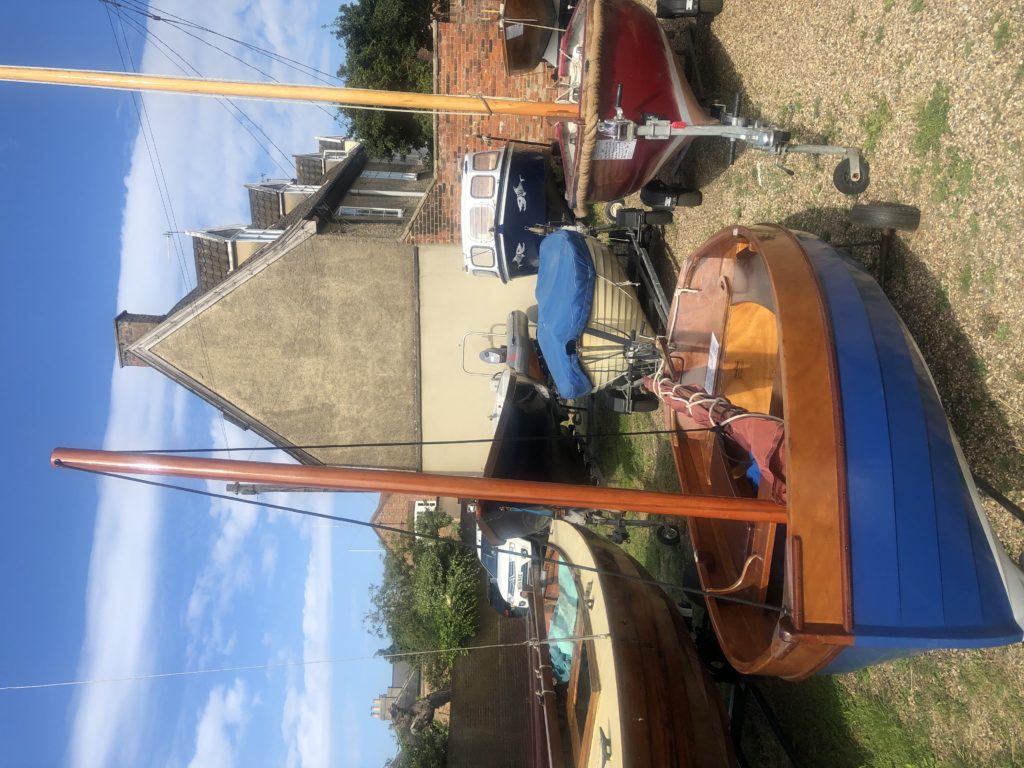
A pretty selection of dinghies and day boats…
I have mentioned Andy Seedhouse before. This outfit is based in Woodbridge, Suffolk, up on the River Deben.
There is an eclectic array of small motor and sailing craft in his yard, begging for a loving home. All would make great starter packages – even for that first year or two, before going forward into the sport with a larger more expensive craft.
If it wasn’t the person’s cup of tea then no great expense has been coughed up and in all probability it would sell again.
Sitting in a yard waiting for a new owner. She doesn’t look very good, but a pressure washer would bring her back. A bit of polish and varnish stain to woodwork and she’d be pretty again…
So often, with glazed eyes, a chap (usually) takes his family to a boat show. The family all go gooey eyed down below while the man twiddles knobs on an ‘instrument stack’ next to a shiny steering wheel and is hooked.
Within the first owning season, an expensive boat begins its sterile static life gathering weed in an expensive marina gobbling up family reserves.
No bigger than my Finesse 24, with second-hand boats needing work available for a ‘pittance’ but these retail new in the £100K region. Bloody madness! Note that Verdigris is well established. Woodwork has deteriorated Sad.
Let us all be totally honest: how often have you walked past a modern boat, covers, decks and ropes going green, and wondered about her?
I do. It makes me so sad.
Oh, yes, what was that opening ceremony all about with some chap flying on a hose cutting the ribbon…
It is now nearly three months since I was promised a response by the Royal Yachting Association to my investigations around the difficulty in obtaining bottled gas.
Enquiries wherever we went where gas was normally available was mixed. On the whole the smaller bottle sizes were difficult to obtain including a mid range bottle of 7 kg too (next size up from the 3.9/4.5 kg).
There was no outlet that had refills of the 3.9 kg propane and the 4.5 Kg butane – thank goodness we sorted ourselves out prior to leaving base!
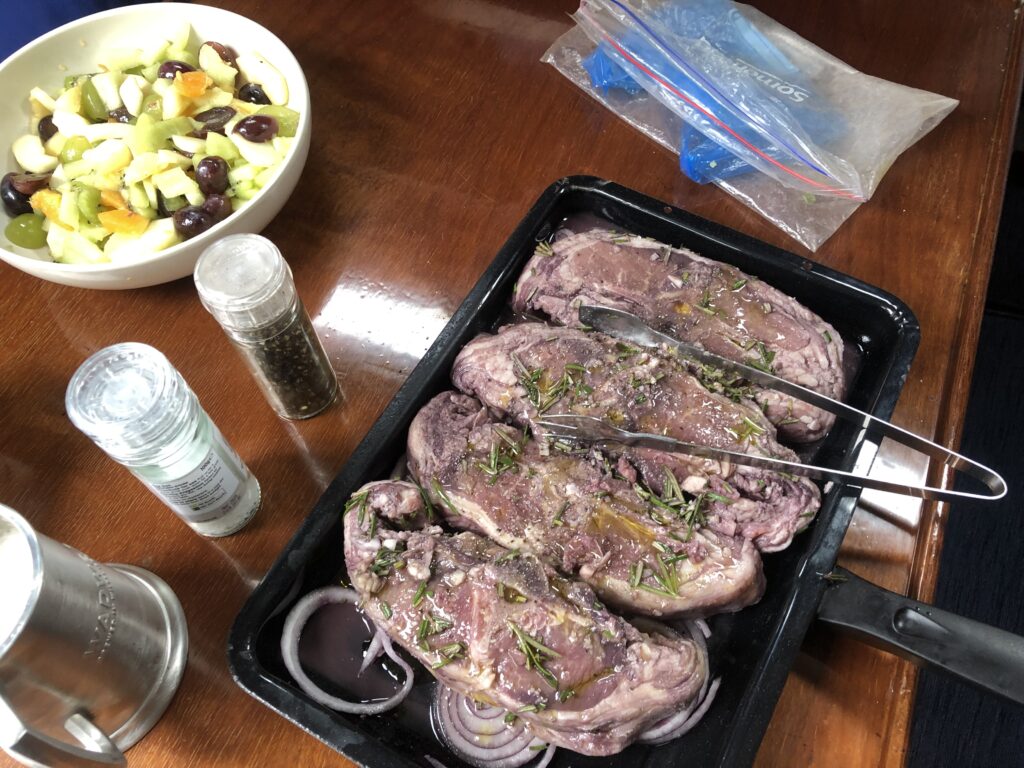
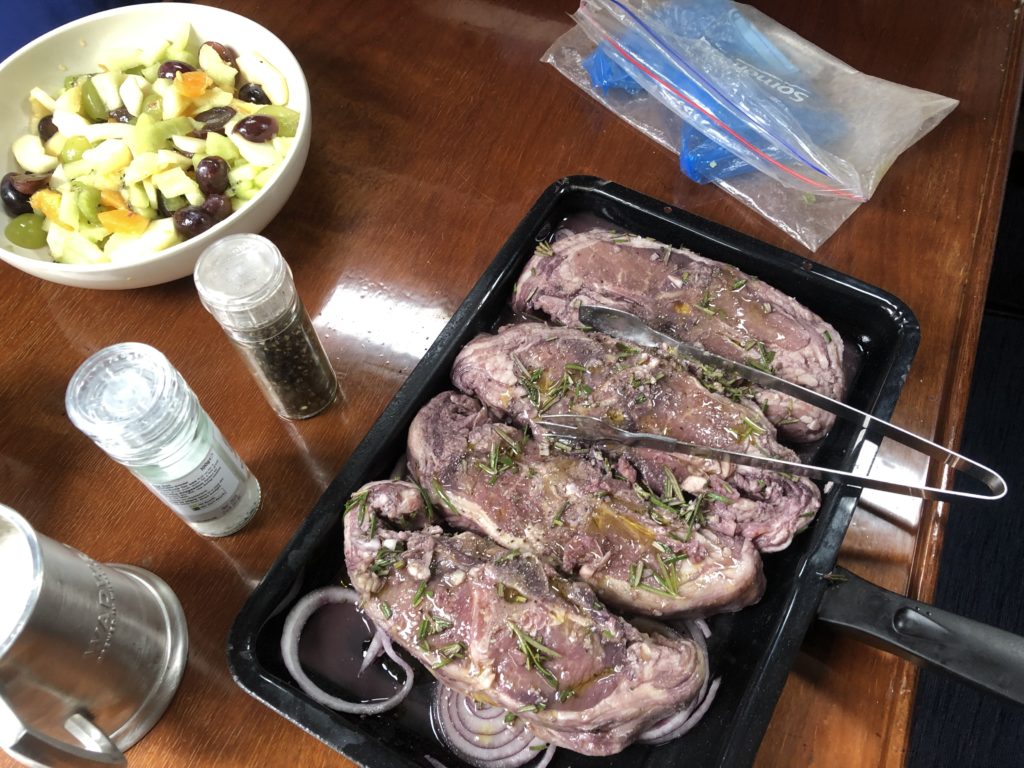
We cooked more often this year than last – marinated Barnsley chops for a hungry crew!
We felt safe in getting back to a more normal level of decently cooked grub cooked aboard this season again. We id eat ashore more than usual but only where we knew the quality was acceptable: last year we had some pretty mediocre and moderately expensive offerings…
With a return to base mid summer, we were able to replenish our gas from home, knowing a certain supplier…
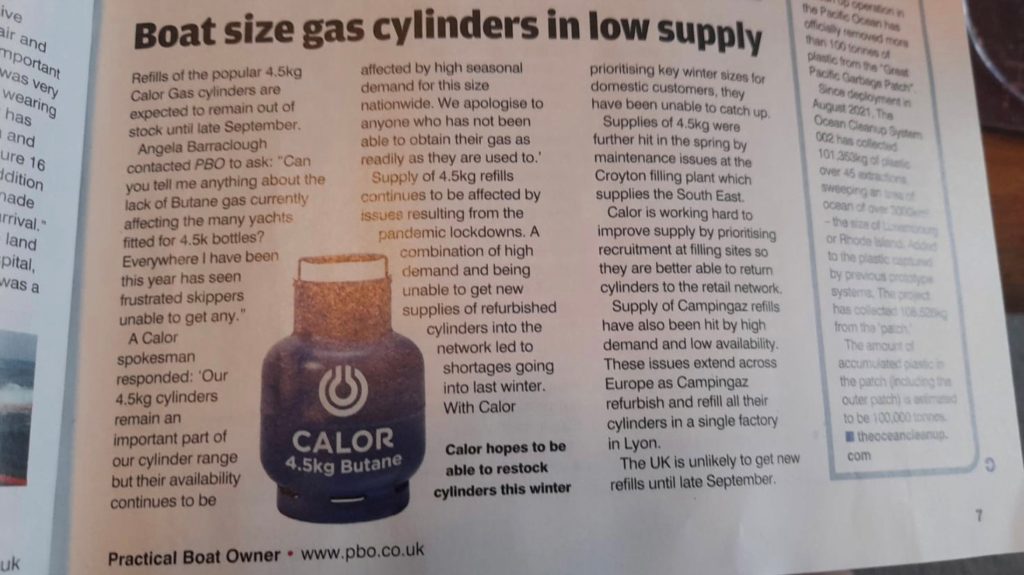
I was surprised to be sent copy of a letter response in Practical Boat Owner (September 2022) in which a lady asked the questions most of us have been asking.
Practical Boat Owner did not really answer the question – seeming to me to be biased towards the industry excuses…
However, here it is:
Courtesy of Practical Boat Owner – September 2022
Hope for next year?
Wouldn’t it be nice to be able to replenish with the ease of those ‘pre-covid’ days…
I wasn’t aware that Bill Turnbull was suffering from prostate cancer when I began my investigative journey which led soon after to a diagnosis that shook me to the core.
It was a BBC R4 Breakfast programme that jolted me into action. That was not so long after Bill’s diagnosis, which ultimately claimed his life…
Bill died this week.
Rest in Peace, Bill.
For me it was a reminder of the ‘escape’ I made by my demand for a test. Bill, on the other hand in an interview said he’s had a test at age of forty, then fifty, then for an unknown reason not again until he was in pain – in his back, dating to his years of lugging heavy reporting apparatus, so he took pain killers and dismissed it…
As he said, it was a bad move for when eventually when getting on for sixty-two he visited his doctor, a psa test showed a high number. It was bad news.
Bill battled and campaigned. Thank you Bill: their are many in the media industry who haven’t ‘shouted’ about it and should have done for men take notice of a favourite pop star, etc…
When I was undergoing my initial tests I was preparing for an Essex Book Festival talk. That was during early February for a March date.
A winter wonderland in February 2018…
I’d had my first prostate specific antigen test which was ‘high’ but the doctor at my surgery said was nothing to worry about. I was called for a further test: the hospital were by then activated. They weren’t happy … for damned good reason too as it turned out!
Strangely, I am in the end game of the editing of my next work, which has been a longer drawn out process with my new publisher than with previous, however, I am assured all is well and my review of final changes is close.
It would be nice to think that the Essex Book Festival organisers will be interested in a ‘re run’ in 2023 – book event that is, not my illness…
Delivering my festival talk…
This morning prostate cancer was being discussed on the BBC R4 Today programme by a presenter and various, including the oncologist who ‘dealt’ with Bill.
Here are a few current facts to digest:
One man dies every hour of prostate cancer in the UK…
Get tested.
The earlier the diagnosis, the greater chance of a ‘cure’…
Late diagnosis means a certain early death, still…
Men get by- passed by the system within the NHS, unlike women.
It is still a ‘Cinderella’ cancer…
So, in memory of Bill Turnbull, please, I am asking men to think about a test, then get it done. The NHS cannot say NO!
When one has had a near end of life experience, the joys and preciousness of life are sharpened: one is a very long time dead…
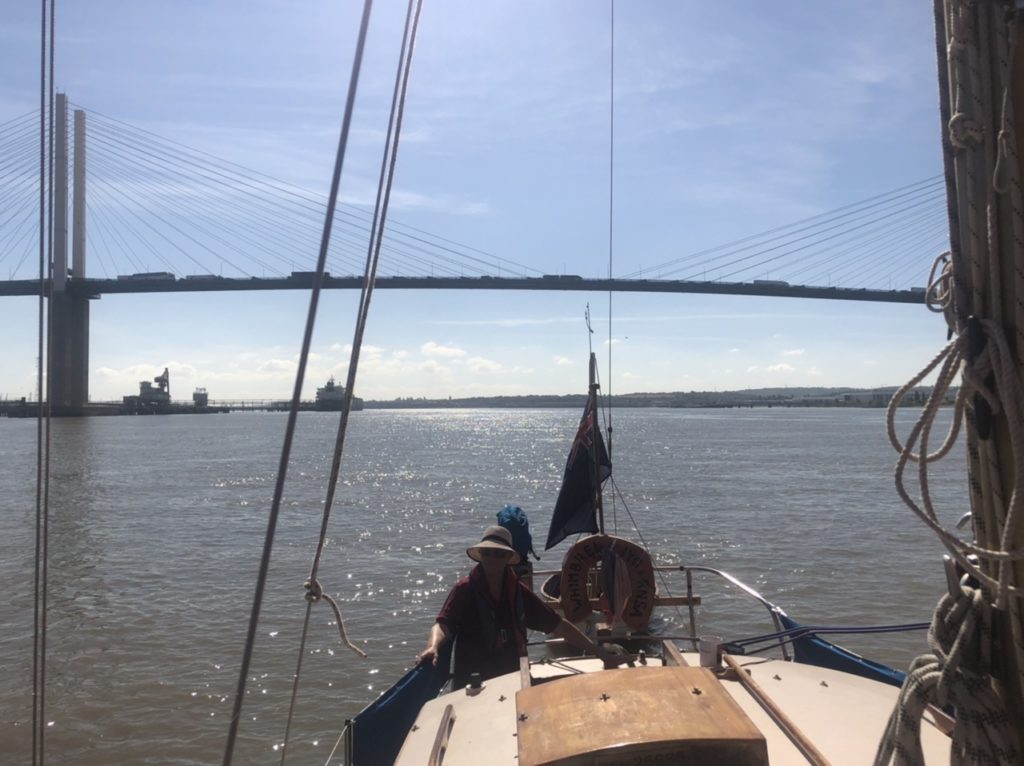
We set off from Queenborough on the West Swale early the other morning bound for Gravesend.
It was a quiet still morning n the harbour, but clearing Sheerness the sails were up and drawing nicely to a northerly – not the forecasted east-northeast!
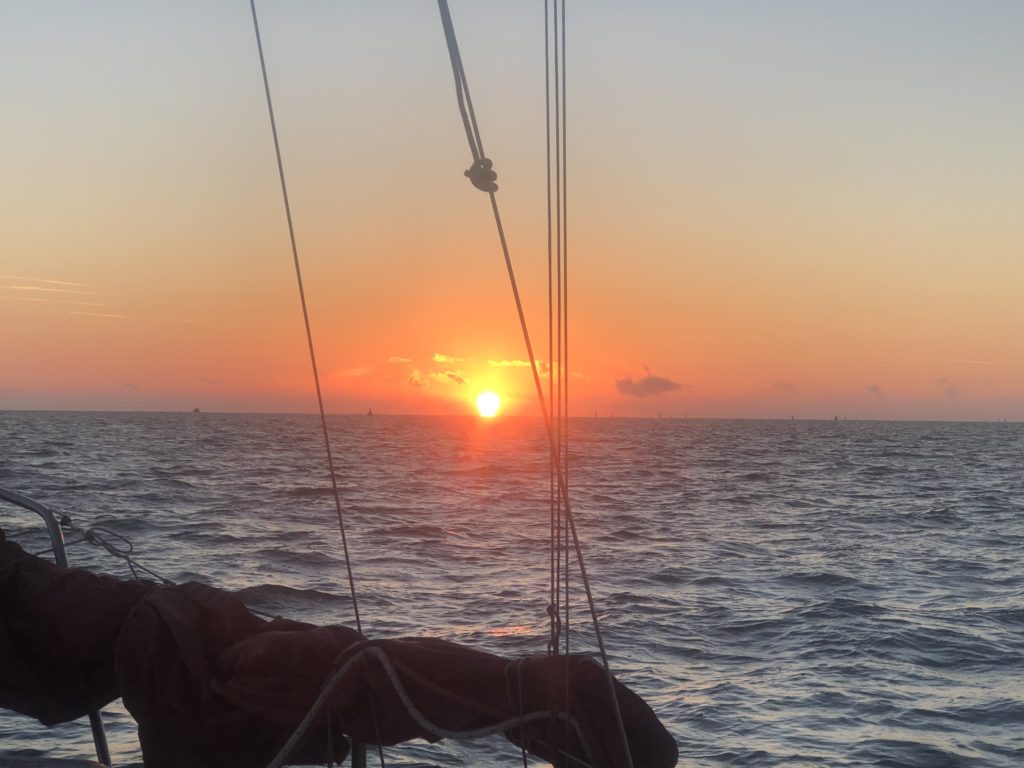
Sunrise…
We proceeded nicely up the Nore Swatch and passed the eastern end of Canvey Island.
Up the Nore…
After passing the East Blyth, we changed over and I went below for a wash and do the breakfast clearing up. The clearing up done, I set to with my ablutions…
I was half way through this without a stitch on when Christobel started the engine, saying something…
The something was drowned out by a tremendous crash with an unsavoury noise. I saw a buoy rush aft past the aft most port. We’d hit it a glancing blow.
I looked aft, the dinghy bounced off and we were clear. Below, I could see that water wasn’t rushing inboard, but what damage was there apart from my mate, who was in tears…
‘I got it wrong…’ she said, shedding more wetness.
‘I thought…’ she wailed.
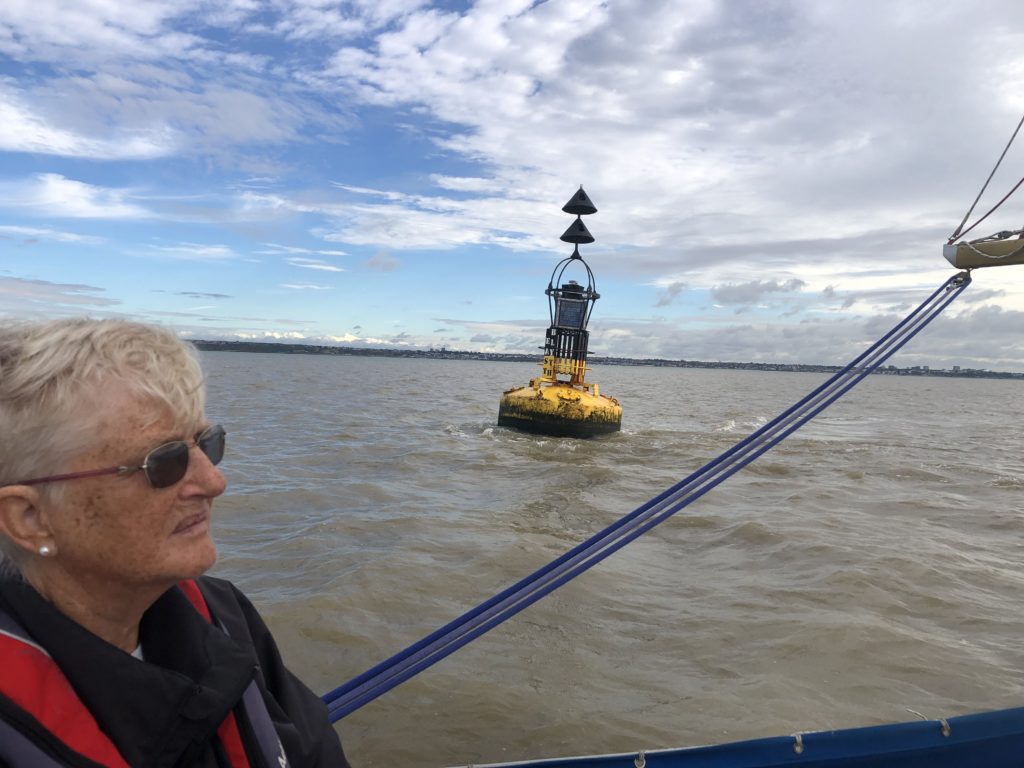
We’d ‘bounced’ the Mid Blyth Buoy – a bloody big bugger!
I am always saying to my helms to leave buoys well clear: I can remember my father ‘mating’ with several in my childhood on the engine-less spritsail barge May Flower.
‘Carry on please…’ I pleaded. I need to check below properly for damage. I was shaking from the shock…
Splintered paint covered the table and cushions from ‘deck stress’ apart from that there was nothing to see below. I pulled the berth cushions out and looked around. Dry. No water was leaking in…
Above deck the damage looked serious, at first!
Closer examination later showed we had ‘got away with it’ and there wasn’t a mark on the hull or rubbing band…
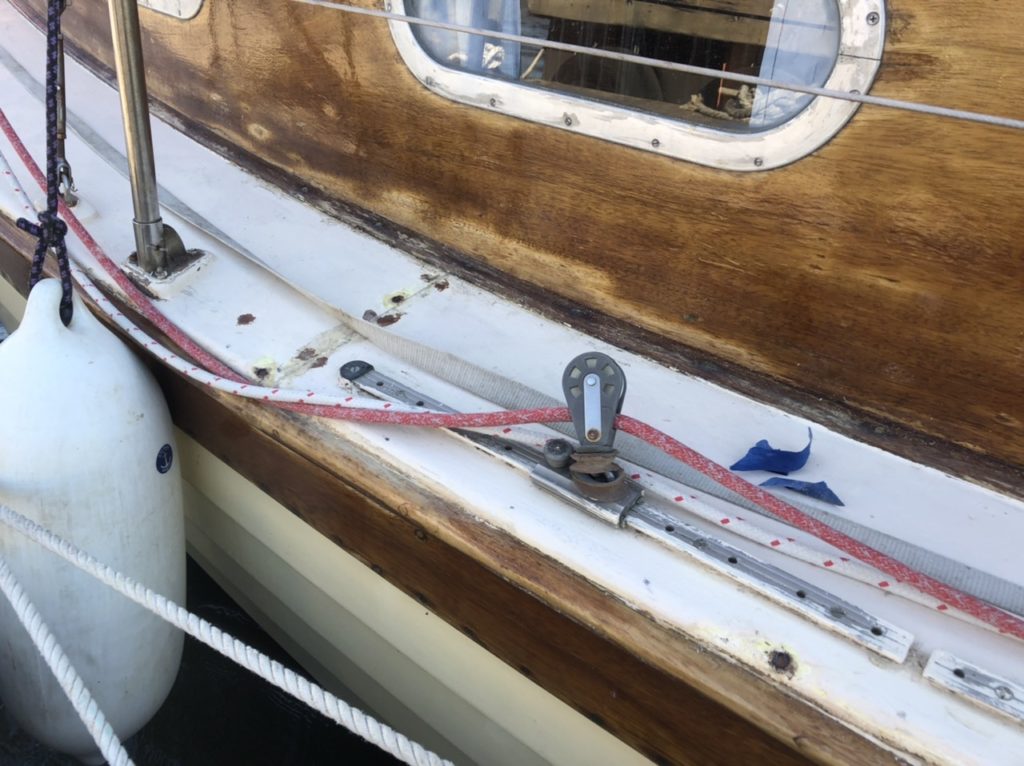
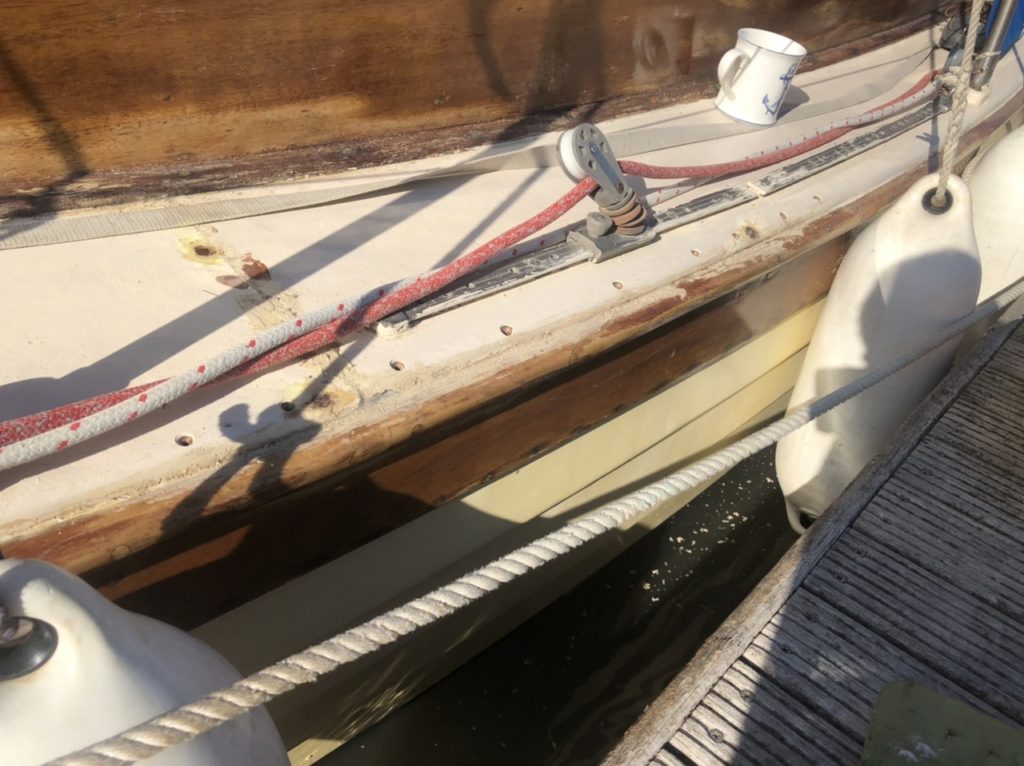
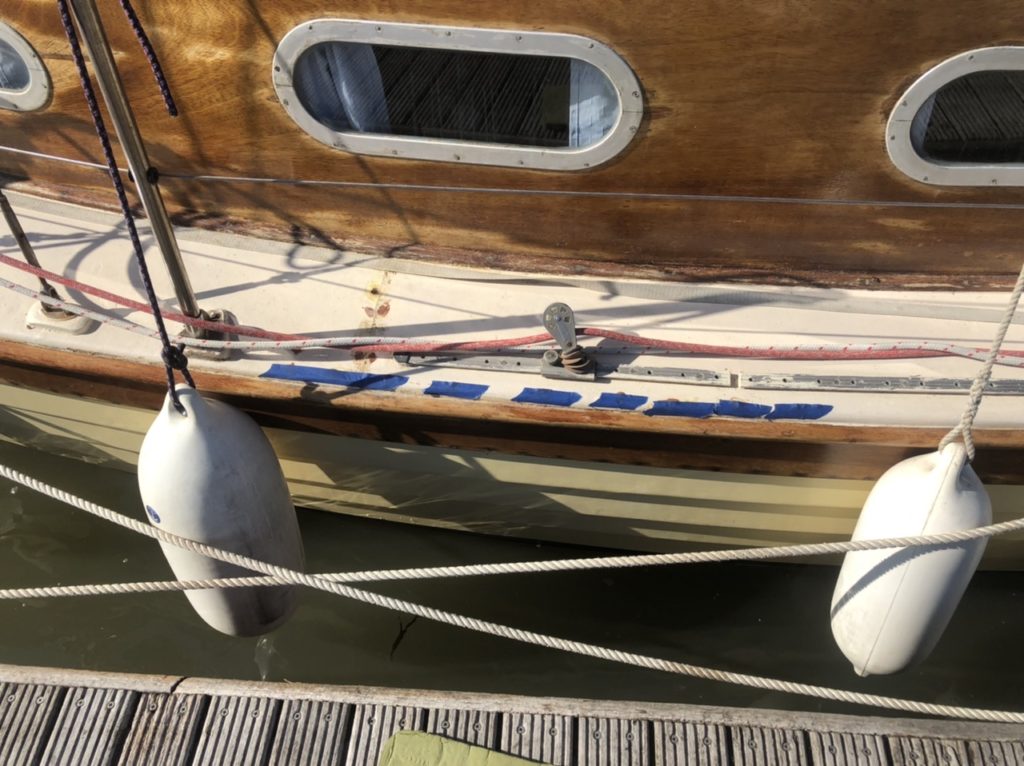
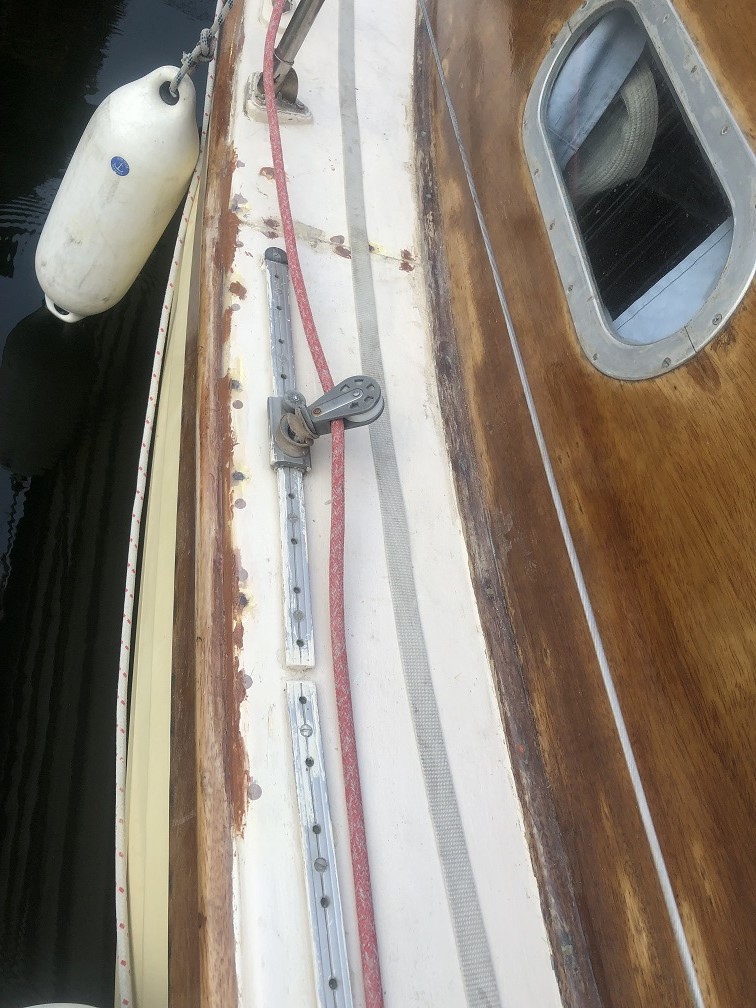
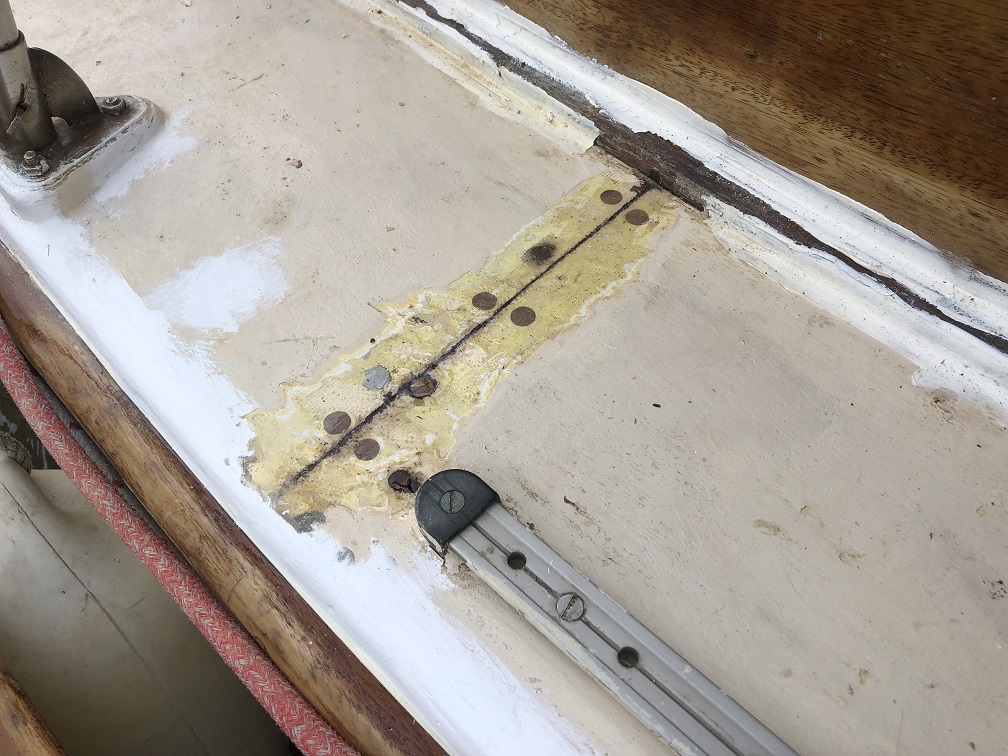
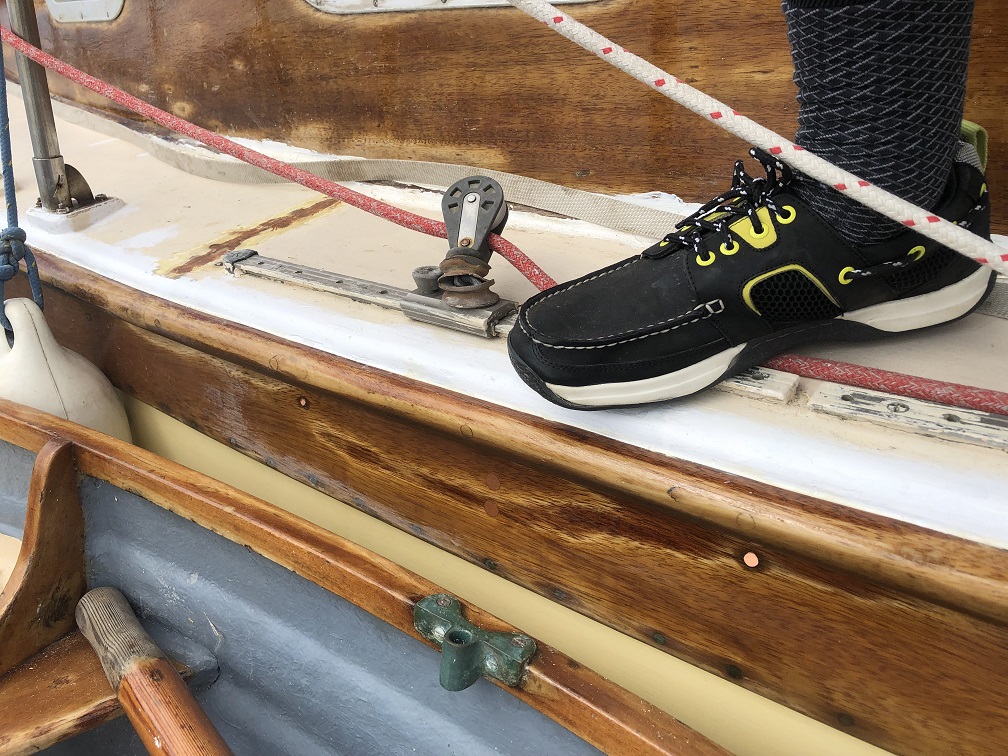
The deck edge was stressed and a join had opened with one side ‘popped’.
The deck damage…
Apart from the obvious, all looked sound, so we continued on our passage with the mate on the helm.
We did not discuss the ‘incident’ until moored at Gravesend – initially on a sailing club buoy before moving to alongside the Town Pier, which had been booked.
View of Whimbrel during our ‘court of inquiry’… over a glass or two!
At the ‘Court of Inquiry’ the Mate pronounced herself guilty as charged!
She’d got too close and then chose wrong way out… hey ho, cheers darling!
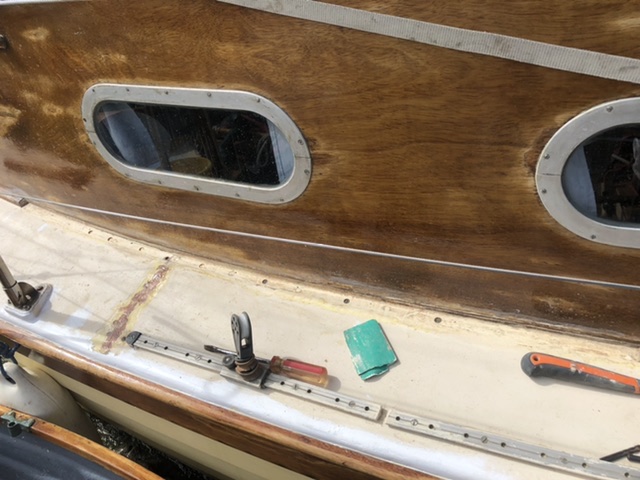
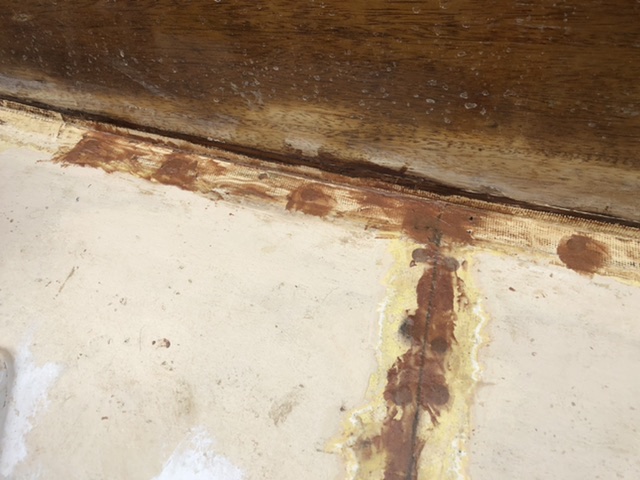
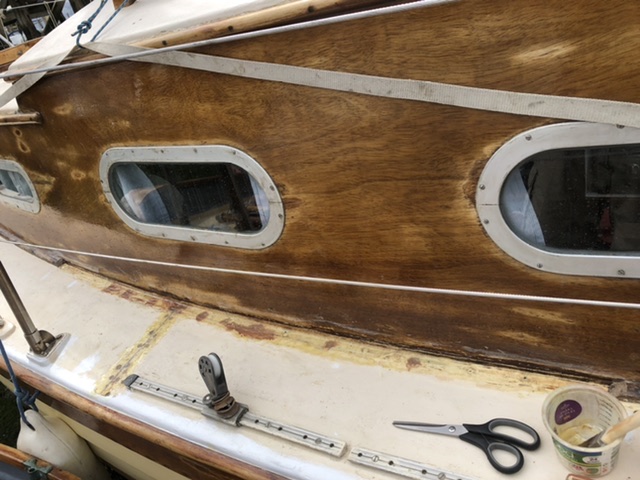
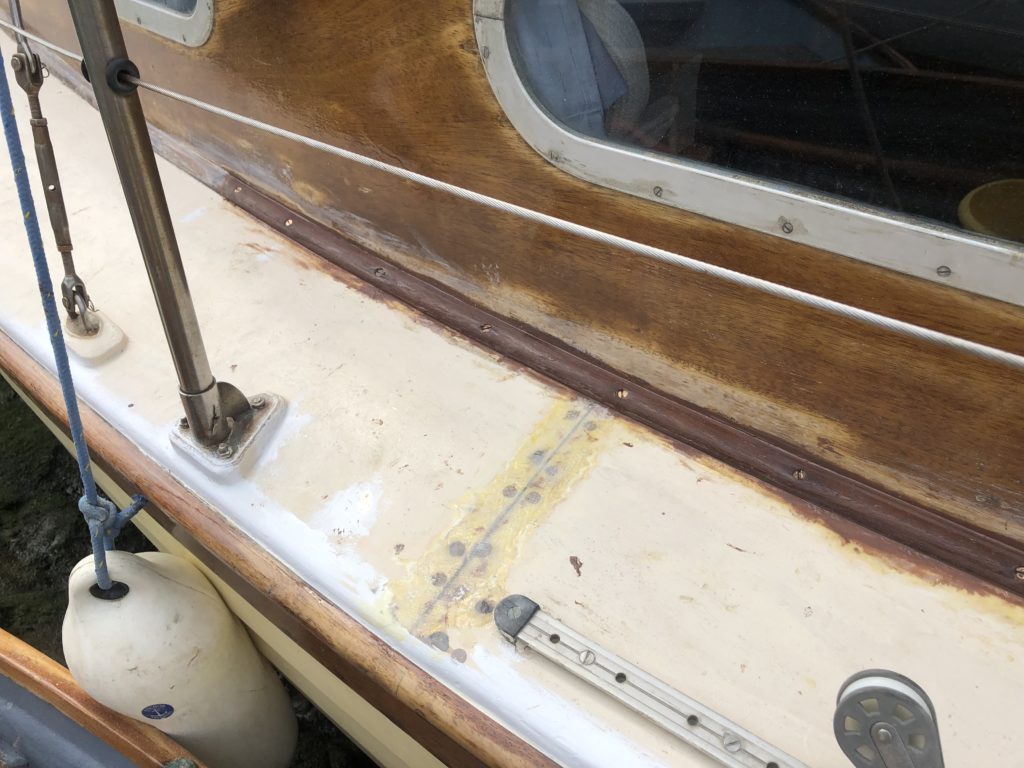
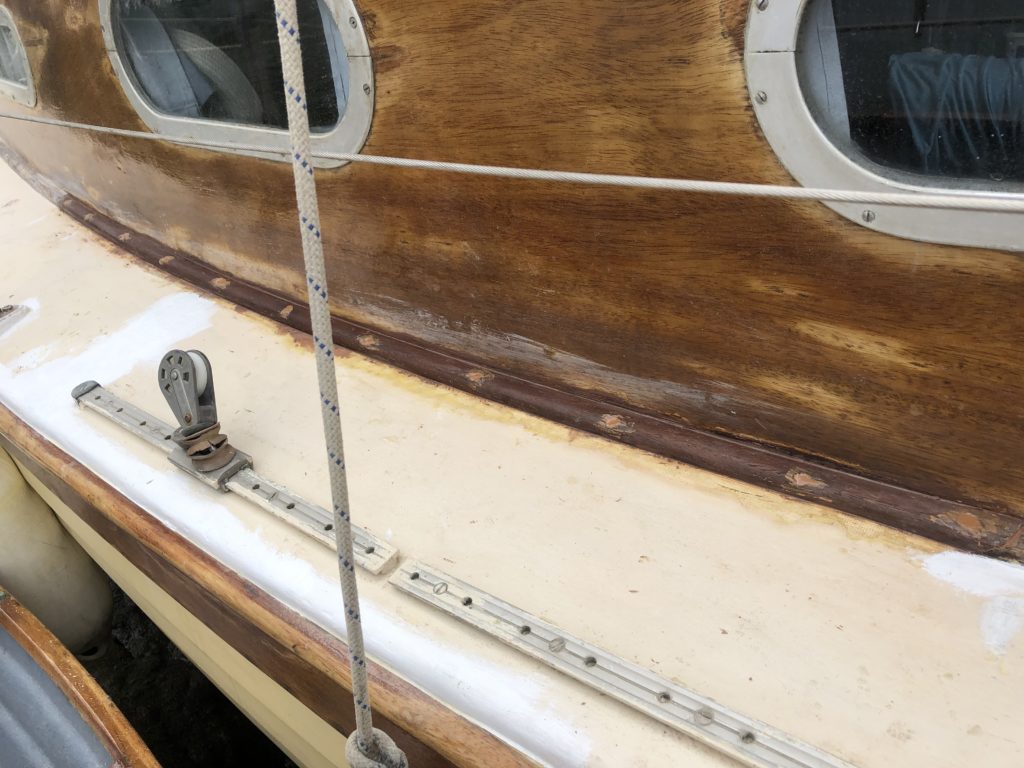
I had had a good look too. The cabin side beading has loosened and the deck edge lifted, with one deck join too.
The edges, join and beading were sealastic sealed … as a keep water out measure.
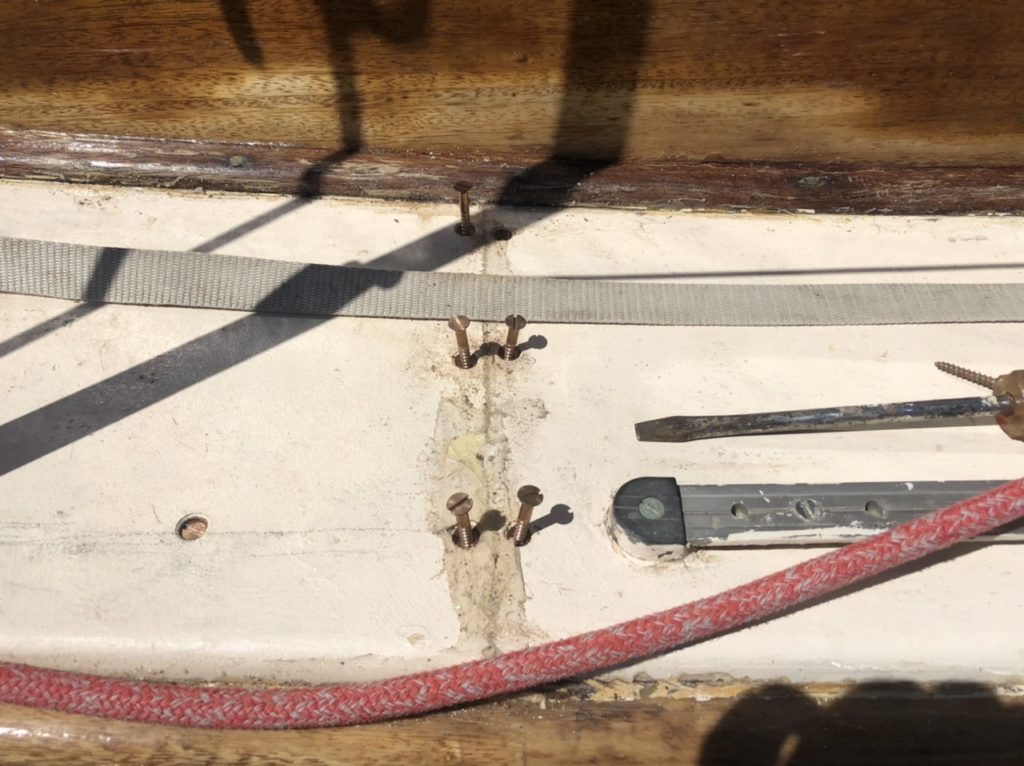
The join has been screw fastened which thankfully pulled the popped section down.
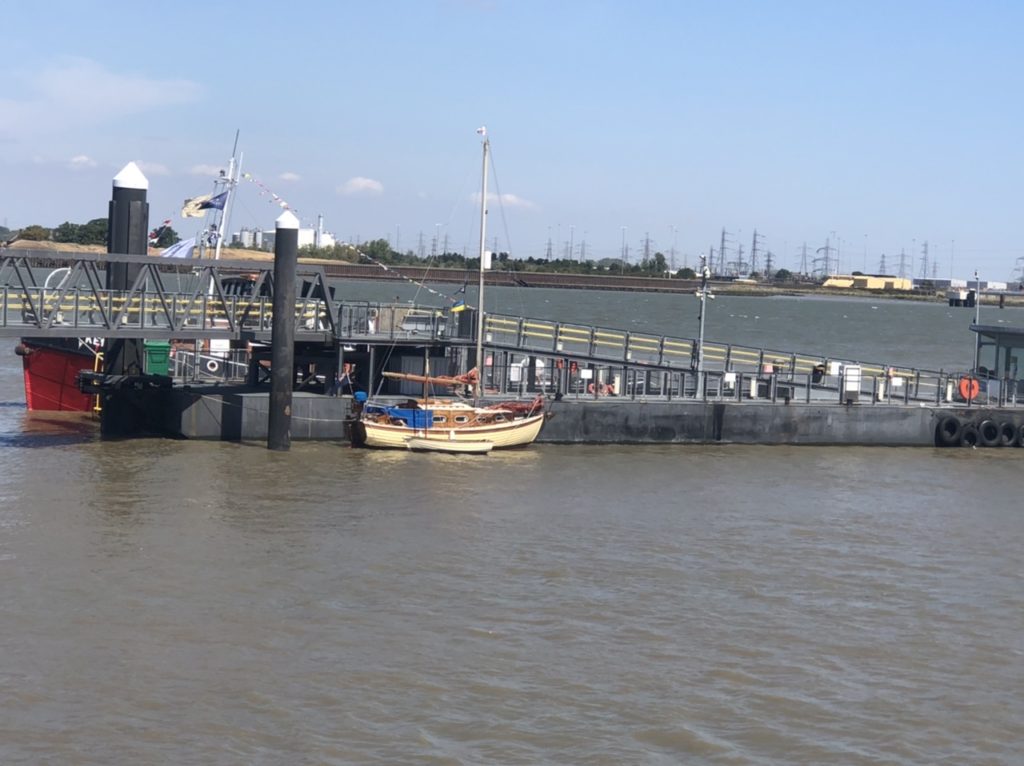
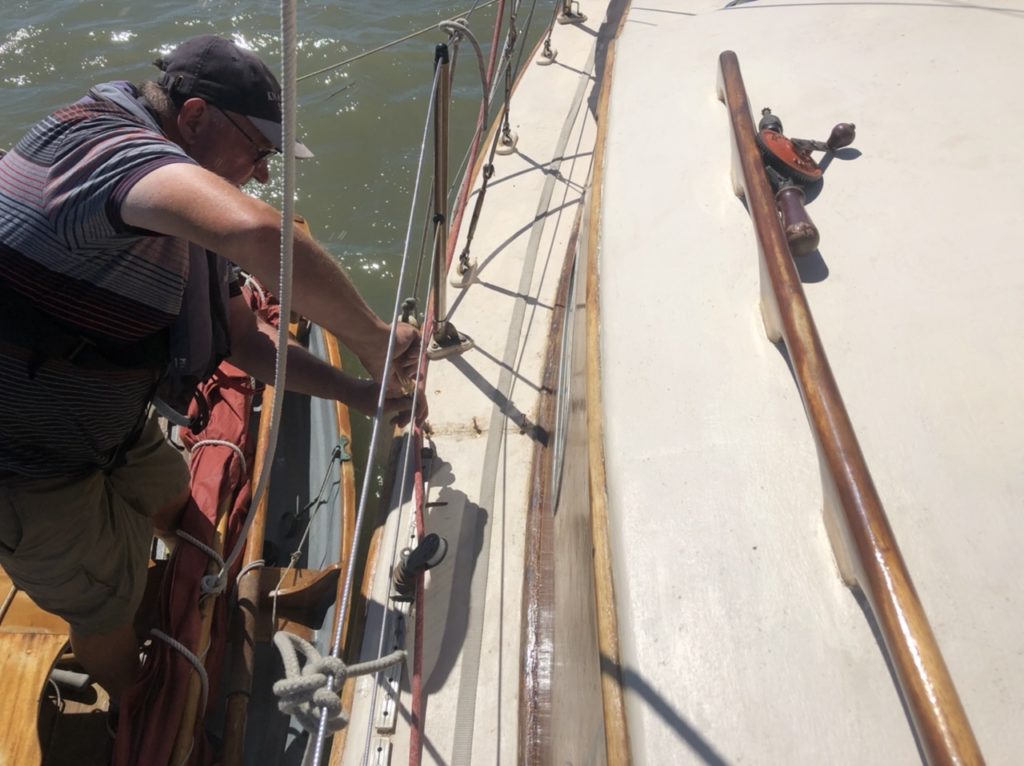
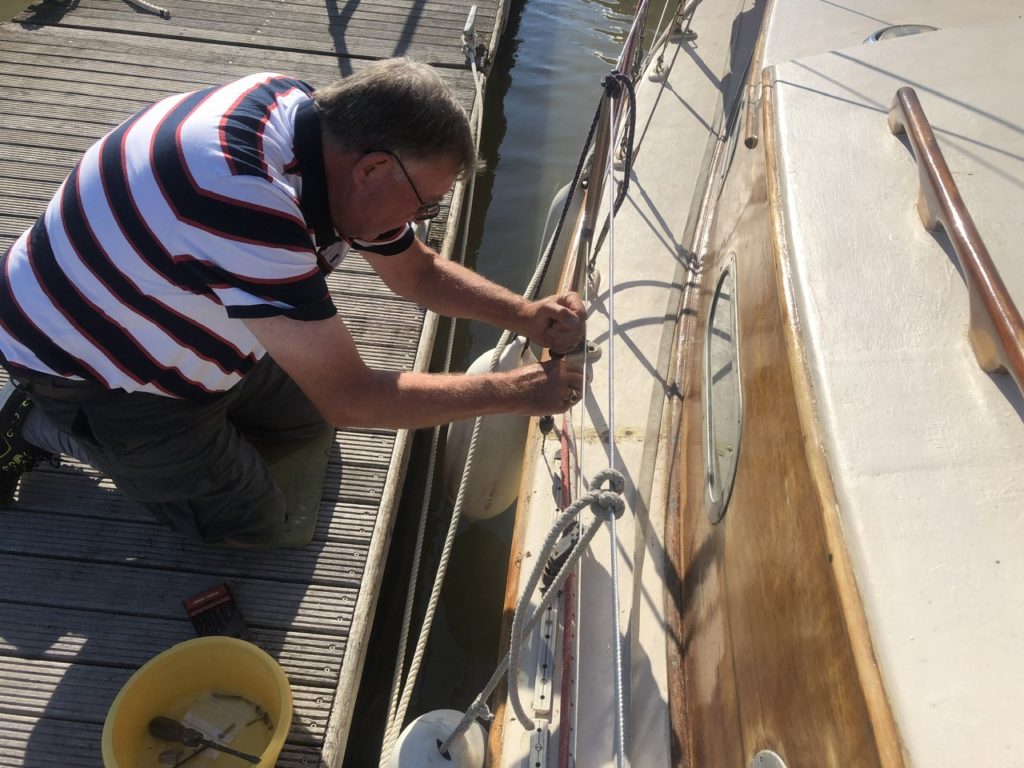
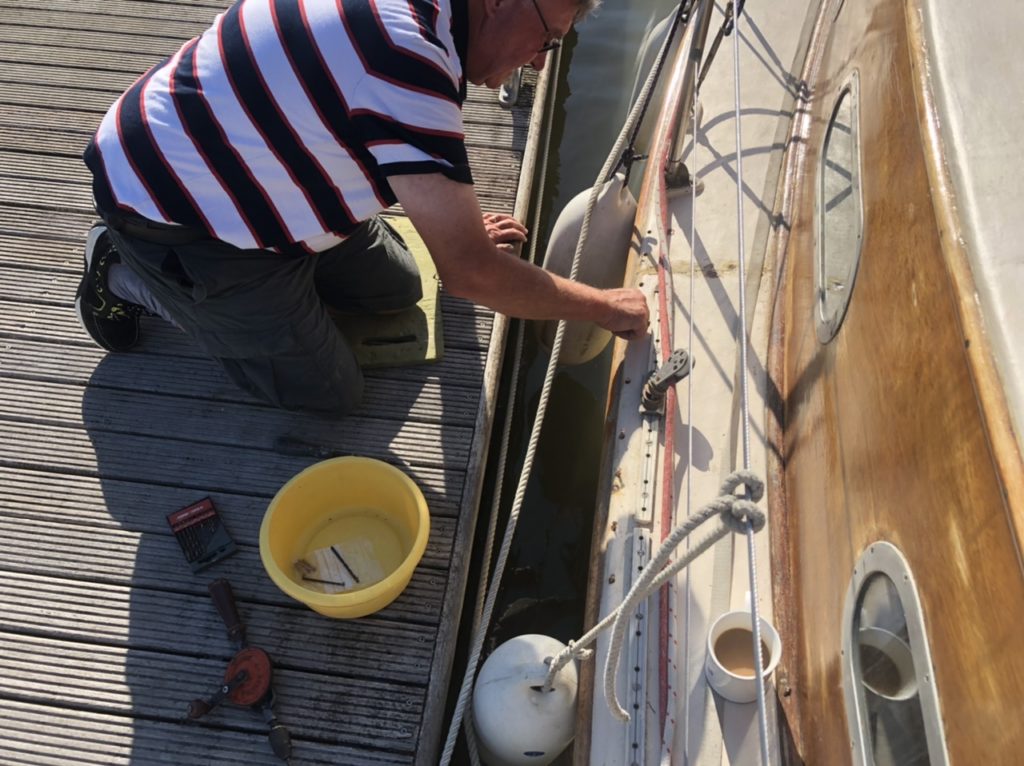
One done six to do…Off Erith – tightening screws…
Christobel helped with tool passing and some pictures…
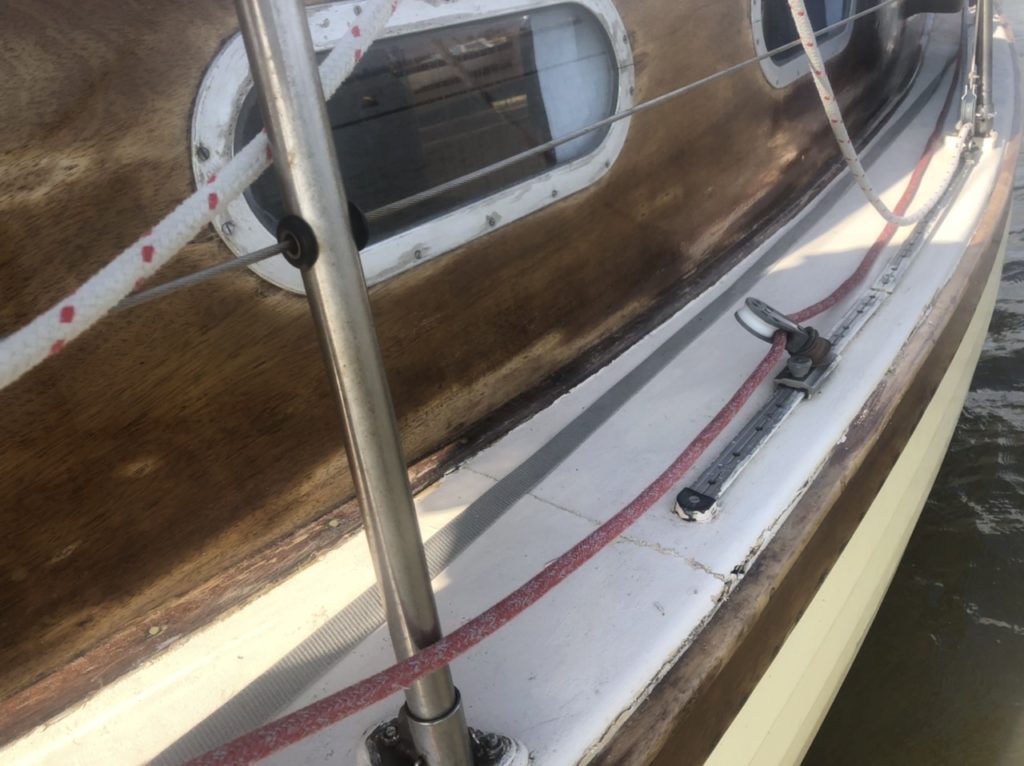
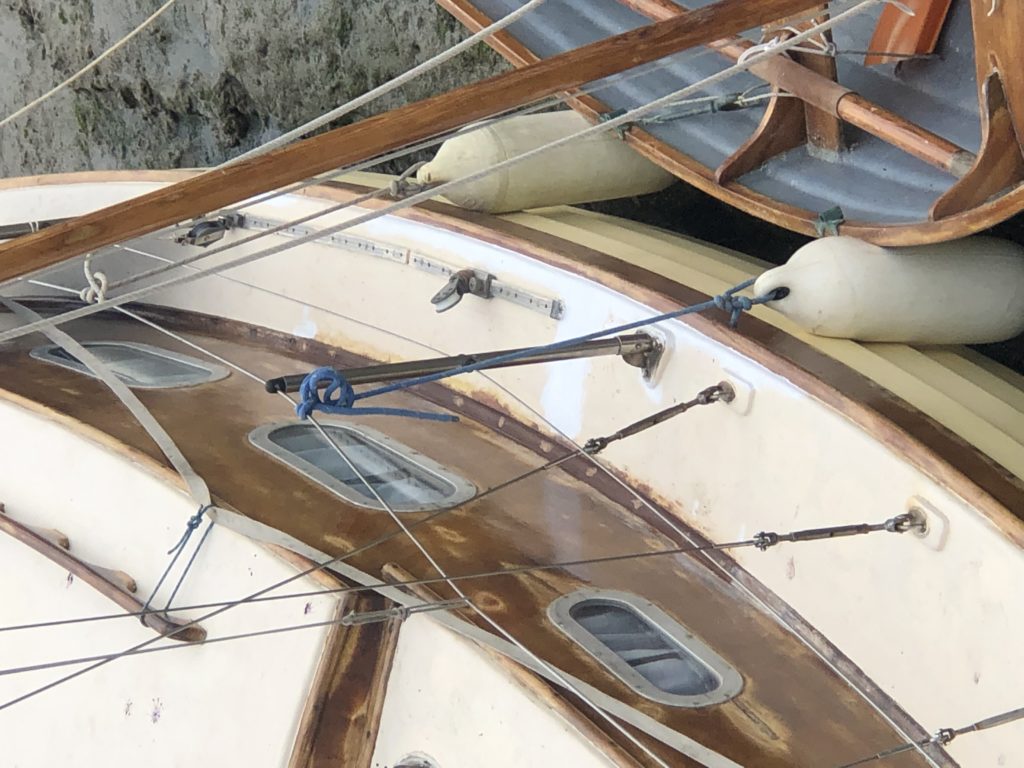
Several original fastenings were punched a little, rust treated and plugged… (a common Finesse fault)
The deck edge and cabin side beading remain to be dealt with.
Alongside the Greenwich YC pontoon – old fastenings plugged, new capped with epoxy.
I have also got to ‘gingerly’ put a number of fastenings along deck edge into a 5/8” Iroko plank – tentative pencil dots have been made…
The good news is that all drilling swath is good coloured wood!
The Mate helming up Long Reach…
The Finesse is clearly a tough old bird. I really thought the worst and had a terrible night rescuing my Mate twice and failing once… Shock?
The good news is that Whimbrel survived, intact, and my Mate too is slowly regaining her confidence…
Bless.. xx
Update: Saturday 13th Aug.
Alongside the Greenwich YC pontoon (inside berth) a run of new deck edge fastenings we’re fitted.
After careful study of side plank angle … I marked and drilled!
All drillings – fine drill first- stayed in wood. The planks are max 5/8” thickness!
screw size drilling and countersinking done, my row of fastenings had the deck edge secure.
Good coloured wood in counter sinks…Fitting screws…Screw heads epoxy filled and taped over until cured.
There are a couple of old fastening tops to deal with … popped as deck was pulled down hard.
Those and repair to fabric of edge to do next…
Update: 20th August.
During our stay in St Katharine Docks Marina repairs were progressed.
The deck edge was carefully stripped of paint, sanded and the glass sheaving re-coated with epoxy.
Deck edge prior to final sanding.
This was allowed to cure before final filling, sanding and several coats of undercoat paint.
Initial treatment of join with epoxy run in…
The area of deck either side of a plywood join was then cleaned back to he original glass sheaving. Old capped fastening heads were cleaned out, fastening punched, an application of anti-rust treatment before wood plugs glued.
A further fastening head spotted was also dealt with before a filler coat was applied. Whether or not the join needs a piece of cloth epoxied over remains to be decided…
Area around a fine crack to sheer strake varnished
The last job before ‘hitting’ home was the treatment of a fine crack in the sheer strake. Creeping crack cure was dribbled along until saturated.
A couple of fastenings were added above and below for good measure and decrease chances of movement. The filled over screw heads are barely visible.
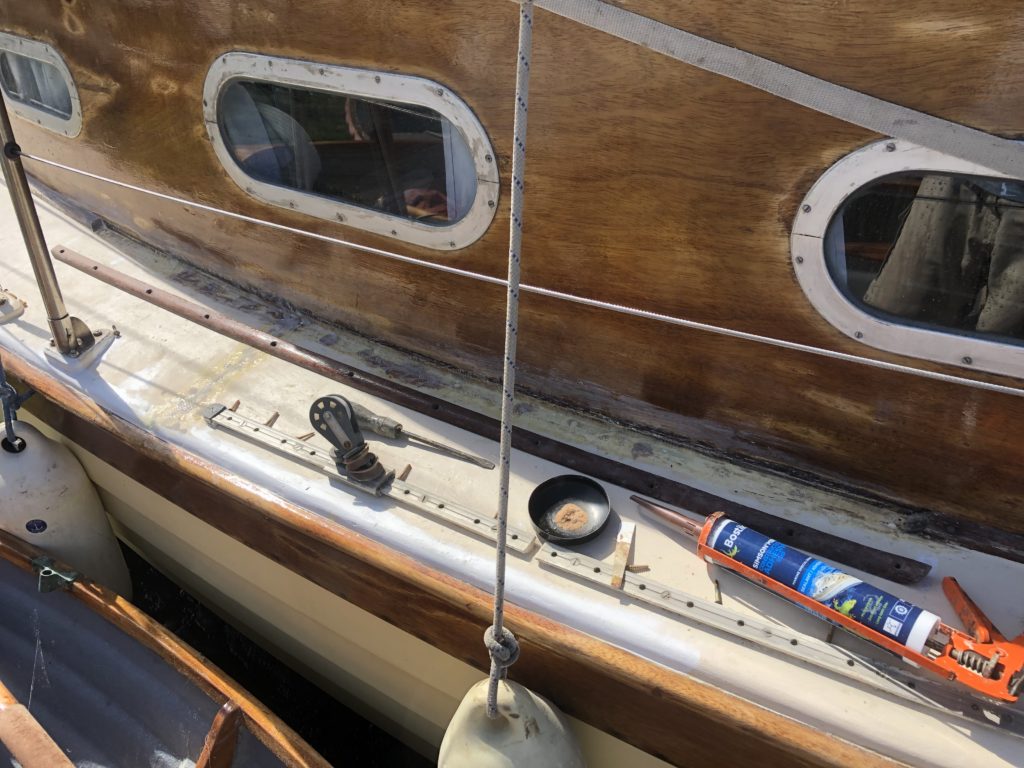
Next: the deck edge/cabin side batten must be removed, repairs made and batten re-bedded…
Update: 22nd August.
we arrived home on a glorious evening after having a Ray Day with scrub of Whimbrel’s bottom.
Working from the dinghy as a stable platform the cabin side batten was removed intact. The original sealant was removed and a section of loose sheaving cloth. Area was sanded.
Apart from clear movement running forward there was a gap to the cabin side at the inner deck edge aft, but it didn’t seem to be ‘fresh’ – from build? There was clear movement along the aft deck section. The edge was re secured with bronze screws.
A run of new screws fitted.
An old fastening was punched in and plugged too.
Epoxy was then run into the gap and movement crack followed by thickened epoxy. This was left to cure.
Close up of gap filling.
The whole area was then sanded ready for application of glass cloth.
Deck join and edge covered with cloth.
I was surprised at how translucent the glass cloth went, but it’s there!
The batten was taken home for cleaning, sanding and epoxy dressing of ends to allow fitting back flush at angled cuts.
And glory be, a tube of Simpson MSR marine sealant ordered while away arrived in the post!
Penultimate update – 23rd August.
The good mate joined the work party for this penultimate day of repairs.
Her job was below – sanding and undercoating the cracked paint on the underside of the deck.
While this was going on I set to and prepared the batten for refitting, adjusting the bevels to fit. It was to be screwed back into place – holes were prepped too.
All set to fit batten…
The epoxy and glass cloth areas were sanded to take away any high areas. The deck join area too, ready for a coat of undercoat paint.
We stopped for a break before the final exercise – it was exceedingly hot and humid…
Sanding and one coat of undercoat done, the mate takes a break!
Break over, I set to work. Sealant – Simpson MSR compound – was applied to mating area then a little epoxy mixed and applied to forward end. I had to get on now…
Working from forward where curvature was greatest, the screws were driven home.
Forward end was secured first…
Reaching the aft end a further bob of glue was applied to batten join and last screws driven.
All secured.
Christobel in the meantime had done a clean through below around her working area. We had a lunch stop … allowing batten to settle.
While I went round the screws again and sealed tops with thickened epoxy, the mate applied her second coat of undercoat paint…
Mate cleaning her hands…The area from a distance – Whimbrel feeling much better!
Of yes, Christobel left this buoy a fair distance off. Look at the flow past its body!
Mate on the helm reaching down along the Blyth Sands…
The end- all the sticking plaster comes off!
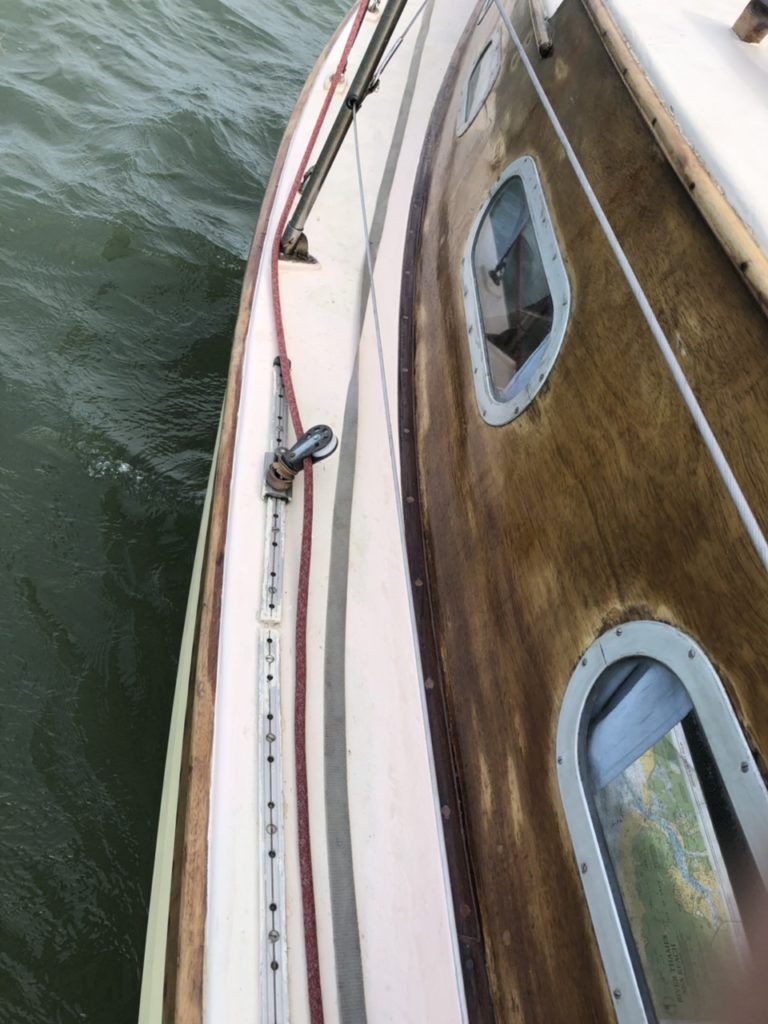
There was a ‘kick in the nuts’ to the job: I found that I had to re fasten the deck edge going forward of the stanchion. Also, the outer stanchion base fastenings go through into chocks behind the shelf strake set between the ribs.
Great. But, the chocks bare on the underside of the deck inside the sheer strake, thus inward pressure on stanchion was lifting the outer edge of deck which was not helped by failed/loosened fastenings.
The mate dealing with the underside chock painting…
I fitted a covering chock inside to go over the the infill chock and underside of the shelf. This was screwed to shelf and fastened through from sheerstrake. Pressure on the stanchion showed no movement if deck…
The edge was released and hardened up after application of runny epoxy before it had time to set off. Edge was then coated with thickened epoxy.
All painted…
I shall be looking closely around the other five stanchions…
All is now painted and has been tested in the estuary!
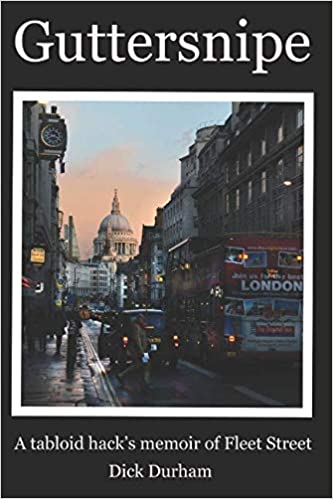
Ah, Dick, you whipped out your colt 45 and blazed away, words zipping as the tale unfolds…
Courtesy of Amazon.
I was enthralled. I laughed out loud while reading (most unusual) and nearly cried as sobering and sad words spilled from the pages too.
I always knew Dick spent time in Fleet Street on a new newspaper which hit the world in a blaze of tabloid hype and steamy stories. It ‘s a world I knew nothing about, other than the scandals that have trundled from the news with a regularity over the last couple of decades, leading to a massive tightening of regulations.
Dawn on the hottest day in July, ever…
I knew Dick when I was young – being a ‘Thames barge boy’ – when he used to come aboard my spritsail barge home, the May Flower, to help out! Dick later sailed as mate aboard the mighty sprittie, Cambria as no. 2 to the inimitable Bob Roberts. I didn’t reacquaint until years later.
Now, I know what he was up to. Dick learnt his craft with the Dundee Courier at their offices by Fetter Lane – the building remains with its painted advert above and can be clearly seen from a bus.
He was soon having a rollicking good time as he sloshed his alcoholic way through the miasma of Fleet Street’s news desks and pub floors. As a news hound, he chased’ news’ and the people behind them, insinuating himself easily into the cracks in the stories.
What couldn’t be had from the coal face was made up … but the paper’s readership from the start lapped it up, gullible to the very core!
He names characters without a care: truth cannot be challenged. It silences detractors … something I’ve learnt.
Big press names rolled off the pages. ‘Huge people’ discussed by the media talking heads and tut tutters. Wow, he knew them in the work place. Now we do too…
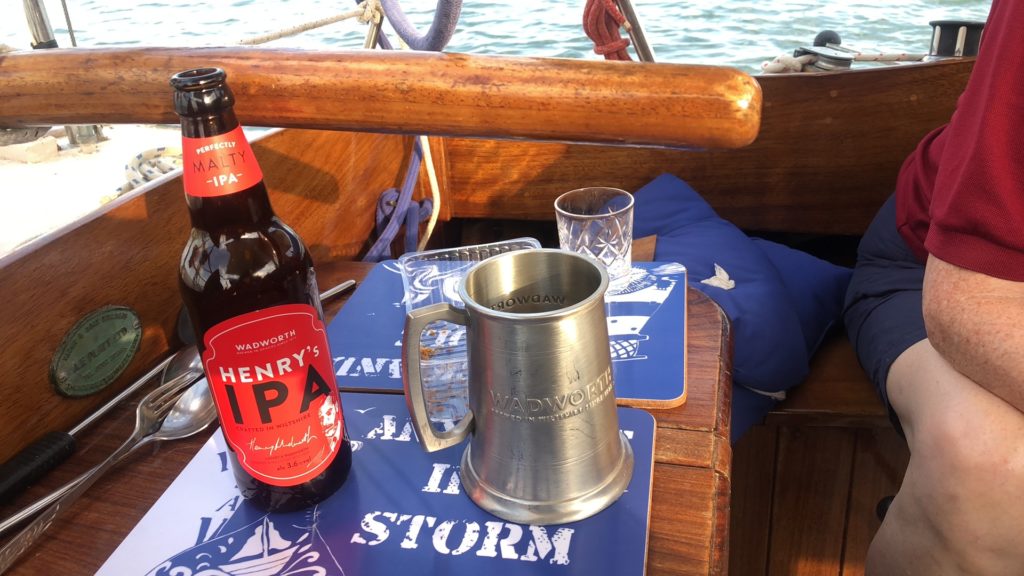
A beer helped the story flow…
A bloody good read Dick, which I quaffed with equal eagerness with a beer or two whilst keeping cool afloat this summer.
Not a sailing book, but written by an amusing and characterful sailor.
Towards the end of June I wrote to the head honcho of the Royal Yachting Association, Sarah Sutcliffe, regarding the cancelation of my membership and my reasons why.
I received a confirmation of receipt from her personal assistant stating that my communication would be placed before the Chief Executive.
Time has ticked by. There has been no response.
The problems remain acute with supply to marinas and other outlets of calor gas in particular, yet the RYA clearly does not have the balls to respond to a member cancelling membership after some 40 plus years of loyalty.
All I was asking for was pressure from what purports to be ‘our’ governing body to be applied to suppliers…
It typifies the crassness of this organisation that clearly exists as a self-employment project with not a care for the ordinary sailor, other than the gathering of gold medals.
I can think of many an Olympians and I doubt if they would be similarly treated. The Royal Yachting Association needs to remember the greater majority of sailors sit on the lower rungs…
Now, I wrote to the editor of the ‘Yotty’ Newspaper – All at Sea. The editor was back to me in a trice.
The July 2022 issue of the paper has my letter and their findings – no more than I had gleaned. But, and this is an important point, they responded in a positive manner, agreeing it was something that needed to be sorted out.
The piece is added below:
Courtesy of ‘All at Sea’ – thank you.
I always try and pick up a copy of this publication when seen in a chandlery or marina office: it is quite informative, if largely south coast orientated (aren’t they all…)
So, I would like to say thank you to ‘All at Sea’ and the rags editor, Jane Hyde, and Simon Everett.
Over the past month I have enquired at five different outlets about the ‘gas problem’ and ALL reported the situation as dire!
Coming upstream on the River Orwell yesterday I spied Jack Coote’s old yacht, Blue Shoal on the mooring trot below Ostrich Creek. The vessel, was, I believe, Jack’s last.
Many possibly won’t know of Ostrich Creek. It is the seaward end of Belstead Brook which runs down to the salty Orwell where Fox’s Marina and the Orwell Yacht Club are situated.
Blue Shoal.
Ostrich Creek was the first sailing anchorage of the inimitable Maurice Griffiths who shared a ‘tore out’ with a couple of buddies for a short while in the early 1920s. MG lived up the Wherstead Rd running into Ipswich.
The Orwell YC cadets under training in the small area of water left between Fox’s and the club’s moorings.
Janet Harber, one of Jack’s two daughters, told me recently that Blue Shoal’s owner gives her a sail from time to time. How lovely…
I never met Jack, but I am sure my father and grandfather did back in the late 1940s and the 1950s. I would have relished the experience.
For years I have kept Janet supplied with updates for the East Coast Rivers pilot book. Updates can be obtained from the last issue publishers, Fernhurst.