
For my recent seventy-first birthday I was given a copy of a book put together by W N Roughead, a sailing companion of Hilaire Belloc.
Belloc was born in 1870 and died in 1953. He married in 1896, his wife dying dying in 1914. Much of his life was spent as a widower.
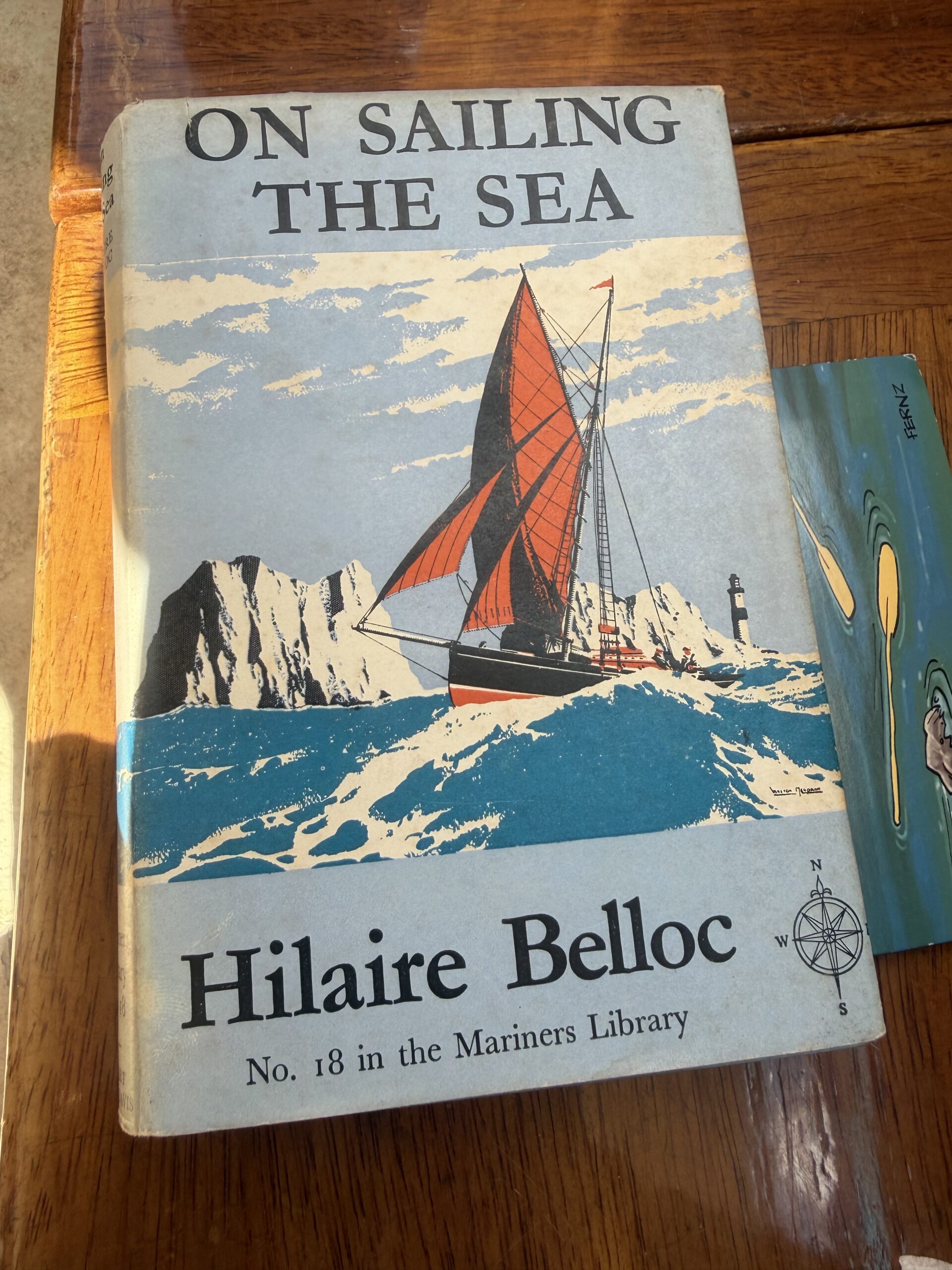
The book is a compilation of Belloc’s writings with some previously unpublished essays or articles.
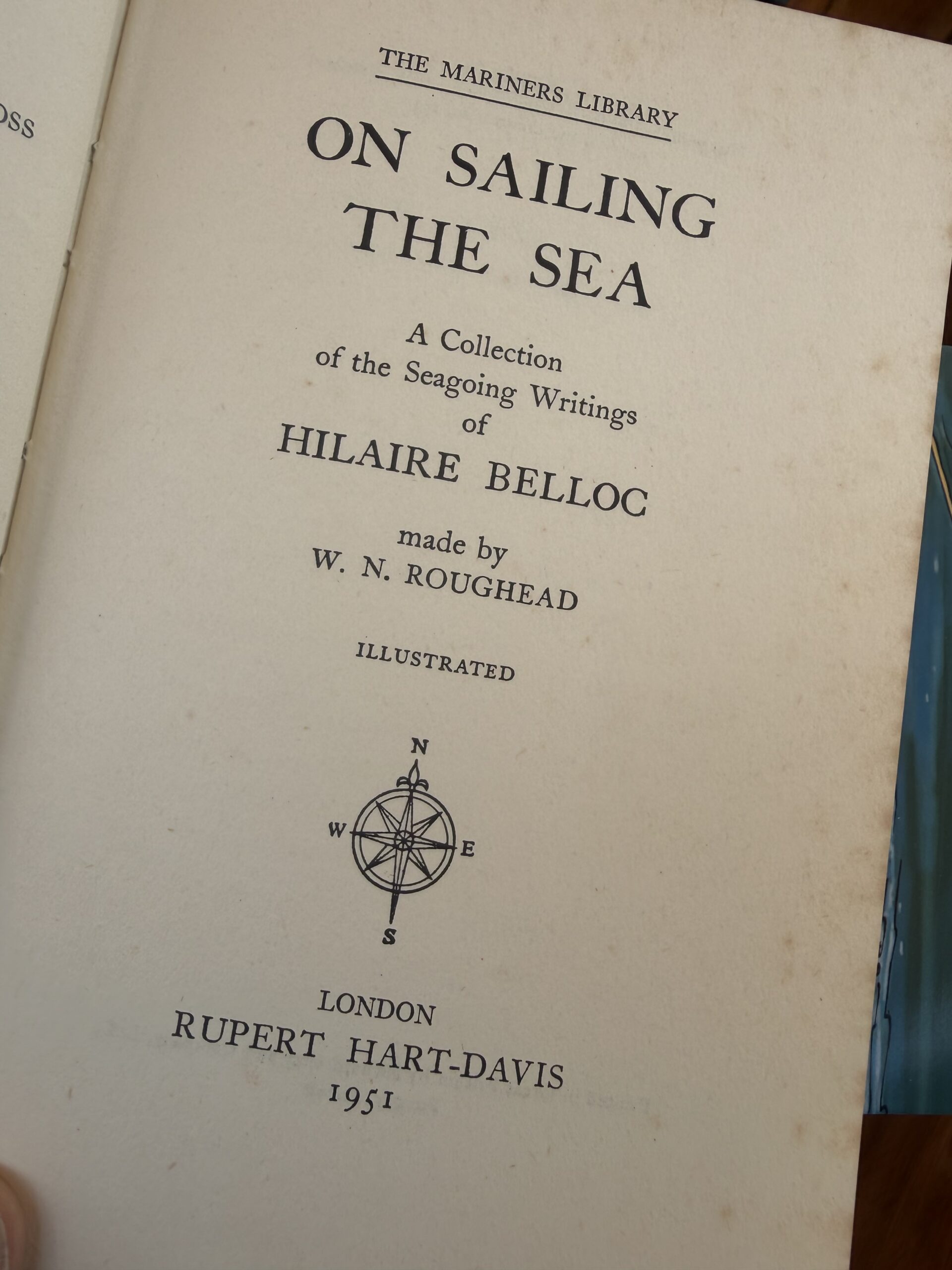
The book was compiled very late in Belloc’s life by his old shipmate not long before Belloc’s death and, note, it was published by a publisher long associated with sea tales.
Hilaire had an English mother and French father – born into the French Empire – and maintained dual citizenship upon becoming a naturalised British Subject in 1902. From early childhood after the death of his father he lived most of his life in England. He was a serial writer producing books on varied subjects, articles and authoritative works. He was also a bit of a poet.
In the early years of the first decade of the 1900s he stood for Parliament and won the Salford seat for the Liberals. He did just one term.
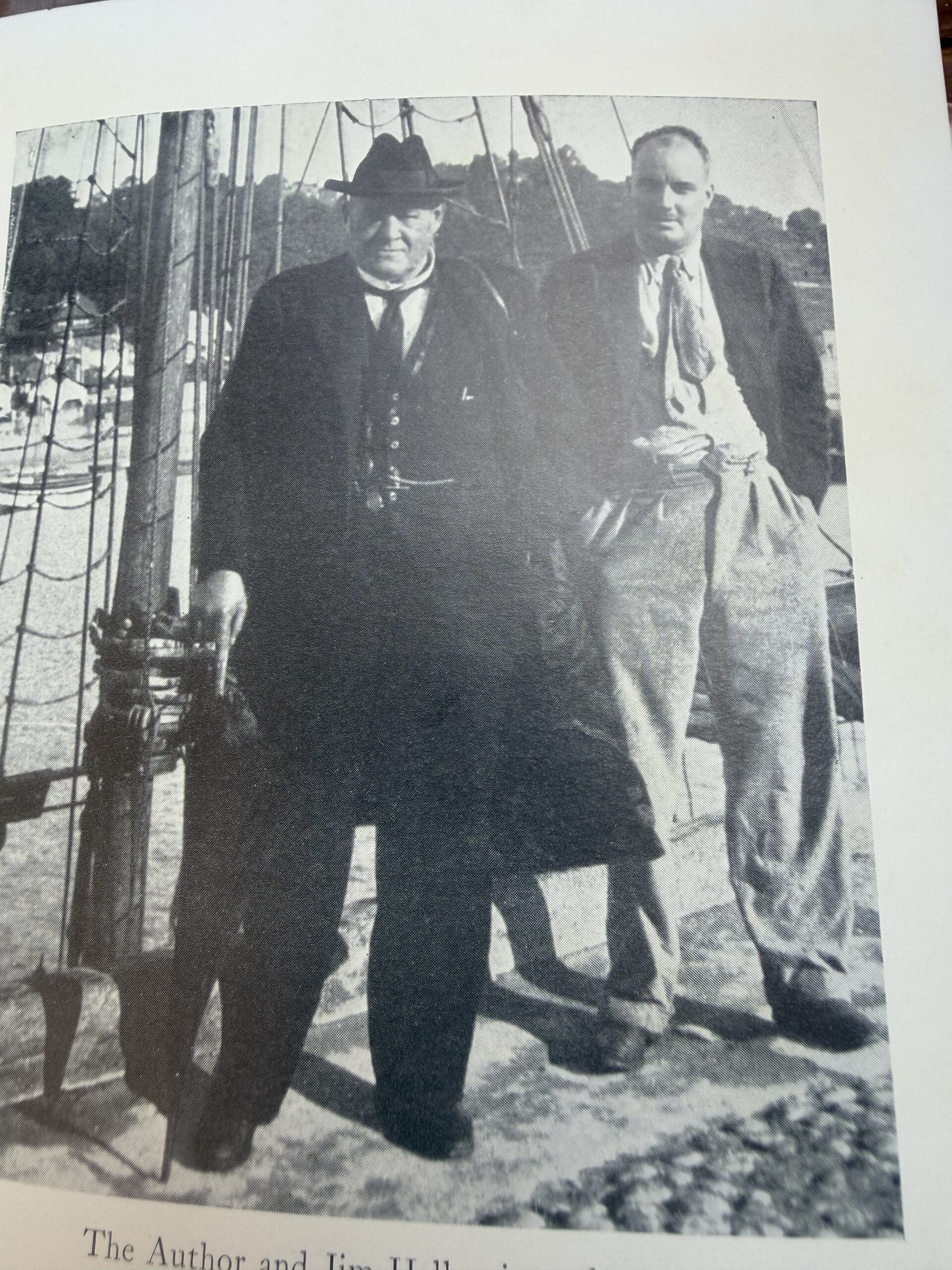
Hilaire and a chap called Jim Hall – going ashore. Hilaire was clearly aging by this time.
Brought up as a catholic, he held fast rules on life. Women it seemed had their place: with not a mention of the fairer sex aboard his craft…
I found the book tough going on the whole for within his yarn he debates Catholicism and the way we should endeavour to live our lives. Ostensibly, the writings feature sailing on the Nona, a yacht that was in her sixties when ‘she died’ a moment evocatively described towards the book’s end. She hailed from the plumb bow era, deep draught and probably wet – said to be around ten tons ((Thames?), the ideal size for a few men to sail together…
There are few pictures of vessels dressing the book and those included are of the Jersey, a boat gifted to him by friends, probably after the loss of his beloved Nona. The Jersey was kept for a time on a mooring at Holehaven, in that mud creek separating Canvey Island from the mainland, if my memory serves from reading another volume some years ago – probably on my library shelves still.
As mentioned, one story in particular I found evocative and sad, ‘The death of the ship’ placed right towards the book’s ending. One becomes aware that this is a story of his Nona’s ending. She was an old lady by then built in the Victorian era, surviving by make do and mend culture that has largely been lost to latter day generations.
Nona and her crew were on a trip from the west of England to the Normandy coast. Reference is made to ‘The patching up had got more and more difficult…’ and off that Norman coast Belloc says ‘she gave me that look which they give us before they leave us…’ (he lost his wife to illness years before). He says, ‘Had she not been near the piers it would have gone hard for those aboard.’ Her cockpit was half full of water from sprung planks … she reached the basin within ‘and then lay up upon the mud.’
Belloc says, ‘She ceased to be a boat for the purposes of a boat any longer. She was no-longer-patch-up-able. She had fulfilled her task. It was all over. She had taken to her repose.’
After her going: Nona was broken up, Belloc ends, ‘I wish I were there-already: now: at once: with her.
Belloc clearly loved her … as if female…