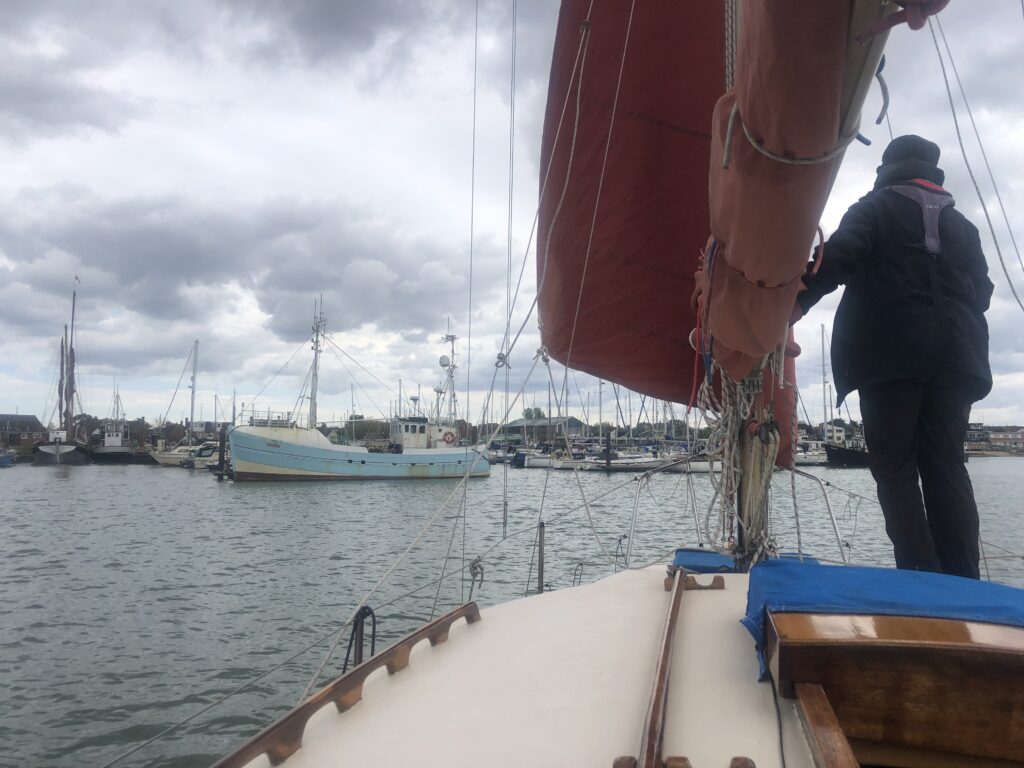
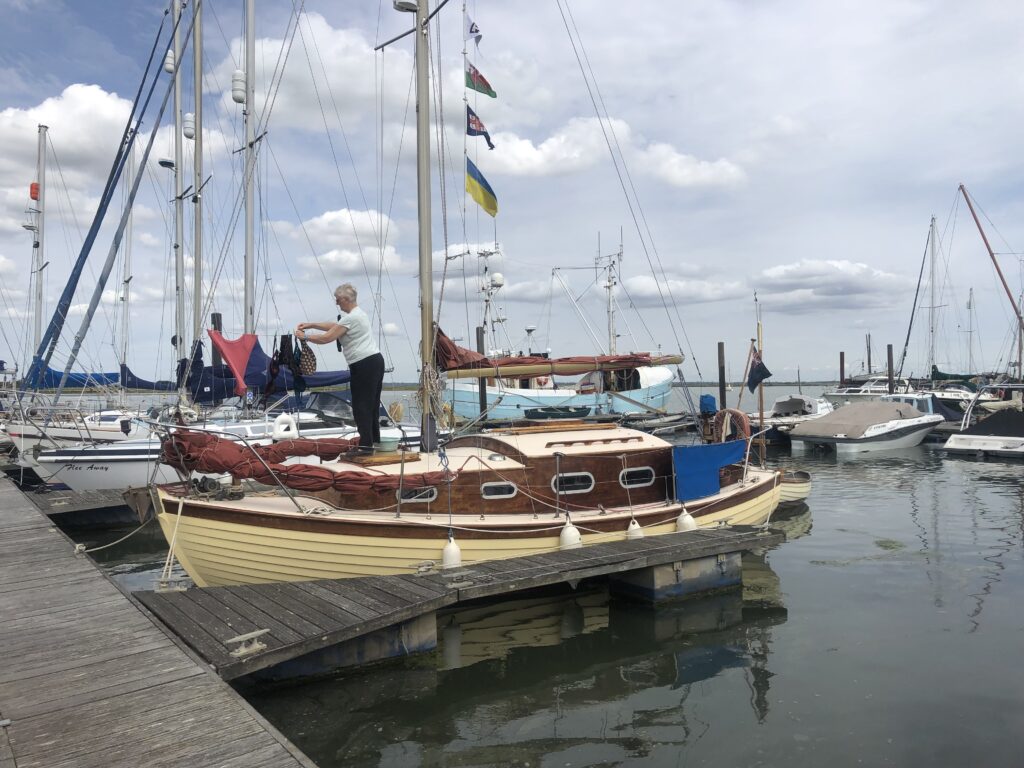
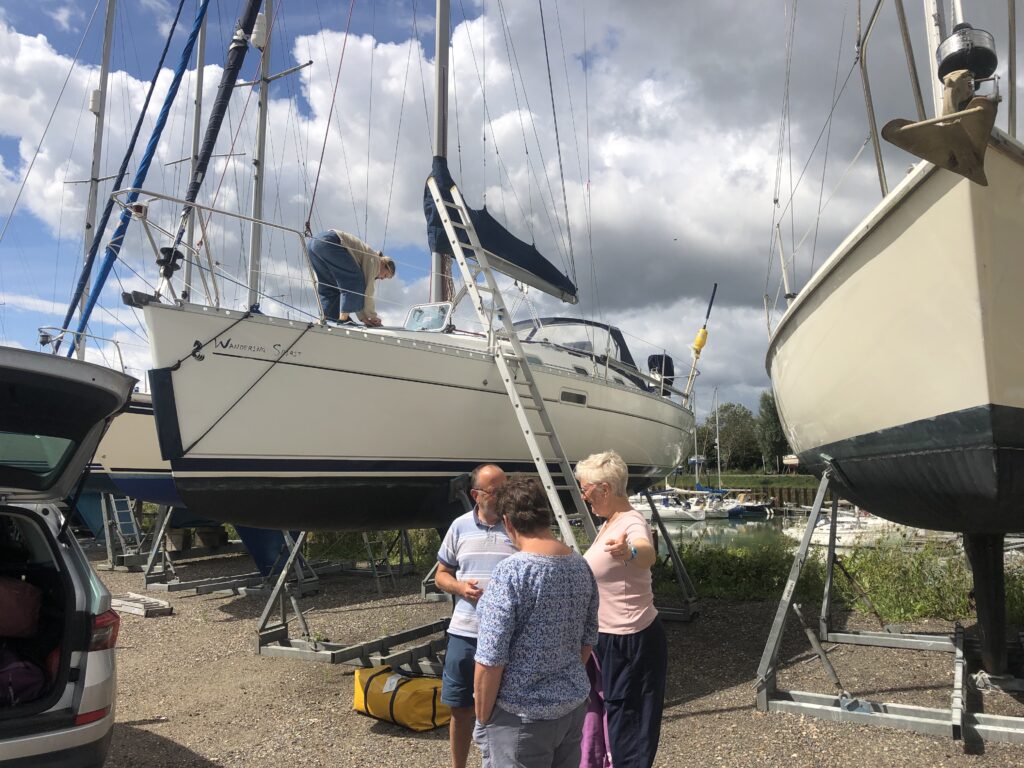
Due to our move to a new mooring area, we did not sail into Faversham last year. Future visits are highly likely to be less frequent than we have enjoyed in the past.
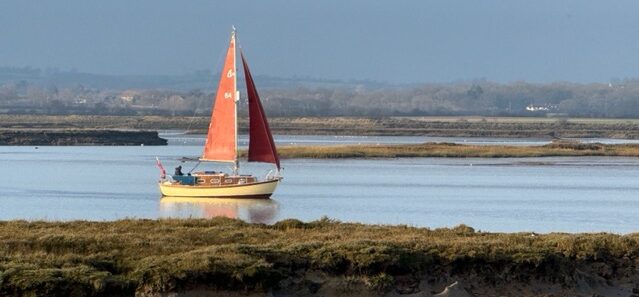
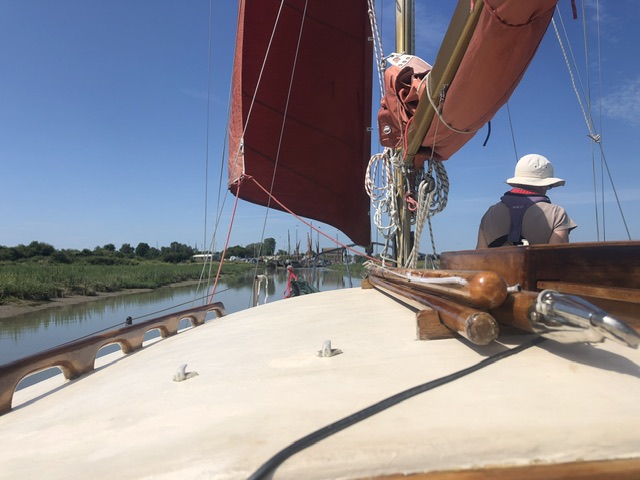
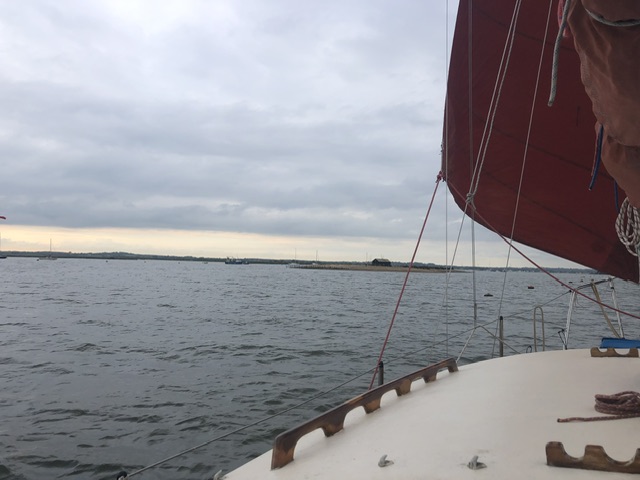
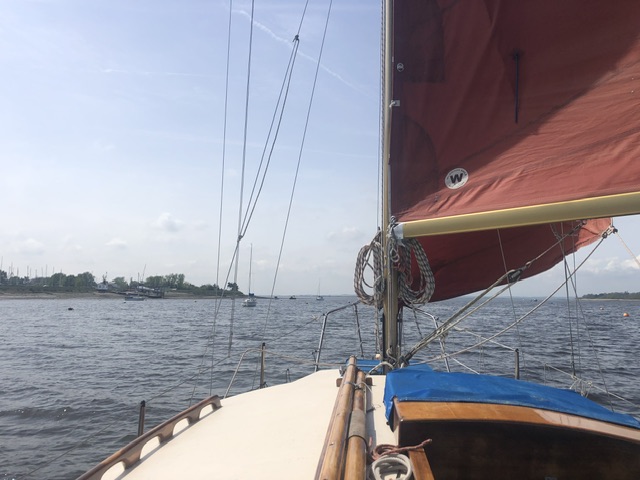
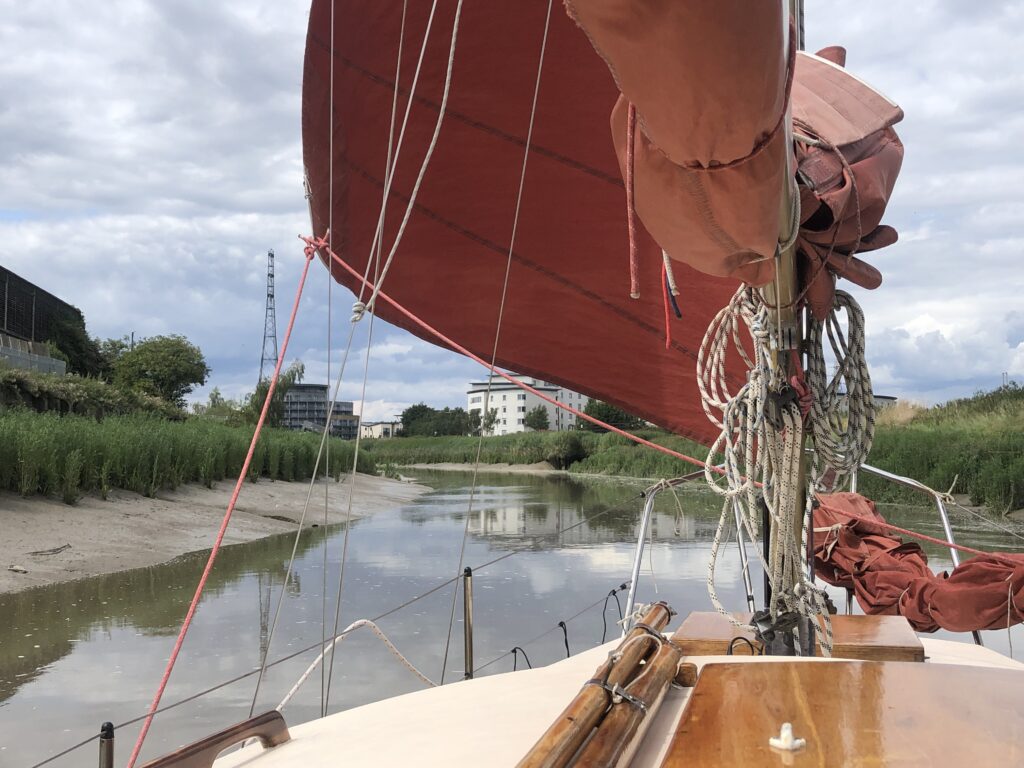
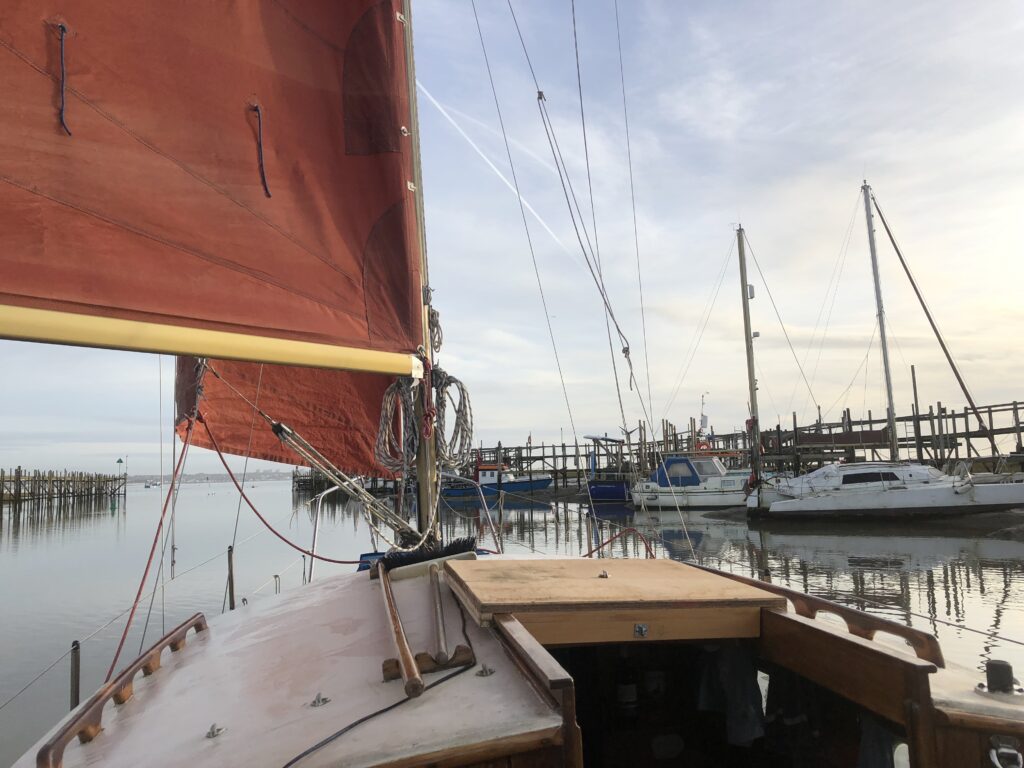
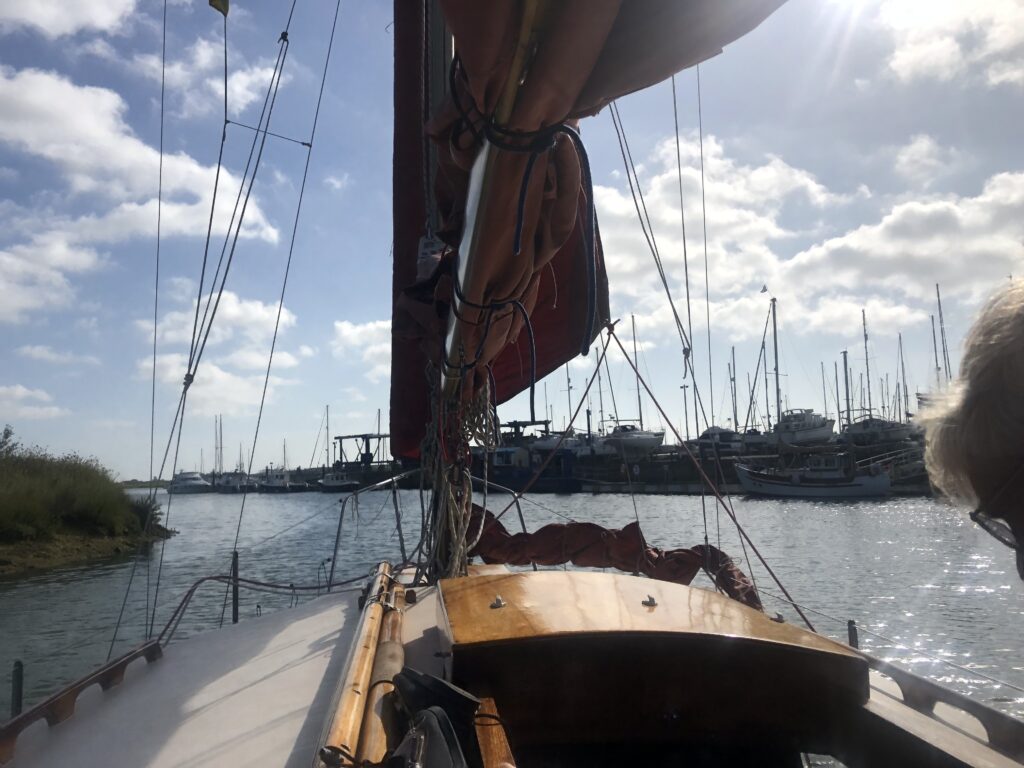
So, it was with seemingly fresh eyes that we entered the creek a couple of days ago, managing to largely lazily sail up with the tide.
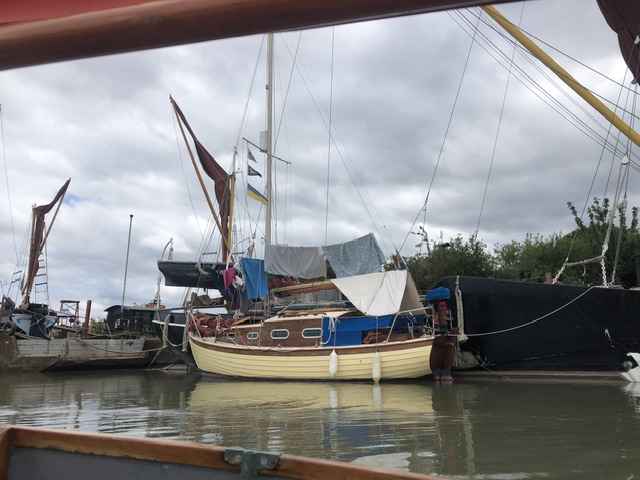
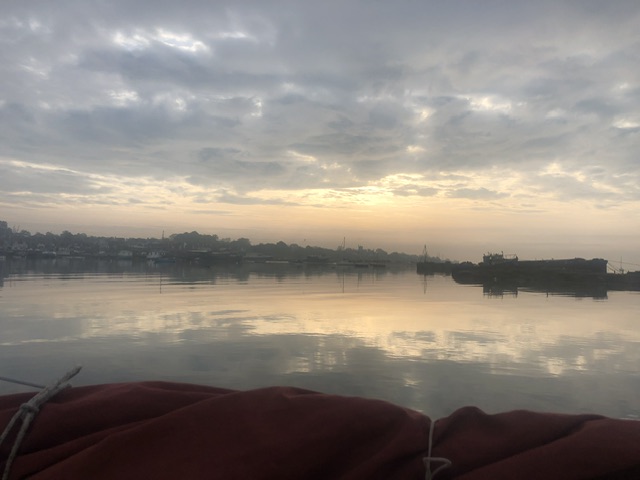
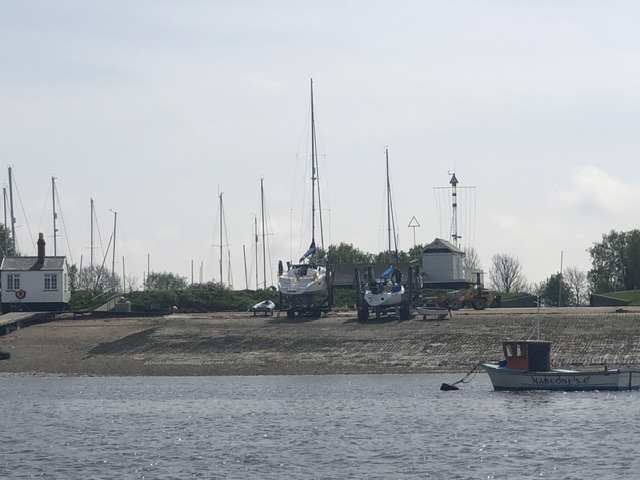
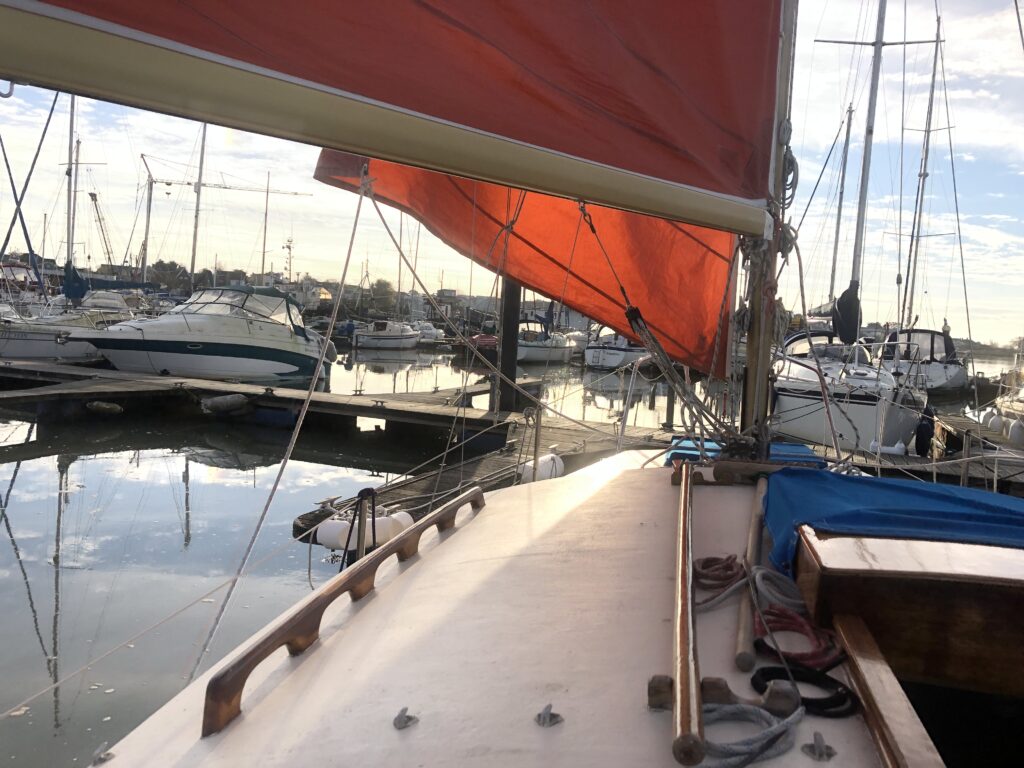
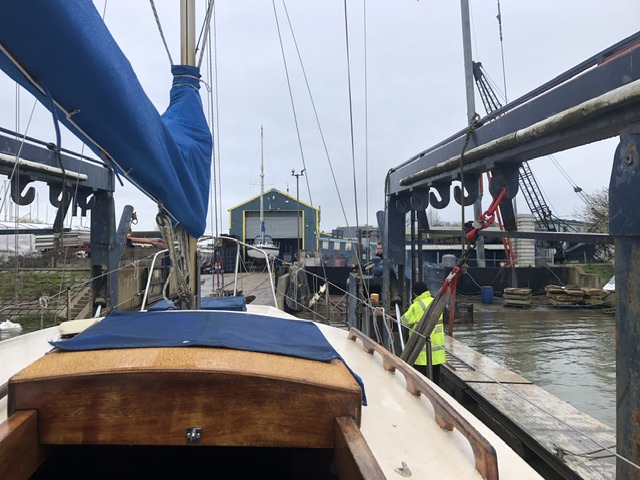
Approaching Iron Wharf.
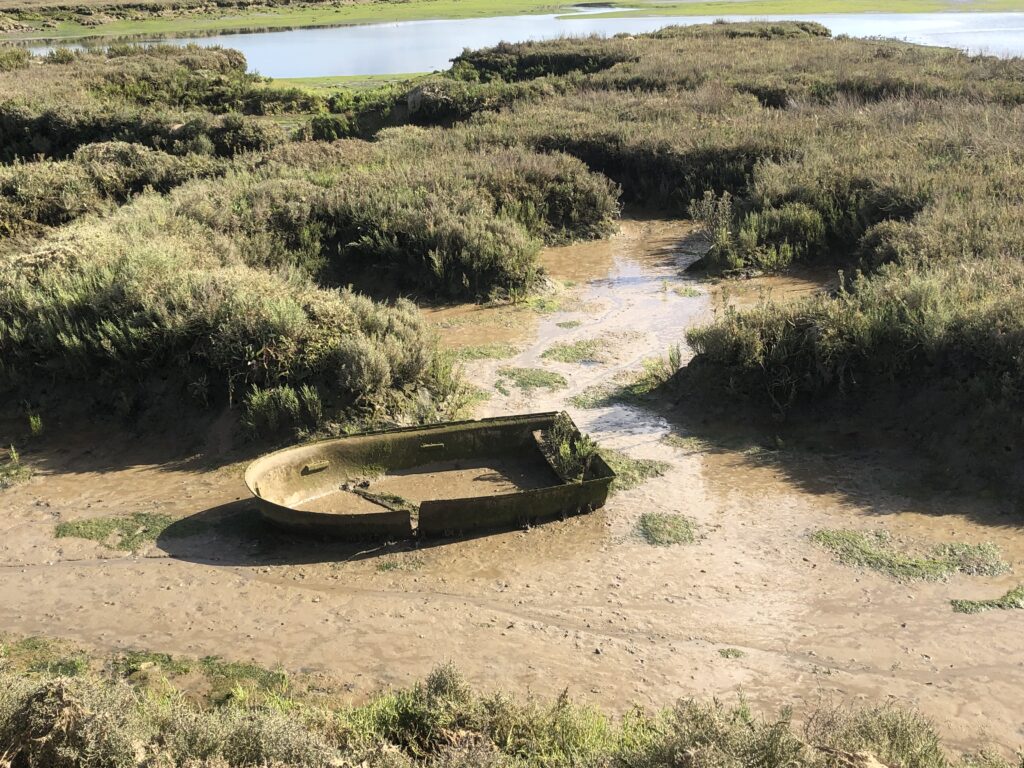
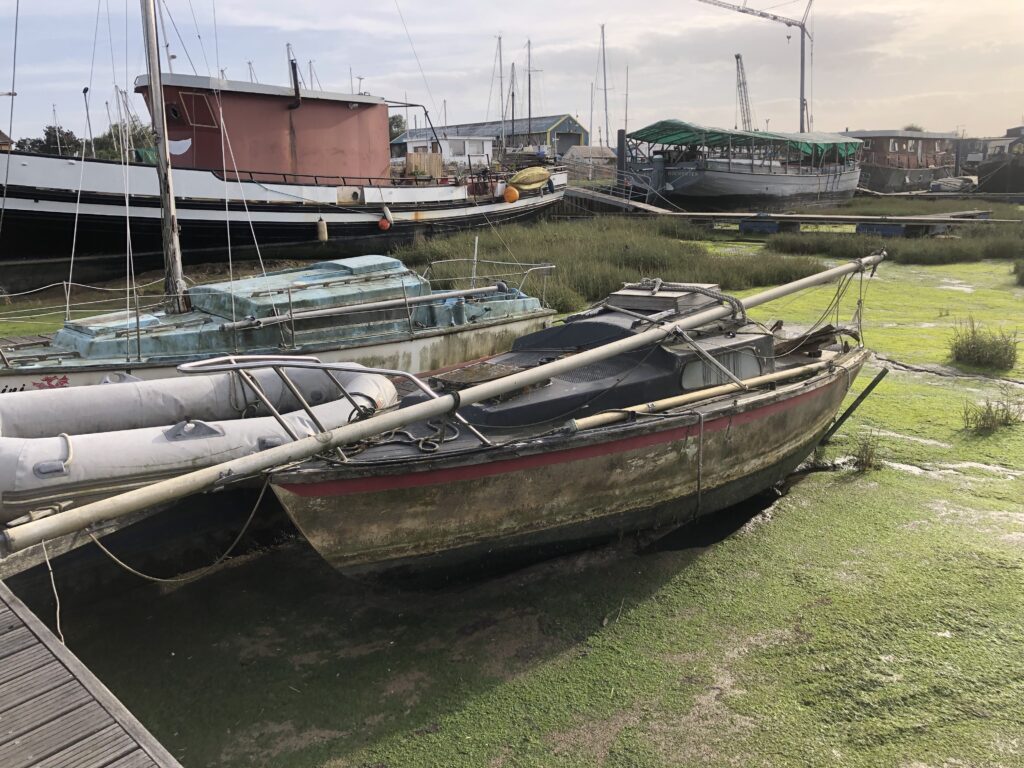
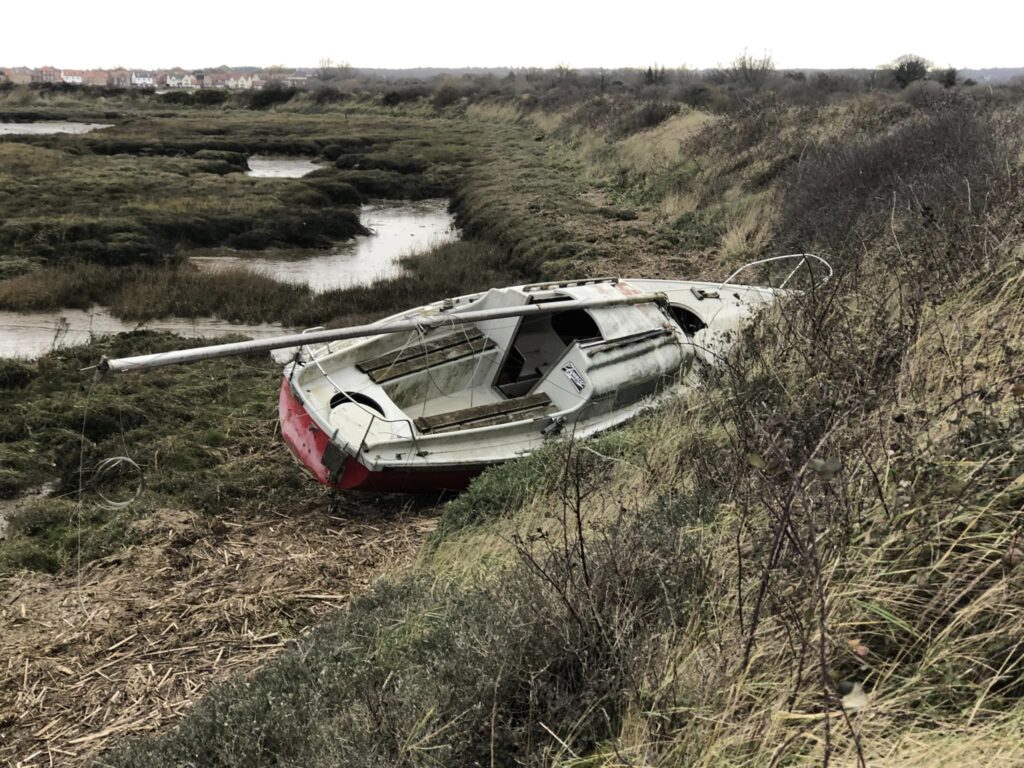
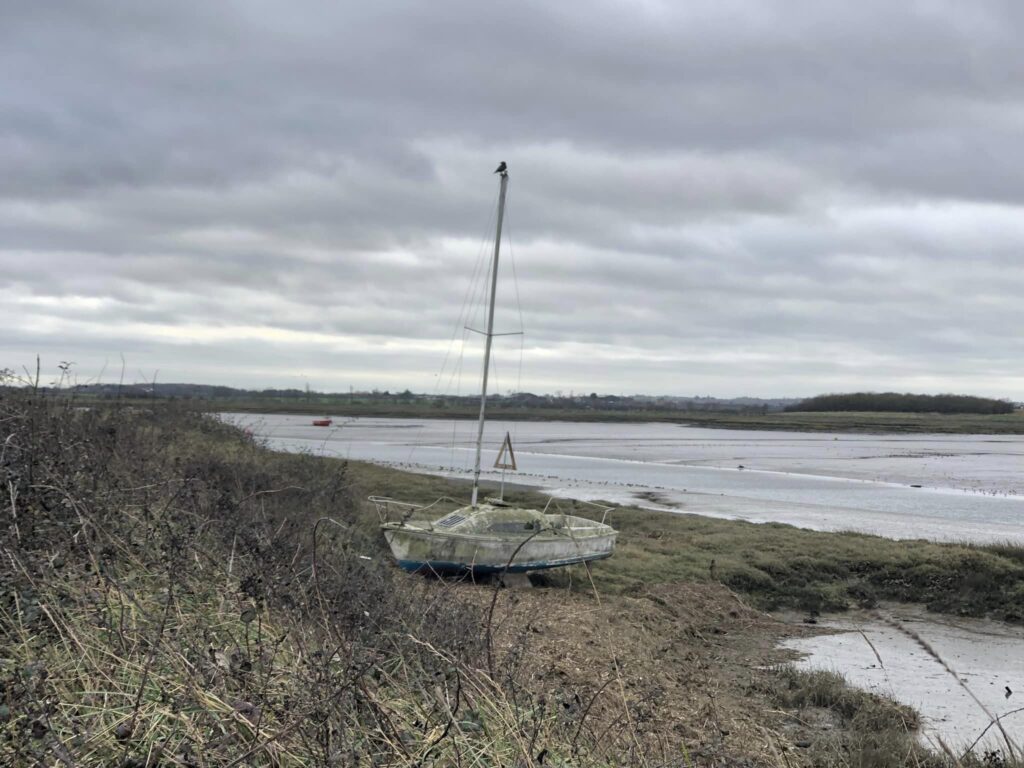
We were struck by the additional craft that have been abandoned on the banks with a sunken yacht just below Oare Creek. And too, by the renewed beauty of the saltings we sailed past: our eyes were just above the heavily sea lavender scented sight-line…
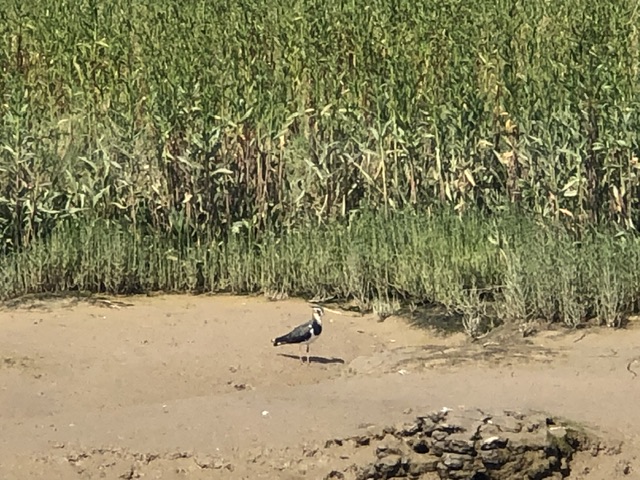
A lone lapwing watched us glide by, completely nonplussed!
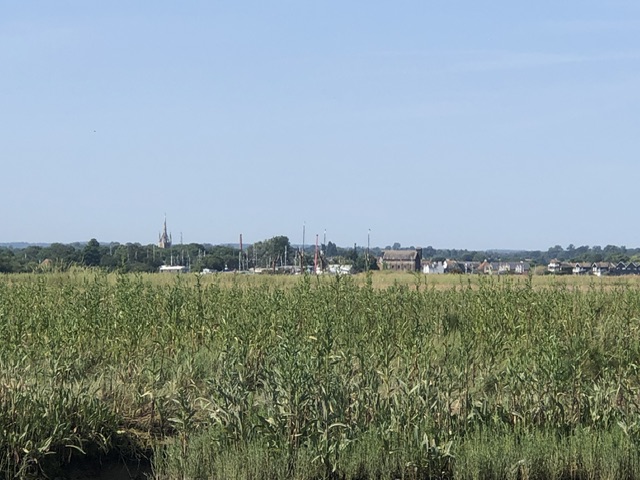
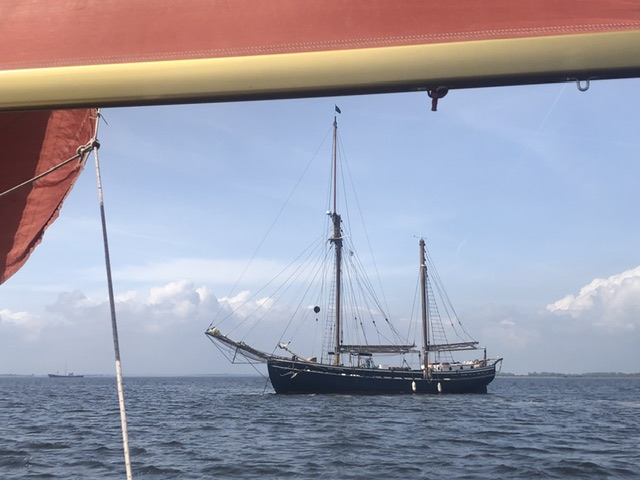
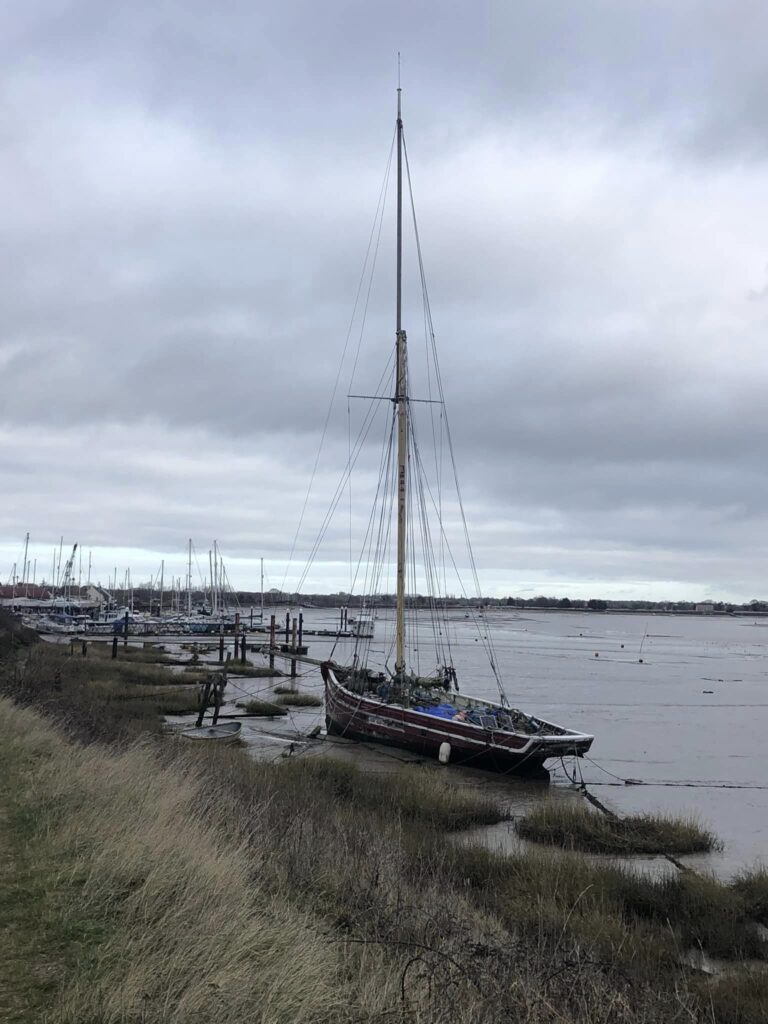
On the approach to Iron Wharf, the town’s high steepled church proudly mimics the lofty top masts and cocky sprits of the cluster of sailing barges berthed there.
We (I) had fitted a new galley pump the week before: it leaked out of its bottom seal and pump spindle. Great. After removal and inspection, I decided to seal the base gasket with sealant. The leaking spindle was sorted by hardening up the o-seal gland. Probably, it is now overtightened!
I had called Mark the proprietor at Faversham Chandlery and to my delight he had a pump in stock – a Whale Flipper. So at least I have a spare: a ‘bodge’ is unlikely to last.
Looking over the top of sea asters with lavender colouring beyond.
And yes, I shall be writing to the manufacturers…
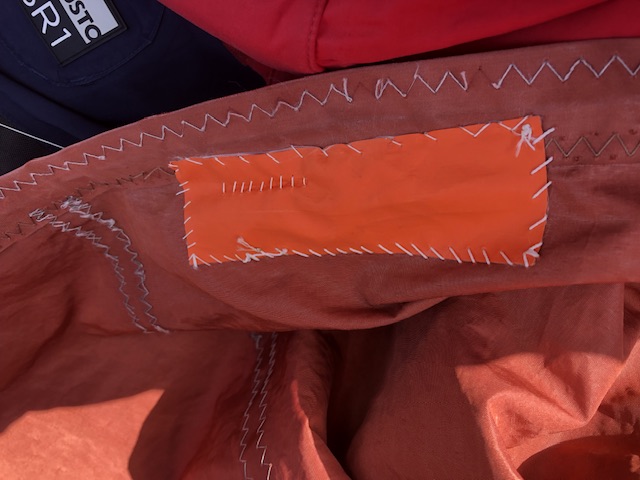
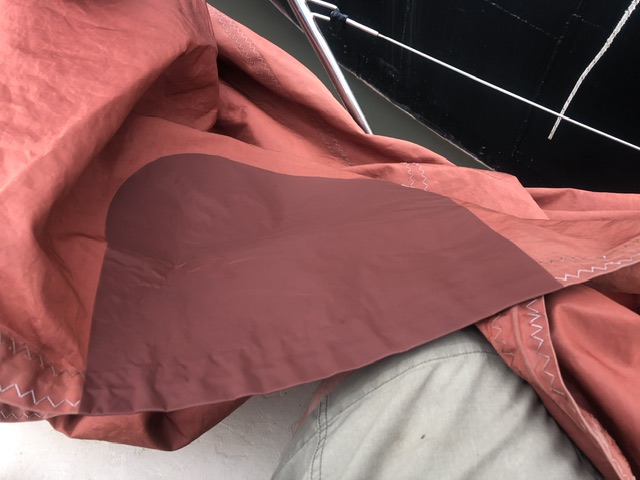
When preparing to set off from our home berth two weeks ago, I spotted a tare in the leach of our Genoa. I gave it a fix using a bit of sail bag label … Cindy – Wilkinsons Sails in Faversham offered to give it a proper repair if we visited, which was in our plans.
My fix being finished on a buoy in Mersea Quarters.The professional fix…
I got the sail into sailmaker post lunch hour and it was returned to the boat after work by Alan Johnson.
So, a heartfelt thank you to both Faversham businesses!
We had come into Faversham for a booked prolonged visit because a day was set aside for an event in London at St Katharine Docks with the Sea-change Sailing Trust. But that is another story…
The stay also coincided with need of a washing machine – two of which are billeted in the Iron Wharf’s revamped shower and toilet facilities.
Whimbrel adorned with ‘bunting’…
Some old friends have departed the yard or met their maker during past two seasons. Other craft have moved position – whether in line for breaking, I don’t know.
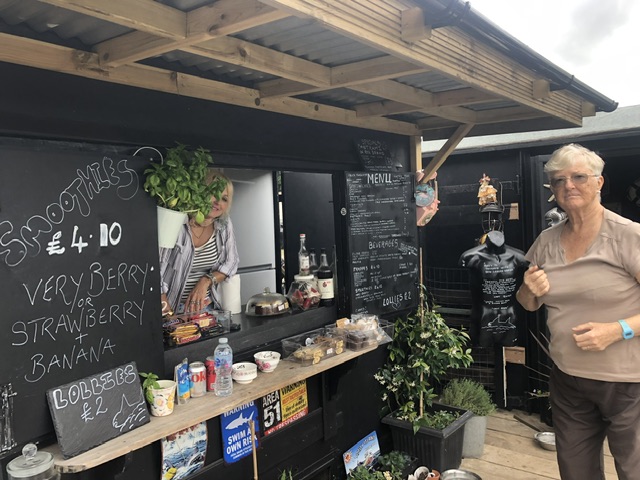
We had been tipped off after our arrival about a new waterside cafe at the outer corner of Iron Wharf by the old brick dock entrance.
Christobel discussing the cafe with proprietor…
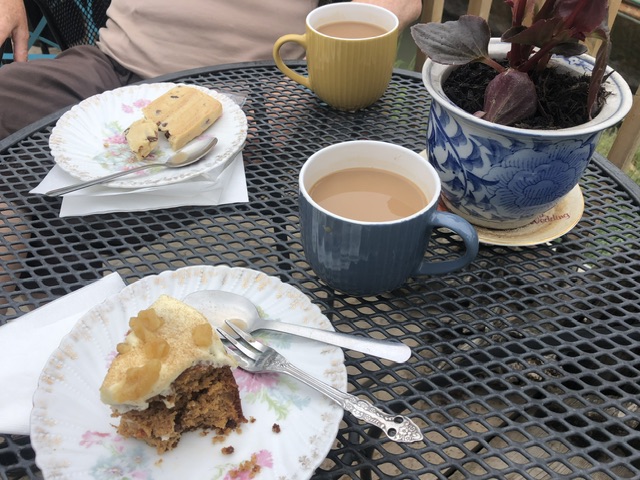
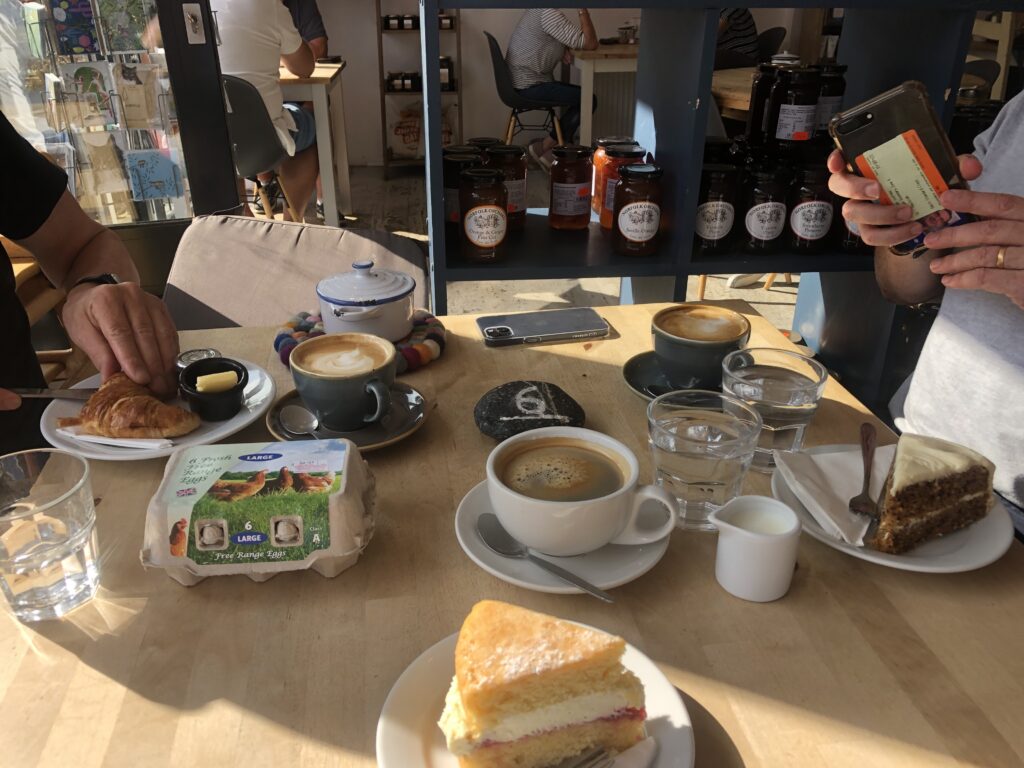
However, I had spotted it as we came in – yes, we’ve visited and enjoyed decent coffee and cake! The building of the defunct Iron Wharf club has also been removed from where it forlornly sat for years, close by.
Yum, yum…
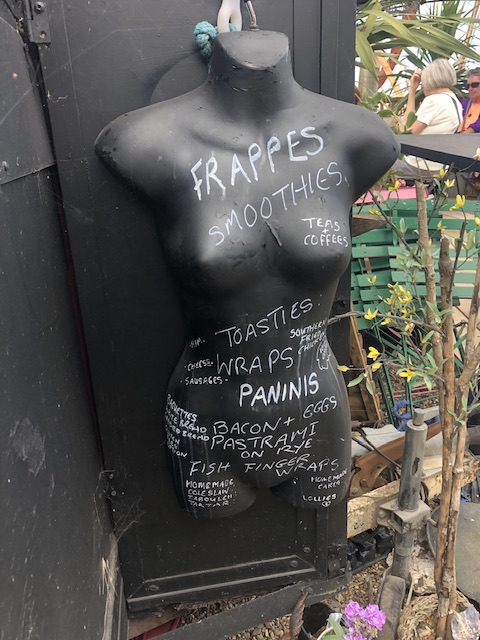
The place is called, Quints Retreat Cafe Diner. It has a quirkiness with interesting menu boards…
The problem of unwanted craft around our UK moorings and boatyards along with discarded and abandoned vessels along creeks and riverbanks has been an increasingly sticky problem.
It is something our European cousins have cottoned onto too. A figure placed on such craft sits at around a million vessels. Of what minimum size, I can’t recall.
So, when I spotted in a Marine Industry News article a couple of weeks back that there was just such a problem around the waterways and lakes of the USA, I smiled. Let’s face it, why should it be anything different?
Apparently the problem has rocketed with numbers of craft being left to fend for themselves until they founder or break moorings and settle into a river bank.
The problem has reached such proportions that it has become noticeable. A solution is being sought. The American Boat Owners Association have received central funding for grant applications to make a start on dealing with the problem. A systematic removal is planned.
Now, in the UK we have the British Marine Federation – a builder/yard/marina ‘set’ looking after their interests. We also have the ‘use-less’ Royal Yachting Association, which seems interested in racing and gold medals than the interest of cruising and casual sailors.
As many will know, I cancelled my forty-five year membership over the RYA’s ‘disconnect’ from the Calor Gas problem.
However, they represent, in theory, the user group – US! What have they done? As far as I know, Nothing.
It is a subject I have harped on about for a very long time, long before I saw anything else in the media. See:
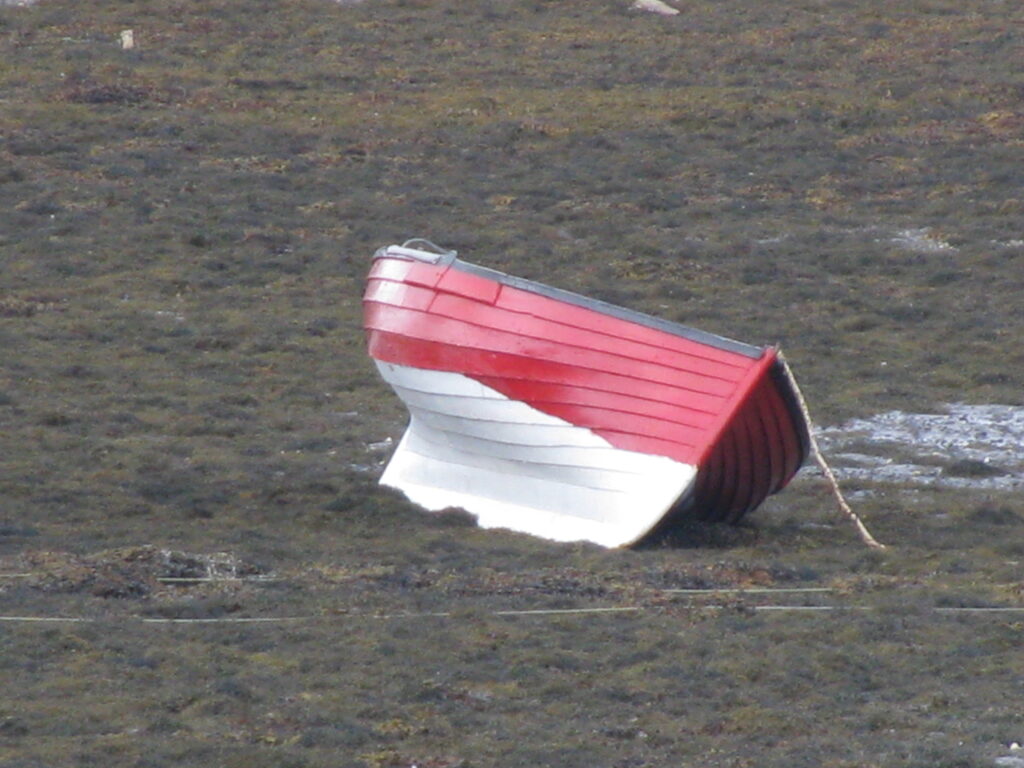
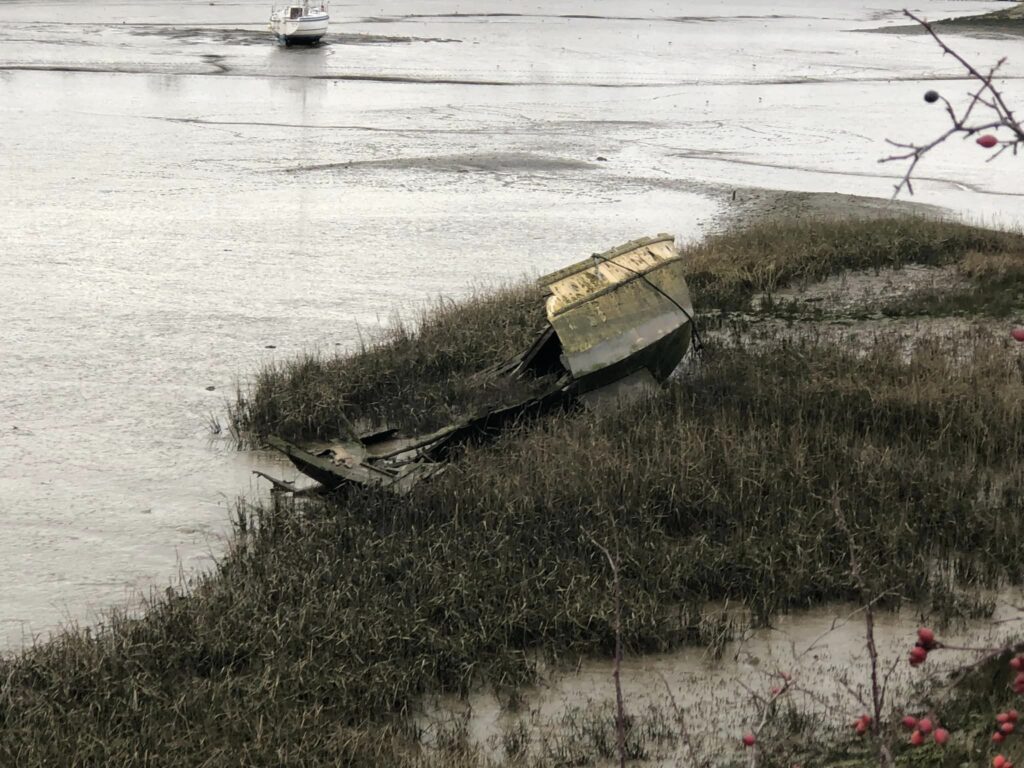
Wherever one walks along the shores of Essex and Kent the saltings rim is often the graveyard for an old thing that has drifted up on the tide.
Hull of a dory or speed boat type in the saltings along Mayland Creek, Essex.
In the past it was generally acceptable to let an old wooden vessel die on a river bank or patch of saltings where it would eventually rejoin the environment from which it came. Now it is not.
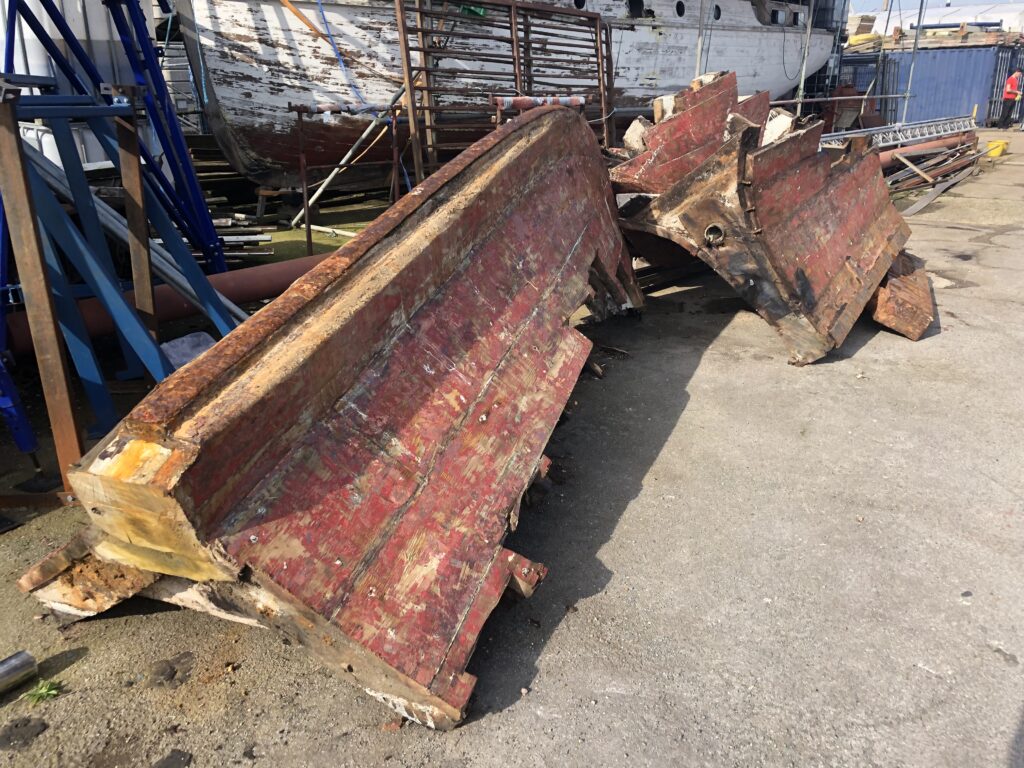
Since moving to The Blackwater Marina, which is a traditional yard as well, I have noted a number of vessels being broken up. During the spring an old MFV-type’ was placed in a floating dock and dismantled. Much was burnt, but some had to go to landfill. Other bits – outfit materials – were dismantled and went away somewhere…
The final bits of a ‘MFV type’ broken up in a dry dock at Blackwater Marina Yard, Essex.’
Another similar vessel in a parlous state which was towed round from the West Mersea houseboat moorings awaits cutting up. Sadly, much of the hull timber was in a relatively good condition, however, talking to one of the dismantling crew, he pointed out where poor maintenance led up to its fate – a far too common story!
Currently an old steel tank barge briefly a failed houseboat project is being cut up.
Is this poor little thing ever going to feel the caresses as she forges over a flood tide…
In the yard there are craft fit only for disposal, in the moorings too … however, as yard managers have aft told me, ‘if the bills are being paid…’
It is a problem.
It is a problem that has to be dealt with!
In that, the ‘solution’ being worked in the USA may lead to government funding to assist in disposal for it is not cheap. It is that or local authorities and yards need the legal teeth to go after an owner, or if one cannot be found to apply for a grant to legally dismantle such vessels.
At the end of the day, an end of life plan must evolve: plastic (GRP) cannot rot or be burnt as wood can or steel recycled.
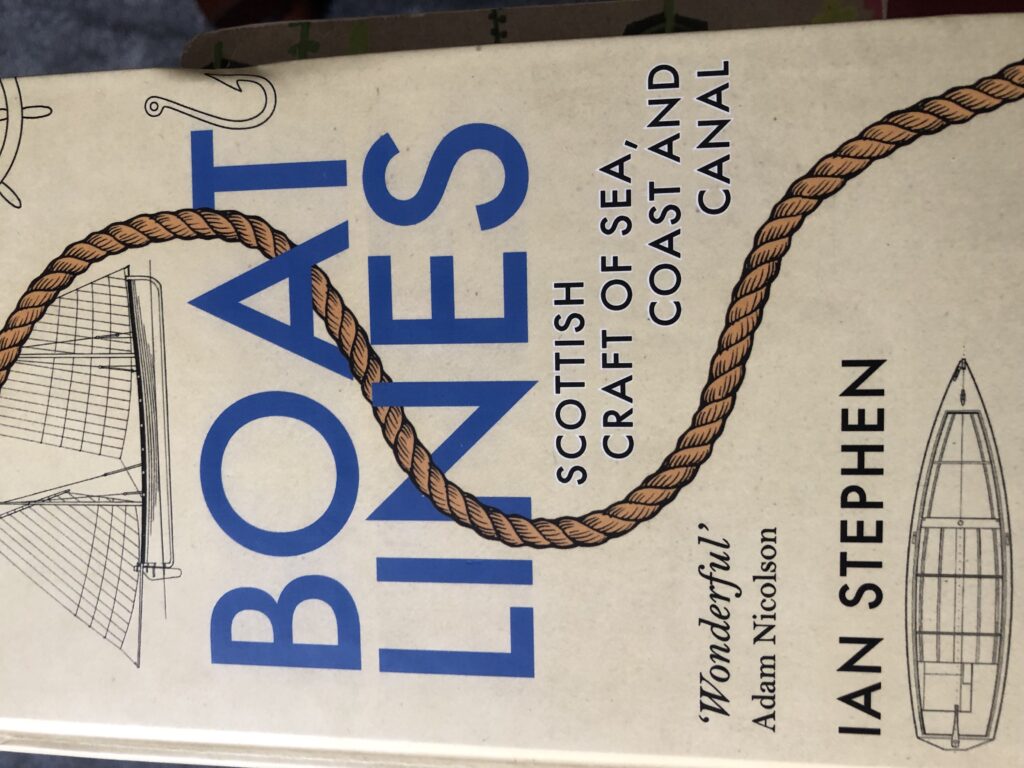
Whilst in Scotland during May and early June, Christobel bought me a book she found in Fort Augusta about Scottish boat types. I wasn’t too sure, but looked interesting with a cursory flick through – ‘I am glad I said yes please…’
The author Ian Stephen has had a long association with Scottish craft, being brought up with them and has continued to sail them, as well as his own family cruiser based in the Western Isles.
Ian weaves into the boat types stories behind them and associated folk lore. It reminded me, in a way, to ‘The Salty Shore by John Leather.’ However, it is rather different!
The book…
The book covers all types of craft up to the size of the Scottish Light Tenders (with their associated work boats) and the Clyde Puffers – of which two examples currently live on the River Medway.
In a section about the craft from the likes of Watson, Mylne and Fife, there is a passage that rang in my heart: I have said the same thing!
About the King’s Britannia he talks of the revival of the big class yachts, J’s and such and says: ‘What if Britannia had been handed to a charitable trust instead of being stripped and deliberately sunk? What is committed teachers had worked with young people of deprived parts of cities, say Plymouth, Swansea, Belfast and Glasgow? He continues by asking the what if about these youngsters racing against the millionaires’s rebuilt boats…
Yes, well.
The same could be asked of Everard when they deliberately broke up two good sailing barges in 1963.
Thank goodness we now have organisations like the Sea Change Sailing Trust with their new spritsail barge Blue Mermaid…
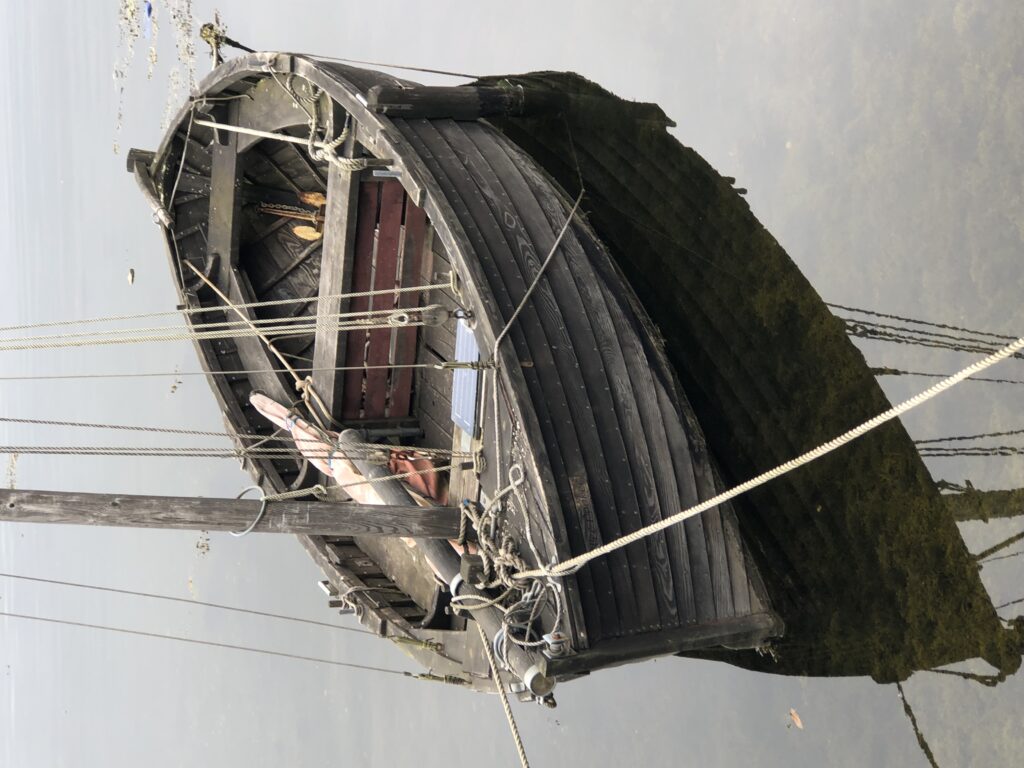
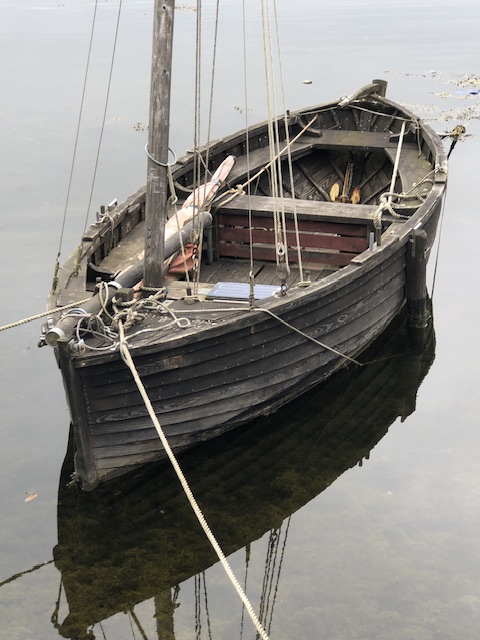
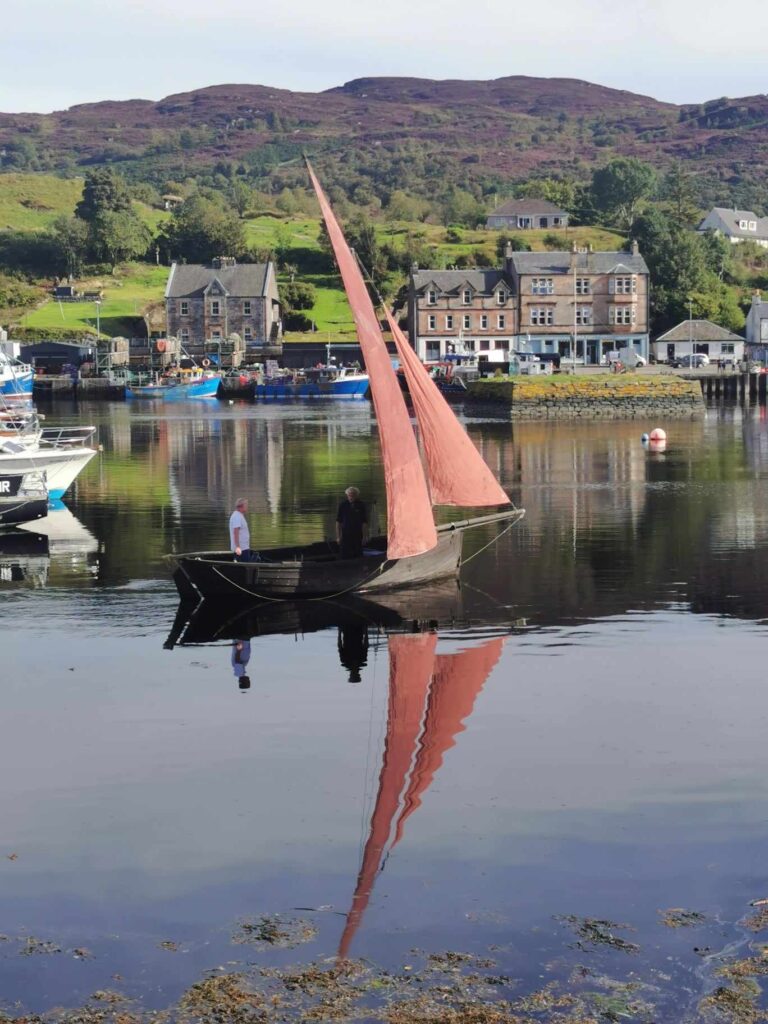
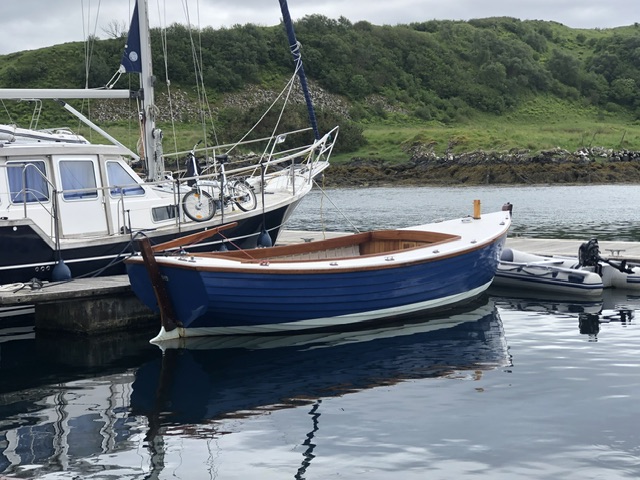
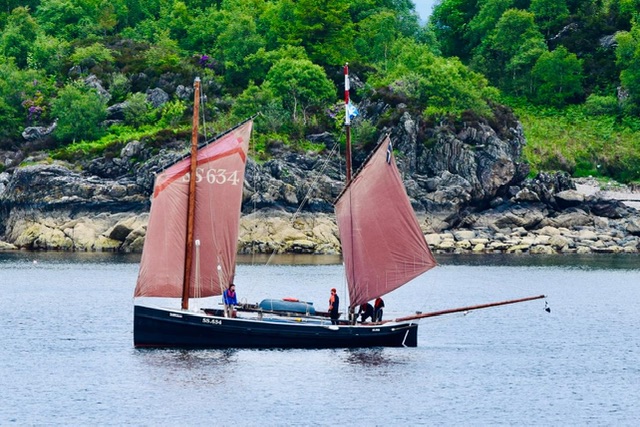
While staying in Tarbert, Aygyll, I spotted a traditional open fishing skiff. She’s a Loch Fyne Skiff built during the last decade by a local boat builder, A & R Way, who involved local students in her build. Her hull and rig, a raked single mast with a standing lug, defines her type.
‘New build’ of a Loch Fyne fishing skiff.
The author also discusses repurposing designs for a modern use – largely in rowing. All round the UK and many places abroad, the rowing of skiffs and traditional west country gigs has become hugely popular.
Many of the Scottish small beach launched craft used pebbles as ballast, however, in the modern rowing usage, the ballast is the people. and I am sure a ‘rower’will tell you that weight distribution makes a huge difference.
Some types have been recreated, and the author questions why. He says in chapter 3: ‘The purpose of Wee Hector, built by Mark Stockl (then with Ullapool Boatbuilders) was not clear. A role in the encouragement of tourism was one of the funding criteria. But there seemed no practical plan for fulfilling this.’
I was reminded of the Leigh-on-Sea Endeavour project – the rebuild of a typical mid 20th century cockle boat. She does very little apart from attending ‘flag’ events. Her rebuild funding criteria included taking youngsters afloat. Little if any of this is done for varying reasons – safety limitations, as far as I know, is one.
Another type covered was the Plockton racing dinghies. I’d come across these at Plockton while sailing aboard the Gaff Ketch Eda Fransden some eight years ago now. Several were listed over on the shore and their lines were interesting along with a deepish keel shallowing like working craft towards the bow. The rigs are tall, nothing at lal similar to a working boat where sail area was kept deliberately low aspect to help with sailing in often far from perfect conditions.
A Plockton Boat all painted up and awaiting her mast…
Many a Scots builder’s outputs can be found in our east coast waters – the Miller’s, the Zulu’s and east coast two masted lug rigged boats. Sometimes, the mouldering remains can be seen too.
A ‘Miller’ type seen ahead of Whimbrel at Maylandsea Marina.
My one gripe: the author often discusses at length a certain type with its rig set up but doesn’t include a picture… the book is scattered with little line drawings and sketches of craft, but I was often left wondering…
That said, I found the book very interesting and full of knowledge. I enjoyed it immensely and feel I have been educated into the bargain…
The book: Boatlines, Scottish Craft of Sea, Coast and Canal, by Ian Stephen, published by Birlinn, Edinburgh, 2023. £16.99.
The Mate and I have been on a two week heist to the West Coast of Scotland with a Northumbrian stop-over on our way home.
We have had two sessions in the western isles waters aboard the fifty-foot gaff cutter Eda Fransden (One is told about in my recent book: Sailing through life…)
After a distance break in Carlisle, Glasgow was visited for the opportunity to visit the Burrell Collection. Brilliant! From there we were booked to stay with my cousin and his wife in Tarbert, Argyll.
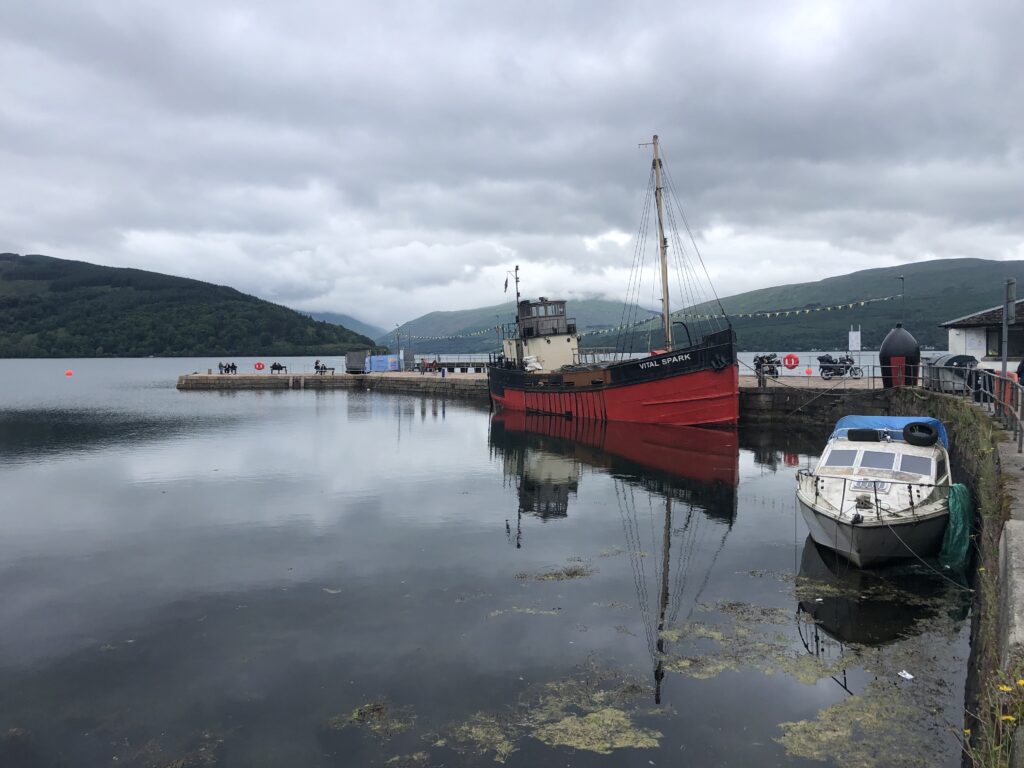
The steam puffer Vital Spark at Inveraray.
Onwards to Tarbert…
Rustic and original to the core.
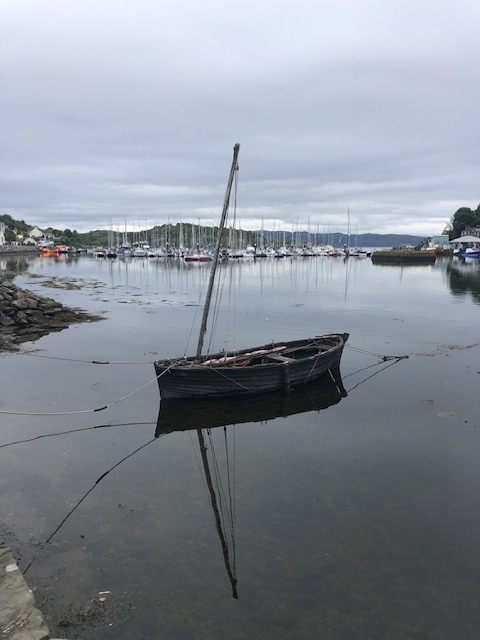
In Tarbert harbour was a small local traditional fishing skiff, rigged with a lug sail – whether dipping or not I couldn’t tell. According to my cousin, the boat does get used and isn’t just for show!
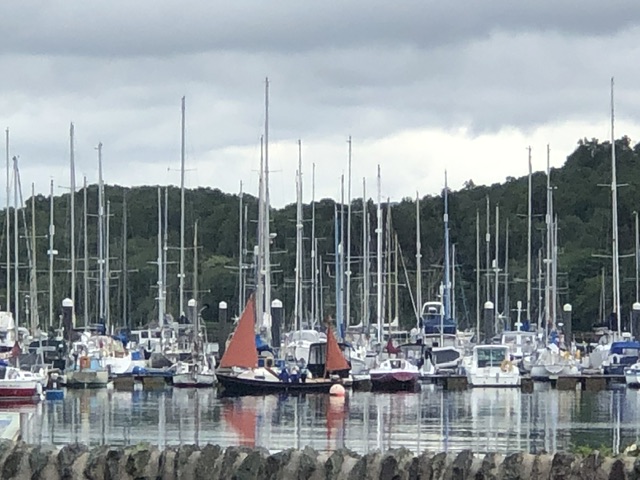
Tradition sitting in her own reflections with very modern sisters in the marina beyond.
Although the marina looked to be stuffed full of plastic, it wasn’t, and some, as it turned out was classic!
The vessel written about gloriously captured under sail. Picture: Jenny Hunt.
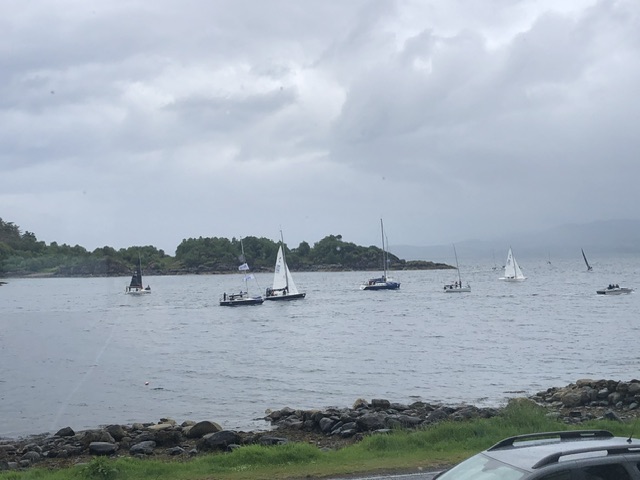
Our visit coincided with the Clyde Series Whitsun Bank Holiday Weekend Regatta. Wow, I was suitably impressed by the time we departed…
Sail & Oar – a little Drascombe gliding slowly home Sweeps were used for final berthing.
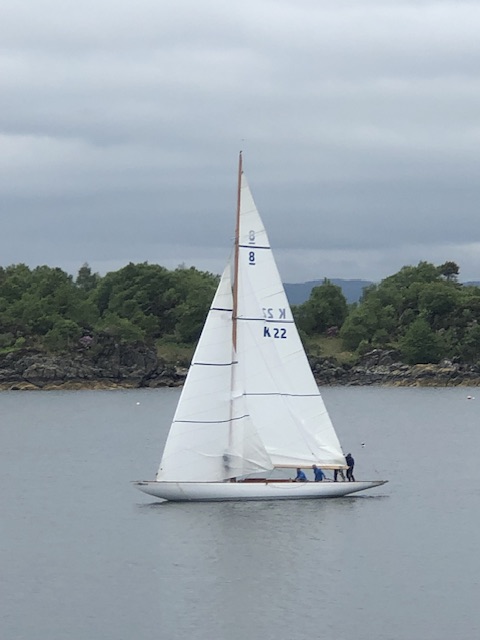
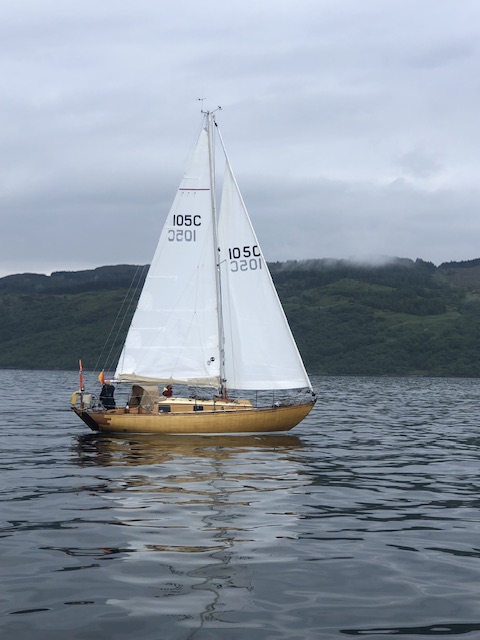
Driving up towards our weekend abode, I spotted this 8 m tacking slowly home after the first day’s racing (Friday). It was clear she had a wooden hull.
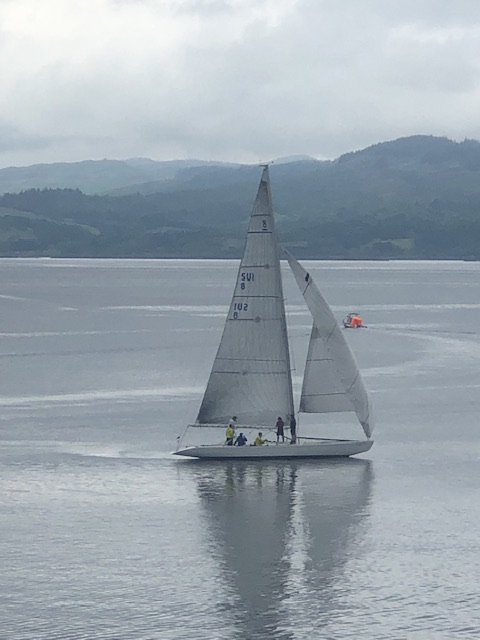
Later during our stay, I spotted a modern ‘8’ with a Swiss sail number.
Fulmar – originally to be called Oonah she was drawn by William Fife III in 1929, at height of his powers, and built in 1930.Details from class Facebook page.An ‘8’ with a Swiss sail number. I have emailed the class association to find out details!
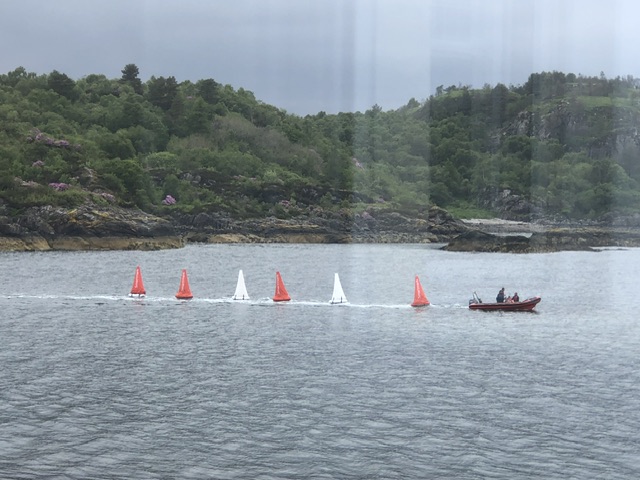
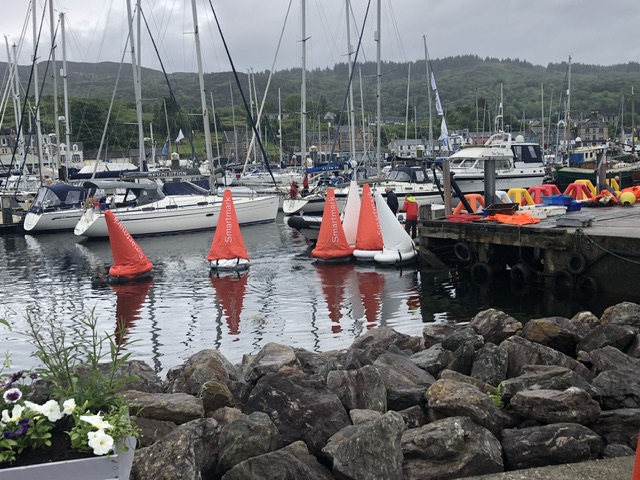
There was another wow too: we spotted what looked like miniature yachts heading into the harbour. It turned out that they were self propelled marker buoys and have been in use in ‘international’ regattas for some time.
They are battery powered with two motor driven propellers. They are capable of keeping station and, in the need, to be ‘motored’ to a new position by a controller.
The insertion of a gps position, they will head for home. See one type found online:
Marker buoys being towed out.Early morning and they’re beginning to flood out of the marina after a night of ‘partying’!
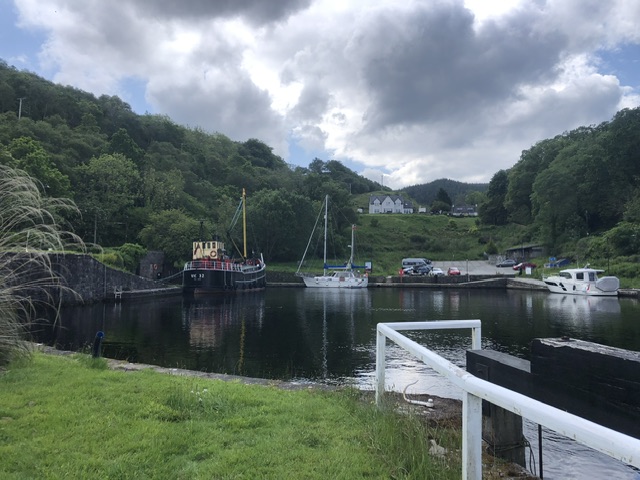
I had been ‘promised’ a sail aboard my cousin’s boat – a big Beneteau of some 35′ in length. Sunday was the day deemed best (it wasn’t in the end, but a good choice!). A walk and a visit to Crinan at the northern entrance to the Crinan Canal was made.
In the canal basin was another Clyde Puffer, VIC 32, dating from 1943. It is privately owned and operated. Close by a sleek motor boat sat with drooping ensign and burgee. Passing it, Christobel spotted that the burgee was familiar. The West Mersea YC!
We had a bit of a chat. The boat had been trucked up to the Clyde and the couple were on a complete summer cruising around. My cousin gave some advice about anchorages…
Crinan Harbour with puffer and a WMYC motor cruiser.
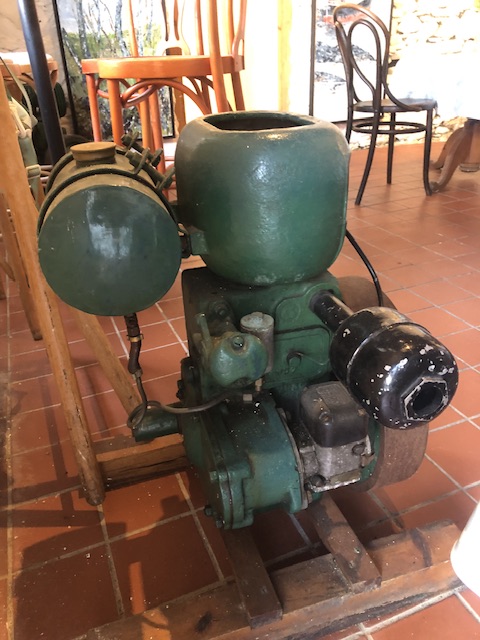
In a neat cafe sitting beside the basin I spotted a range of engines on display – all ready to go…
They were all in fact agricultural engines made by Lister, so could have been used afloat!
A Lister all ready to go…
So, to the brilliant bit. We went sailing on the Clyde!
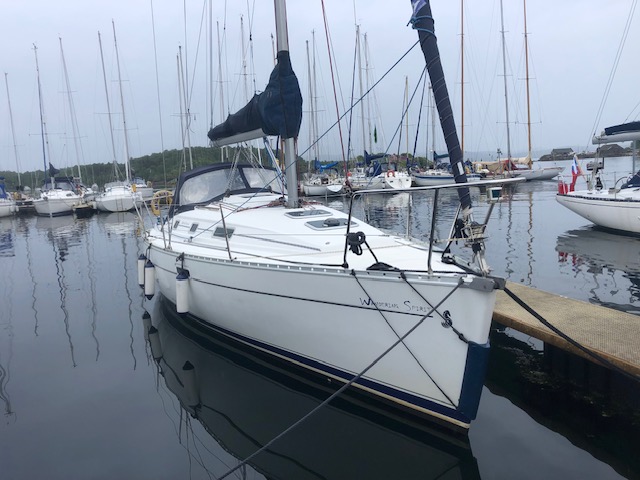
This is the yacht we enjoyed for a half day. It went from a murk to drizzle then rain…
Clearing the marina we set off down course to meet the craft as they returned. At a point near an island with the Sgat Mor Lighthouse we turned for home. It wasn’t long before the rain really set in – my mate was bravely keeping her chin up, or well covered!
Apart from some winch work when tacking there wasn’t a lot of cockpit activity…
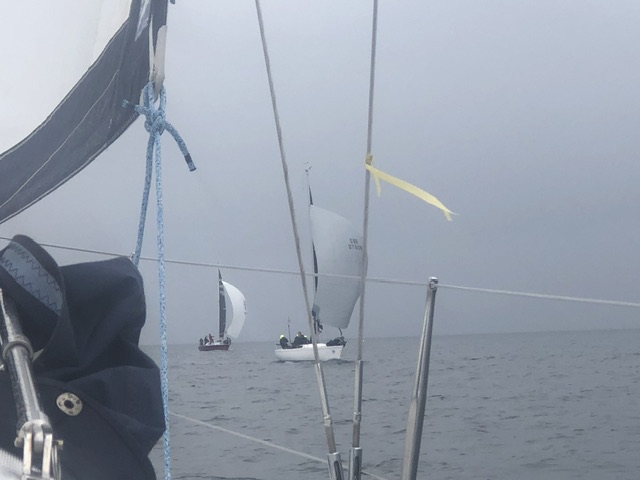
Boats coming out of the murk!
Closing the finish line, the sun tried to reappear as the rain ceased and with it a calm, which was bewitching to the tail-enders struggling to finish.
A Mc Gruer 28 – only eight of these were built.
A wooden Mc Gruer 28, of which only eight were built, owned by offspring of my cousin’s neighbours (they having passed her on) was one of these. She’d been timed out in a previous race and had felt aggrieved! They did finish in time…
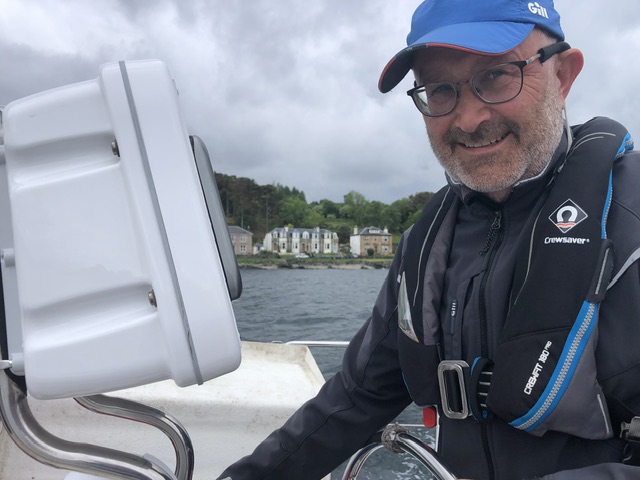
My cousin Dan…
As we went ashore after tidying and stowing gear, as one does, the race markers were collecting at a pontoon. Fascinating, but effective.
Sadly we had to leave Tarbert to continue our excursions around the coast. Next stop was Ardfern, a lovely little place with a delightful friendly marina. Littered along the loch were patches of swinging moorings.
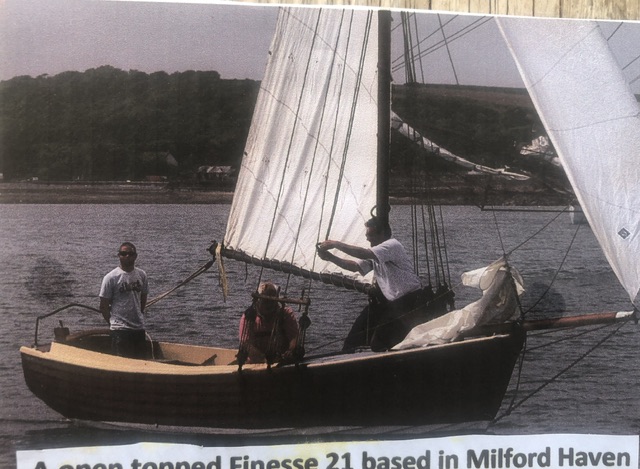
At the marina, I was hoping to spot a Finesse 21 motorised open boat, called Stravaig. This boat had come from Milfordhaven in Wales after having been sailed as an open boat. Why, is not known. Then, she was called Arab – told about in my book, The Jottings of a Thames Estuary Ditch-crawler.
Open F21 motor boat.
The boat was exceedingly well fitted out. I was though very surprised that a cover wasn’t fitted.
The boat, named Arab, as an open sailer.
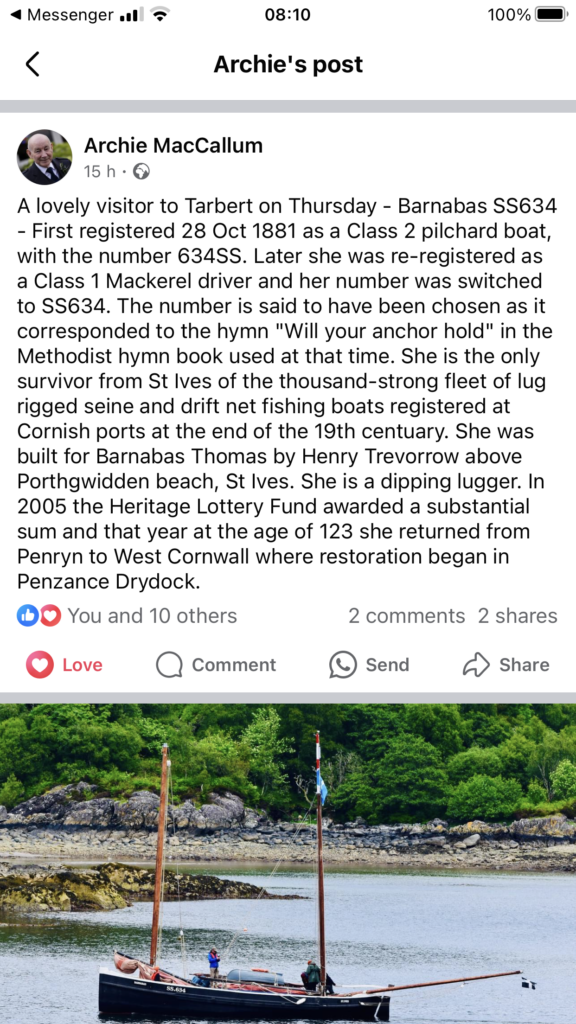
While continuing my travels, my cousin sent me a post seen locally of a Corish lugger sailing into Tarbert’s harbour. The boat was built in 1881…
See post picture for details. Amazing.
Dipping lugger Barnabas from Cornwall.
Nearing the end of our journeyings and in Northumbria, we ended up in Amble. Driving towards the town, I spotted masts and was reminded of a little sailing club – The Coquet SC – where a Finesse 24 used to be based.
Contact had been lost. I wondered, indicated and pulled in!
The sight that I spotted as we parked up nearly brought tears to my eyes for a boat that a previous owner had cherished and cossetted was a mess.
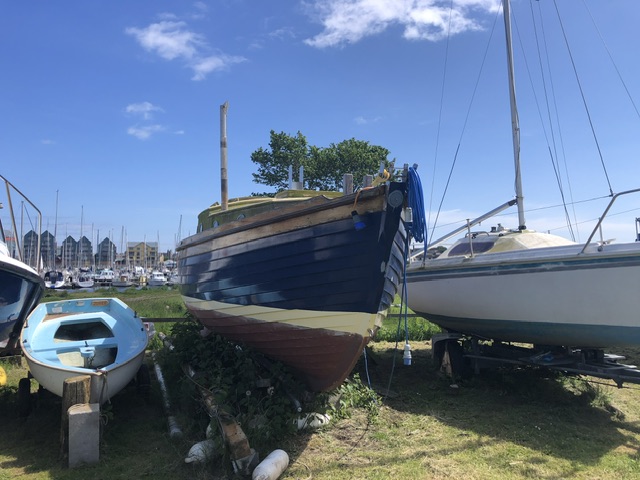
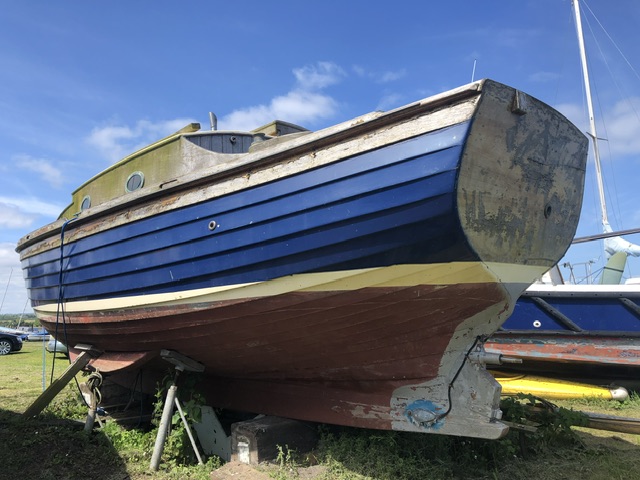
F24 Sehnsucht, ex Emma & Kate.
The boat was originally called Emma & Kate. She has teak laid decks and has a fit out above spec. She was built as a gaff cutter and her spars with loose peeling varnish sat beneath the boat.
Stern view of Sehnsucht.
The cockpit has been left uncovered and most of the varnish had failed…
I obtained some details but said would try and contact the club’s secretary again. I left with a feeling of sadness.
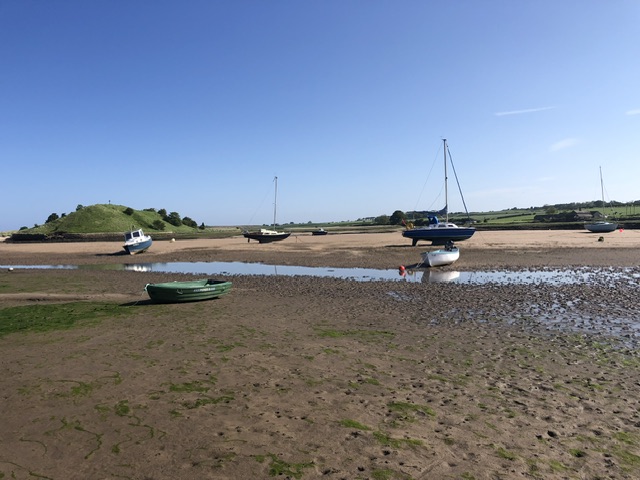
Alnmouth Harbour – where we stayed last!
It was a fascinating tour with oh so many boats on a ‘No Boats’ holiday!
Some while ago now I serviced the four lifejackets carried aboard Whimbrel and renewed our lifebelt. These jobs are just part of the well trodden list of ‘must do’ things all boaters enjoy!
But, do all boaters do these ‘simple’ checks? When the RNLI is called out so often to people crewing vessels with shortcomings, one has to wonder.
We can all end up needing assistance for one reason or another but…
Some while back I had carried out my biannual servicing of the engine oil and fuel system filters. The fuel system has never showed water in it and I went to a two yearly cycle many years ago. The engine is not overly used but it is operated regularly throughout the year, never sitting static for too long.
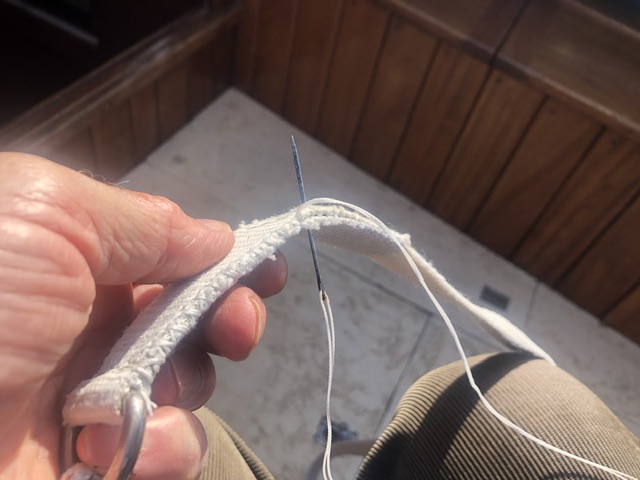
Recently, after washing the lifelines, I spotted that the ‘D’ ring turn over stitching’s had degraded, being degraded completely in part. All four ends were completely restitched.
Sewing up the D-ring turn backs.
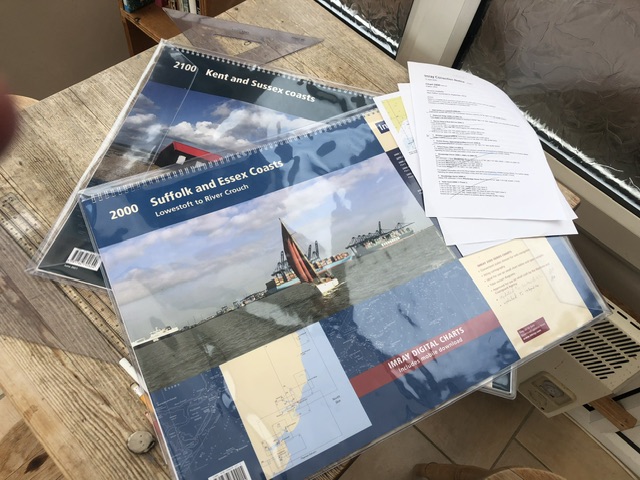
I have been checking the Imray web site chart correction pages for a while, awaiting the correction lists fired out each spring. Been slow in coming this year, I thought.
So, today, I was pleased to find them available. It has been muted that the age of the paper chart is closing out – oh heck. Everyone has a chart plotter or similar, it is said. Do they? I have a GOS Map, but I wouldn’t call it my main means to navigate.
Whimbrel’s two packs.
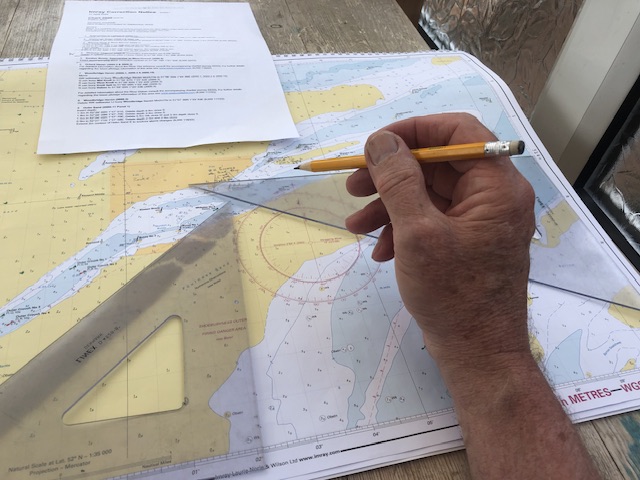
The boat’s charts have now been updated…
Checking list against those done last year.
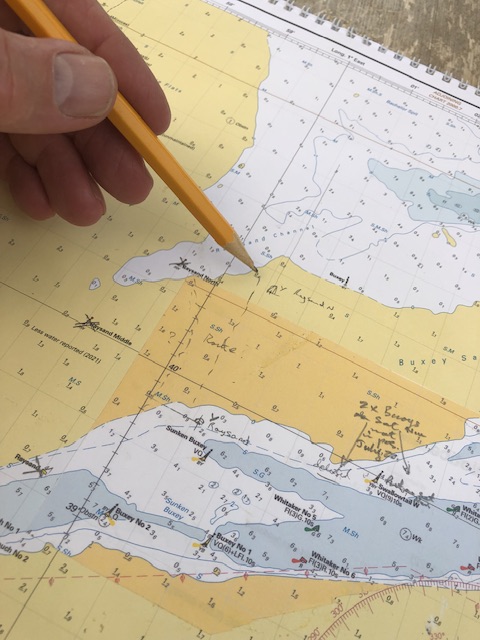
A change that has popped up is the movement east of the Raysand Swatch buoys. Now, the last time I crossed two season’s ago, I marked up the chart with where I could see there was more water: I had arrived early on the northern side having come from West Mersea and watched the tide come over. The flow was well to the east of the buoys – probably only around 300-400mm, but that can make all the difference!
New buoy positions marked. Note my pecked line from a previous crossing!
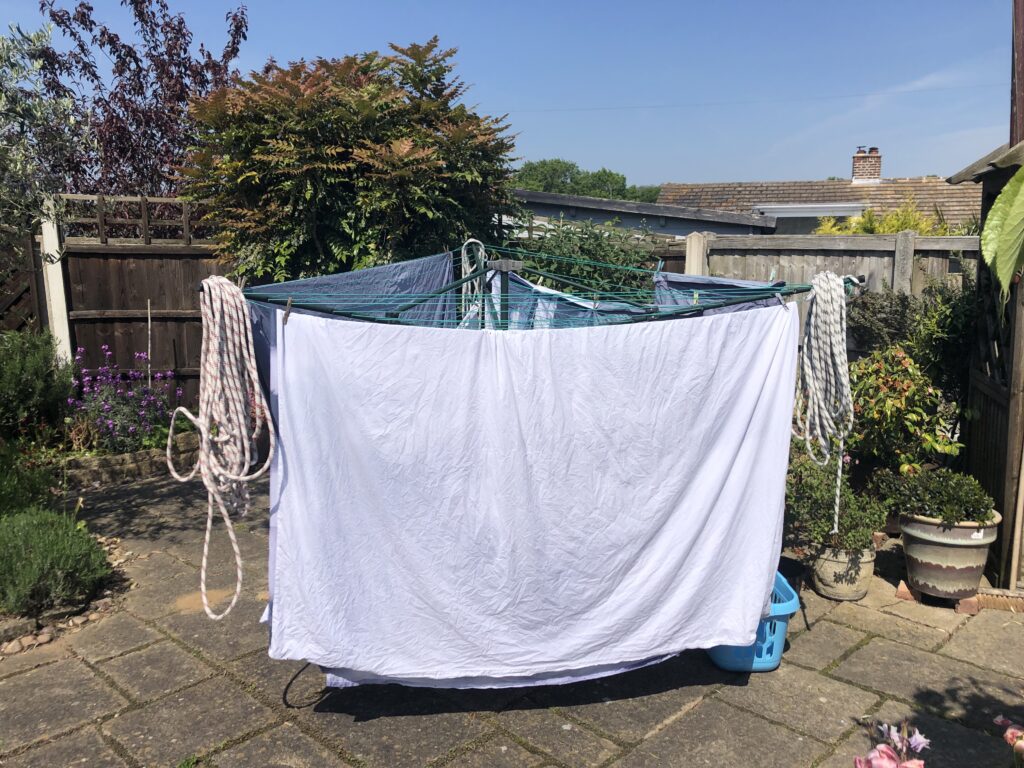
Nothing to do with safety, really, but the jib and main halyards were run out at the weekend and given several runs around the inside of our washing machine. Does them the world of good, dissolving salt and releasing airborne verdigris.
Halyards and kicker drying in the spring sunshine back home…
I shall probably run out the topping lift and spinnaker lines too…
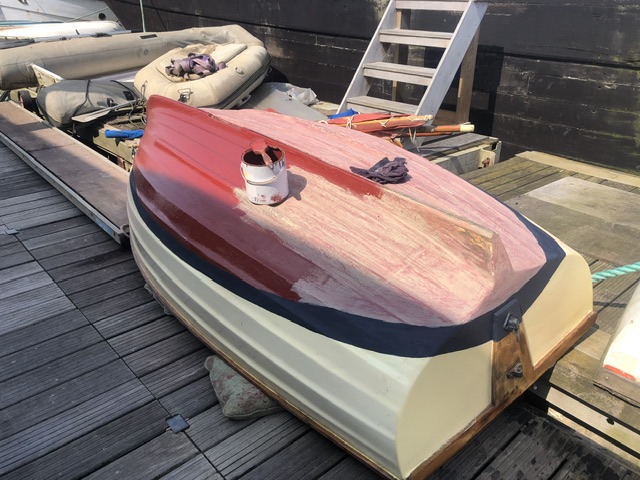
Not to be outdone, the dinghy which was given a good refit in the autumn, had her bottom rubbed down and freshly antifouled. I use a soft ablating paint for one doesn’t want unnecessary build up.
Antifouling the dinghy’s bottom.
Apart from completing our build up of general stores loaded aboard for the summer, we are ready for the off!
‘So…’ my good mate began to say, adding, ‘what are you going to do when I’m in London on Wednesday?’
And without pausing, grinning wickedly, added, ‘why don’t you have a night down river with your mistress…’
Departing, sailing out under jib.
Having recovered from a blush: I’ve never ever had ‘the enjoyment of a mistress’ I wasn’t sure the mate was serious!
She has, however, amongst her many girl friends, oft referred to Whimbrel as my mistress, so perhaps that was her tack…
The boat has many similar virtues, for sure, others it couldn’t provide, but one thing a boat can’t do is argue!
The mighty Hydrogen passes, Maldon bound.
So, on the Tuesday of this last week, I gathered up all I needed and hightailed to the boat at Maylandsea’s finely situated marina. A few jobs were done before the tide neared and it was time to get the sails and such ready.
As the tide comes up Lawling Creek – although there is always a little water in the rill – duck, geese and a myriad of waders begin a frenetic gleaning, sieving the mud before it covers.
Cracking along towards the top of the flood.
In Lawling Creek there has been a myriad of bird life all winter and into the spring. There are still numerous over-wintering Brent geese, but I haven’t yet seen any terns – late?
It was an easy sail down river and I just about reached the Nass before the turn of the tide. I stowed the main in clear water and sailed under the working jib towards the quarters channels, looking for the entrance to Mersea Fleet.
Between the outer withies – the gap is just a couple of boat widths!
I spotted the line of buoys, then the perches marking the outer channel came into view. These withies have been marking the entrance here for around three years now: the channel has been threatening to close off – a result, I believe, of the beach recharge/regeneration of both Cobmarsh Island and Packing Marsh island.
Still no terns, I noticed. Normally by this time of the year they will be seen sitting atop various buoys, withies or anything else suitable.
The line of empty mooring buoys.
Once inside, I chose a clear patch to amble forward and douse the jib before puttering to one of the many vacant moorings.
Looking closely at Packing Marsh Island, it is hard to believe that its time with us is that great. The beach recharge appears to have been attacked since done and it seems as if it is as it was a few years before hand.
I enjoyed a fine supper of fresh cheese topped bread, sausage with a onions with baby tomatoes… I washed it down with a bottle of ale!
supper gently sizzling…
Not long after sunset, the forward bunk was calling, so after washing up, a coffee and some chocolate found in my stores (stowed by my dear mate), I hit the hay!
Sunset over the Packing Shed.
The night was punctuated by what sounded like a raucous party on Packing Marsh Island. It wasn’t a bunch of ravers but a cacophony of gulls – the big variety – deciding that from time to time they would let humans know about them!
I awoke to a calm. Well, almost: there was a gentle east-southeasterly which barely ruffled the reflective surface of the ebbing tide.
Good morning May!
The peaceful slightly high cloud morning soon developed into a glorious day.
Not needing the jib, I stowed it before setting about stitching up the ends to our deck lifelines. The stitching was degraded … I got one done and fitted before leaving. The other is being done back home!
Sewing up the D’ shackle ends of safety line.
In the glorious conditions I sailed off the mooring, gybjng round to head out, serenaded by the squawks of the hull population. I grinned for I’d had to clean the cabin top after a full decided to land earlier and use Whimbrel as a latrine…
Clearing Mersea Fleet I tacked out of the Quarters to round the Nass – a rite of passage and for a New Zealand friend – before heading for Sales Point on the Bradwell shore.
Sailing round the Nass.
Closing the shore a ‘school’ boat crowded with outward bounders tacked across Whimbrel’s bow, forcing me to come round too – the person in charge, forward, lifted a hand saying something to the helm. Bad teaching was my view! Still they were out on the water enjoying themselves!
Not overly enamoured by our police force: never found them either helpful of friendly. I got ‘challenged’…
Shortly after, the ‘men in black’ roared alongside … the marine police! The conversation ran along these lines…
‘Where have you come from?’
‘Where are you going?’
Answering both, ‘West Mersea to Lawling Creek…’
‘Then…’
‘Home’ I said!
‘Oh, last of ebb out and flood in…’ the speaker said.
I looked at him and just said, ‘Yes…’
They left after saying ‘enjoy…’
Sorry, but neither I or the Mate have one iota of respect for our constabulary after the way they treated us during the Covid pandemic after we were threatened by an Essex sailor who touted the law. It was poorly dealt with. They are a waste of space…
The Cirdan Trust’s Queen Galadriel off Bradwell Creek.
Outside Bradwell Creek the Curran Trust’s Queen Galadriel was sitting serenely to her anchor. She did look a picture.
Lonesome sailor!
The tide was on the turn and Whimbrel’s speed increased accordingly and the distance to Stansgate Point was eaten away.
Closing Stansgsate Point.
Passing the Marconi Sailing Club there were two yachts in launching trollers ready to go in. Ashore there were dozens awaiting a turn!
Two yachts ready for launching – seems to be dozens line up ashore!
Sailing into Lawling Creek, I dumped the Genoa and reached inwards. As the boat scuffed the bottom, I rounded to stow sail and felt my way to a vacant mooring to await sufficient tide.
Lawling Creek seals.
There were the usual seals basking in the mud with others in search of food in the water, crested grebe, duck, Brent’s and a myriad of waders to look at as I sat in the sunshine with my lunch.
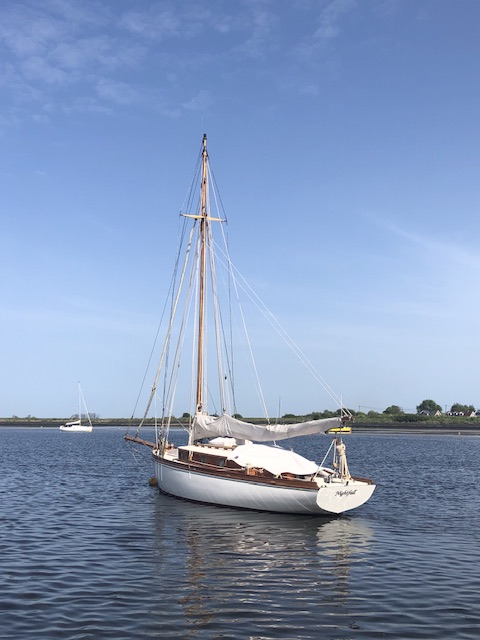
Maurice Griffiths old boat Nightfall now out on her mooring.
The wait didn’t last long. We soon learnt at weary stage tge tide was sufficient to gain our berth. I slipped in after a momentary stoppage all ready to depart home to my mate upon mooring up: I’d missed her…
This was my first overnight sail of the year away from our new base – a new experience, but one I enjoyed very much. The ‘missing’ mate was a downer, but, hey, I’d had my mistress…
Something in a Marine Industry News bulletin came to my attention recently; Spirit Yachts of Ipswich are building a new ‘mini’ J Class.
The class was known as the Q Class. These were an American designed yacht specifically used as club racing and as a test bed for the J Class yachts and their crews.
With money to build these from around 1900 through to the nearness of WW2, it is easy to see how the Americans remained holders of the cup for so long. They were thorough beyond anything done in Britain!
Apparently there are a few of the class which eventually numbered around sixteen still sailing. Another, currently in a rebuild, is due for completion in 2026.
The new vessel’s design is complete and the new build is due to start around now. Those that berth in the Ipswich Wet Dock may well be lucky enough to see her in a year.
Be great to joust on the river with her!
P.S. the crew of a ‘big’ Spirit all gazed and waved at us last year…
These days, with the America’s Cup, all teams have an exhaustive series of matches and then there are the preliminary race series leading to a contender… A far cry from ‘dragging’ a crew from yachts and fishing boats to man those giants.
The story of how we decided to purchase a new build Finesse 24 is told about in Chapter 2 of my book, ‘The Jottings of a Thames Estuary Ditch-crawler’ published by Amberley Publishing, 2011. It remains in print and available.
The story also wraps up the history of the Finesse classes after Alan Platt (and Shirley) graciously agreed to sit and talk to me about how it all began. It was and remains a fascinating tale.
My Mate’s seal of approval upon a first visit to the yard can be put in a nutshell: ‘Yes…’ after we had toured a couple of craft chocked up around the yard in its woodland setting in Daws Heath, Essex.
The boat had all the parameters that had been discussed, apart from: a walk round bed (nearly), a deep bath, a washing machine and a power shower… Of course, these were all a joke!
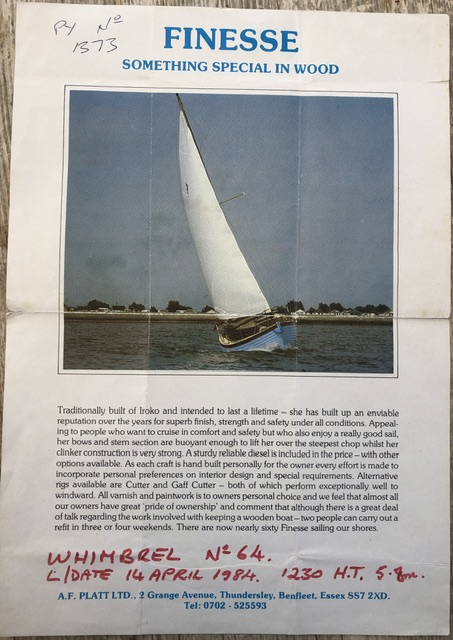
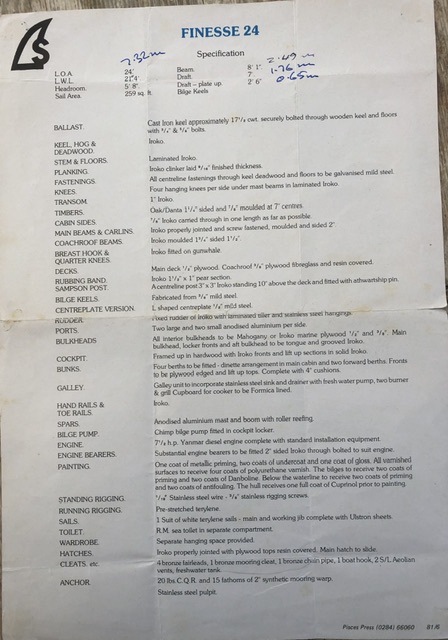
Front of A4 information brochure.Constructional details on rear
I had explained to Alan and Shirley that I was on the point of selling our Yachting World Peoples Boat and would contact as soon as sold. I was also due back to sea – in the latter point, I was sent to a ship that disappeared off to the Caribbean for the whole time the boat was being built!
I seem to remember we lost a sale and then one Sunday lunch time received a call from a chap to say he wanted the boat. After a visit, a price was agreed. Within a week we were boat-less!
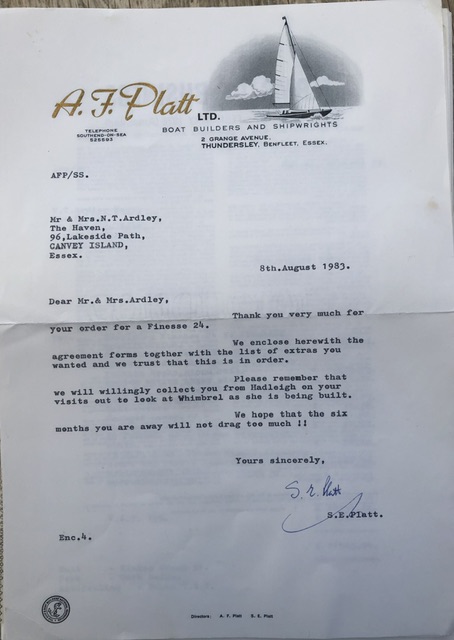
Confirmation of our order from early August 1983. Note: offer to collect from Hadleigh…
Alan and Shirley were delighted with our news of the sale and our definite order…
Along with the order confirmation was a comment from Shirley offering to pick Christobel up from Hadleigh – she had to get a bus from our then home on Canvey Island (where she was a school teacher) and we did not at the time have a car. Our boy was buggy-bound… It was an offer that has had an enduring appreciation.
A build/sail number was given to us and we gave over the boat’s future name, Whimbrel, and colour scheme, which has remained unchanged from her build 41 years ago. A whimbrel is a northern curlew. It is smaller than the one generally seen with a slightly shorter bill. During some winters they can be seen well south of their normal breeding areas up along the north coast of England and Scotland.
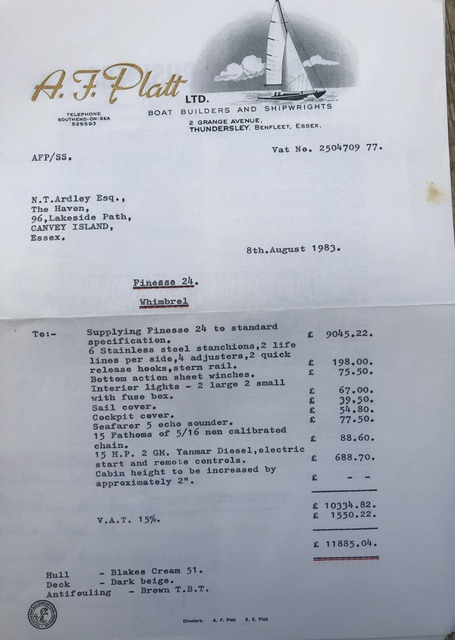
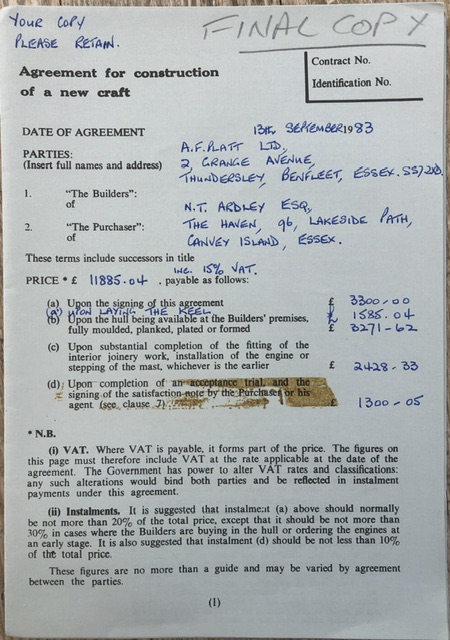
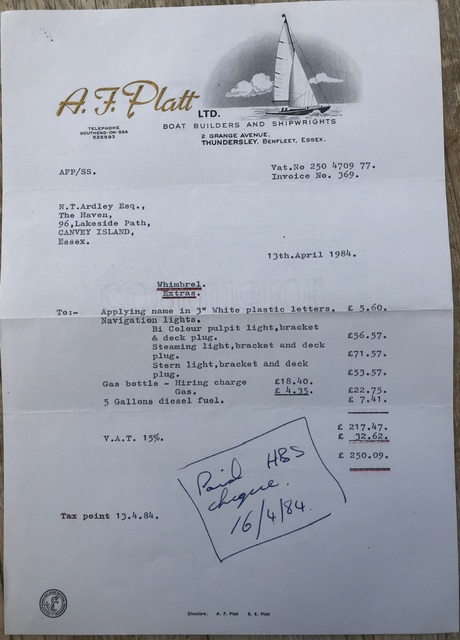
A list of pre-build extras was agreed and with A F Platt Ltd and the final build total. It was a tad more than our then house had been in 1977/8!
Build extras included uprated engine installation.
Of greatest importance to me was engine power: I had worked out using an equation from one of my engineering/ship design books that the single cylinder Yanmar being offered was at full whack to get to design hull speed. Diesels need to work hard, but!
We took out a Lombard Marine Mortgage for just over 60% of the boat price. I soon after gained a promotion and we paid it off within three years…
The Agreement!
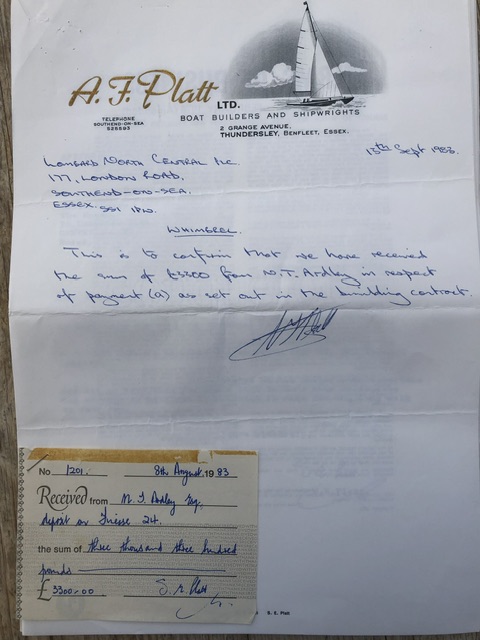
One of the things Christobel never really got her head round were the stage payments which she had to sign for.
Initial payment to get going!
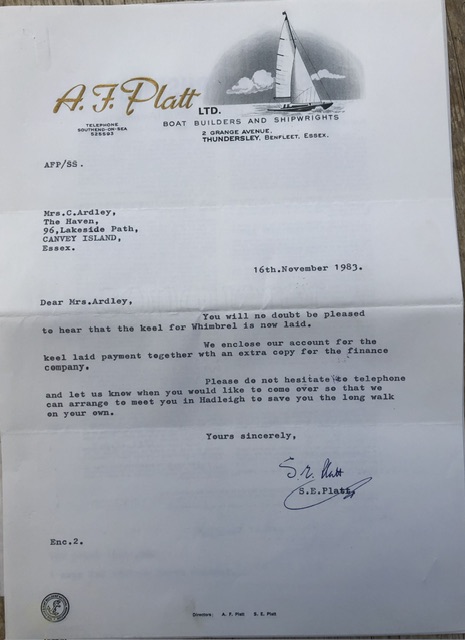
She wrote to me that the keel had been laid and had to witness before signing. She said ‘There was a piece of wood on the floor with sticks at each end…’ Bless!
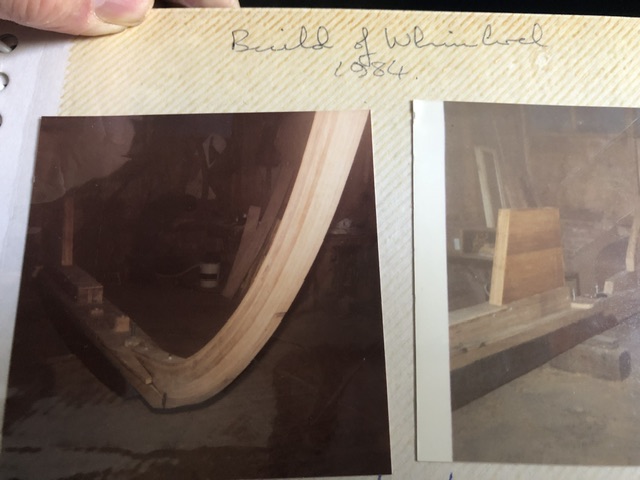
The keel is laid…
At the time Christobel had an old camera – this was before the advent of digital or camera phones – so the quality was a little poor, but she did her best.
Our photo files has the build under ‘1984’ but most are from the autumn/winter of 1983: the boat was finished by the end of February 1984.
The Mate took these: I was away at sea! Keel laid… Note: 1983.
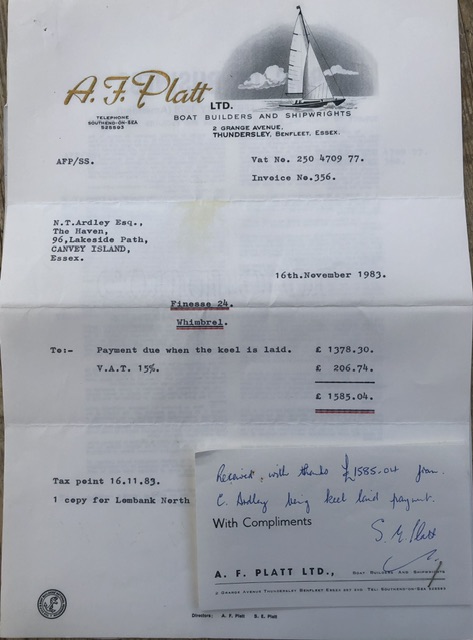
The paperwork arrived in ‘telling’us of completed stages quickly followed by the invoices.
Christobel found it hard to understand what she was paying for!
I have copied all the keel ones, but just the invoices of following stages. The bald simplicity states the case: ‘Payment due when keel is laid…’
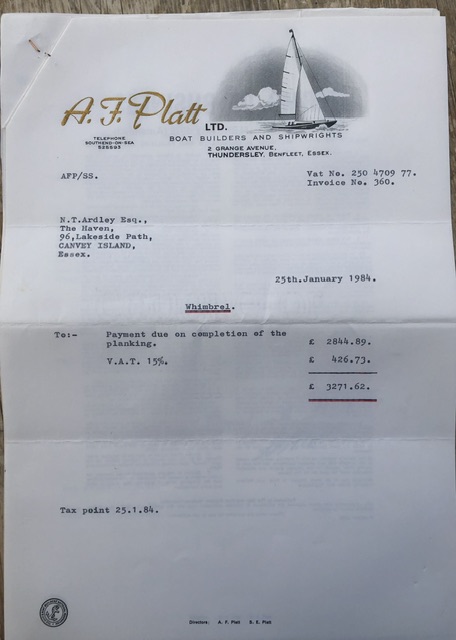
The next was a big jump: ‘Payment due on completion of planking…’ Thgis must have been completed before Christmas for much structure was in by my Mate’s inspection visit.
At this point the boat’s hull was our Whimbrel!
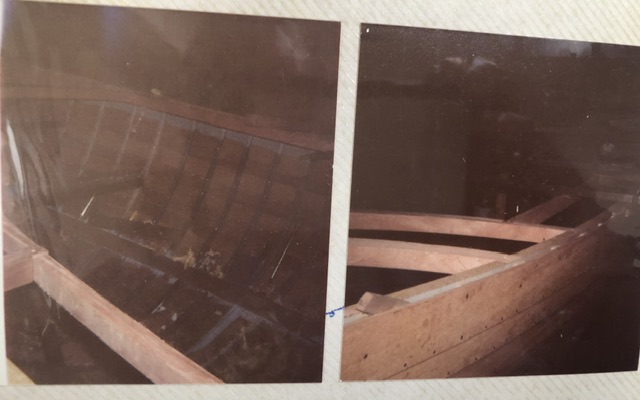
Completion of hull planking – wish I’d been present for these stages!Hull planking completed.
After planking up and fitting the ribs, beam shelf, deck beams, carlings and the longitudinals for the cabin sides, Christobel visited and took a few pictures… It wouldn’t be long before the cabin sides were fitted with its associated coach roof beams, but we do not have a record of this.
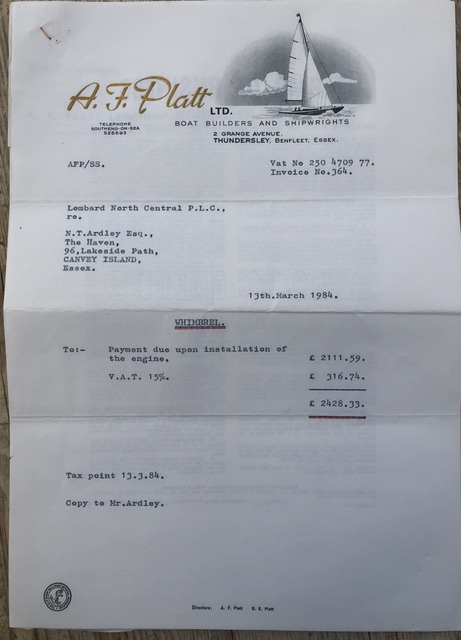
The next payment came close towards the end, just a month before the delivery/launch date. This was for installation of the engine: surely the structural and finishing work must have been completed below and in cockpit by then.
Payment for installation of the engine.
I arrived home from the ship I was on just a week or so before the boat was contracted to be launched, although Alan Platt was flexible with this in consideration to my job! Alan had spent his National Service years with the Royal Logistic Corp – afloat…
Launch Day was approaching very quickly, barely giving me time to get reacquainted with ‘home life’ and to get essentials aboard the new boat.
I found the boat outside the build shop with its mast up on the boat, lashed, ready for the launching. I had a good look around, stowed warps and fenders in the cockpit lockers and left the yard with a glow inside: this beautiful creation would be under our protection soon.
There were a few sensible extras added on – these were paid for after the launch!
Strangely, I have no pictures, but this was before the advent of digital cameras, let alone iPhones. I had a good Pentax at the time so am nonplussed as to why not!!
Various family members came for the launching plus some family friends as we had a bit of a party afterwards.
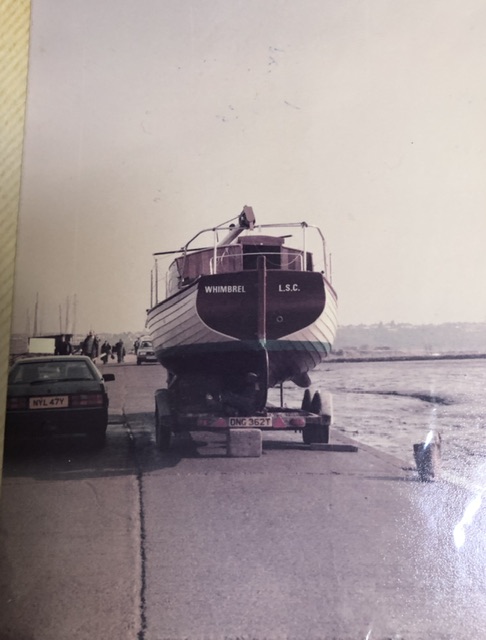
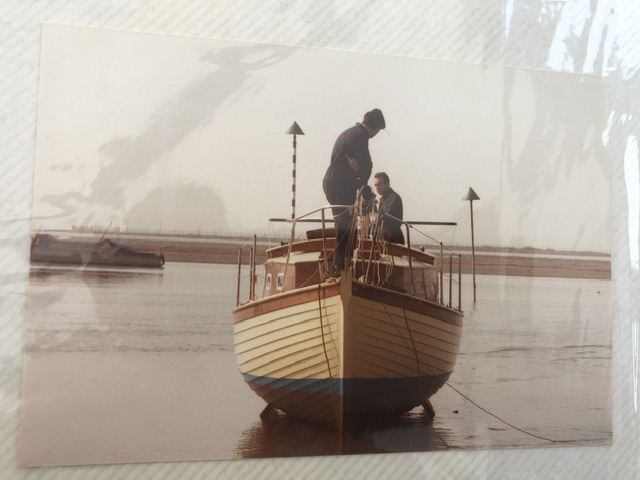
Launch Day – Saturday 14th April 1984. Whimbrel arrives on the hard at Two Tree Island, where many of the Finesse class were ultimately launched.
My sister who had a car acted as taxi to all. My youngest brother and his then girl friend were given the pleasure (honour) of being Whimbrel’s first crew.
The boat arrived on a trailer behind Alan’s landrover. It was bit by bit jacked off the trailer and left on low chocks. The tide was around the boat by the time the mast went up.
Tide is rushing in and mast is about to go up.
After the boat floated, I boarded and went off for a ‘delivery spin’ with Alan and another. Upon returning to the hard, Alan formally handed Whimbrel over, and that was that!
A bottle of fizz appeared and it was ceremoniously poured over the ship’s head, then my youngest brother and his then girlfriend boarded for passage to our berth in Smallgains Creek.
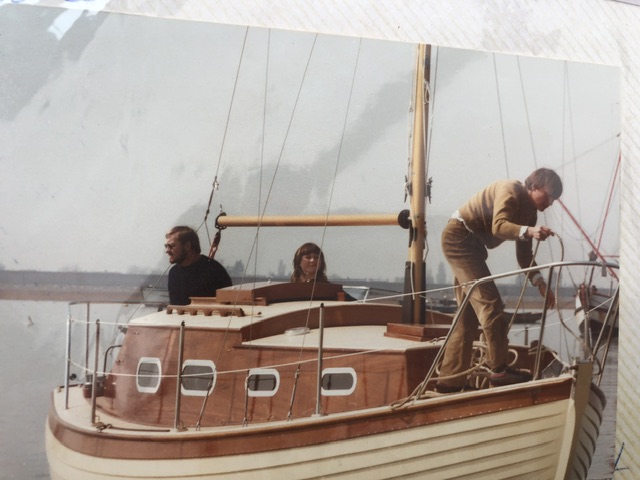
Boat looking resplendent and I have my hands on the tiller for the first time…
Going into our berth, I vaguely remember bumping the boat – no damage ensued. It was the first time in and first bump!
My leave period wasn’t long so we were soon off using Whimbrel as oft we could. Christobel was not teaching at the time and the boy not anywhere near school age – we were free.
Not long after her launch, Whimbrel was photographed by an owner of a Trident 24. A GRP boat with very close looks to a Finesse 24 – squatter and less roomy. The crew came alongside us at Queenborough and asked to come aboard – one asked, strangely, why the ribs weren’t fastened with grip fast nails! I have never forgotten his question. His experience ran to the Eventide type…
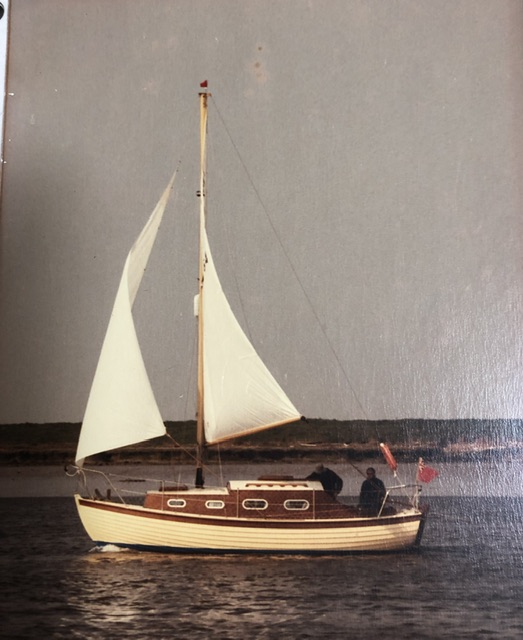
Whimbrel captured by a fellow sailor approaching Kingsferry Bridge on the Swale. He kindly sent this picture. It was our first trip round the Swale – June 1984.
So, moving on forty years we gave the boat a bit of a refit during May and June 2023, just short of the fortieth anniversary of our ordering Whimbrel.
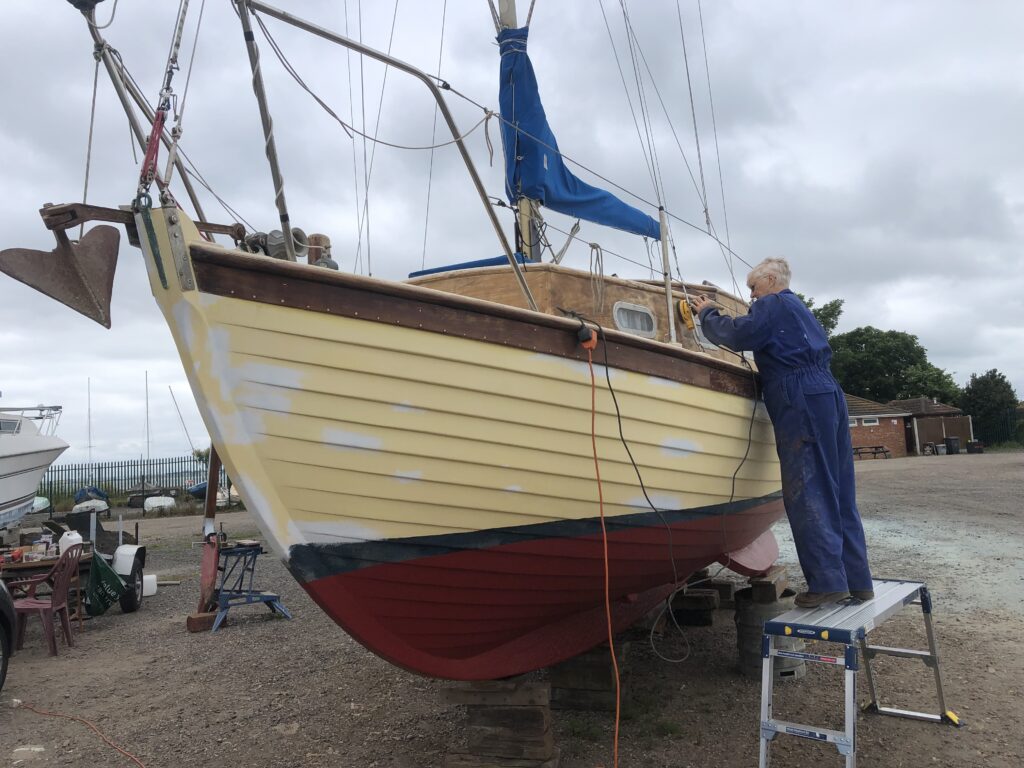
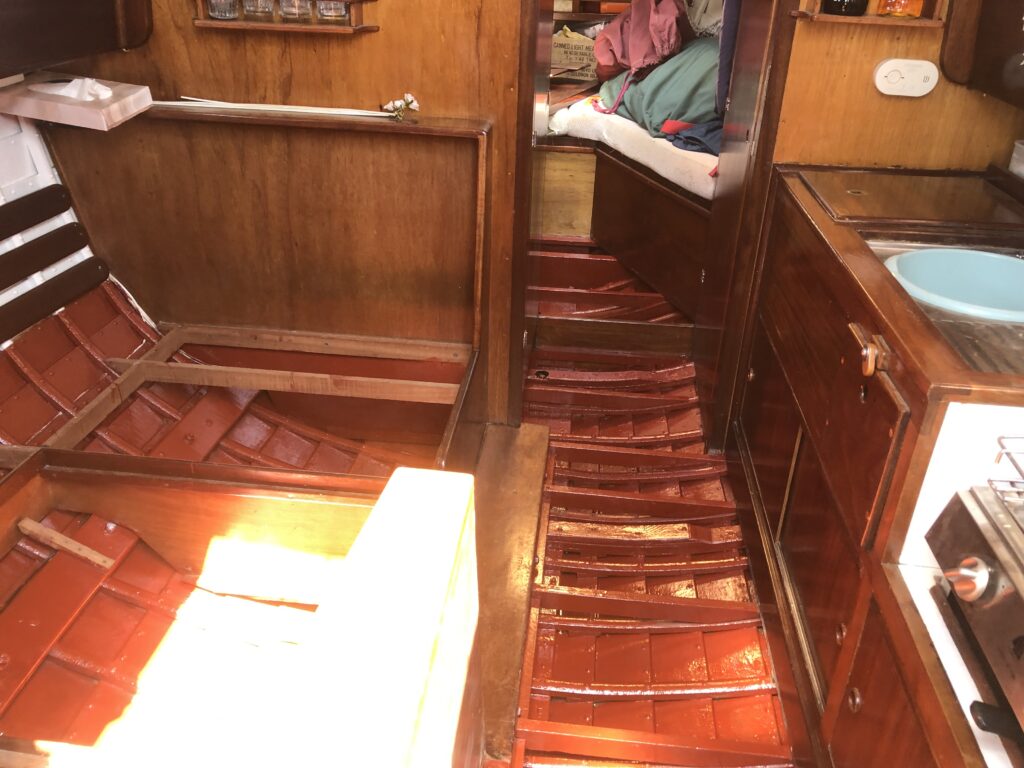
Mate sanding after stripping varnish off cabin sides – May 2023.Bilges through to fore cabin after repainting – June 2023.
The boat was out of the water exactly four calendar weeks. Upon relaunching we sailed directly for the River Medway for a couple of days away.
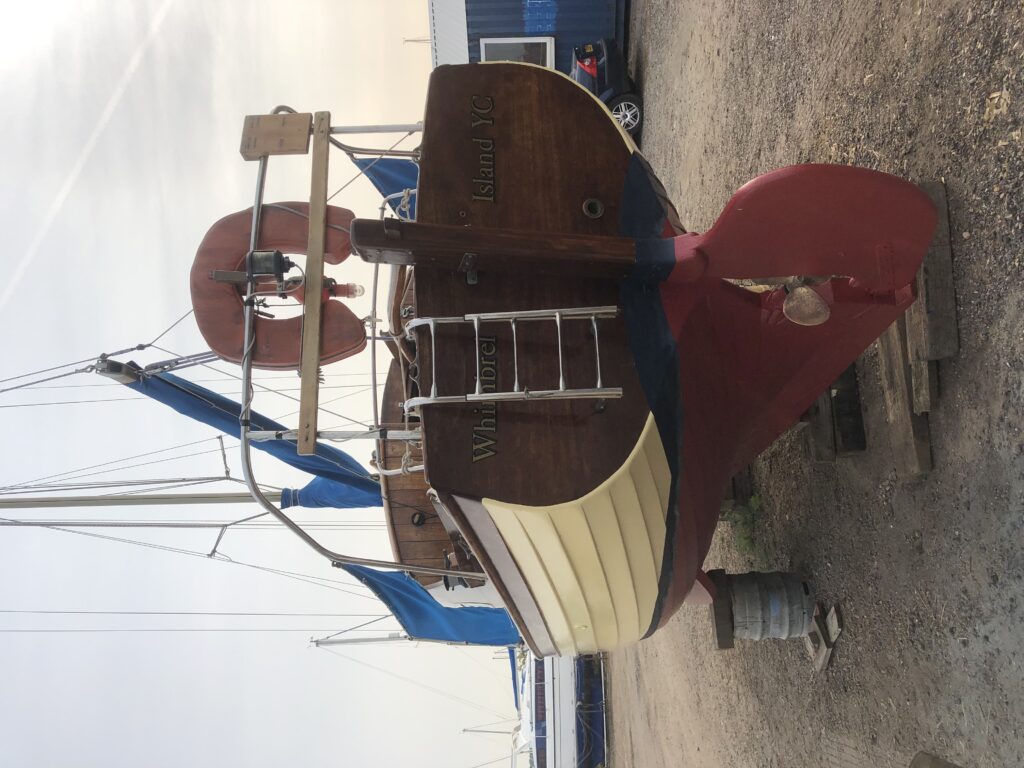
Ready for relaunching – June 2023. Note ‘Island YC’ has since been removed.
We are no longer berthed on the Lower Thames – after trouble at the Island YC which resurfaced after we had been bullied a few seasons before, we left. The boat is now kept at The Blackwater Marina – a pleasant, friendly welcoming place, a place oft visited since the old yard became a marina in the early 1990s.
We are still busy ditch-crawling – creeping up on the tide to Colchester during July 2023.
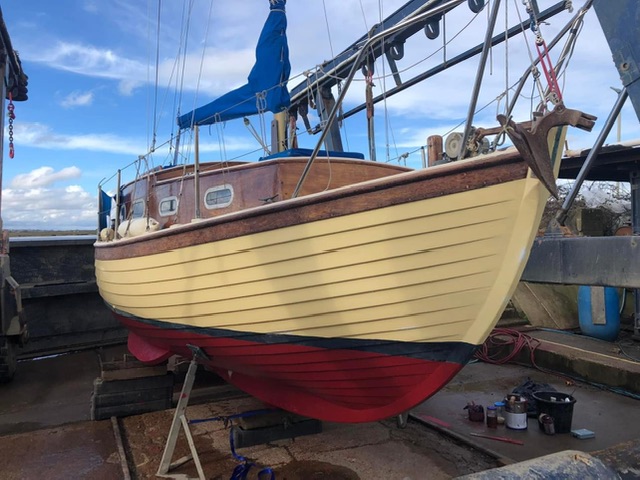
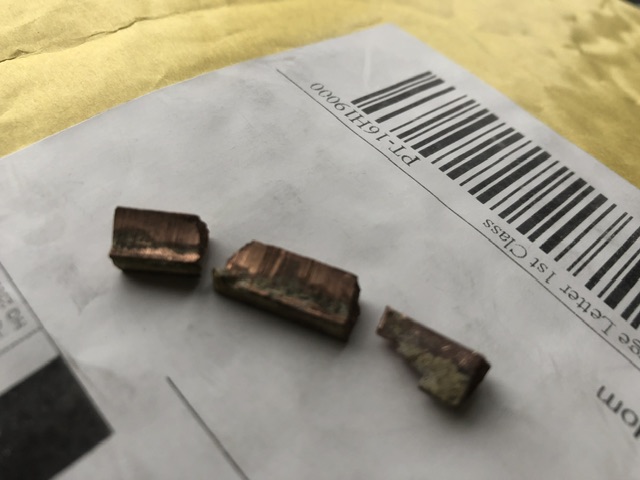
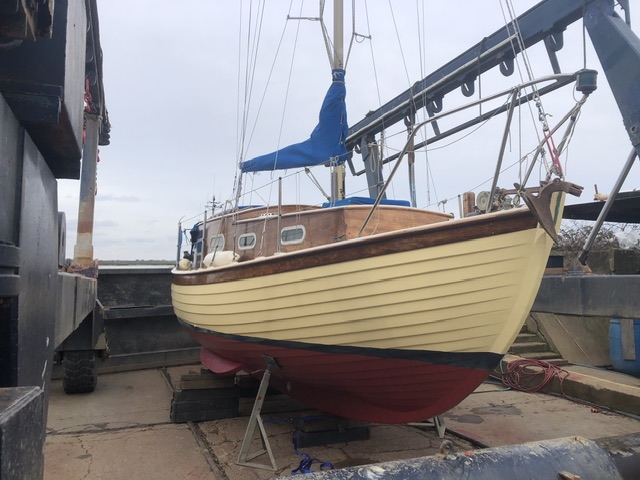
Whimbrel came out recently due to a propeller key failure. It was soon fixed. The hull coating was repaired as needed, antifouling done and hull varnish work sanded back and given two coats.
More recently, Christobel cleaned through, inside, while I sanded the cabin sides and varnished, outside.
Over forty years since that hull was built, it is in perfect condition. Mate has stripped out and is cleaning – April 6th 2024.Whimbrel ready for relaunching after a week out for propeller key renewal, hull varnishing, hull paint repairs and antifouling – 3rd March 2024.
The underside of the galley area deck and varnish work was recoated too. So, we are ready for the Whimbrel’s fifth decade…
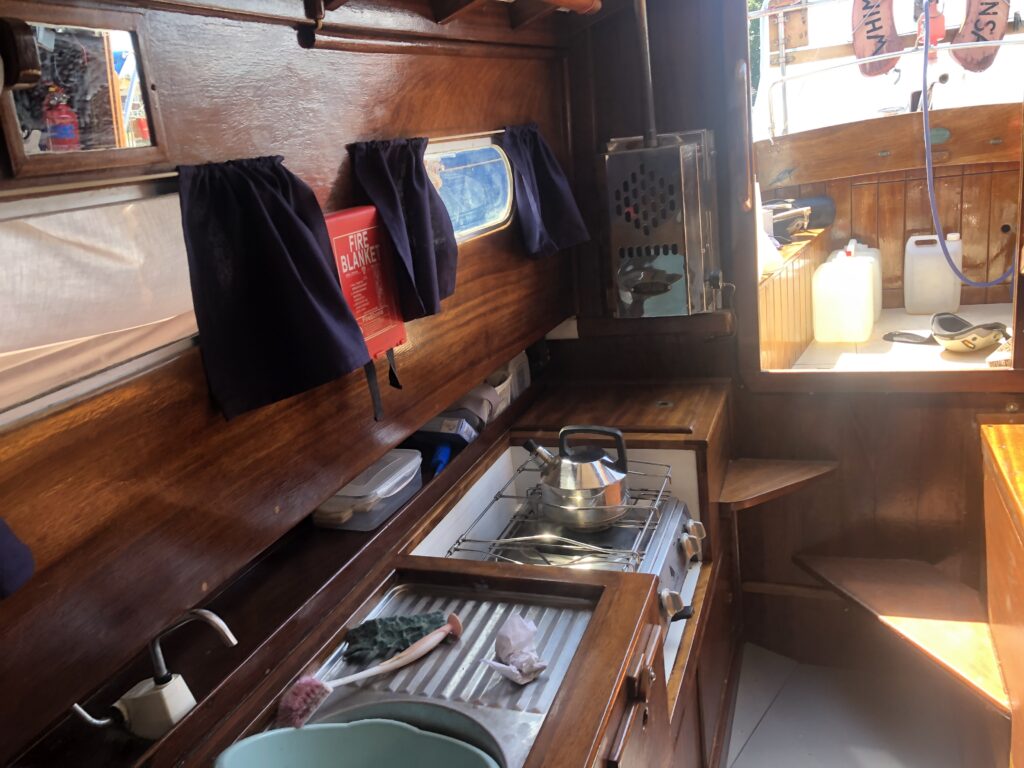
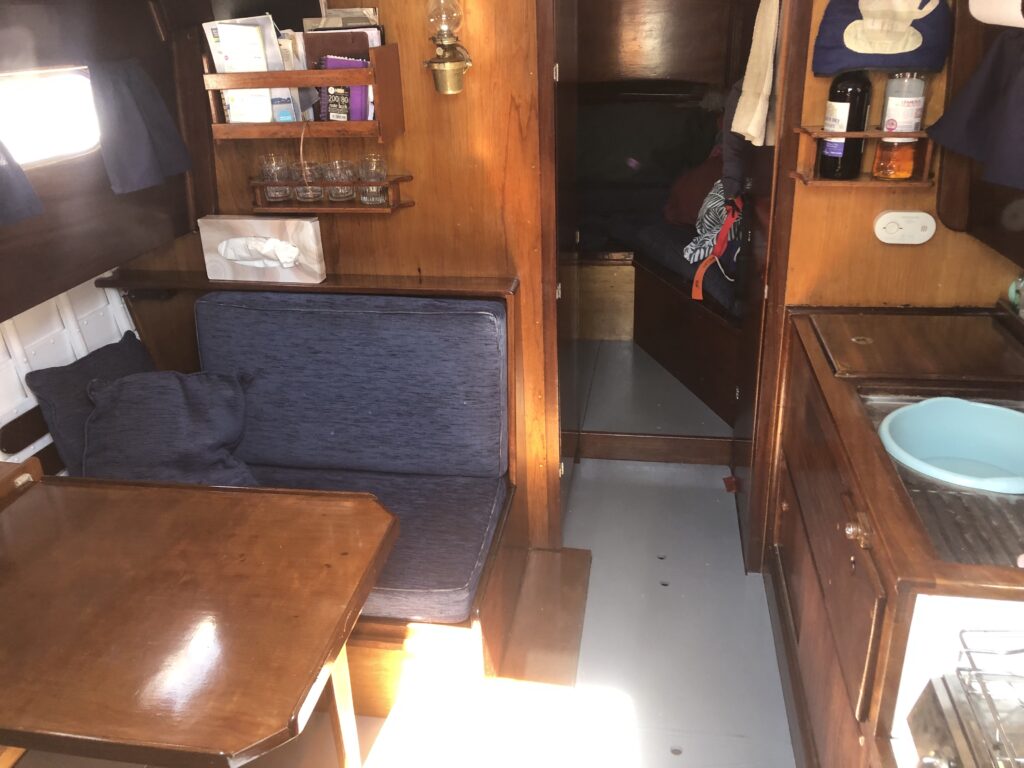
Inside the main cabin – galley.
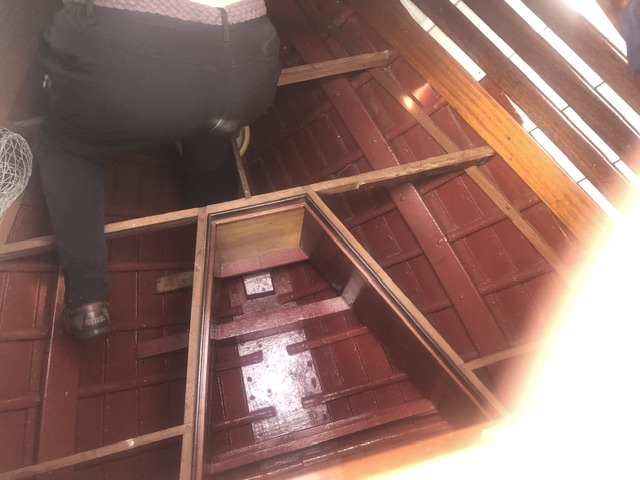
Below, she looks as good as new.
Inside main cabin, looking through into fore cabin.
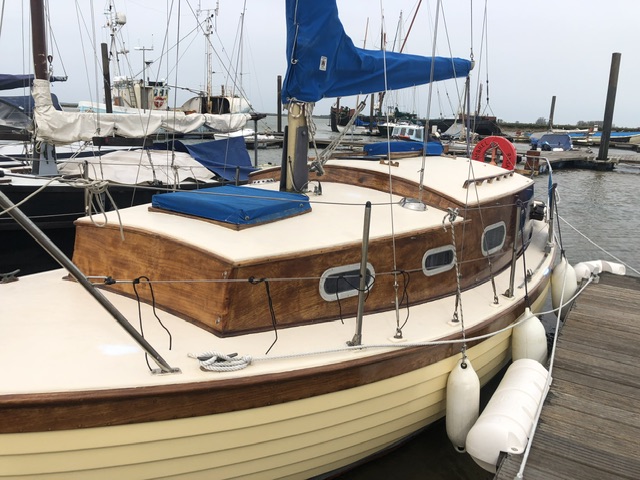
In her forty-first year…
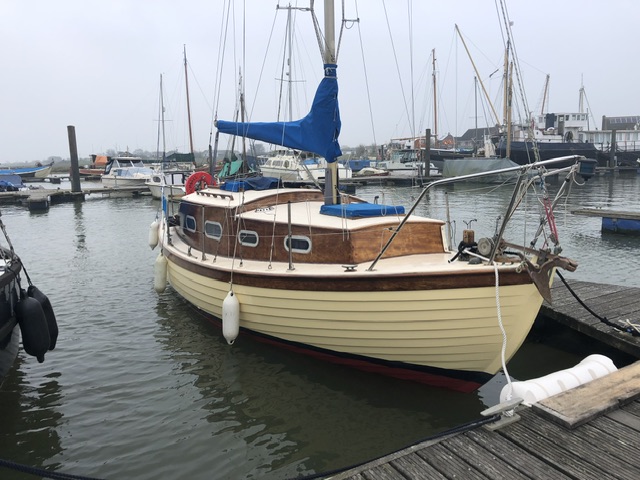
Cabin sides sanded and recoated – 6th April 2024. Whimbrel is at her new home berth at The Blackwater Marina – a friendly place!
Whimbrel is ready for a shakedown trip of a couple of nights: the cries of curlews amongst the saltings in Pyefleet are calling…
A sailing friend, Paul Mullings, and supporter of my books in far off New Zealand, Auckland, to be precise, on the North Island, where he has lived a contented life with his wife for many years.
Paul hailed from Leigh-on-Sea in Essex, England and has always been a friend of the sea and its coastal waters. He has sailed the east coast of England (Thames estuary) and waters around his home, taking in the many inland lakes too. He currently has a trailable Farr.
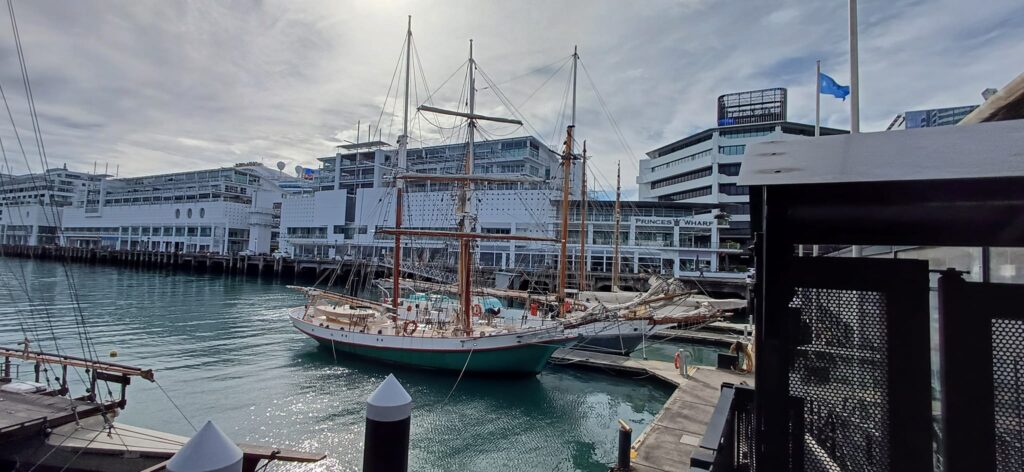
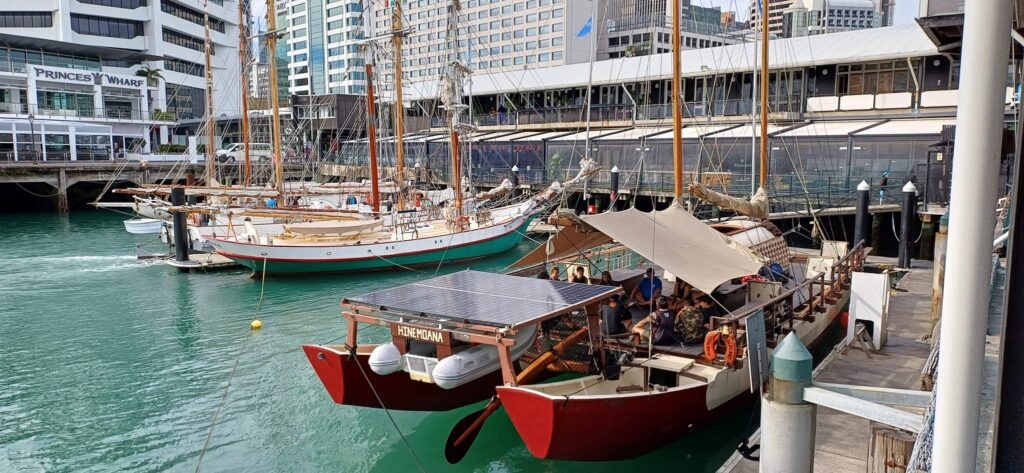
Paul posted a raft of pictures on his facebook page covering a visit to the Auckland Maritime Museum.
Breeze, a fairly recent build on style of inter-island trader. (Paul Mullings)
I was struck by the way the museum has mixed static vessels on display as well as a selection that are available to ‘go out on’ and participate in their on board operations.
Now that is something I have not heard of before. In the UK, we have a variety of maritime museums, from the National Maritime Museum (NMM) at Greenwich where a host of antiquities are cared for as well as a few small vessels, to the Maritime Museum of Cornwall which host various craft (none available to take visitors afloat). The NMM has an off-shoot at the Chatham Docks Museum where ship models are displayed.
There are heritage Harbours, but none offer what the Auckland museum has got its head round – a lesson perhaps?
Included within the museum complex is a boat shed built in 1922 by Percy Voss and it is maintained in use for wooden boat building and repair. Is there another lesson here for the rather staid museums in the UK?
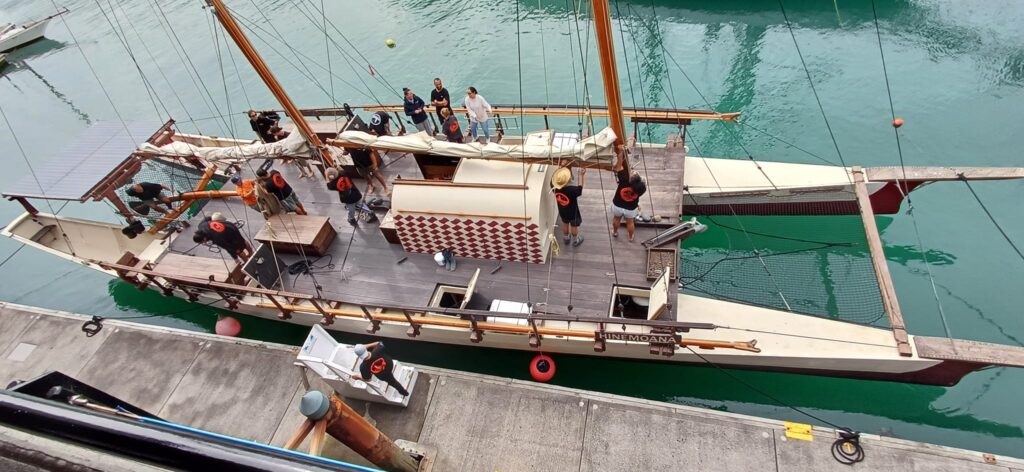
In the views above and below, there is a sailing vessel described as a brigantine once used for inter-island trading. She is the Breeze, a modern build of the type and takes people afloat.
A traditional Polynesian catamaran. (Paul Mullings)
Another vessel which was a trader is the scow Ted Ashby. These vessels did much as the ubiquitous Thames spritsail barge once did and traded the coastal routes and went inland up tidal rivers. Some of these vessels were huge three-masters and traded afar.
I wrote a blog about some NZ old timers years ago – it can be found on the ‘old blog’ page, just down the string. See: https://nickardley.com/old/
Below is a ‘native’ vessel and she looks as if she is ready to depart…
Traditional craft of the countries Maori inhabitants. (Paul Mullings)
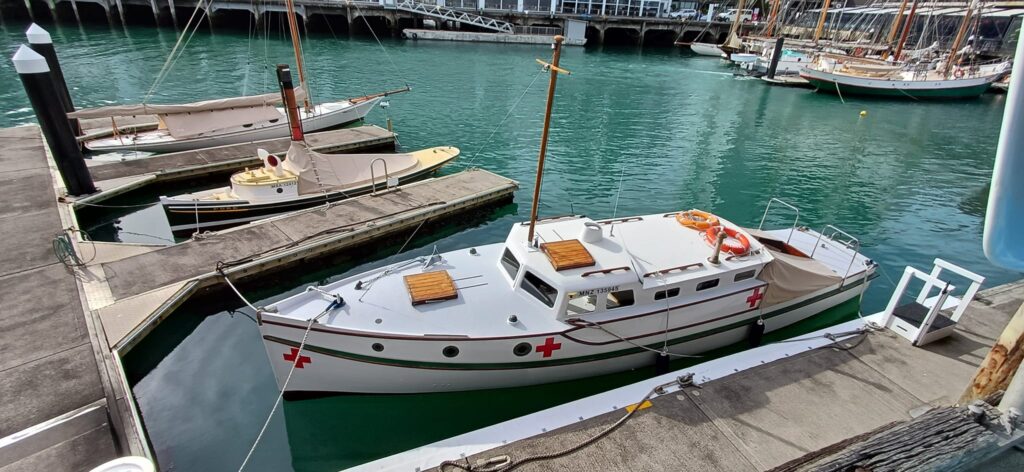
An interesting motor vessel caught my eye. She is the Nautilus, a motor vessel in 1913 in New Zealand. She with another motor boat went aboard a NZ Hospital ship and the boats were used as tenders around Gallipoli – a place synonymous with the people of New Zealand and Australia: many of their forces were lost there.
The Nautilus – a early 1900s motor yacht that went to war… (Paul Mullings)
She also is available for trips around the harbour.
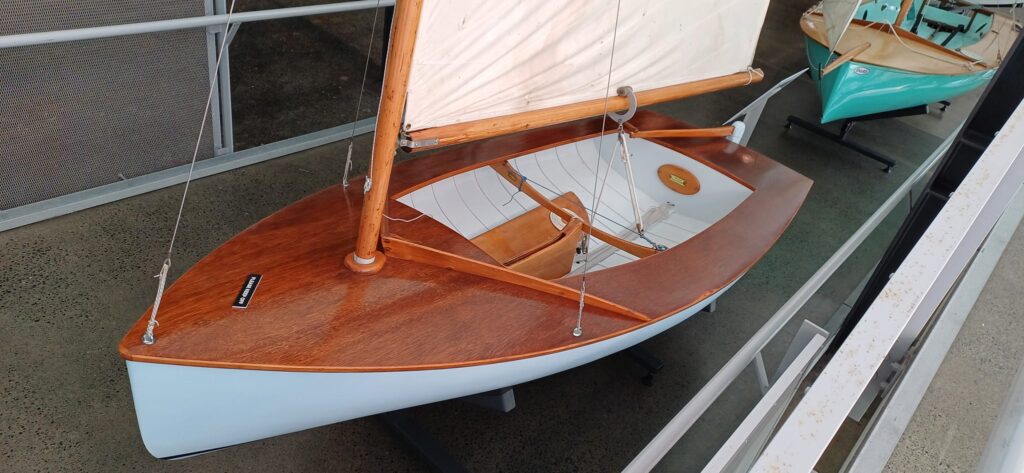
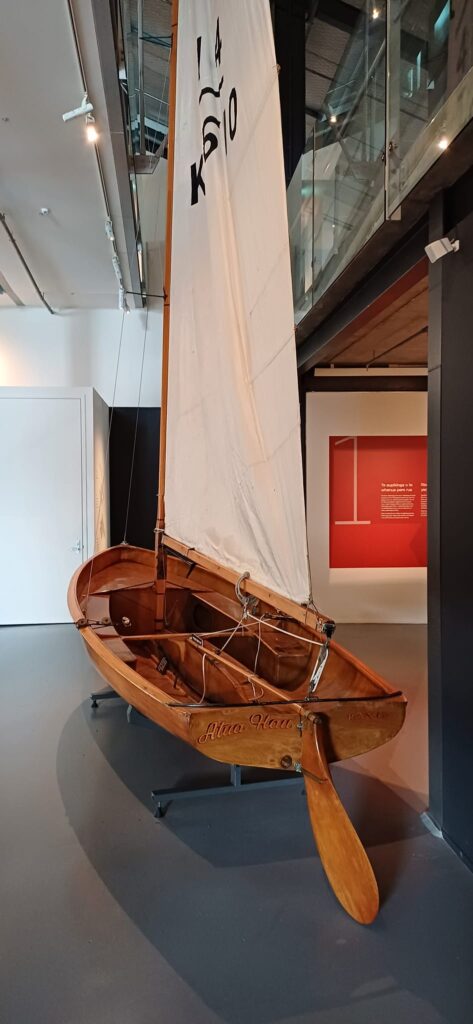
A Zephyr dinghy. (Paul Mullings)Ata Hura – an International 14-footer. (Paul Mullings)Mauri/Polynesian craft. (Paul Mullings)
I don’t know much about many of the exhibits for they’re not specifically mentioned within the web site pages.
I am left thinking that I’d love to see these for myself, but it is something very unlikely … so thank you Paul!
I posed a couple of questions. In defence:
UK maritime heritage sites often have open days for vessels under repair, or viewing platforms are erected for ‘Joe Public’ to witness from a safe position works in progress, but what we do not do is have museums carrying out ‘harbour trips’ on historic craft.
Yes, one can hire a Thames sailing barge, say, for a weekend or go on a river trip for these vessels morphed into passenger vessels after trading in solids had ceased.
At Brightlingsea, there is an old smack dock but it tends to be inhabited by ‘old smacks’ closer to heaven than most vessels whilst their resurrected sisters are out in the harbour away from inter-personal contact. Are harbour trips part of the ‘deal’ – no. Its all look from a distance stuff…
So, this is not the same as a live museum where boat building, repair and boat exhibits sits alongside the ability to experience working aboard an ‘oldster’ oneself…
The article reports on possible reasons for the problems encountered by the boat builder – largely around the fact that there are a huge number of craft sitting around for sale of the ‘up to 8m range…’ and we all, those who follow such stuff, have seen this around the bazaars.
In the Finesse wooden clinker boat market, the prices being offered for what can be a perfectly fit craft is a kind of madness, but, sadly, a reflection on the overcrowded market of smaller craft. This has affected the whole sector.
I remember the ‘coming’ of the original Cornish Crabber 24 gaff rigged cutter. I went on board one – it was so cramped even against the Yachting World Peoples Boat we had at the time (we were looking to change boats…)
We currently have a Cornish Crabber berthed alongside us.
The old version is ostensibly the same length – alongside each other the boats are significantly different in length (ignoring bowsprit) and boat volume.
I had a good look at the modern ’24’ some while ago and she can be found in the link. They are £120,000 sail away version without essential equipment. Open plan and ‘poky’ inside. Mad!
There is a Crabber 26 – more like the inside of a Finesse 24 in fit out with separate cabins. These sail away at a peck under £160,000 – more bloody madness. This is the problem…
At my marina, as can be found around the yards and clubs up and down the coast, there are a number of small craft – the 18′ to 26′ range – that are sitting ‘neglected’ and seemingly unloved. They are all owned by mooring holders with ‘bills paid’ as I understand it, but no longer have owners who care enough…
The Marine Industry News article is interesting reading for at last, as far as I see it, someone is being bluntly honest.
A quote: An industry source posts that the current market is very tough for small boats. “No boats under eight metres are selling at the moment,” the source told MIN in confidence. “There are 100s of boats sitting on forecourts that aren’t selling. The market is really flat. Cornish Crabbers doesn’t generally make big boats. The volume of boats for sale under eight metres could be the problem.”
So, with this terrible news, the UK could well loose another boat builder who has specialised in the smaller boat market. The Little pocket cruiser, Cornish Shrimper, has bee a remarkable success story and they are great sailers. But, like most well built GRP vessels, they are long lived: still plenty of the early Crabber 24 cutters around.
The MIN said also: A different anonymous source told MIN: “There are too many crabbers out there, loved by many people, for the company to disappear completely. Look at its history, it always comes back from the brink. There are always people who want crabber…’
Yes, but are they opting to settle for an older model at a fraction of the new boat prices?
I spotted a little craft on the way up the River Blackwater last summer – a Yarmouth 23 gaff cutter. She looked far lighter than the Crabbers and could be taking some of the market. Seen a couple about…
A Yarmouth 23 gaff cutter.
The future: clear out the yards and marinas of defunct little ships and cut them up. Make a big hole in the market to enable production???
The last time Whimbrel came out of the water we suffered from exceedingly bad treatment from a large minority of Island Yacht Club members and we ended up leaving our club of forty years…
There was a little more to it than that: it rekindled the rancour following a complaint we’d made about a ‘RIB Bombing’ by an Island YC RIB, out of spite, following which the club and a protagonist – the RIB driver – were issued with Port of London Authority written warnings.
Last Tuesday, I went for a sail on my own. We’d both been out on the previous Saturday when I thought we’d hit something with the prop leaving the berth. All seemed well: we’d sailed away.
Preparing for that sail…
So, as the tide made, I began edging astern. The boat didn’t move! I went ahead. All well… I tried astern again, nothing. I then lifted the cockpit floor boards – the shaft was turning both ways normally…
I went astern again, nothing. Tried again, I was away… However, I wasn’t entirely happy.
Clear of moorings and sailing, although engaged, the prop shaft was spinning. I felt over the stern with the boat hook.
A ‘Clatter, clatter, clatter’ was heard and felt. Key, I thought…
Sailing back into our Blackwater Marina mooring on a different occasion.
The wind was in a good direction to sail back into the mooring under headsail, so thinking, ‘sooner than later’ dropped the main and scuttled back in, berthing nicely. I was pleased I’d sailed in on a number of occasions already!
The following day eschewing a walk, we both went over to the boat while the tide was out. I went overboard on a walking plank and discovered it was as thought. Clearly the key had failed!
Into the slings…
A conversation with the yard’s manager, Beccs Polden, and it was quickly arranged for Whimbrel to be lifted the next day – I had two weeks…
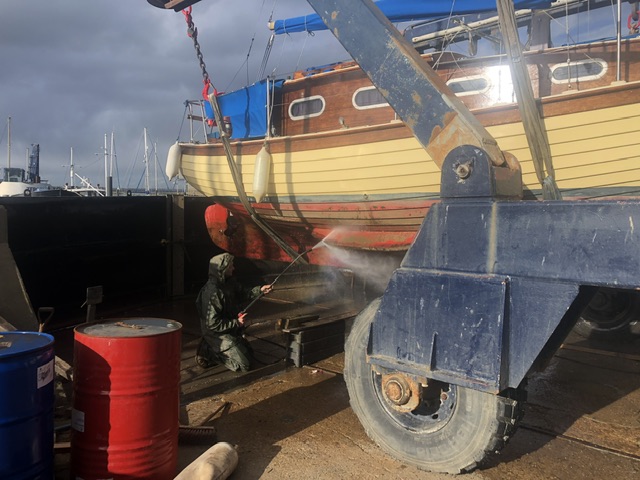
Bottom being pressure washed with a ‘serious’ washer!
The prop was soon off, then the yard pressure washed the boat’s bottom, which comes with a lift. As a mooring holder, yard time out of season is not invoiced, which is nice.
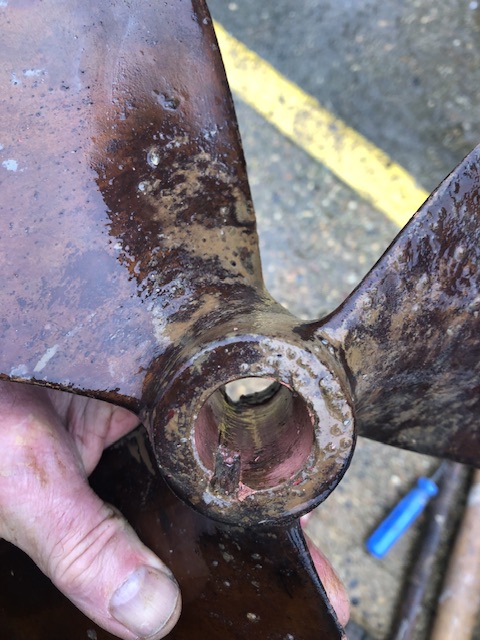
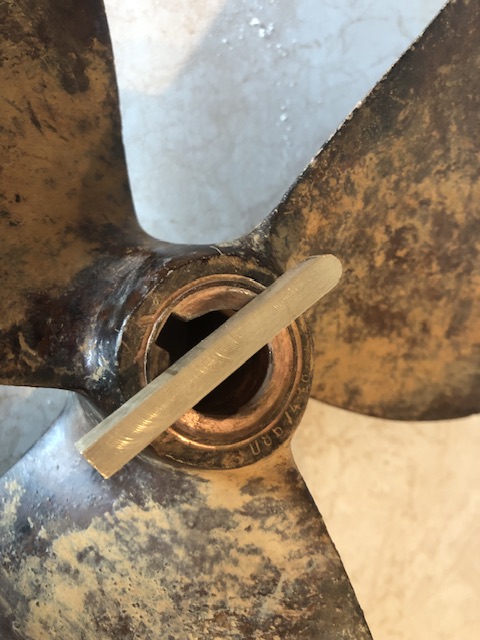
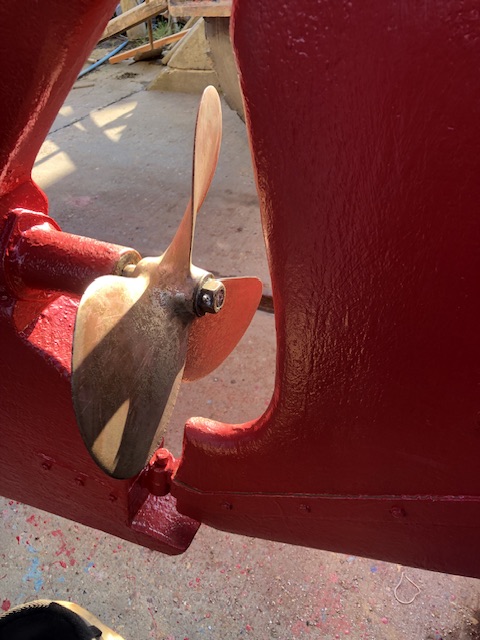
Removed propeller with part of ‘sliced’ key still in key way.
Remains of the key was soon removed from propeller and shaft. Fortunately I had a piece of bronze, long ago picked up in the gravel of a boatyard down on the Swale. Beccs gave me a telephone number for a local engineering firm (Millers and turners) – chap said come along…
Cleaved key from shaft.
Arriving at the works just a couple of miles away on the edge of Latchingdon, the owner/manager set to and milled up my chunk of bronze (reckoned to be phosphor bronze) and within less than an hour I had a new key that fitted snuggly into propeller keyway.
Joe Owen Machinists – 01621 740308
I was very grateful and had a long natter next day when taking in my payment… Chap had some interesting tales to tell of east coast traipsing.
Final word to me: ‘Keep sailing as long as you can…’
New key, with one end rounded to fit shaft in readiness to cut to length.
After refitting the propeller, I left it twenty-four hours and again hardened up the nut before re-drilling the safety split pin hole.
So, the ‘panic’ job was done within thirty-six hours!
The yard manager had dangled the prospect of time to do antifouling in front of us and after putting the question to my good mate, we’d decided to get the bottom antifouled while out rather than in just two months time on the slipway.
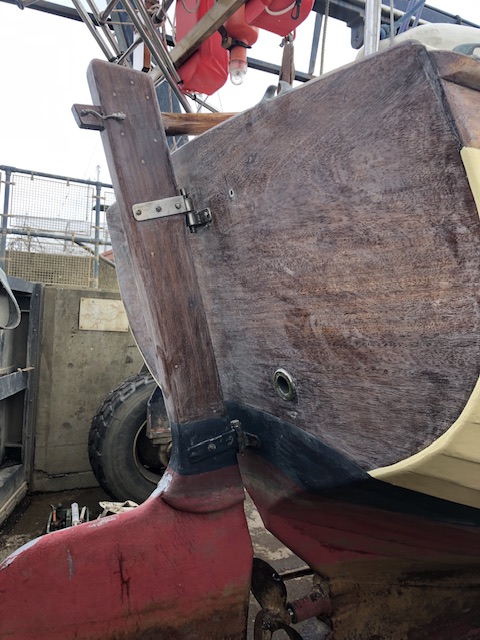
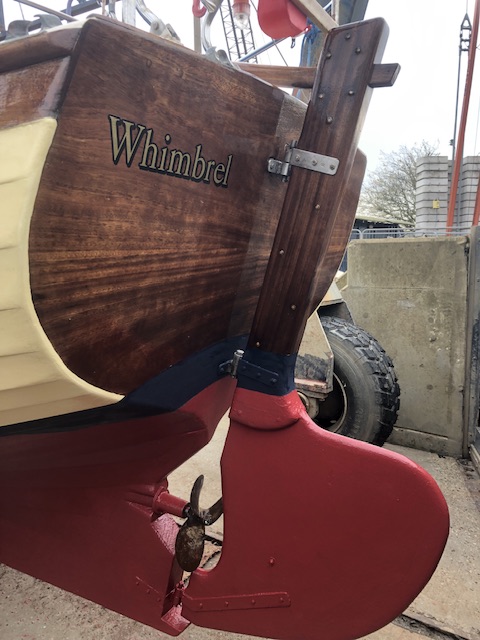
The weather being reasonably conducive, just, allowed for a coat of varnish round the transom, rudder and shearstrakes, these were sanded and given two coats.
The varnish work was given a good 180 grit sand to flatten off from our post strip down coats of last year.
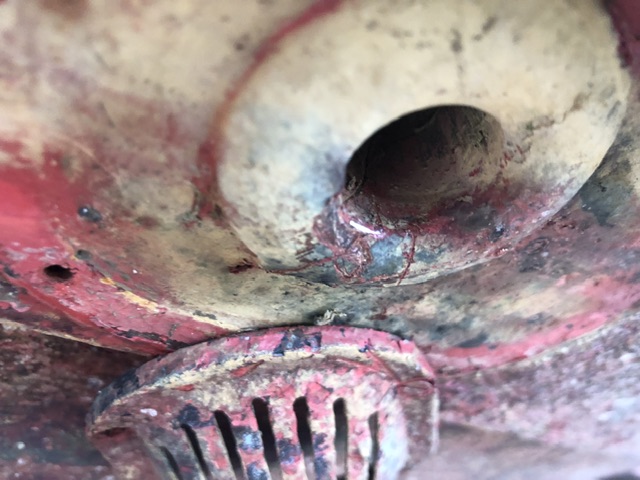
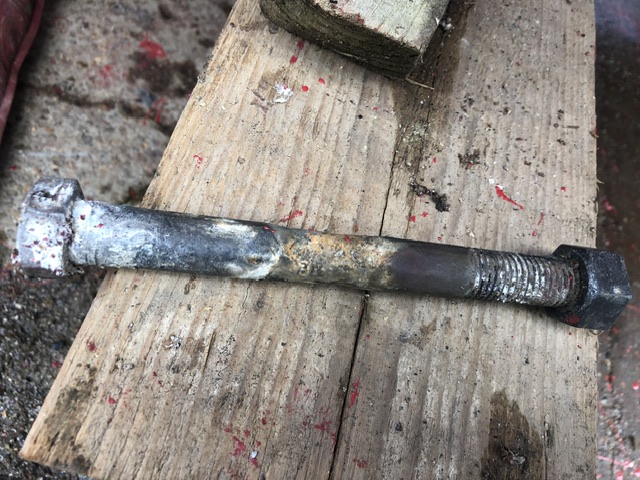
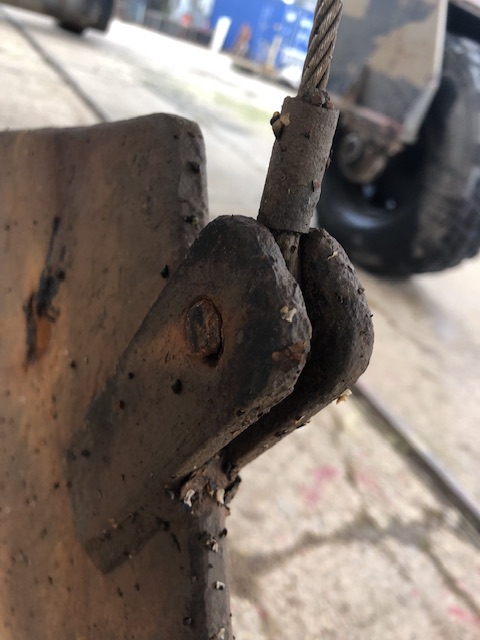
All the usual out of water checks were made too: two lower pintle strap fastenings withdrawn and inspected, hull fittings for ‘brightness’ – that is looking for dezincification, centre plate pivot bolt renewal (very low wastage) and checking of lifting wire riveted pin condition.
Note bright metal lower side of intake.
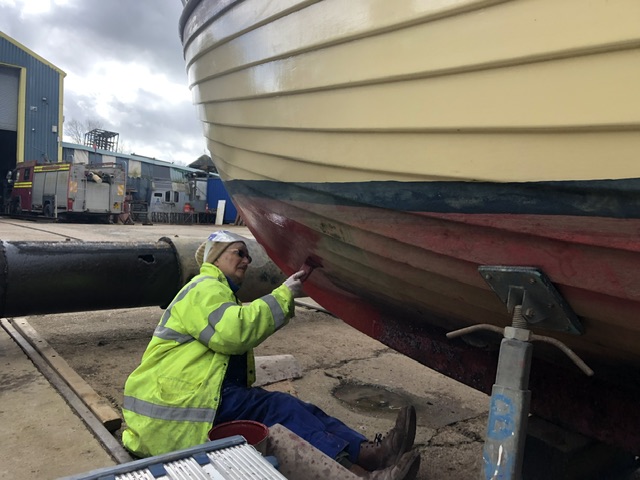
While I was carrying out the checks and redrilling of the shaft, Christobel hit the antifouling…
Removed centre plate pivot bolt.My happy and contented bottom manager gets down to the serious stuff…
The hull topsides were checked over and a few odd paint repairs were completed too.
Aft end looking resplendent…
Although the bulk of the bottom paint application is carried out by my good mate, she leaves the cutting in to me!
Secured and polished propeller…lift wire and pin inspection.
So, within a week of being lifted out, Whimbrel was ready for the water.
It was interesting sitting between the yard’s tide flood gates and the painted yellow hatched foot path guide lines: a fair number of people stopped to admire and comment or ask questions. Christobel said I should have put up the ‘Finesse class board’ I’d made and used at events…
What was pleasing was that no one asked if she was a Dauntless! Several knew Whimbrel’s pedigree, and one person knew of me … ‘nothing bad he said…’
Another chap, a boat builder/repairer who works on projects in the yard said that Whimbrel was the finest Finesse he had looked over…
Flattery!
Sitting awaiting the natural feel of ‘Blackwater salt’ surrounding her…
Arriving at the yard at 0825 yesterday morning, Thursday 7th, Whimbrel was already hoisted from her chocks. That last inspection of the lifting pin done, a touch of antifouling on chock patches and we were back in the water and on our mooring by 0905…
Back on the mooring.
It was a little misty with a keen easterly, so we chose not to go off for a short sail, so after checking the bilges – no ingress – we cleared away homewards for a pleasant late morning walk in the sunshine around our local woods…
All there is left to say is thank you to the kindness and attention of the yard’s staff.
The other over riding joy was the fact that not a single vehicle ‘burnt past at speed’ showering the boat and us in dust and debris: that sort of behaviour is not tolerated.
P.S. Christobel took great delight in deleting ‘Antifoul weekend’ in our diary for May!
The responsibilities of a boat’s skipper was brought home in the news the other day and the story would, surely, be a bit of a surprise to many.
Small craft owners, whether sailors or motorboaters will know that underway, the skipper is in charge and not only that, is responsible, under law, for the well being of others aboard.
The law of the sea was clearly not understood by a refugee who elected to be in charge of a boat attempting to cross the English Channel during 2022. The boat, like many, came apart and several fellow refugee seekers died. The ‘skipper’ was charged with manslaughter and has since been tried under English law and convicted. It is the first time this has been done…
The MCA (the UK maritime authority) showed a mock up of the typical ‘safety’ gear carried, the gear amounted to, dinghy sailor buoyancy jackets, a bailer, couple of 5 L fuel cans and not much more.
I wonder how many boaters ‘play’ at this responsibility in respect to what the MCA and other organisations recommend?
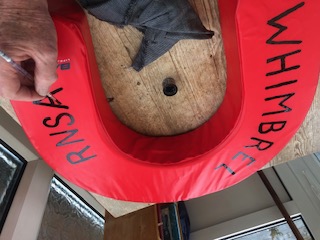
The only organisation we now belong to is the RNSA…
The MCA and other organisations have recommendations about what should be carried by certain sized vessels – in the big ship world I worked in there are regular checks by statutory authorities – us mere boaters aren’t, unless chartering. But those recommendations if not complied with in a sufficiency can and will bite if an incident occurs…
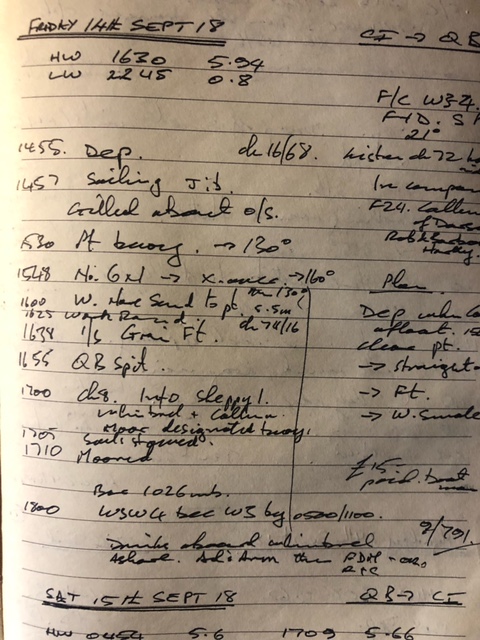
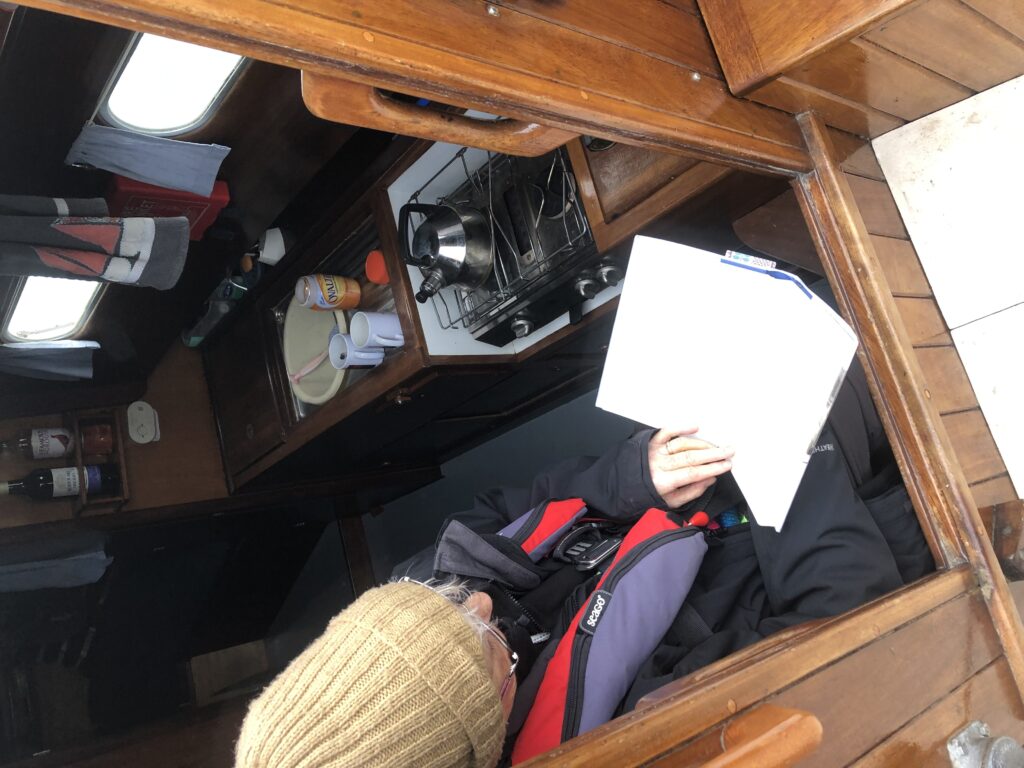
This is how it is done aboard Whimbrel – an A5 notebook makes an admirable log book…
How many people keep a log of an activity, however small. A sail out on the tide can be as dangerous as a coastal passage. The MCA is quite clear and they use the words, You SHALL… (and there is a list).
As the winter has run along, bits of Whimbrel’s safety gear have been checked, serviced or renewed.
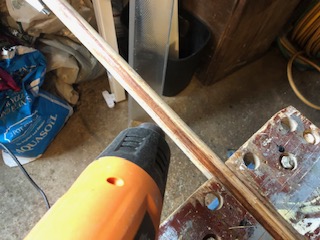
‘Burning’ off the boathook varnish.
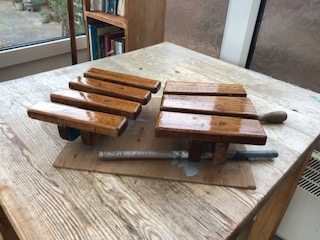
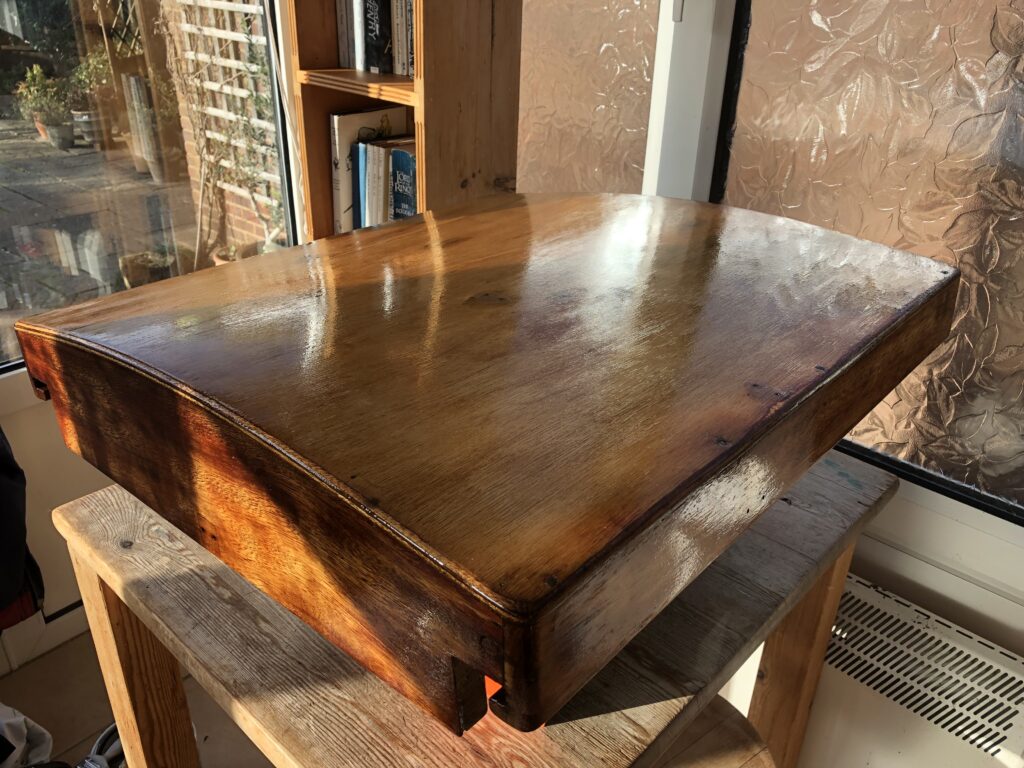
Although not an item many would consider to be part of the safety kit, the humble boat hook surely is in many respects. Ours needed stripping of old coats and has been re-varnished.
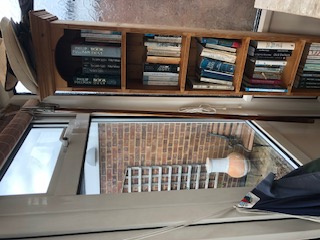
Re-varnishing in progress – conservatory is purloined as a drying room!
We still carry flares pack for coastal sailing – currently in date and dry inside waterproof container…
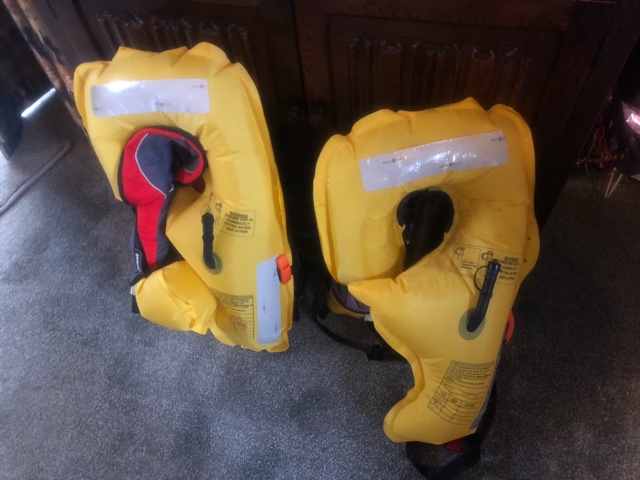
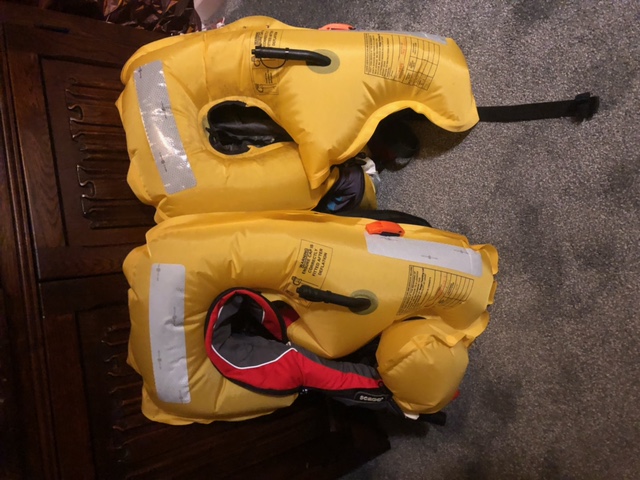
The spare life jackets have come home for cleaning, checking over – making sure auto-inflation parts are screwed in tight and in date (although I am told by providers that provided considered fit for purpose, these can run over). Jackets are inflated for 24 hours before packing into covers.
Inflated life jackets…Next day – still inflated!
The skipper’s and mate’s life jackets get same treatment.
After the spring chart corrections come out, the chart sets held aboard will be corrected.
How many boaters still carry paper charts, I wonder? How many keep a record of where one is when on passage? The MCA say ‘You SHALL…’
Not a safety item as such, but essential for helm comfort.
Of course, there are other safety related items, but I do not wish to bore, but make a point, jog inactivity or just keep my readers amused…
As each year rolls over into the next, the numbers of small craft, fibre glass boats on the whole, abandoned by owners has grown steadily. Old wooden boats get abandoned too, however, these, in time, will break down and in any case, as a last resort an owner can ‘safely’ burn.
I wrote an article about this problem in a magazine, now long out of print, back in 2010. It was published in Anglia Afloat in the May/June 2011 issue.
At that time I had not seen anything in the press about the growing problem that was clearly there to be seen, however, over the past decade it has become a hottish issue with even the BBC getting in on the act. See inside one of the two web blog links below.
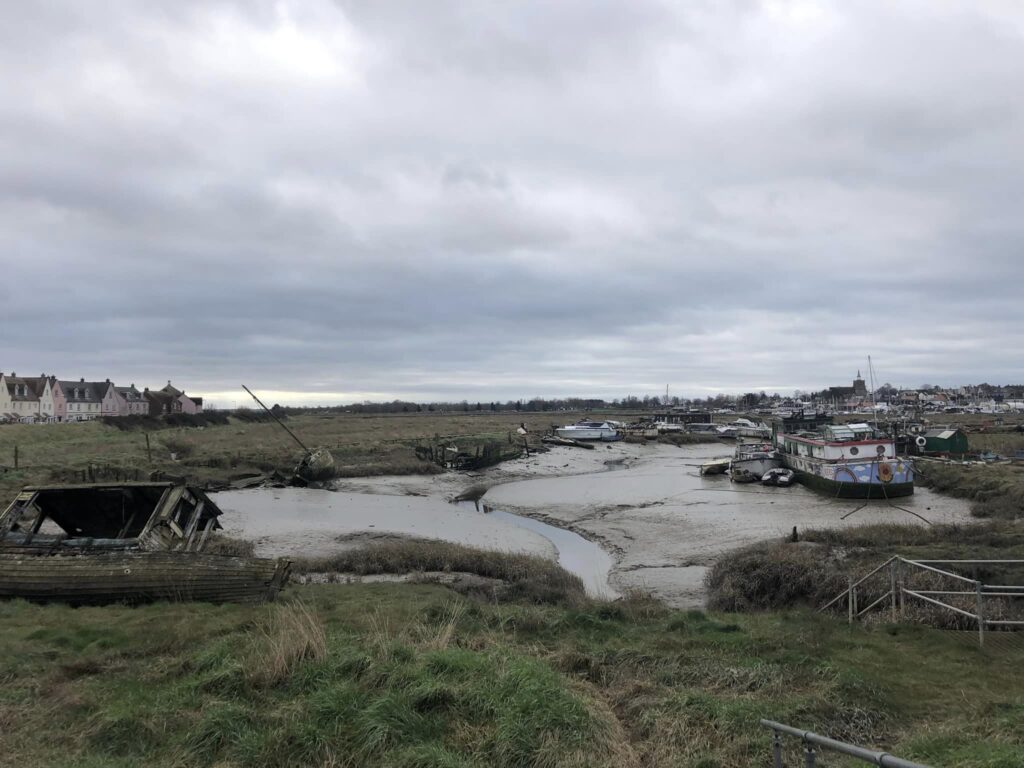
Walking the sea wall from Maldon to Heybridge Basin this weekend I photographed the head of Heybridge Creek (River Blackwater) where there is a plethora of dumped craft – wooden on the whole – and running round to Herring Point there were a couple of abandoned fibreglass yachts and what appeared to be an old plywood cruiser. In the back channel two old sailormen idly rust and rot away…
Head of the tidal River Blackwater (Heybridge Creek) with its wrecks…
There have been trials with chopping fibreglass up and reusing it – this was not very successful. Another trial was trialing chopping up the glass and fibres and ‘extracting them’ for reuse. This seemed to be working small scale – upscaling hasn’t as far as I know hit the sector yet…
A little cruiser in the throes of disintegration.
Meanwhile around the world, for this is a global phenomenon, authorities are becoming agitated…
Abandoned and stripped out…
A Woodbridge boatyard has for years been into the brokerage of small cruising vessels – of the type most brokers wouldn’t even look at. The yard can be found by the rail station!
Abandoned…
Now, a boat breakers based in Gosport, have begun a service where they match people with abandoned projects. The company has been disposing of craft for nearly twenty years it says and they have had some success in these endeavours.
Whilst I applaud the Gosport company, I would ask: what is the success rate of a match? However, they’re doing something – similar in my view to the Woodbridge enterprise.
One thing is certain, it will not be long before some form of legislation comes into the arena – it will affect us all.
Titchmarsh Marina Yard has for a while now been clearing their yard of abandoned craft. All fittings are removed – wooden boats are cut up for burning and fibreglass vessels are cut into pieces and go off into landfill…
Other yards are active in these endeavours too. Yacht clubs will need to step up and do likewise!
The operators of my new home berth have announced in their regular news letter that unclaimed dinghies will be disposed of and a process is being put into place to remove the craft of non-payers (mooring fees). Some of these craft have clearly loitered for some time. One appears in my article!
The big smack, Telegraph, along the wall near Heybridge Basin.
Along the sea wall near Heybridge Basin sits a big old wooden smack, the Telegraph. She has languished for years on the river – firstly for a couple of decades along the promenade at Maldon and more recently in a mud berth from which she ay never leave down stream.
The vessel is subject to possible ‘enforced’ sale but the owner as far as I am aware is not ‘playing’ – apparently there was (is) a buyer. This is a common problem. The UK Ships Heritage organisation is aware, but they are powerless.
Looking at the Telegraph this weekend, it was clear that her hull is out of shape with a hogged deck line especially to starboard and it was apparent that she does not often lift in her berth judging by hull/mud lines…
A few days into the New Year and an email tumbled from my letter box from a reader of my latest book, Sailing through life…
The chap and his wife have been in regular contact over the past decade or so and upon the sad death from cancer of a sister, they had donated her collection of my works to a prestigious London Yacht Club they belonged to – the Little Ship Club.
I remember meeting the lady not long before her death for Richard had asked for a couple of books and on a research trip to Kent (for Rochester to Richmond) we detoured to their home. Richard’s wife’s family were part of the ‘Parker’ clan of Bradwell – farmers and barge owners, May Flower and Veronica included.
Richard’s sister was being read ‘Salt Marsh & Mud’ by the couple during her lucid ‘well’ periods… That in itself left me rather choked. It was a reminder of childhood and adult sailing times in the waters of the Lower Thames, Medway and Swale waterways.
However, their words humbled me. It was tinged with much gratitude too at their taking the trouble to actually say something…
This is the content:
‘Hi Nick, Firstly, a very Happy and Healthy New Year to you and Christobel.
I’ve just finished reading your latest book that you kindly posted to me before Christmas. Personally, I think it is the best of all your great works and was a real page turner.
The advice that you give about prostate cancer and regular checks – I have my annual blood test for it on the 18th -is so important and I just hope that your readers take proper notice and follow up with their own checks.
As you might imagine, both Sue and I greatly miss Greenwitch and the east coast and so your writings take on an even greater value to us both as our sailing life recedes further into the past.
The wonderful thing about all your books is their ability to be read and re-read again and again without losing any of their charm. In that sense, they compare very much with Maurice Griffith, H. Alker Tripp and, of course, the great Frank Cowper.
We both send to the two of you our very best wishes and our heartfelt hope that you now remain fit and well. With best regards, Richard & Sue‘
Richard and Sue have with much sadness sold their beloved Cornish Cutter (30′) Greenwitch and hung up their sailing boots. Age and health issues caught up with them, as it will us all, but they live the life through their enjoyment of sailing and coastal literature.
Thank you seems not to be enough, but it is the simplest and most heartfelt…
Austin Macauley YouTube clip for book:
Books are available online, at book shops and through me…
At the beginning of 2023, although the mate and I were unhappy with the way the Island Yacht Club on Canvey Island were treating our ‘boy’ and that we have never forgiven the club at the way we had been treated over a ‘problem’ in 2019, we weren’t about to cast off and sail away permanently…
We were keeping a low profile whilst continuing as club volunteers with a continuous need for mooring repairs.
Sailing out of Smallgains Creek during early January.
We had a major ‘fortieth’ year refit planned for Whimbrel during the spring. it being forty years since the boat was ordered. I also had an impending new knee operation and an unknown was how long I would need to recuperate. It was going to be tight, possibly.
The year began with a refit for the main companionway hatch. This was written about at the time.
The refurbished companionway hatch.
As always, we fitted our lives around the joys of walking and sailing, plus our weekly Saturday club work party. Little did we know, this latter ‘joy’ was nearing an abrupt end.
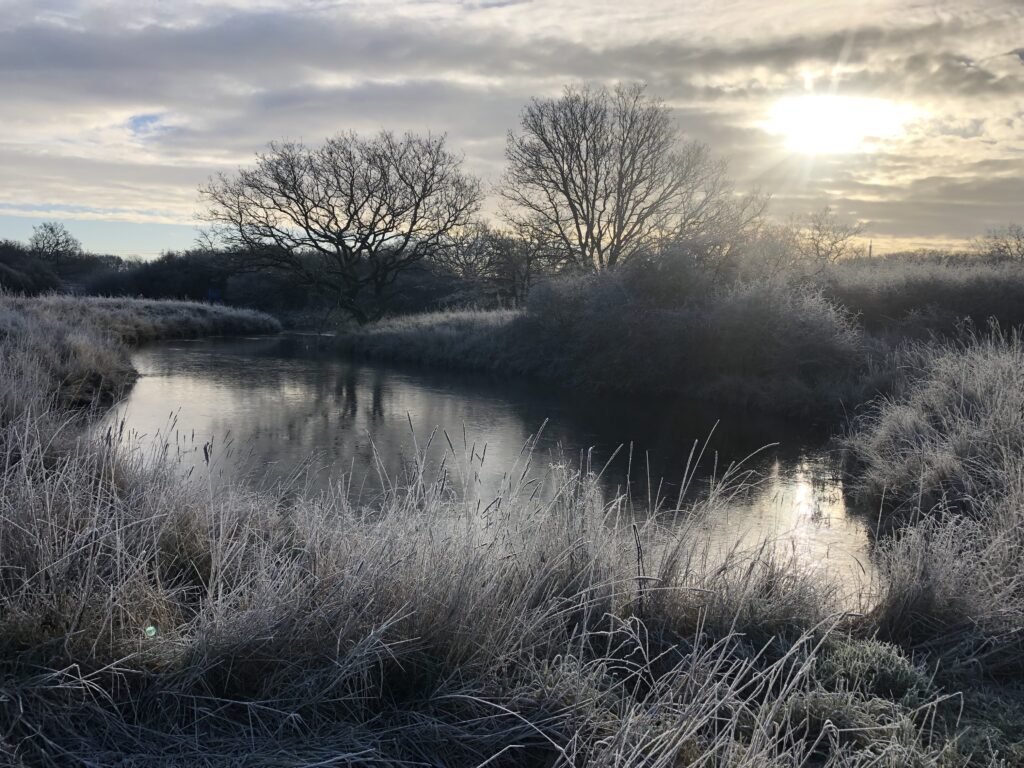
A wintery scene at the top of Fenn Creek, S. Woodham Ferrers.Waiting for the kettle…
At the beginning of March, my youngest brother jumped at the chance to come sailing – something that has become almost a rite of passage over the past few years. Two nights were bagged in fine weather. We made it to Queenborough and to Upnor, enjoying great sailing.
Sailing off the Medway YC pontoon…
During the spring I was reminded of the honour ‘bestowed’ upon me by Yachting Monthly the previous year. I was, in their opinion, one of twenty-five people who’d furthered yachting around the UK and beyond. It came up in conversation at a work party – few knew and even less cared, apart from the enquirer!
The Island Yacht Club themselves, although told at the time, followed the award up with complete silence…
Our faces had never fitted. An old hand took me aside years ago and suggested we got out – as he himself did not so long afterwards (based at Brightlingsea now) If not in with a certain corp, then you were a nothing. We were generally happy with that situation, as are the majority of club members around and about.
My knee op was looming and it wasn’t long before I was under the knife…
On an early exercise walk…
I wasn’t out of action for long and with the exercises and day by day longer walks was up to five kilometres at the fifth week of convalescence. At that point, we booked a date for Whimbrel to be lifted out.
It was a little under eight weeks after my knee op that the boat was set on chocks ashore. During the work period – just four weeks – I had a bout of trouble with blood pressure medication caused by my GP Practice.
Further, we had problems with club members treating the compound as a race track with resultant dust clouds coating boat with fresh coatings taking place. Signs did nothing. Finally, I made an official complaint, verbally at first then formally in writing. That caused a stir… Old wounds were opened and vengeance against us was sniffed (and, privately, alluded to).
Our 2019 RIB perpetrators were now the head honchos of the club…
Whimbrel ready for the water.
The problems caused me angst and my disturbed sleepless nights returned – these began after the 2019 RIB bombing and then being bullied (cowered) into ‘shutting up’ about it all … during my cancer treatment…
There are some ‘nice’ people at the Island Yacht Club.
So, with my sister and two friends aboard (for their week of sailing) Whimbrel departed the Island Yacht Club for good.
As we left, I had just one look back down the line of creek buoys – buoys that I had looked after for fifteen years overseeing upgrade from painted drums to proper pucker floats… Never mind the estimated £100, 000 of Saturday work hours freely given. Now, it seems: for what!
Within a week of sailing away, my mind cleared and I was freed to sleep almost normally. It was magical. A leaden sinker miraculously became buoyant and the trauma suffered with the RIB attack and its aftermath floated free and drifted away on the tide…
Sailing away from Smallgains Creek – we never return.
One of my biggest regrets is the ‘joy’ I put into my writing about Smallgains Creek and our club mooring: they feature throughout all my estuary books. I don’t read back through them and probably never will.
Will I write about Whimbrel’s forty years at the Island Yacht Club sometime, maybe … maybe from another base, maybe!
Having booked a permanent berth at The Blackwater Marina before departing the Thames, we visited, as we oft had over the years, for a stopover. In fact we came in several times during the summer – for the last two visits the manager refused to charge us as we were about to pay our berthing charge. She said, it was ours in any case!
Very kind…
Whimbrel on a visit to what was to be ‘our’ berth…
On one visit with a flat calm, we motored past all the creek navigation buoys and marked them on the satnav whilst noting numbers/names. Later I inputted the details. Useful: however, they’re treated as a guide now for Whimbrel has found her liking for these waters…
It should be remembered that Lawling and Mayland Creek have been thoroughly explored by dinghy as well as on Whimbrel over many years and has been written about (Yachting Monthly and in my books).
During our time up on the Backwaters, Stour and Orwell, we popped into Suffolk Yacht Harbour to meet up with a cousin, a son of my mother’s brother, who had had a passion for sailing but never had a large boat. Retired, he has taken the plunge.
Christobel with my cousin and his wife next to the acquisition.
Their daughter, up on the boat’s deck, had sailed the Round Ireland Race recently and with her skipper won their class… The boat was sailed up to Inverness with a skipper aboard, then by family with friends down the Caledonian to the West Coast and down to Tarbert transiting the Crinan… My cousin is promising me a sail from Tarbert next year!
We had an interesting departure from Titchmarsh during August: Christobel had a ‘whoopsie’…
Briefly: The boat was all prepared for departure with sails ready to hoist – we were going to sail out.
Clearing Titchmarsh marina under sail…
As Whimbrel began going astern out of berth, Christobel stepped onto deck edge, late, forward of shrouds, slipped and ended up hanging down side of boat from the top rail wire!
I had to manoeuvre further astern to get the turn back in, whereupon a couple of helpers took her. She got wet, finally…
The episode and changing lasted ten minutes, and we sailed out cleanly at second attempt!
New Zealander, Paul Mullings had five days aboard – here passing the famous Pye End at sun rise…
While berthed at Halfpenny Pier at Harwich, a large forty-foot boat struck Whimbrel’s port bow a glancing blow. A stanchion base was deformed. However, later when looking closely, the deck edge had been stressed too.
Repairs to deck edge – re-securing and then epoxy coating…
We wandered up into Colchester’s Hythe using the city authorities conveniently placed pontoon for a couple nights. It is a lovely spot if mud isn’t a problem to you. The creek bed provides a feeding ground for much intermixed bird life – waders competing with many types.
The Wivenhoe SC played hast to us a couple of times, once with a fellow Finesse 24, Windsong. It was after that visit we attended a small rally of our class at Brightlingsea…
The summer dawdled on, we took life easy in all respects for I was being very careful with my new knee!
Approaching Stansgate Point on a sultry day with a zephyr of a breeze…
There were days when we sat at a mooring or at anchor just allowing life to carry on around. There was much reading enjoyed by both…
The latter part of the summer was spent dawdling up to Maldon and around the Blackwater to West Mersea. It was blissful. Then, the summer had to end!
Moving into early autumn, we had an enjoyable balmy weekend away to see the Colne Barge and Smack matches – something I had never experienced, then a cousin and my youngest brother spent a cracking weekend aboard, taking in West Mersea and Brightlingsea with a wonderful romp home up the Blackwater.
When stowing our gear, with the two boys, I dropped our weekend egg supply! They fell into the fore cabin bilge which made interesting cleaning, clearing the ‘white’ especially from under the ribs!!
Morning coffee at that delightful cafe opposite West Mersea church – note the eggs…Reefed main romp back from Brightlingsea.
After the trip with the two boys, the dinghy was stowed on its trolley and ‘berthed’ in the marina storage area, where in time, much varnish work was stripped back and coats built up. The oars, rudder, and dagger board were serviced at home. Finally the inside was repainted … ready for the new season.
The dinghy overhaul received many admiring glances and questions as to her origin…
During the autumn we got out as the weather (and space) allowed, getting away under sail, and, on a sultry afternoon, I sailed back into the berth single handed too…
Sailing out of our mooring past the manager’s floating home.A quick snap as I came into the berth – I have a short line which can be hitched to outer cleat, holding Whimbrel… The fendering on pontoon is perfect.
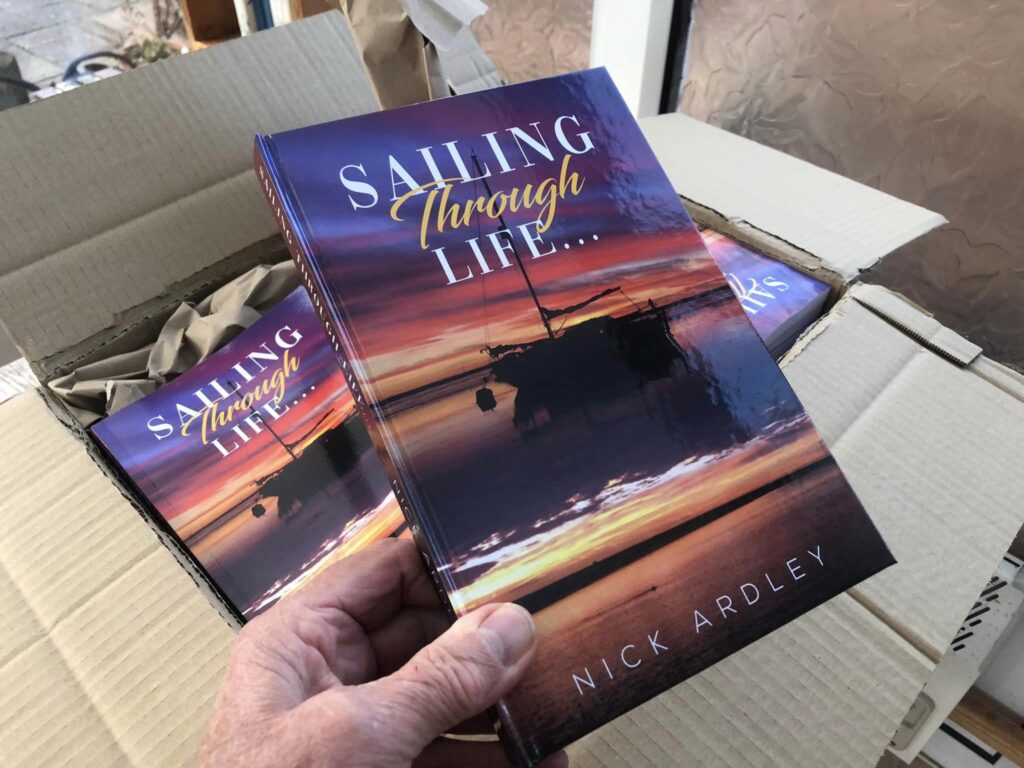
During the middle of the autumn, my latest book, ‘Sailing through life…’ finally came out.
See:
On our jaunts out on the boat and further walking exercises round the borders of Lawling and Mayland creeks, it became obvious that the area was a hotbed of overwintering birds. Many species of duck and of course the ubiquitous Brent goose!
Huge swirls of dunlin, knot and other waders (usually mixed up) have regularly been witnessed while sailing in the creek.
One thing was sure, I wasn’t missing out on the spectacles oft seen down off the end of Canvey Island. (A place I now rarely have the need to go…)
A huge flock of brent flew over the mast and out over the saltings.
So, how do we feel in our new home?
Happy. At peace. No stress. No hassles. No bullying or the threats of. Manager remarked that she’d suffered workplace bullying and in its unlikely occurrence, to report immediately…
Yes, we miss the chaps we worked with on the work parties, but the rest of the rot, not one jot.
We’ve still to ‘test’ the yard hard for our spring bottom refit (antifouling), but the manager has assured us it should all be to our satisfaction.
We feel blessed with our lot.
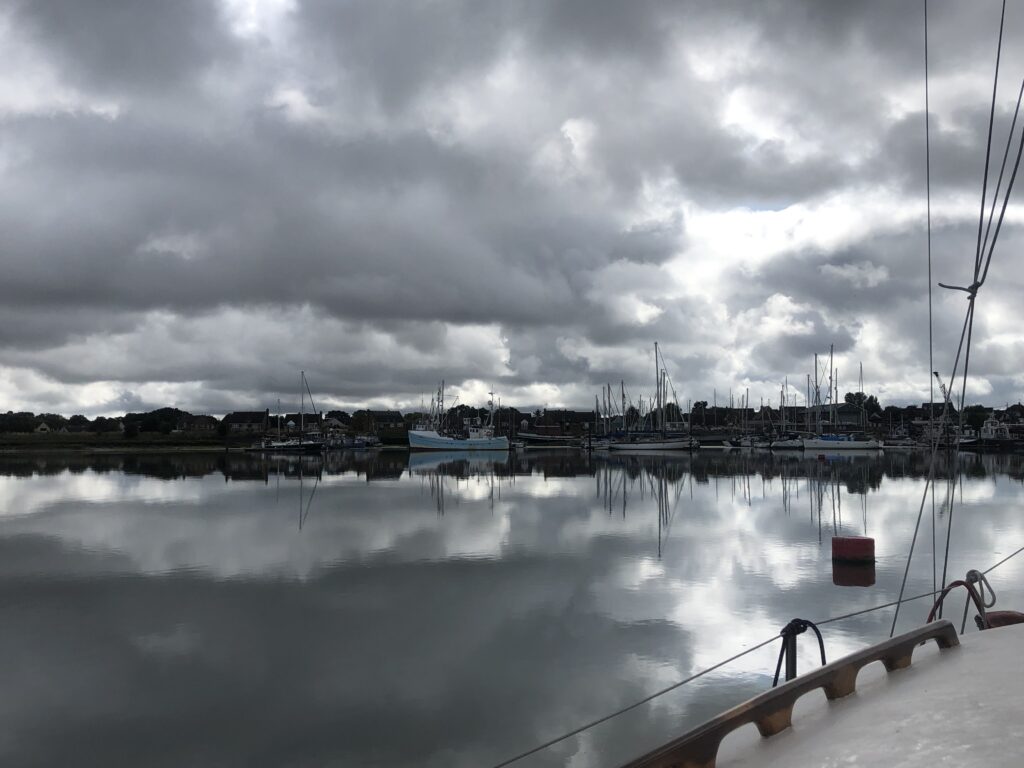
The Blackwater Marina under a moody sky.
Back in 2010 in the introduction to, ‘Mudlarking – Thames Estuary Cruising Yarns‘, published by Amberley, I wrote:
‘The pleasures of an arrival in a creek fringed with saline plants, with their heady scents of summer, are enough for this sailor and his mate. The sight of traditional craft, smacks, old wooden yachts, classics or otherwise, or the ubiquitous, evocative spritsail barge adds immensely to the aura: to fetch up with any of these, in the same anchorage, adds timelessness…‘
Well, we are now berthed within ‘that paradise’ – I should have moved us three years ago, we realise this now…
Finally, Whimbrel and her crew would like to wish all readers a very happy New Year and a peaceful coexistence with those around you.
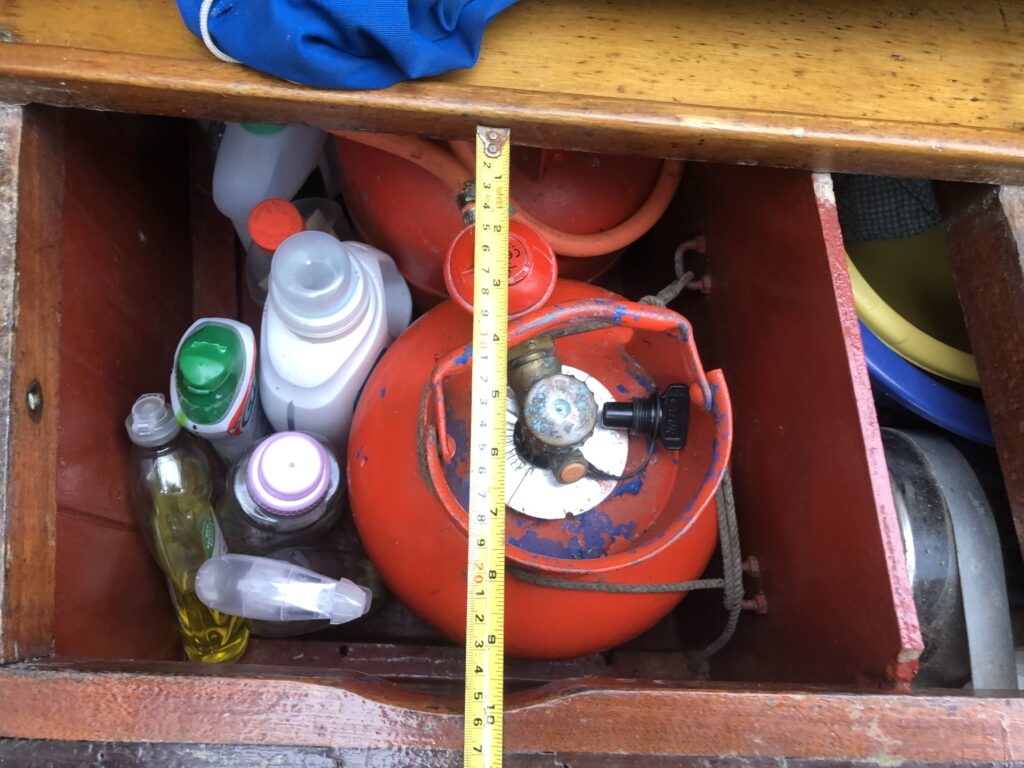
Calor’s crazy decision of a couple years back now caused more than a stir in the boating circles, but it was in the caravan and motorhome world that the storm of dissent was loudest, and, earliest onto the block.
Whimbrel’s gas locker arrangements.
I tried my luck with the traditional boating press to no avail before getting the South Coast sailing news to do a piece.
As for the Royal Yachting Association, they were initially non starters with seemingly little care, ignorant in their response to myself, until finally a ‘Calor’ statement was published by them last April – I had disposed of my forty plus year membership by then!
So, as someone who had only one choice to make when supplies of the ‘small’ calor cylinders ceased, that was to change to the smaller and more expensive Campingaz, I have kept my ear to the ground.
Fortunately, we built up a bottle reserve and found a supplier who ‘never ran out’ of the 3.9/4.5 cylinder sizes.
Then from my friend in Aukland, New Zealand came a tip off…
A snippet of news on the East Coast Pilot site – not a place I visit often. So I went trawling towards the caravan brigade for they have been very proactive.
I found and interesting item. From Admin of the Caravan and Motorhome chat pages:
‘Seems Calor have u-turned on this one which is good news for many I am certain, from Calor:
In February we announced plans to streamline our cylinder range to phase out the 3.9kg propane and 4.5kg butane sizes.
Customers using these cylinder sizes, particularly in the boating and caravanning communities, told us they were frustrated by the limited availability of alternatives to these sizes of cylinder. We listened to their concerns and reviewed options for returning these cylinders back into circulation.
We’re now pleased to announce that we’ll continue to supply the 3.9kg propane and 4.5kg butane sizes.
What’s changed?
Since the announcement, we have continued to fill a small number of these cylinders. And, following recent modernisation to our filling centres, we can now increase the supply of these cylinders.
We’ll also start to refurbish and return cylinders back into the network to improve availability. This will take a little time as we are investing in a significant capacity increase in reconditioning facilities, but we’re working hard to return supply to normal as soon as possible.‘
It would appear that Calor are about to announce something: there is nothing other than the statements of early 2023 on pages currently.
Also: I know that many marinas have changed their supply lines and stock a greater amount of Campingaz, so, whether or not marinas will go back to Calor, if the pull out is rescinded, remains to be seen.
Stay alert!
Note: from fellow sailor, Brian, the Westerly Owners Association carries the same worded message.
A little while ago there was a warning in the ‘yachting press’ about boat safety and in particular safety on inland waterways craft.
This is nothing new: Marine Industry Federation and MAIB (Maritime accident investigation branch) of the MCA have raised concerns earlier this year.
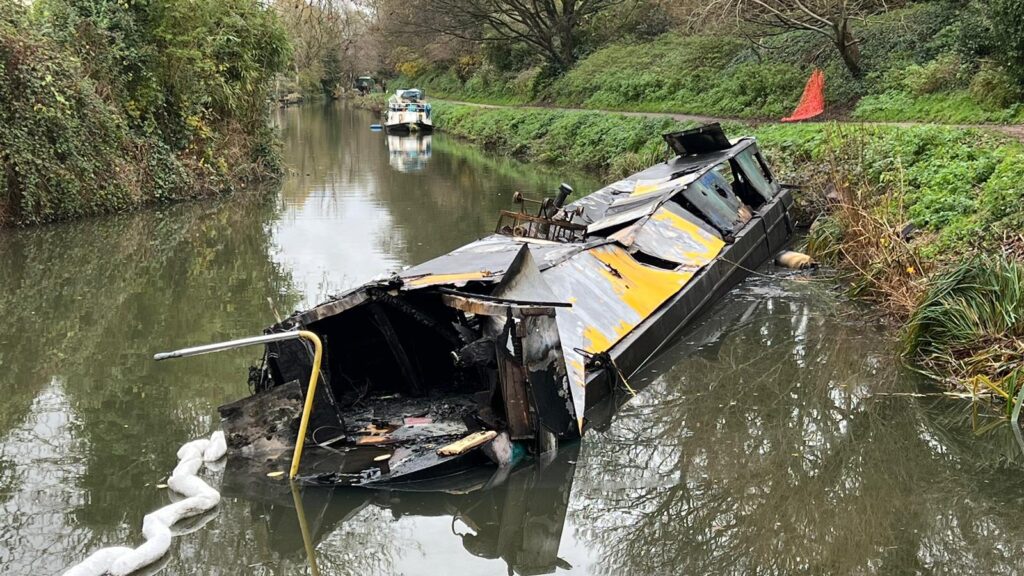
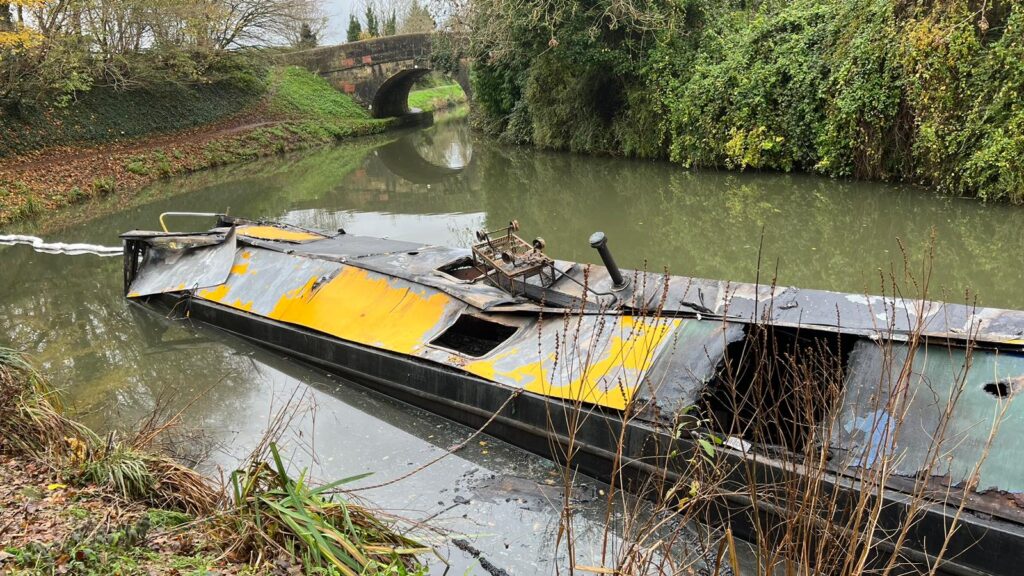
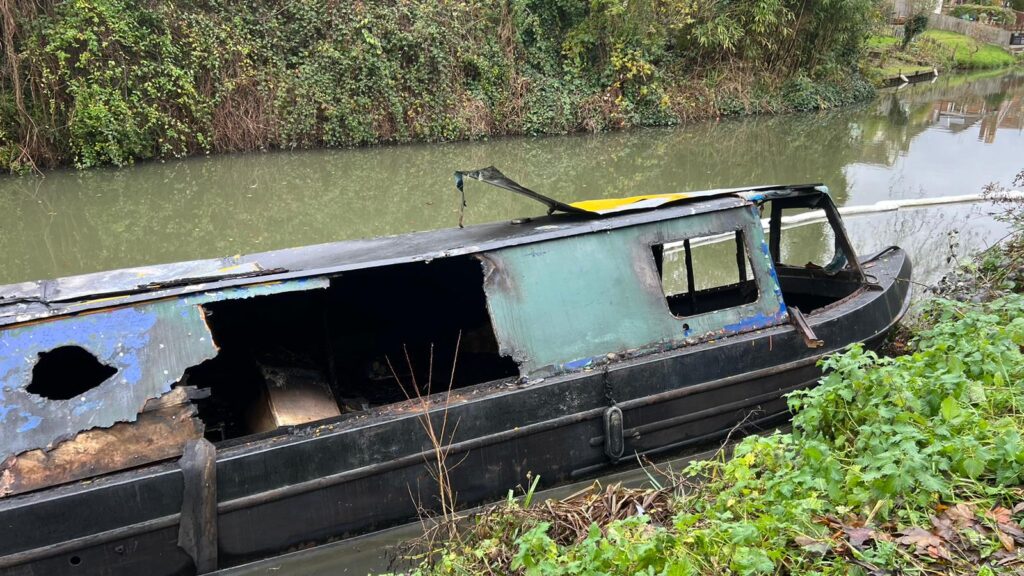
While down in deepest ‘land locked’ Wiltshire recently visiting family in Devizes, we saw a blaze taking place whilst passing over the Kennet & Avon Canal. It turned out that a most serious fire had taken place aboard a canal boat moored near the road bridge.
Three pictures courtesy of Theresa Ardley
It is not known what caused the blaze, however, many of the occupants of these ‘live-aboards’ use wood for heating and gas for cooking. Stacks of wood are often seen atop the vessels as well as a miasma of other ‘junk’…
I was told that an intact gas bottle was seen floating by the wrecked vessel, indicating, perhaps, that it wasn’t a gas based conflagration.
It is pretty obvious that the inferno within caused partial destruction of the vessel as well as its sinkage – that, however, was most likely due to fire service flooding when combatting the blaze.
As soon as the book hit the streets, people began asking for signed copies, which is nice. Interestingly the hard copy was as much in demand as the soft cover …
I’ve had two glitches: a few weeks ago, I sent all my stock to Salty Dogs Christmas season shop in Maldon – fronted by Photographer Den Philips – keeping back copies to cover the orders I still had to fulfill.
I need to go back a ‘bag’ another couple of copies to keep punters happy!
I had one email saying:
‘I have bought several of your books as Christmas gifts and he (Dad) also enjoyed a recommendation I saw on your website for another boat book. Anyway, if you could sign a copy for him ‘Mike’ that would be much appreciated…’
Then this fairly fulsome piece from a lady on the the first half of her read…
‘I thought your first chapter was very thoughtful and encouraging to get men to get checked. It can’t have been easy writing about your feelings. I’ve told friends your story (a brief version) to encourage them too. I think of the time when you were going through it all and I can’t imagine what it must have been like for both of you in different ways. I’m just so glad you are so well now.’
Then, continuing:
‘I’ve read more and remember putting a bucket up the mast to go through the bridge in the Swale. Your time on the barge was so much nicer than a weekend I spent on Xylonite…
You provoke so many memories that I read the books twice to really enjoy the books properly usually with east coast rivers open too so I can see your route or a map for the walking.
Thank you for writing another one.’
Thank you!!
I had a card from a sailor in The Netherlands, thanking me for the safe arrival of a book, he said: ‘I have received your book in good condition! Now I am looking forward to a lot of reading pleasure…’
Another chap and his wife contacted asking for a signed copy, wrote:
‘I hope that you will keep sailing and writing those great books of yours because we’ll keep reading them!! ‘
A moody day on the Blackwater…
Yes, kind reader, I will keep sailing for as long as good grace and health coexist, I promise… As for further writing, hmm, I don’t know – too early yet.
And, thank you to all those who have so far bought a copy of this book, it is greatly appreciated.
Whilst away down in West Sussex a little while back during the early autumn, I alighted on a book that looked interesting in a historical way. Great Years in Yachting by John Nicholson. It was published by Nautical Publishing Ltd, of Lymington in 1970. It is therefore still under copyright and I acknowledge with thanks all photographs of book pages.
The book – bit jaded but completely intact.
This, of course, is the Nicholson of that famous Gosport (and Southampton) yacht designing and building fame. John is the son of Charles E. Nicholson, the doyen of yachting – designing, building and racing, as well as family cruising. The Nicholson’s owned and ran the firm of Camper and Nicholsons based adjacent to the Gosport/Portsmouth ferry.
Copy N0.2 – David Watts. Wonder who he was!
The book is ostensibly about Charles Nicholson and the life of the firm during his period of chairmanship (There were three brothers) – John assumed control in the fulness of time, retiring c 1970, but covers a little of the companies pre-history too.
The ‘great’ man…
The family yachts get a reasonable and interesting coverage. John and his sister Mary were clearly the sailors amongst the Nicholson siblings: they were regularly crewing…
Charles made the mistake of many a (gung-ho) sailor and frightened the wits out of his young wife and she rarely stepped foot aboard a yacht following a very bad passage…
How many people have done this, I wonder!
The family yachts during John’s younger years.
The shear size and volume of the Nicholson production at Gosport and Southampton was phenomenal. The Southampton yard was opened as yachts grew in size and, more importantly, draft. Gosport’s slip could manage up to 15′, just.
The Margharita of 1913. Eventually passed to Owner of shipping line, Reardon Smith and was converted for training use.
There is a chapter on ‘Captains and Skippers’… Up until after the cessation of hostilities of the second world war, crews were professional, although amateurs were creeping in. The early interlopers were generally termed ‘Hired Assassins’ or later, ‘pier-head jumpers’ to be kinder and less derogatory. The day of the professional was certainly cropped after a strike of the crew of a mid 1930s Americas Cup Challenger. She was essentially the better yacht, but still lost!
The Port of London Authority tender, Nore, in which the young Queen Elizabeth II was given a tour of the London River.
I was amazed at the attitude of ‘build at no expense’ and the huge alterations carried out after a year on the racing circuit, but, it must be remembered that the worth of such men as Tommy Sopwith and his industrial contemporaries was immense. Akin to the Oligarchs washing around today.
Charles E. Nicholson helming Candida against Britannia and Cambria. The deck edge is awash. The attire worn seems absolutely ridiculous today!
Charles Nicholson was involved with all of the Endeavour Americas Cup projects and the last, Endeavour II, was faster and technically better than the American vessel, however, the aluminium mast of Ranger gave her an advantage in less heel in the generally light wind sailing in which the cup was sailed…
The two Endeavours…One of the firm’s steam yachts.
Camper & Nicholsons not only built the big classes and steam/motor yachts, but 12, 8 and 6 metre vessels, as well as cruising vessels for the less wealthy, however, these were still on the large size if you compare to say a yacht from an east coast yard.
Two fine looking motor yachts.
The book ends with a short chapter on the ;Sound in the shipyard’ where John reminiscences on the lost cacophony produced by riveting, plate bending, hammering of the caulkers and the huge circular saws…
The firm moved with the times and a marina had filled the water off their Gosport Yard and they had slipped smoothly into the use of GRP.
The latter is not surprising for the firm had always been innovative using laminated timbers and diagonal planking etc throughout the early 1900s.
I was left with one huge overriding feeling of this lost world. The definite demarcation of the haves and have-nots – the ‘stench’ – not in a nasty way – of privilege…
Is it worth reading if you can find a copy, well, yes!
On the book’s launch day, a box packed full of the finished article arrived. Even though this is my seventh book, it was still an exciting moment to carefully open the box and lift out and hold a copy for the first time.
Holding a hard copy of Sailing through life…
It was a book that was very nearly ‘binned’ due huge angst I felt about the way a number of yachting folk treated me (us both actually) after I wrote a blog asking people not to go away sailing overnight when not allowed during the first Covid 19 period. This was termed the ‘Cummings Effect’ after that man’s lockdown failings – something which has already been raised at the public enquiry currently taking place under Baroness Hallett.
Interestingly, the enquiry will be covering, ‘…the effects transgressors had on the law abiding population…’
A local man publicly threatened to burn Whimbrel and admitted the fact to a yachting journalist, who, sadly, did not specifically talk to me about the incident. He later admitted that he should have listened to my truthful facts…
The ‘gentleman’ who made the threat was somebody who I once looked up to as a fellow spirit of the waters. He claimed I had informed the authorities about his transgression … an absolute and utter lie, as he well knows.
This came about after the Marine Section of Essex Police visited his yacht club wanting to speak to a number of boat crews about sailing away overnight for a weekend over Whitsun Bank Holiday, 2020. I strongly suspect that the informer, if there was one, was a member of that club: I was informed much later that club officers were scurrying around trying to stop boats going out!
At the time there were various yotty blog and Facebook ‘boasts’ doing the rounds with pictures of anchorages with boats and their AIS (automatic identification system) plots. Kent police ‘raided’ Queenborough, asking for help. Thames VTS had them too, surely. Stupid buggers!
One of my favourite yarns…
There was some vitriol on the ‘air waves’ too, by people who hadn’t even bothered to read my blog – they just wanted to wade in and vent their spleens.
There followed a vociferous and frightening verbal attack out on the water, the chap’s wife screamed at him to ‘stop it…’ Then, Essex Police treated the incidents as harassment…
All these people, to quote a news report I read, are no better than scum, essentially the cesspit of humanity. A damned good description.
I was still receiving my cancer treatment, so, ‘Thanks guys’, for they were all ‘men!’ You made our lives hell…
Inside, chapter 1, which is strong message to men and women about prostate cancer.
Following all of this, I completed magazine work that I had agreed to, but I have not written anything new for a magazine since, and current I remain in an indifferent mind to that world…
The book essentially covers my ‘battle’ with prostate cancer and is written as a severe warning to men: for me it was a close call…
There are various tales, some of which took place before my cancer and the over-lapping Covid period, others are tales and reminiscences during these episodes: both impinged in their own specific ways.
A day sailing aboard the Blue Mermaid.
We enjoyed a ‘mid-covid-breather’ day aboard the Sea Change Sailing Trust’s barge Blue Mermaid. It was a scintillating day with just another two ‘passengers’ crewing alongside the normal three. There were still certain ‘distancing’ rules in place where appropriate.
We enjoyed a little Finesse meet…
It’s during the last few chapters that I get into the nuts of what it was like, as a sailor and walker, during the pandemic, and I discuss the ‘attacks’ made on us and the disgraceful attitude of Essex Police.
The end…
The ending is optimistic for the future, full of thankfulness for our escape from Covid harm.
Now, coming up to five years on from my diagnosis and initial treatment, My PSA is essentially zero and I am continuing to head confidently towards the future with many more blissful years with my mate beside me…