
The subject of ‘end of life’ problems associated with pleasure craft has been in the news in recent times. I had an article in an East Coast magazine around fifteen years ago about what I perceived as a growing problem, especially around the dumping of unwanted little ships.
During the summer days of sailing, I often wander the yards to look at what boats are for sale, being worked on and those in the lay-up places awaiting their fates.
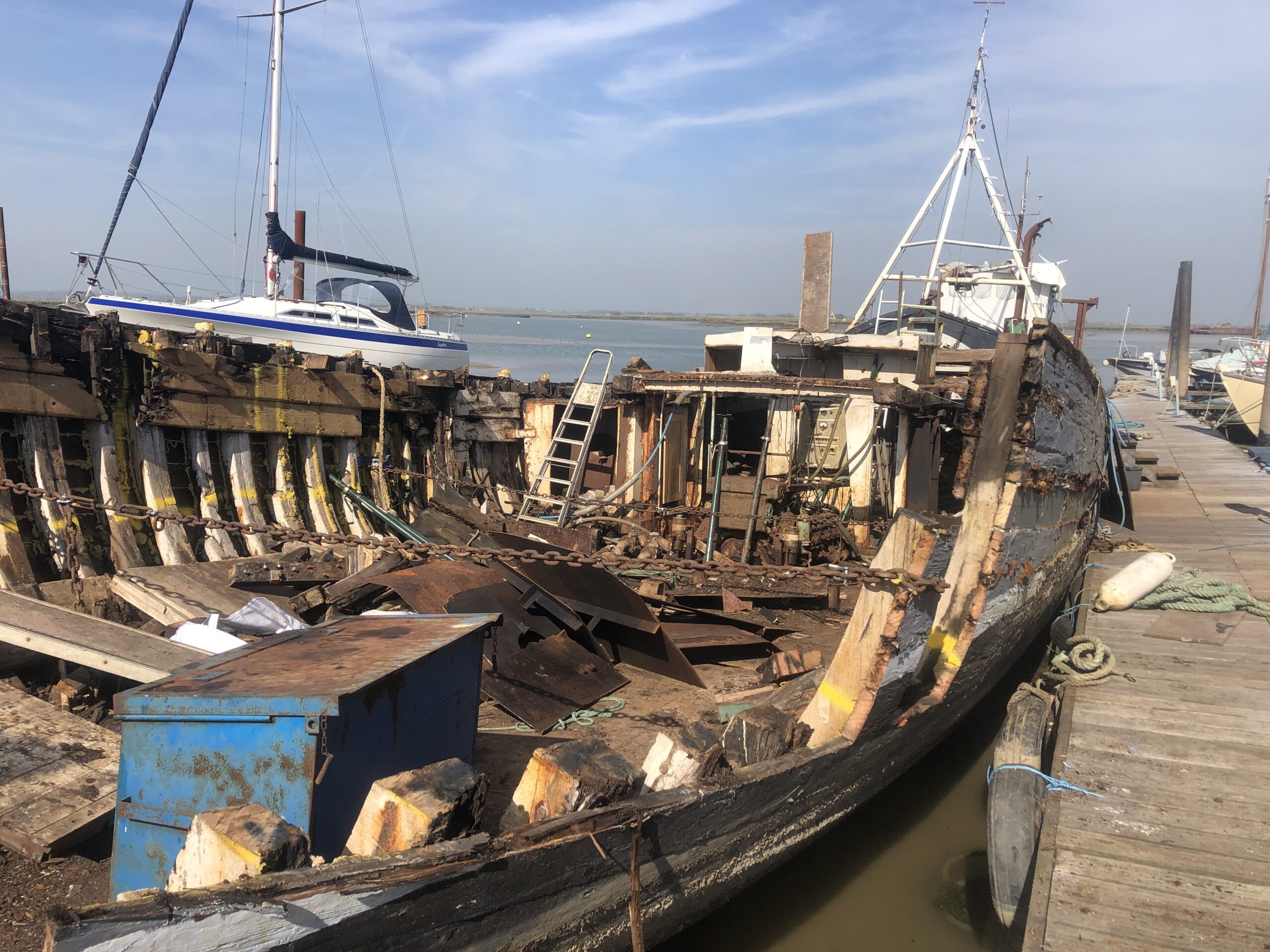
Above is a view into the inside of an old fishing vessel that had been used as a house-boat at West Mersea. The Maylandsea yard I am berthed in, gradually reduced her down towards the waterline then put her on the slip for final cutting up. Metalwork was recycled and much of her timbers were burnt. The yard has another awaiting same treatment. I was told that breakage costs for one of these was £20K!
Companies have tried various forms of recycling experiments from chopping up and mixing into a road surface mix to the complete chemical breakdown of components back to base ingredients. Some success in the laboratory was achieved but scaling up was stated to be a huge problem.
Meanwhile I have noticed a growing number of ‘clearances’ within that corner of so many yards were old boats linger.
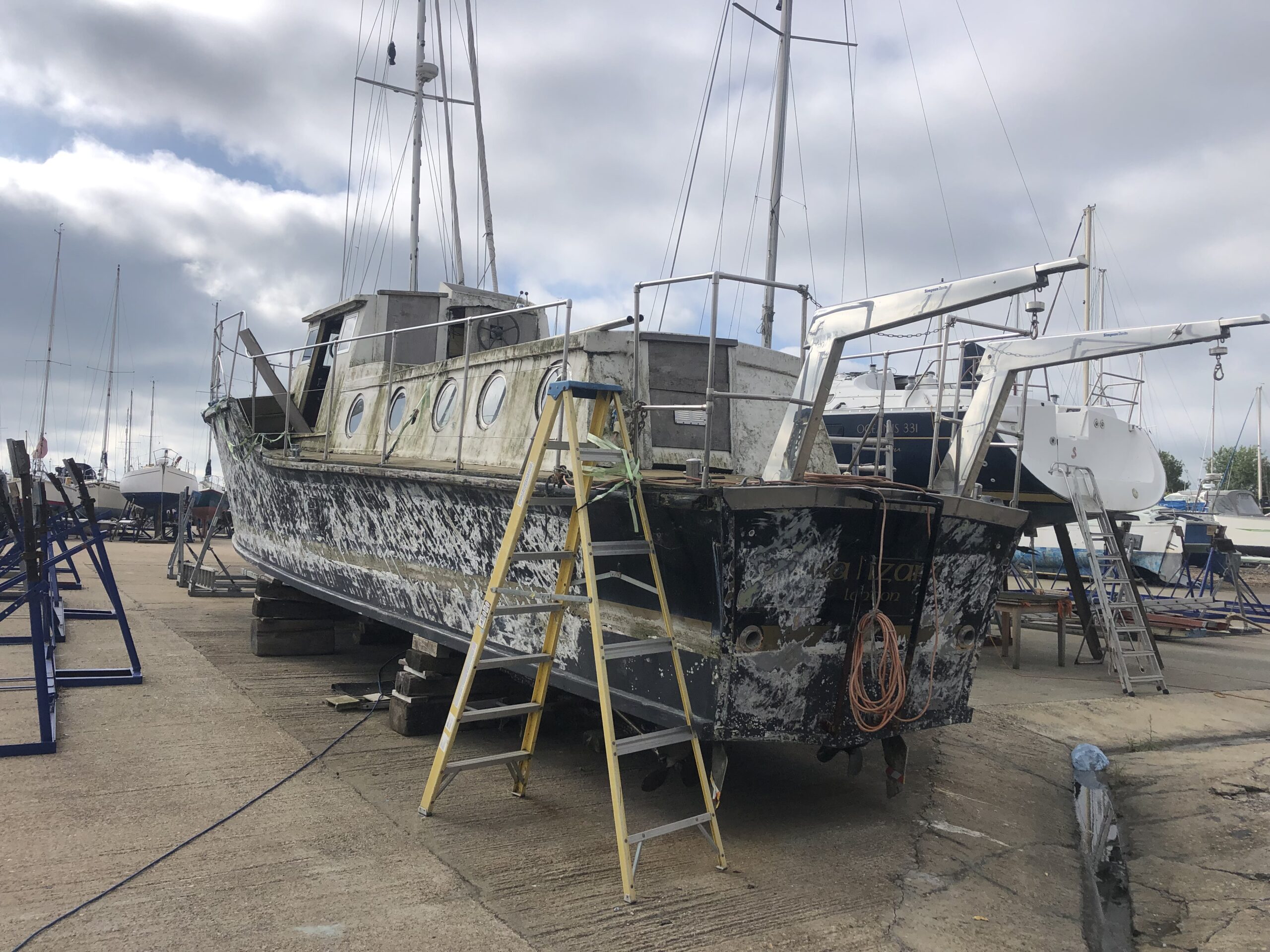
This old girl at Titchmarsh Marina had been hauled out and had her hull stripped back, however, on close inspection the hul was seen to be absolutely riddled with rot. She was clearly awaiting her final fate.
In many respects, old wooden craft can be sawn up and largely burnt.
What is certainly happening is that old boats are stripped of metal work and equipments which go into recycling.
I was recently told that to dismantle an old Thames sailing barge and transport waste to a special site where ‘tarred wood’ could be disposed of was calculated to cost around £67,000… Once upon a time these old girls were sat in the saltings and allowed to gradually decay. It was a good end for they provided a home for so much of natural life. as well as perches for bird life.
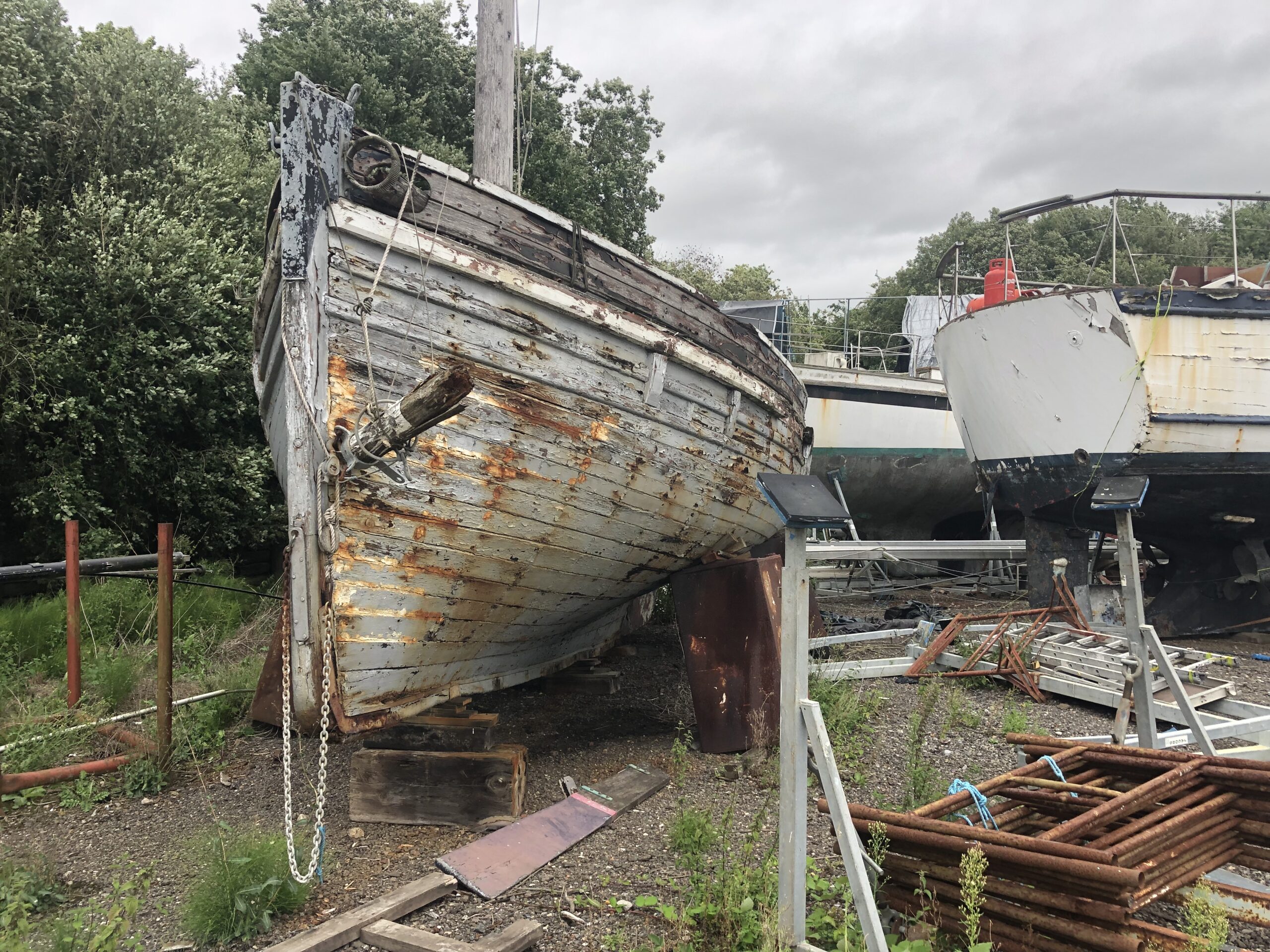
At the Suffolk Yacht Harbour I found a host of craft sitting awaiting an owners decision, it seemed, whilst others were in process of demolition. The old ‘Fifer’ above had a indented rotted keel unable to carry the vessel’s weight. Her planking was rot riddled, yet, her insides, looking through a hole, were in great homely condition!
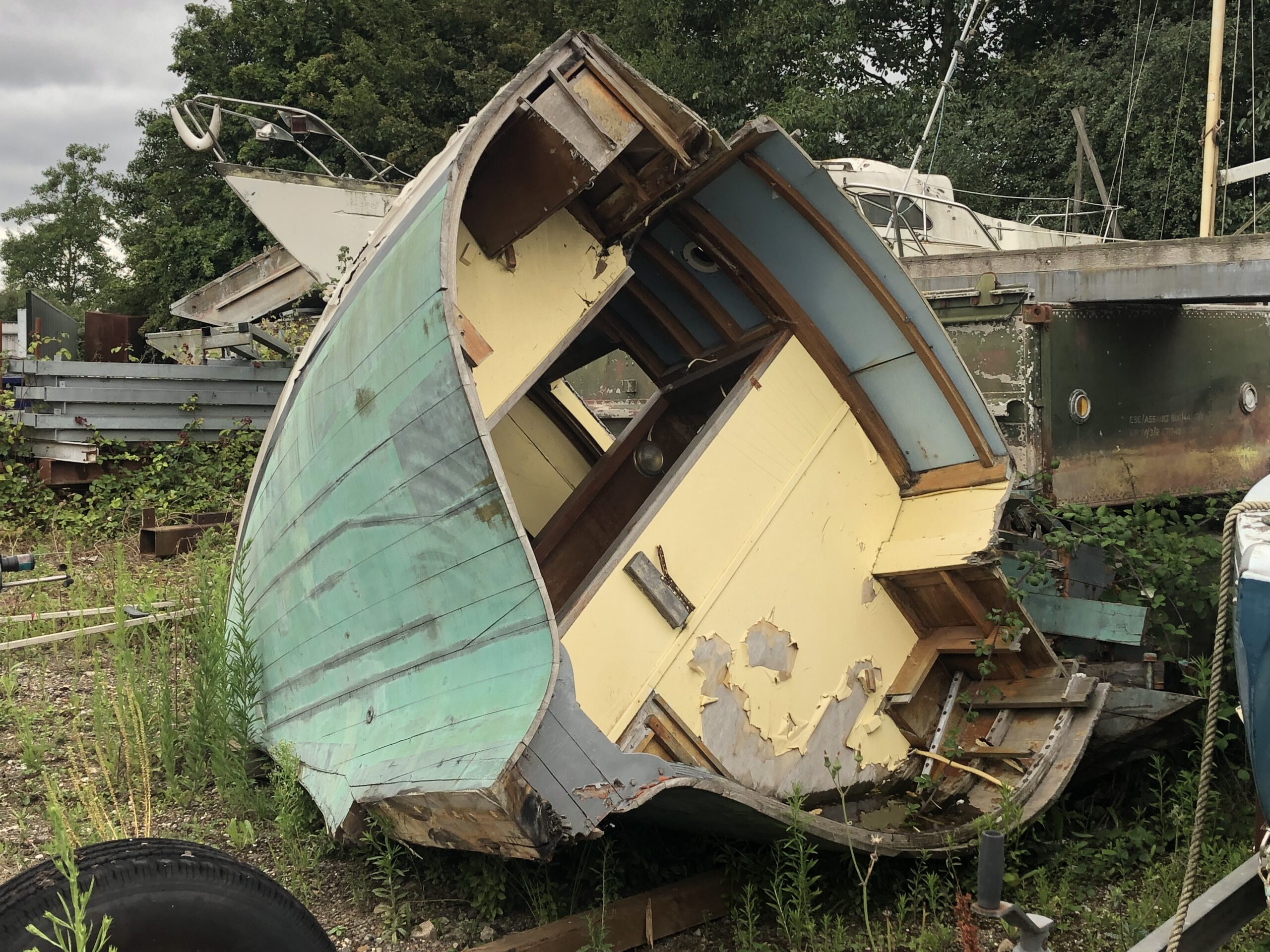
Above, ballast keel removed and cutting up well advanced: there was no sign of the rest of her.
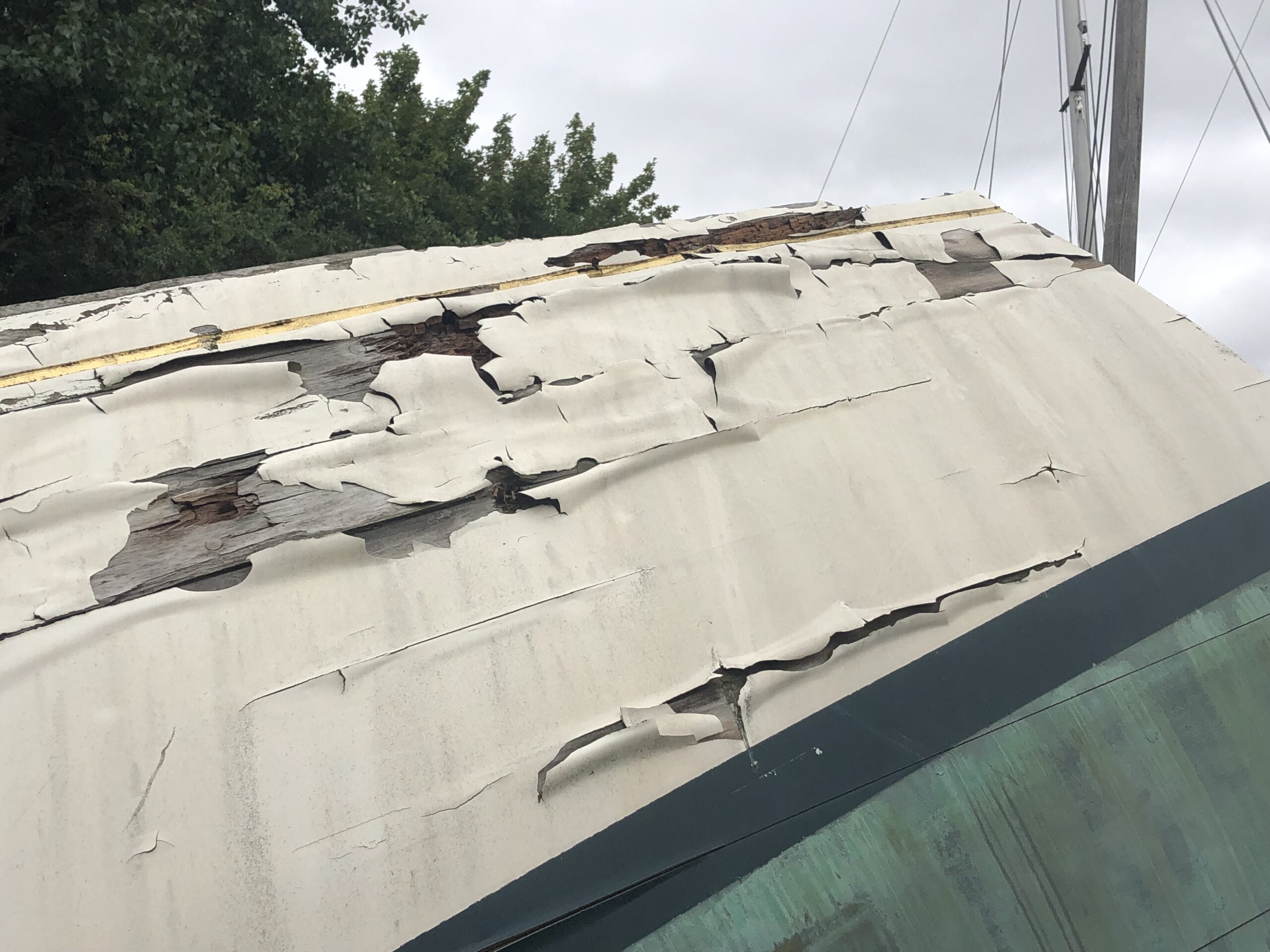
The problems… It was a wonder she stayed afloat. My finger went through the wood by waterline.
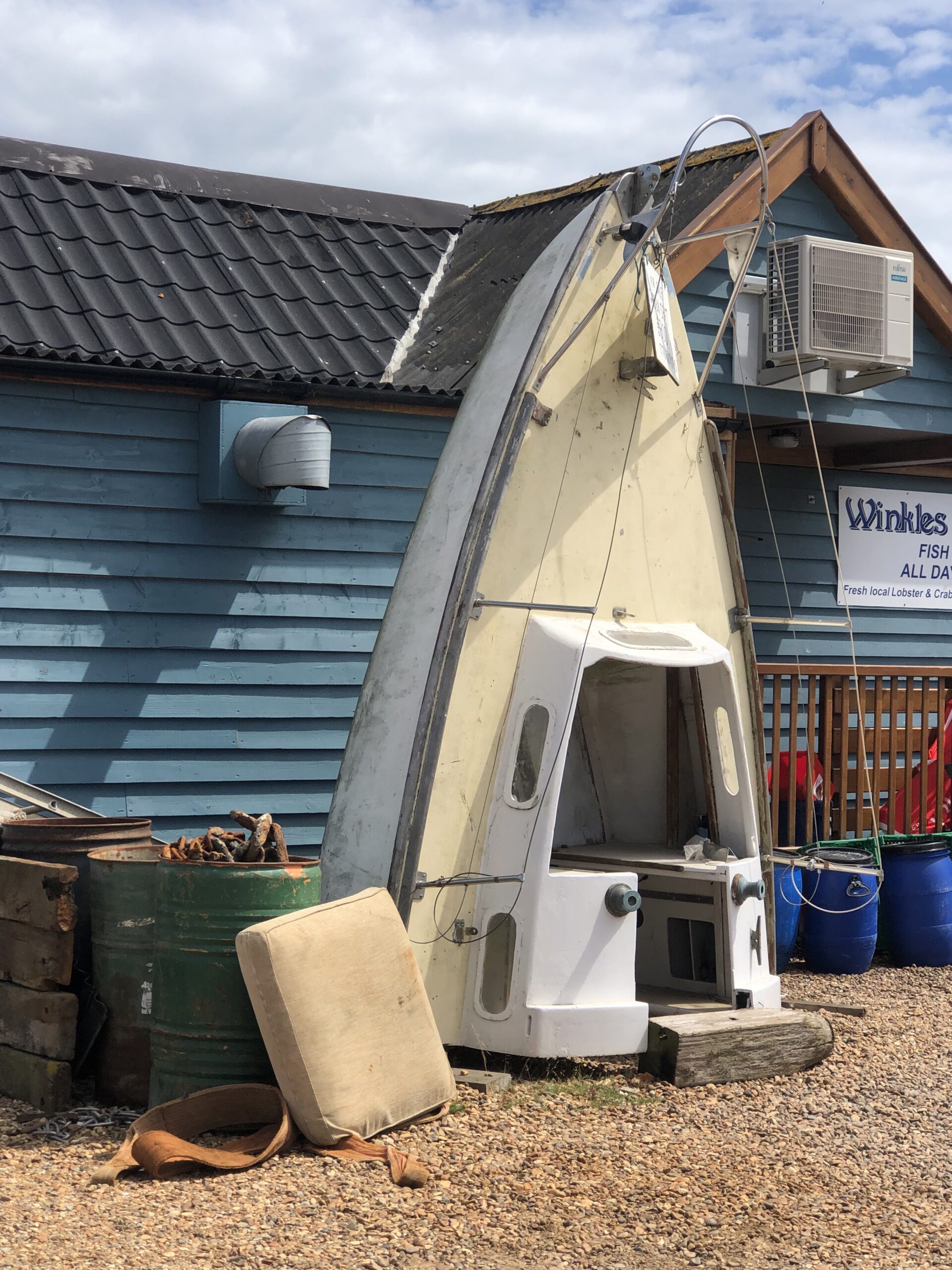
At Felixstowe Ferry an interesting use for an abandoned GRP yacht has been found. A sheltered seating area has been created, however, this is only a small step: eventually she’ll be chopped up as her major half has clearly been.
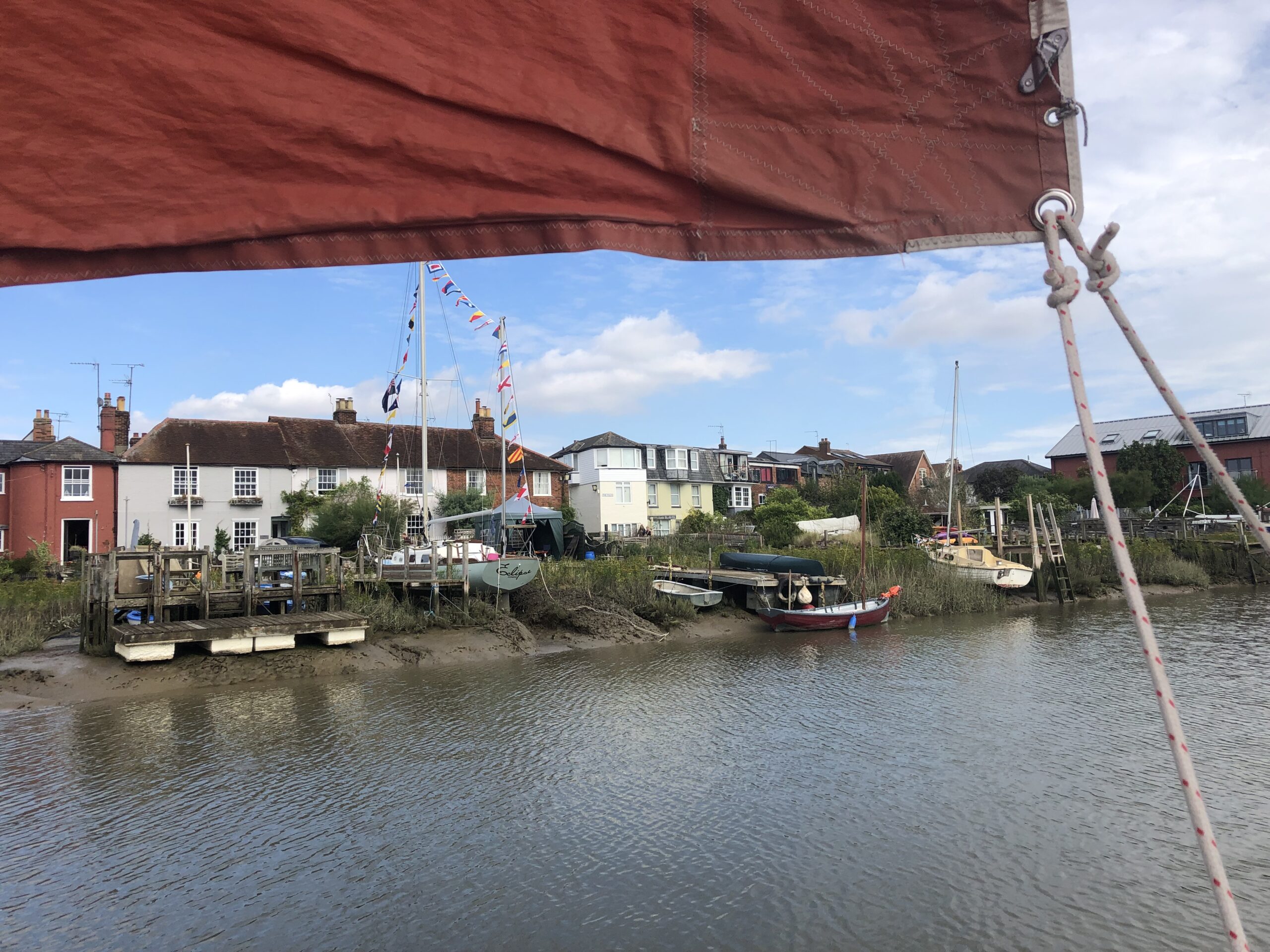
The waterfront at Wivenhoe is littered with abandoned craft rotting away at ‘their moorings’ and over the years I have watched the gradual degradation taking place. One has recently been removed to make way for a different vessel. There are several clinker yachts, one of which was a Brightlingsea built folkboat, pictured below. the other two are of similar design.
Abandoned vessels cannot just be dismantled for there will be an ownership somewhere and it could pop out of the woodwork at any moment. (excuse pun…) Various legal requirements have to be dealt with, but if money is owed, a lien on the vessel can be issued. The property is then transferred to recoup monetary loss, which could include removal…
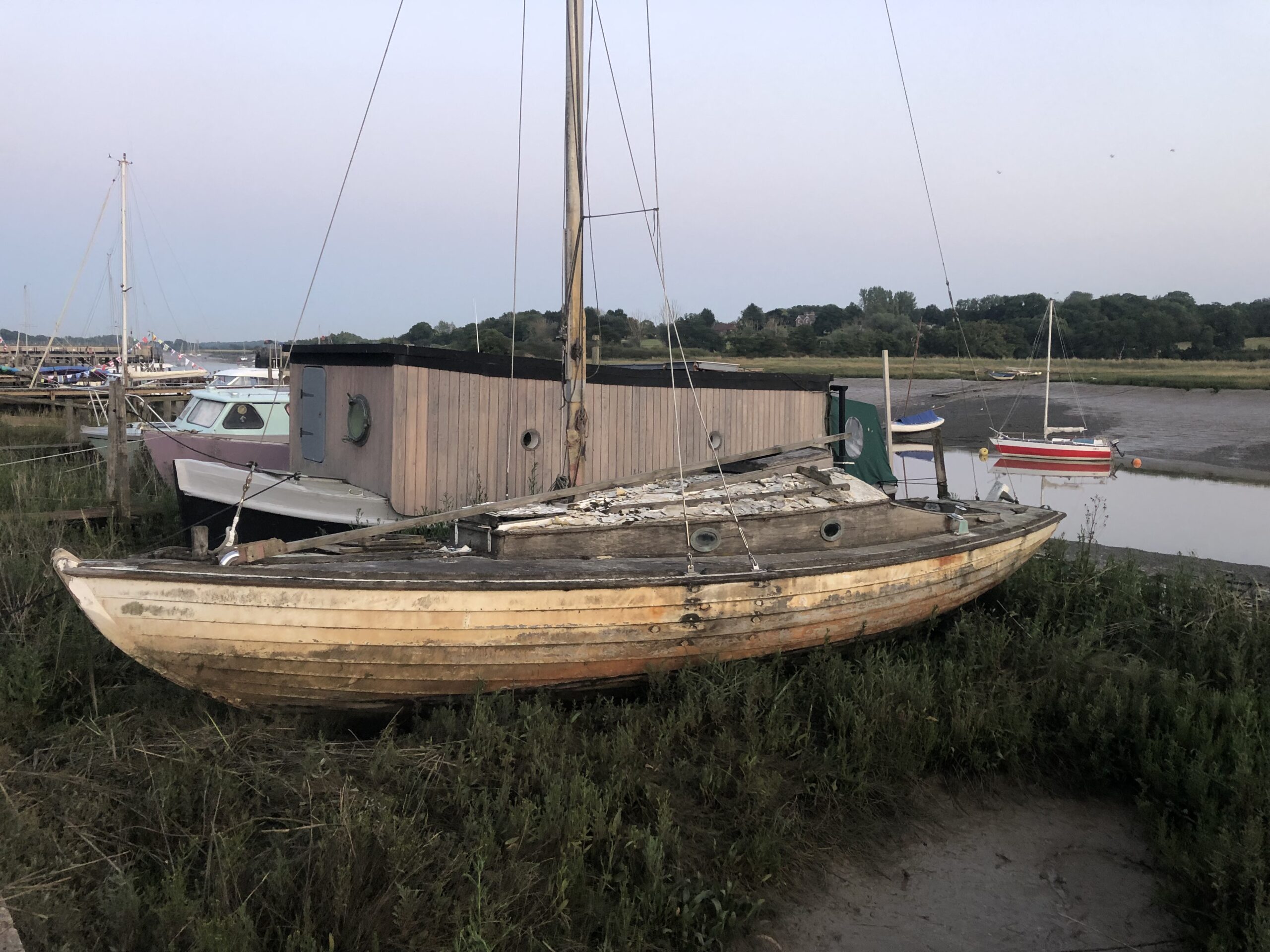
Across Europe the problem is immense. It has been calculated that around one million disused craft are awaiting their fate. In N. America, the Federal administration made funding available for bodies to clear waterways of abandoned craft…
Meanwhile, whatever yards do, I just love to poke around these old girls…
It is something all boat owners may need to think about.
It is a problem. A growing one.