I came across John Leather’s 1979 book, ‘The Sailor’s Coast’ in a second hand book shop in Leigh-on-Sea recently. It was published by Barrie & Jenkins (No longer around).
The book is described in a forward by the author as a tour of the ‘East Coast’ through the lens of Douglass Went, photographer extraordinaire from Brightlingsea, Essex. Douglass Went was born in 1887 and died in 1970. He had a studio in Brightlingsea and spent a good part of his adult life recording vessels he saw in evocative black and white photography.
Sitting looking at the book’s cover, my memory told me that I had seen the cover picture before. Crumbs, not same book thoughts stirred, so I roamed my holdings. I soon alighted on another Leather book, ‘Smacks and Bawleys’ published by Lavenham Press in 1991.
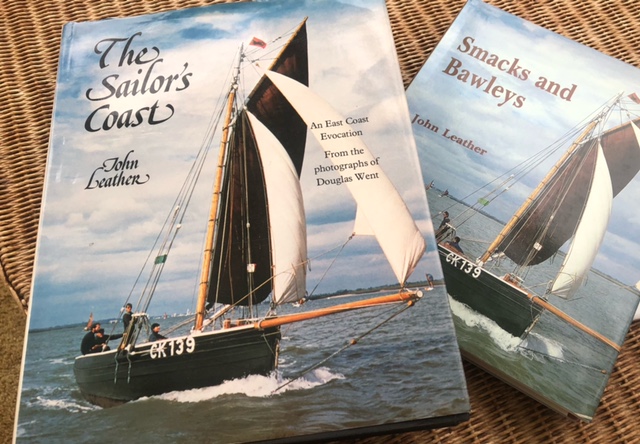
The two book covers!
The pictures aren’t the same, in that the photographers are different, however, they must have been taken at same time (almost). The former was a Janet Harber picture. Janet, if you’re not aware is one of Jack Coote’s daughters. The latter is ascribed to Jack Coote. The background is not the Mersea Quarters, as I first thought. It can be seen that the other yachts are the same vessels in both frames! Janet, herself, contacted and corrected my assumption. The picture is from the R. Crouch during a race from Paglesham where Jack Coote was then keeping his yacht Blue Shoal. Janet and her husband were crewing.
The smack is Kate CK 139, which was then owned by Tim Balfour Janet tells me and was in the same race.
Janet was herself an accomplished photographer following her father’s passion (after boats and the east coast). Jack Coote, as many know, was the editor of the famous East Coast Rivers pilot book.
The John Leather book ostensibly covers the ‘East Coast’ however, there are many ‘missing’ places, especially south side of R. Blackwater (except Maldon). Douglass Went operated from Brightlingsea, where his studio and home were situated and with all the other places he got to, I found it surprising, however, this may have just been the whim of John Leather. Now, we shall never know! Went’s pictures feature in other books about the area in the days towards the ending of the ‘old ways’ on the waterfront.
Below are two views of smacks racing out of the Mersea Quarters. Went’s view was captured during the 1930 Regatta week. My view was taken during the Regatta week of 2025, nearly one-hundred years later! We were heading inbound from Brightlingsea and saw the smacks in the distance coming towards us. I spotted an orange buoy and luffed up to pass clear thus giving room for the old girls (we had right of way!) and I did not want to impede unnecessarily.
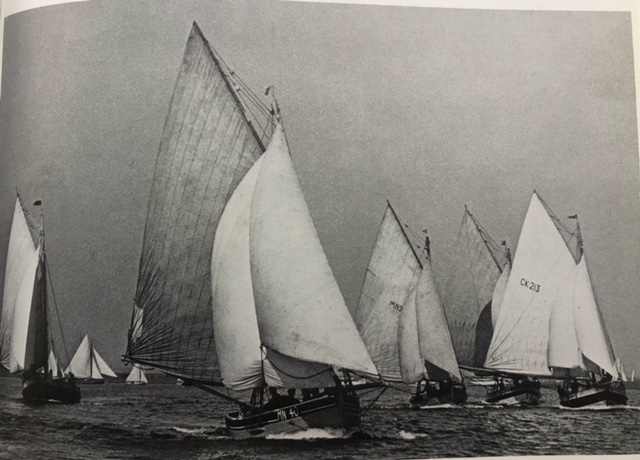
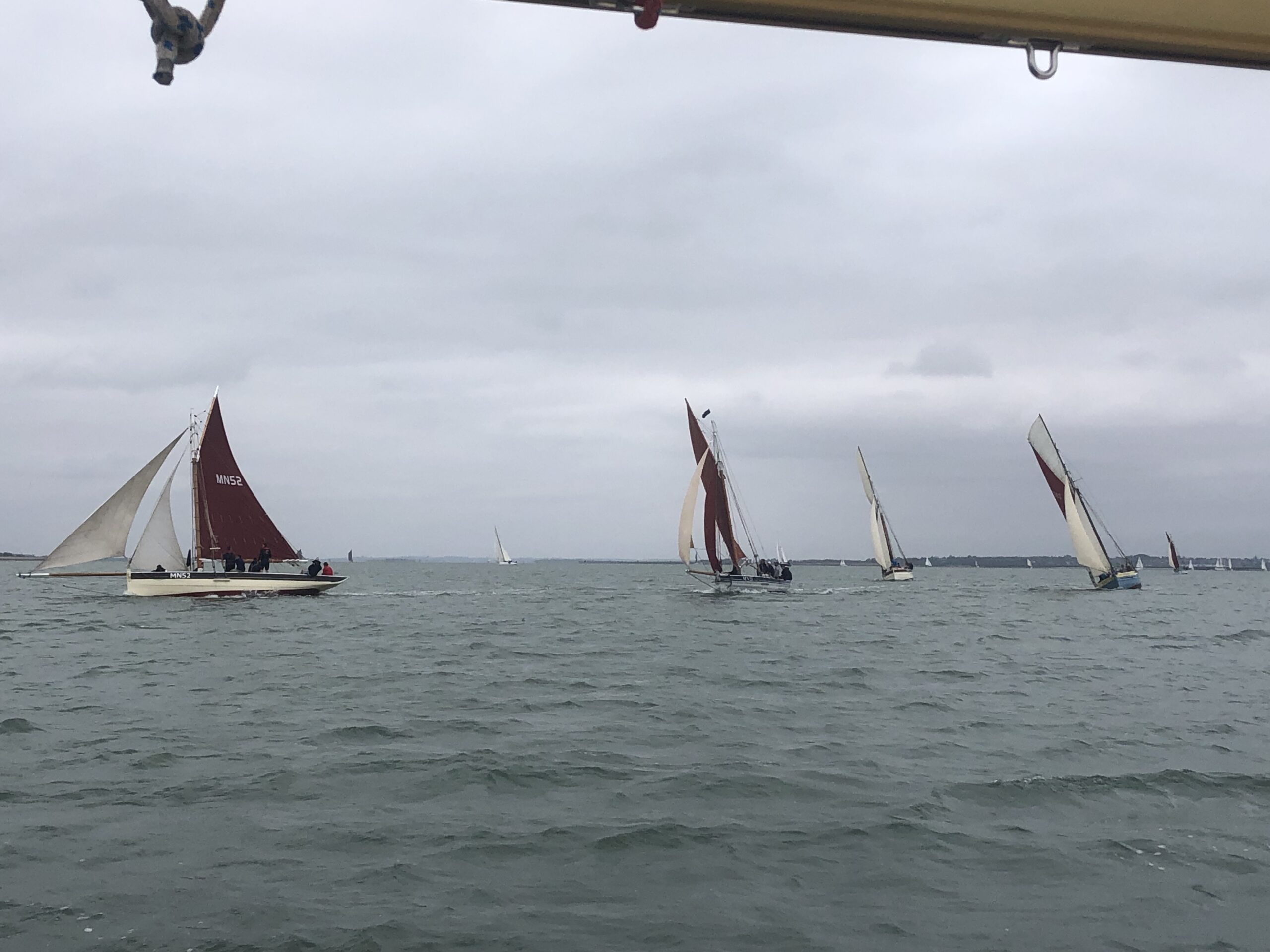
These two pictures of racing smacks are taken ninety-five years apart!
I have pictures of Maldon’s Hythe from the promenade (with its flood wall) but I have used a water view for comparison. The clean beach with its myriad of dinghies, punts and smacks has become muddied through little or no use: vessels do not moor along the promenade anymore. Towards Cooks old yard, there is a tripper boat pier and a berth for the steam tug Brent (awaiting lottery money or other funding) and the old yards set of blocks. The blocks themselves are becoming less used as the spritties largely use a drydock for annual antifouling sessions.
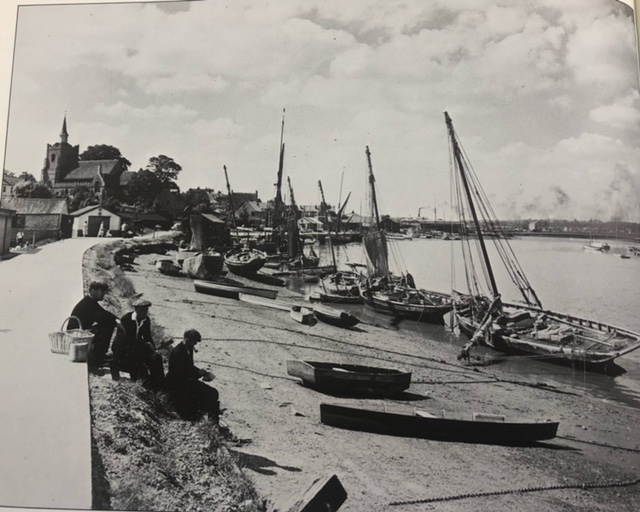
As photographed by Douglass Went in 1957.
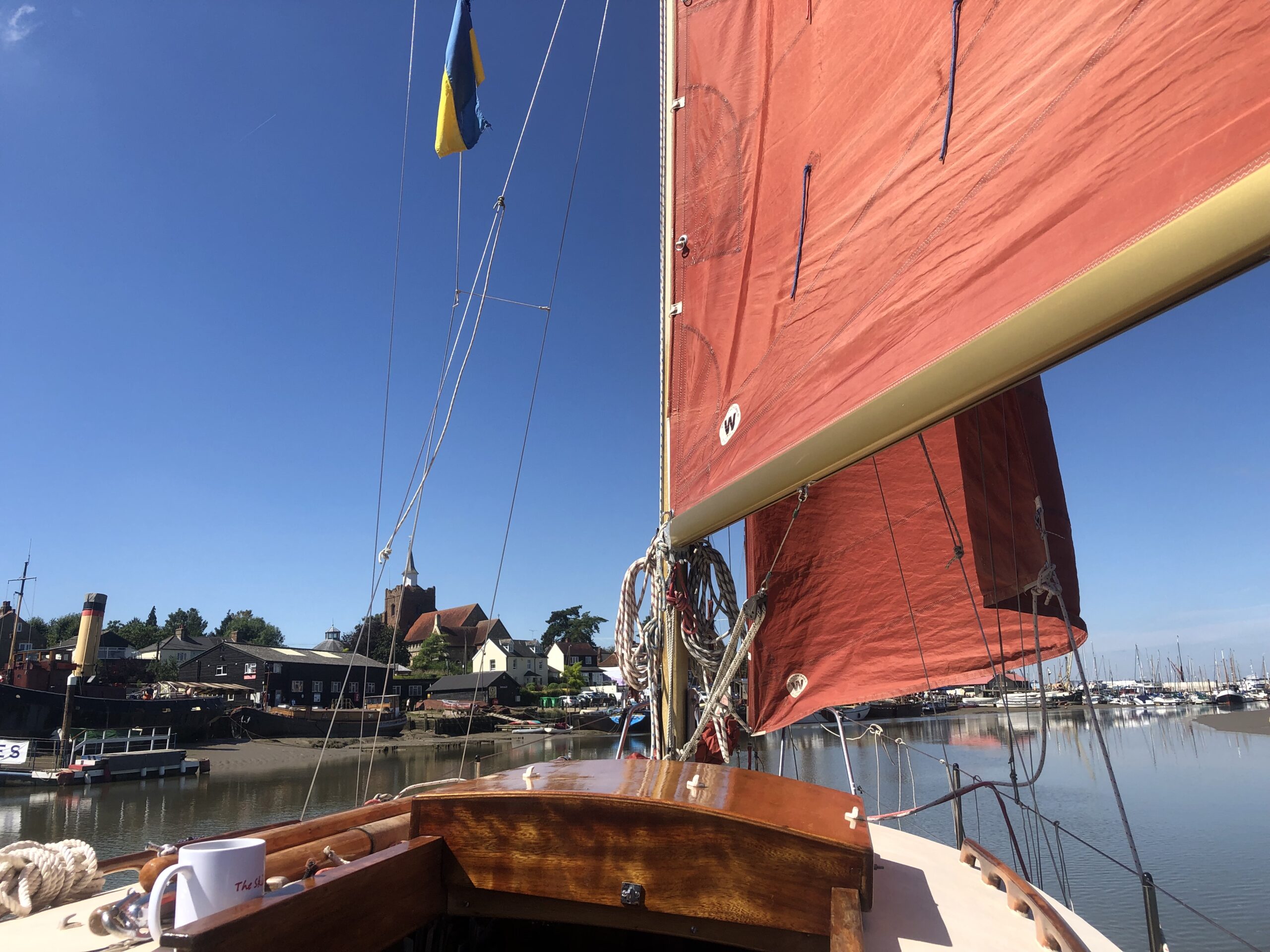
As seen from water during 2025 – there are no smacks or working boats along the promenade now.
The last smack to lie along the promenade, the Telegraph, now sits upstream of Heybridge Basin going to pieces. There are a few old ‘wrecks’ sitting in the mud with a few battered old GRP tenders tethered to mooring rings: all show little use.
Below, we are in Harwich Harbour…
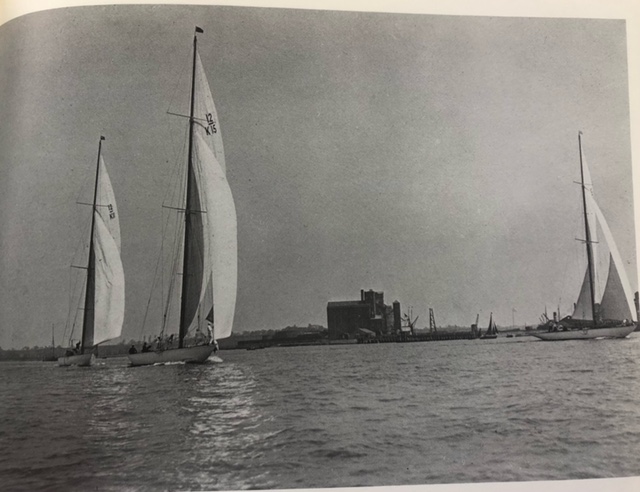
Twelve-metres racing out of Harwich during RHYC regatta of 1928.
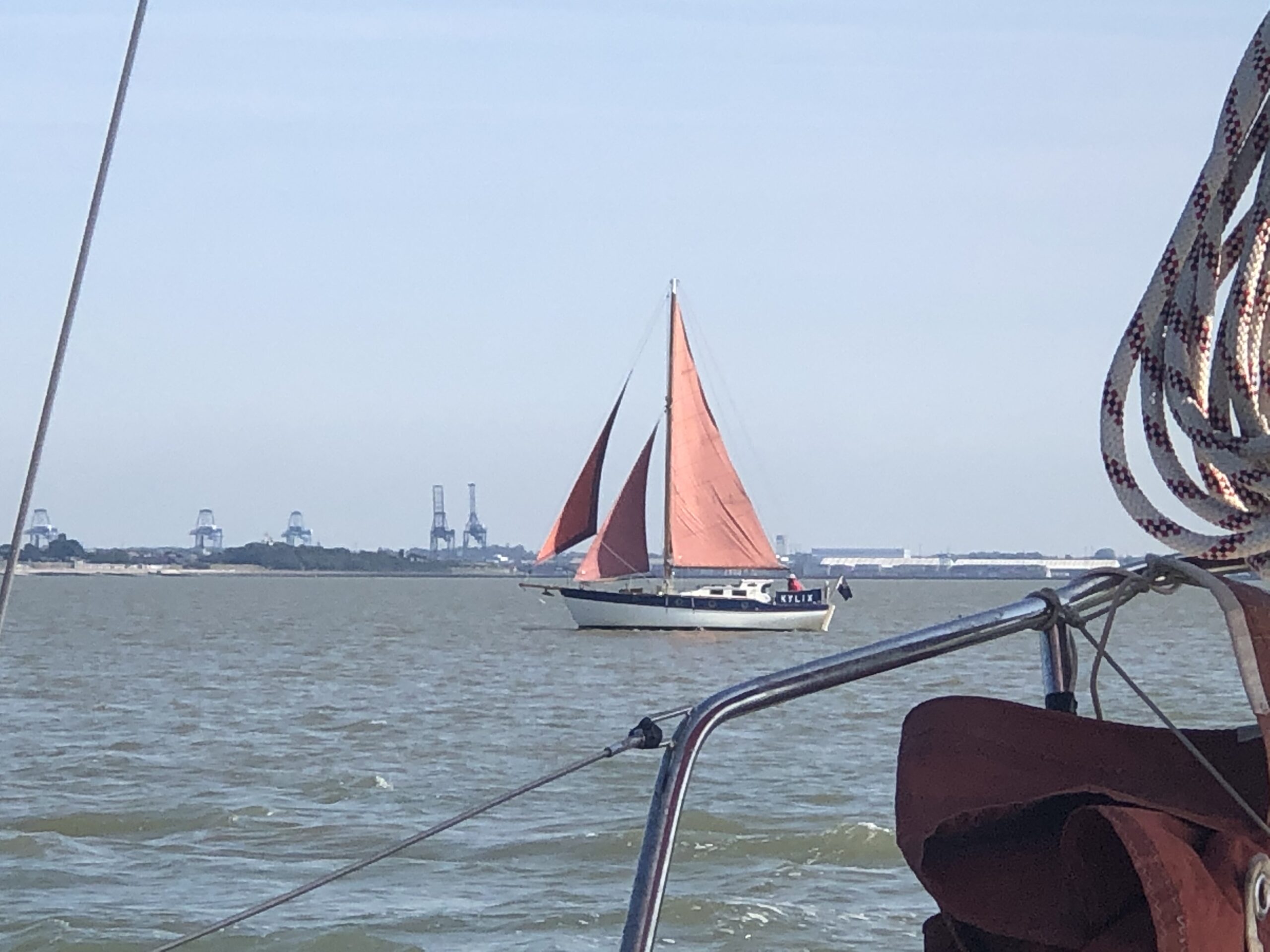
Sailing into Harwich alongside Kylix, a vessel designed by Maurice Griffiths for his own use. A number were built. They are very reminiscent of his earlier Lone Gull 1 and II classes.
Pictures show the same view. The recent one is as seen in 2020. The old dock with its buildings have long been filled over and levelled. It now forms a continuation of the major container wharfage. In the corner a RoRo facility and tug berthing exists with further container wharfage running down to Languard Point beach.
Up the coast and into the R. Orwell, we reach the scenic location of the Butt & Oyster waterside public house at Pin Mill.
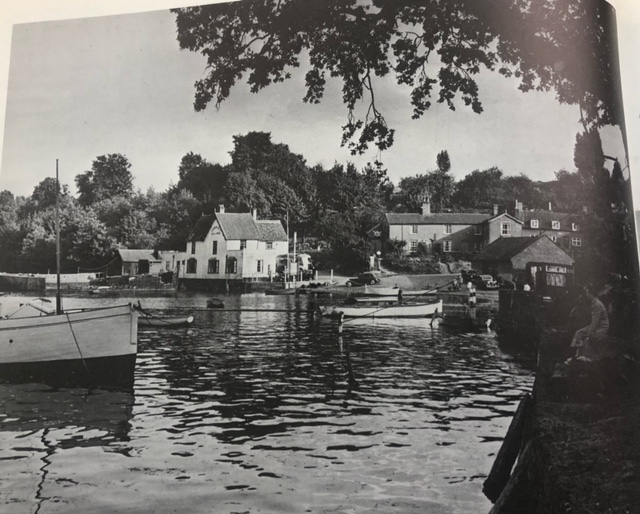
Douglass Went’s 1939 view of the ‘Butt’ from, probably, the site of the Pin Mill SC.
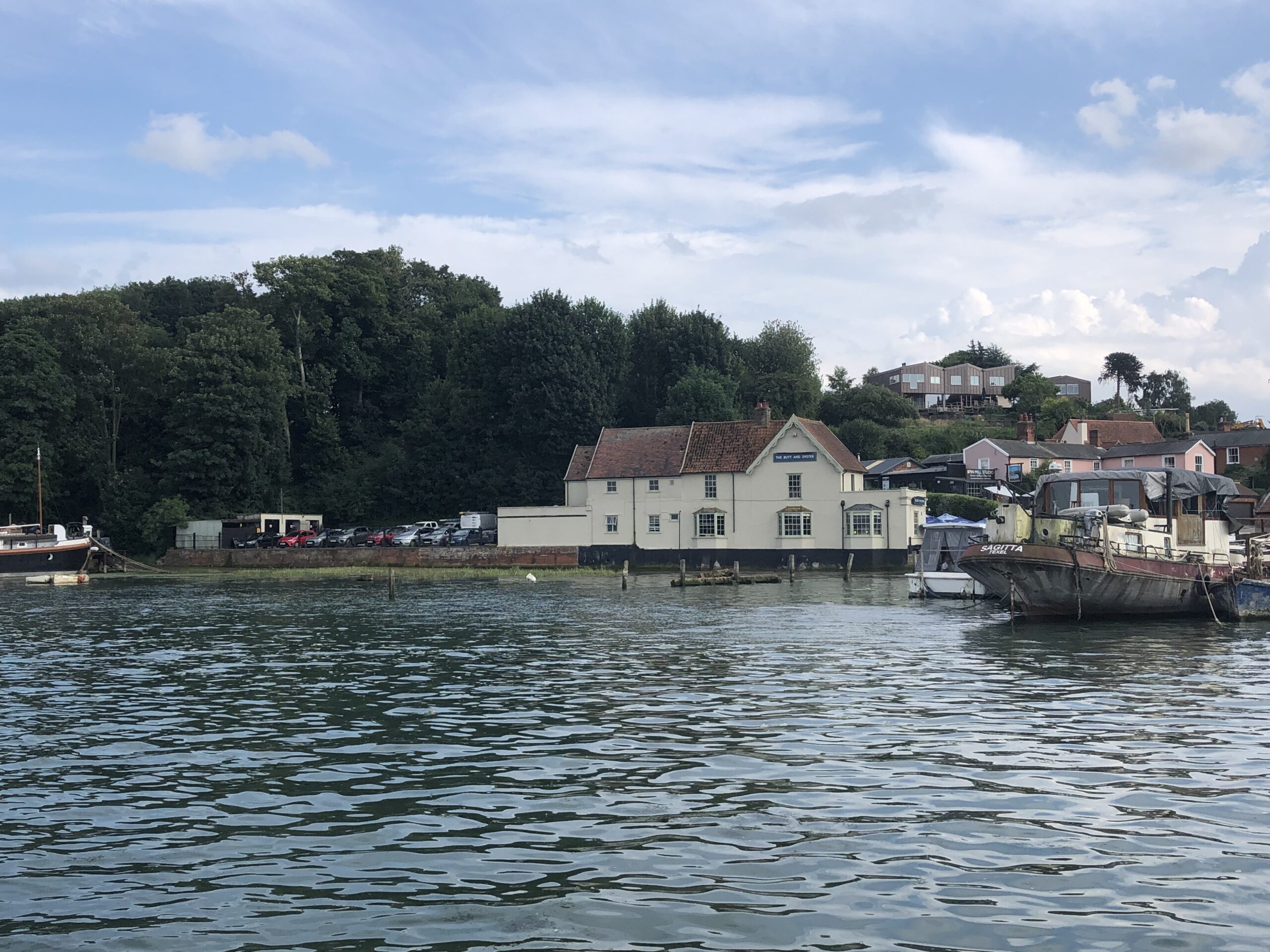
2025 view of the ‘Butt’ taken low down from my sailing tender Twitch, capturing the afternoon light dappling the ripples.
Note that the ‘little’ pub has been extensively extended over the years It is an iconic view. further downstream, currently, there were berthed a couple of spritsail barges and, 2025, the barge-yacht Blackthorn. However, further is a melee of houseboats based on old ‘Dutchman’ and lighters to ‘floats’ falling into a mess of wrecks and detritus, which to most must cause a rubbing of the eyes…
We now move to the Burnham River, said by many to be the epicentre of east coast yachting. There are two classes of older day sailer racing boats of similar design and size. The boats from the Royal Burnham and Corinthian clubs. The RBs were Dallimore designed of 20′ with 17’3″ WL length, 6’3″ beam and 3′ 3″ draft, with a transom stern. They are fine little ships. The Corinthian boats are similar but have a short counter.
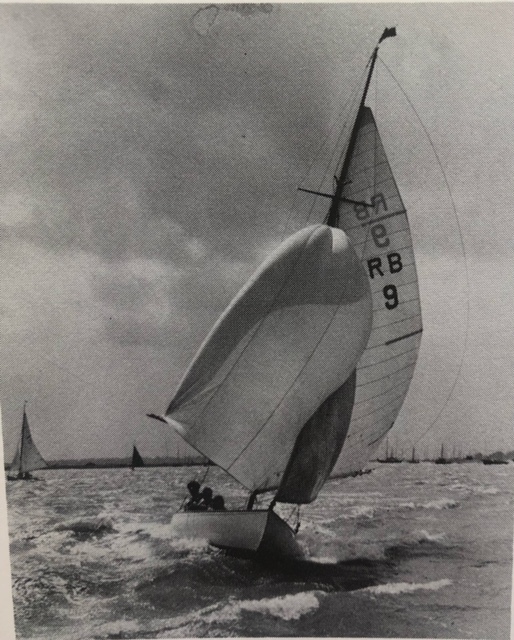
Royal Burnham One Design, No.9 roaring through the slight cross waves in a troubled Crouch flood below Burnham, out bound – dated late 1930s.
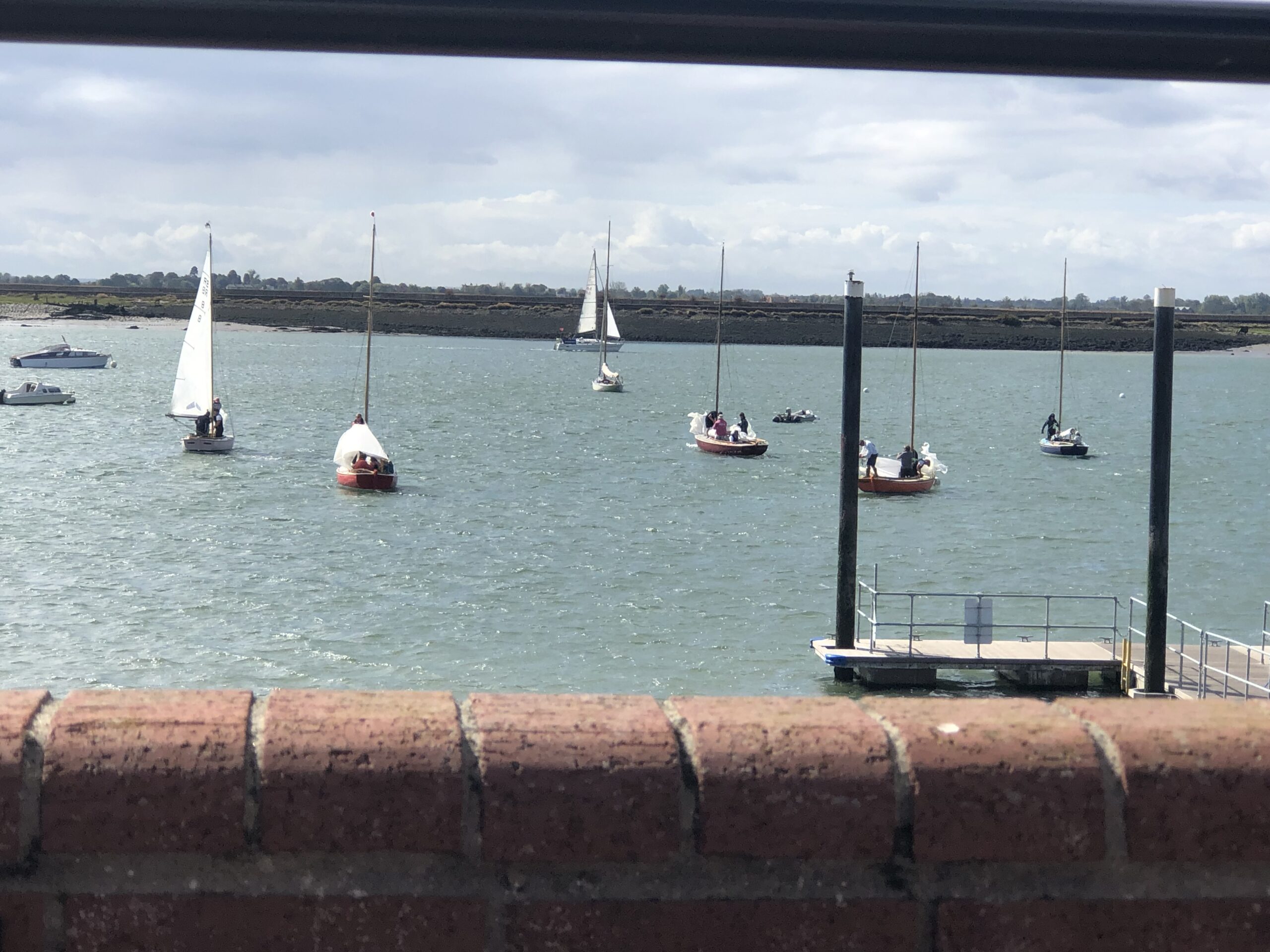
Above: The Royal Burnham One Design No.8 with sail set with others preparing to race on a windy Crouch at the end of August 2025.
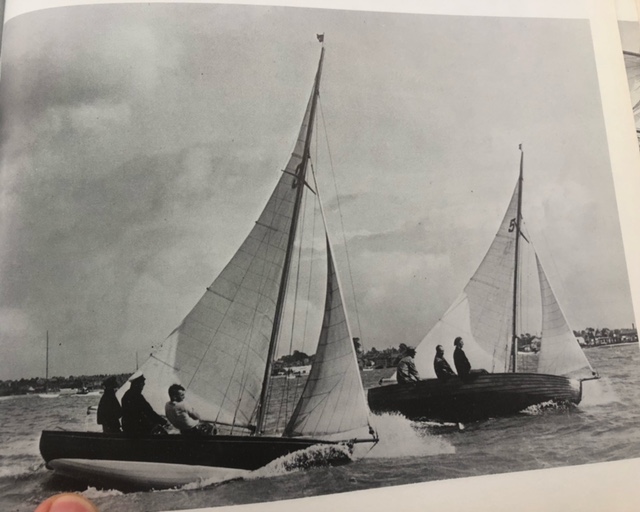
Brightlingsea One Designs which were designed locally by Douglass Stone & Sons of Brightlingsea in 1927. Boats pictured are seen racing in blustery conditions during the 1930s. In foreground is No.3. Below, No.3 is again in foreground, photographed racing during summer of 2025.
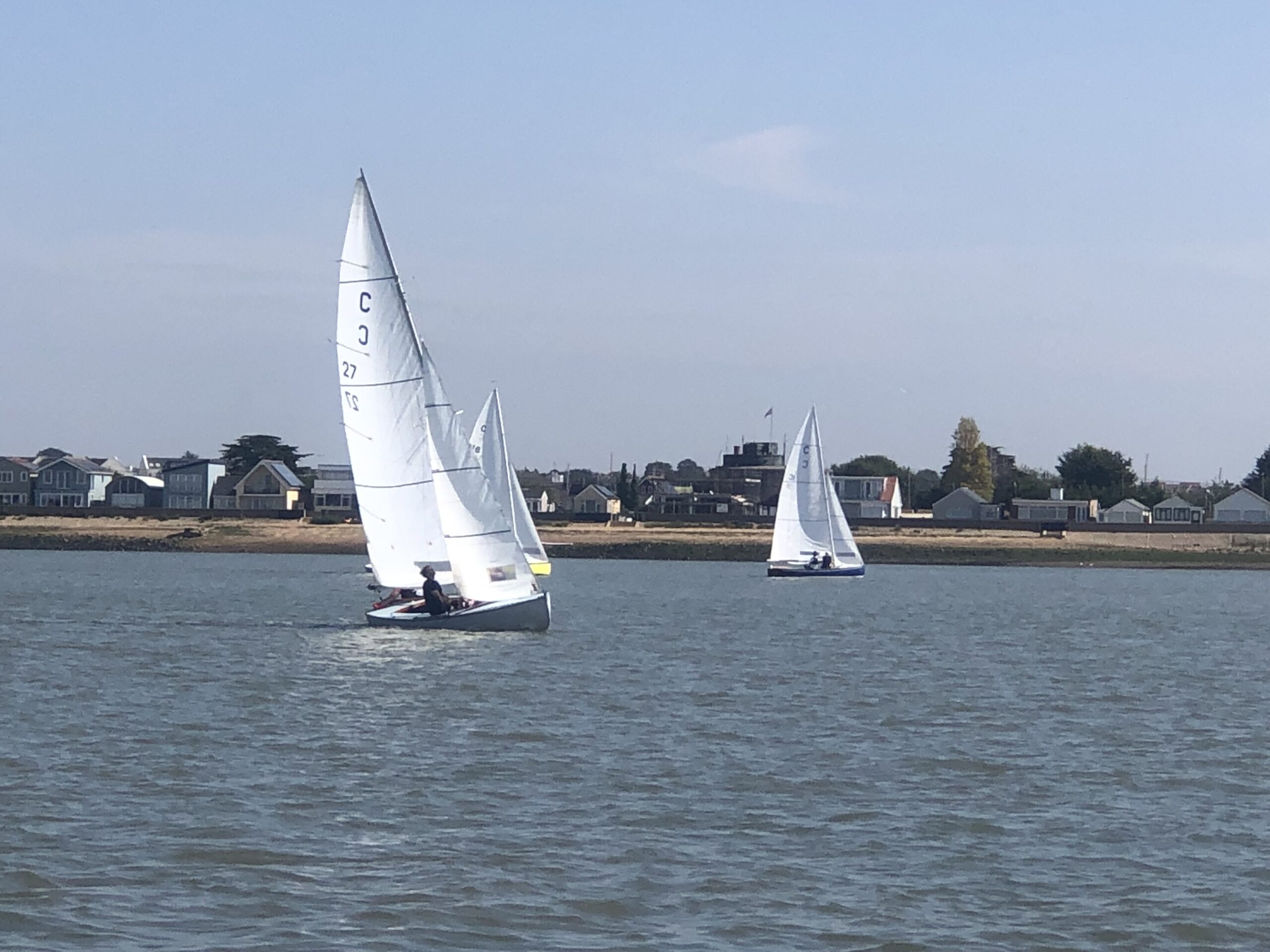
Note that the short bowsprit has been ditched in favour of stem head sail set up. There are still a large number of these sailing at Brightlingsea.
There is something about a black and white photograph but, colour, does more, surely to tell the story. I found the pictures of great interest, especially where a river view could be picked out allowing the decades of change to be seen. There are pictures of the Wivenhoe shipyards above the village where now des-res waterfront housing fronting the water way quaysides with no where for visiting craft to stop. That I have always found so sad.
The book is likely to be in public libraries, however, probably in reference sections. get a look if you can.
Fascinating.