
The future of wooden boat building and boatbuilding in general has been discussed within the industry press for a some while. There is an ongoing skills shortage. A greater number of young women are apparently training or in yards already – I have met a few – but is this enough to make up a male shortfall?
After the closure of The Lowestoft Boat Building College (IBTC) this has become an even hotter issue. A smaller college based in Lyme Regis remains operational, but it is very small by comparison and I saw no large vessels being worked on when I visited some years ago, they were launches, dinghies and canoes, essentially.
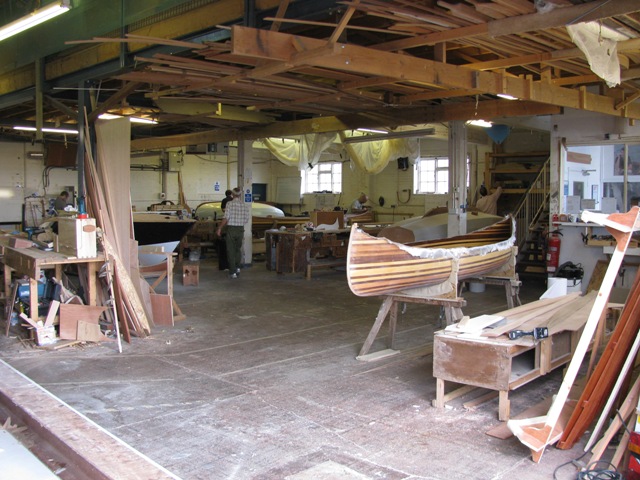
A peak inside the Lyme Regis College workshop during 2013.
The article that caught my eye is below:
Marine Skills Crisis: The future of boatbuilding
It makes for an interesting and thought provoking read.
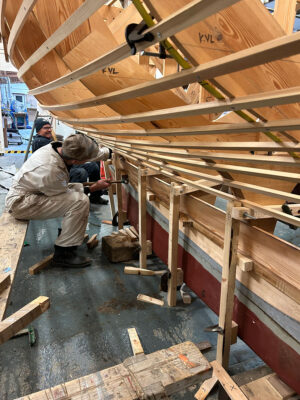
Setting up for a new build at the lowestoft IBTC – credits: College & Practical Boat Owner – this has all gone.
Around the Thames estuary, boat owners are relatively lucky, of wooden ones especially. Heritage Marine in Maldon (Essex) has an active yard with a good team which includes apprentices. The Pioneer Trust in Brightlingsea has a working yard too and over in Faversham, Kent, Alan Staley, has a yard constantly busy with repairs and refurbishments as well as spar making. Alan has just turned eighty…
Other yards around the UK have training facilities, or train on the job, but it is a tenuous business. Stirling & Son of Plymouth have just completed the rebuild of a large gaff ketch but they are almost alone in this field. Trawling the web, there are yards out there.
Essex, fortunately, also has an active Thames sailing barge yard at Maldon too with a very small pool of skilled craftspeople. Another shipwright freelances. One thing is clear: all are aging.
GRP building in the UK is all but dead other than small craft and top of the range brands that are well beyond the means of the ‘ordinary man’ but there are hundreds of thousands of GRP boat owners who from time to time need specialist repairs. A cousin of mine needed the removal of his boat’s rudder due to ‘falling over’ damage. It was quite a job to find a facility in his part of the Scottish west coast to get a repair.
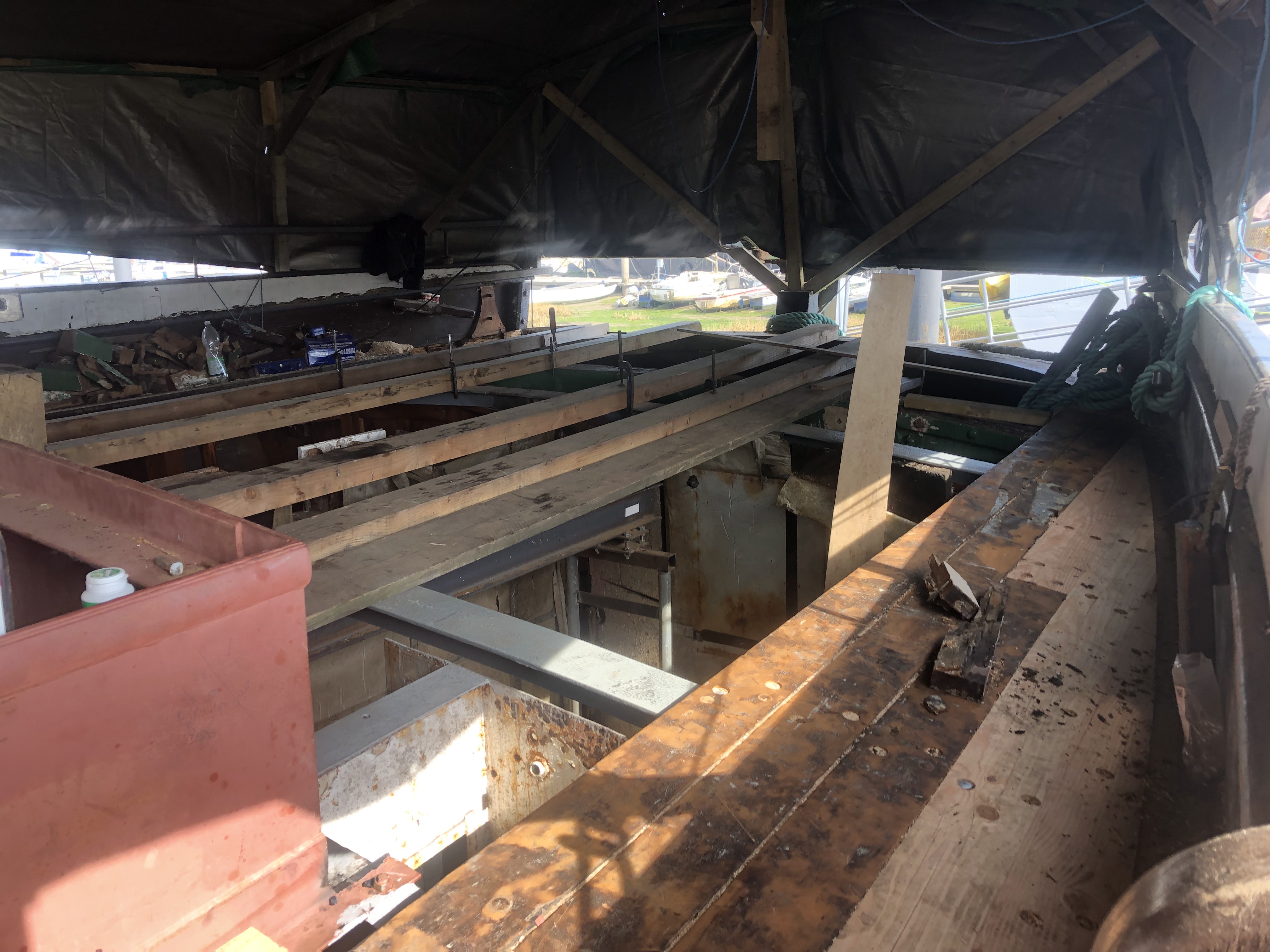
Rebuilding the aft deck of the TSB Cabby at Maylandsea (Blackwater Marina) during 2025 – currently the barge is having her entire starboard side replanked with some new frames – the shipwright is in his early sixties…
The building side of the industry is one issue, however, there has been another flagged up and it is one many observant yotty folk may well be aware of – that is the demographics we see around the yards.
Take a good look at the age of the staff within your home yard. How close are they to retirement, or, are they actually well past retirement age? How many are youngsters on the learning pathway?
In the yard where we now keep Whimbrel, the demographics are reasonably spread. The manager is under sixty, the deputy is around thirty and there is a youngster on the bottom of his learning curve. A ‘metal’ man is edging towards the retirement age and there is another operative heading towards that bracket too.
Once you have a boat and a base for it, be it at a marina, boatyard or local ‘self-help’ club, the issue of annual maintenance and a lift out is about all that bothers you.
Maybe you prefer to get the yard to do anti-fouling, small repairs, hull polishing and varnish work – how old are the skilled staff doing these jobs. It is highly likely that a couple of skilled staff not only carry out repairs but chock boats too.
A few questions:
Do you ever give a thought about who lifts and chocks up your vessel?
Do you attend?
Do you help or offer advice?
Do you do all your own maintenance?
If the answer to these questions is: ‘I leave it to the yard’, then perhaps a rethink is required.
My experience of being at a self-help club/yard is that the owner is expected to assist and direct the chocking up. The owner is certainly expected to be present.
I continue to take a proactive approach at my current base and direct the setting down and chocking: with over forty years of experience with same boat, I know what I want.
There are such issues as gap for centre plate, ensuring main chocks are spaced under the ballast keel and not hardening up on the bilge stub supports until boat has settled.
In the view below, the yard placed the steel frame support under the bilge forward of the keel stub blocks – a position that I haven’t place anything ever! The two port & stb’d supports took no weight and ‘just got in the way’ of the mate when antifouling…
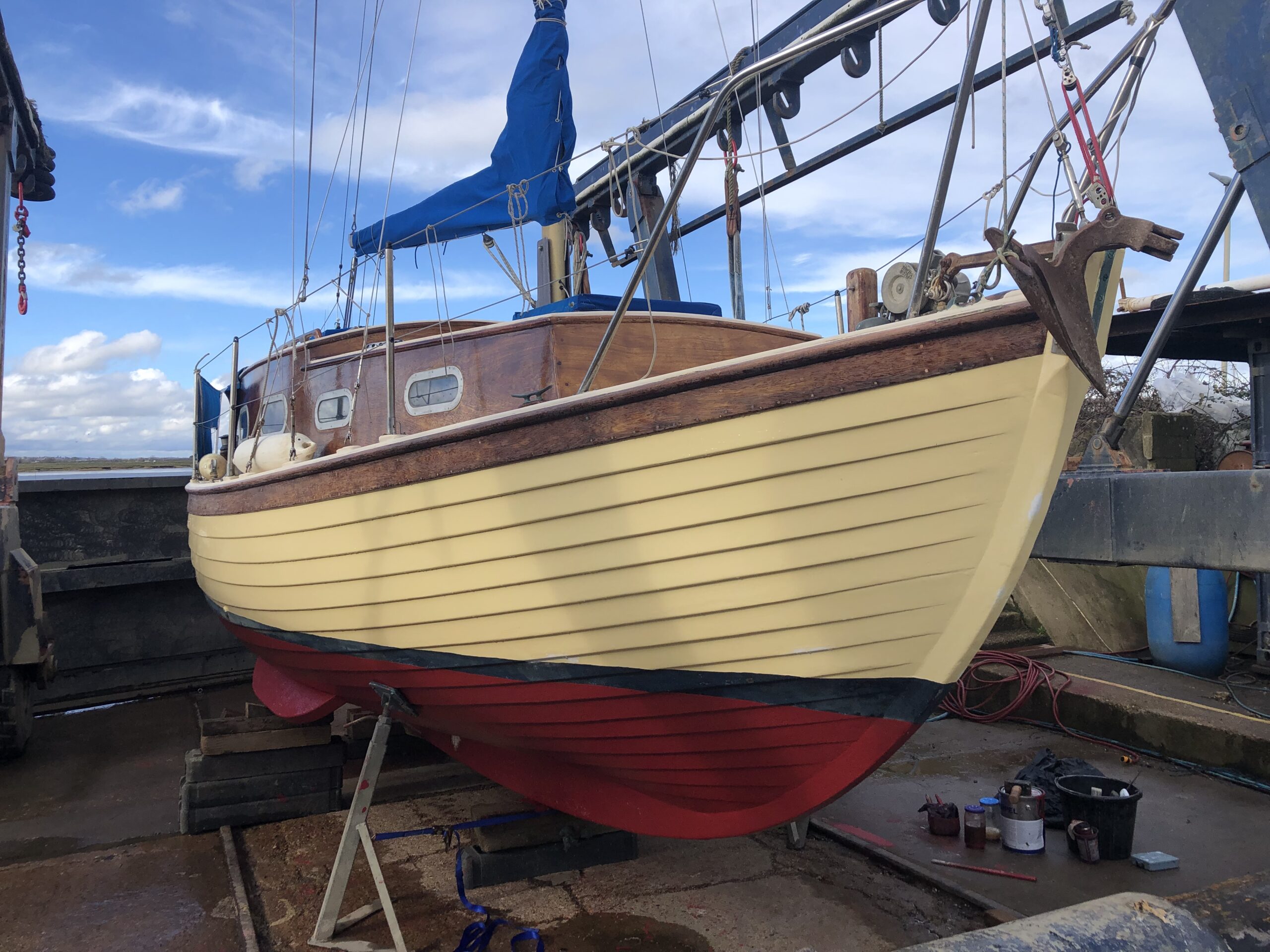
Whimbrel chocked up during early 2024 at Blackwater Marina.
The boat had three sets of keel chocks. If out for a while and moving about deck, I add a bow support. The bilge stubs lightly support the bilge – wedges are not ‘hammered’ home, just enough to support and steady her.
Below is a look around other yards…
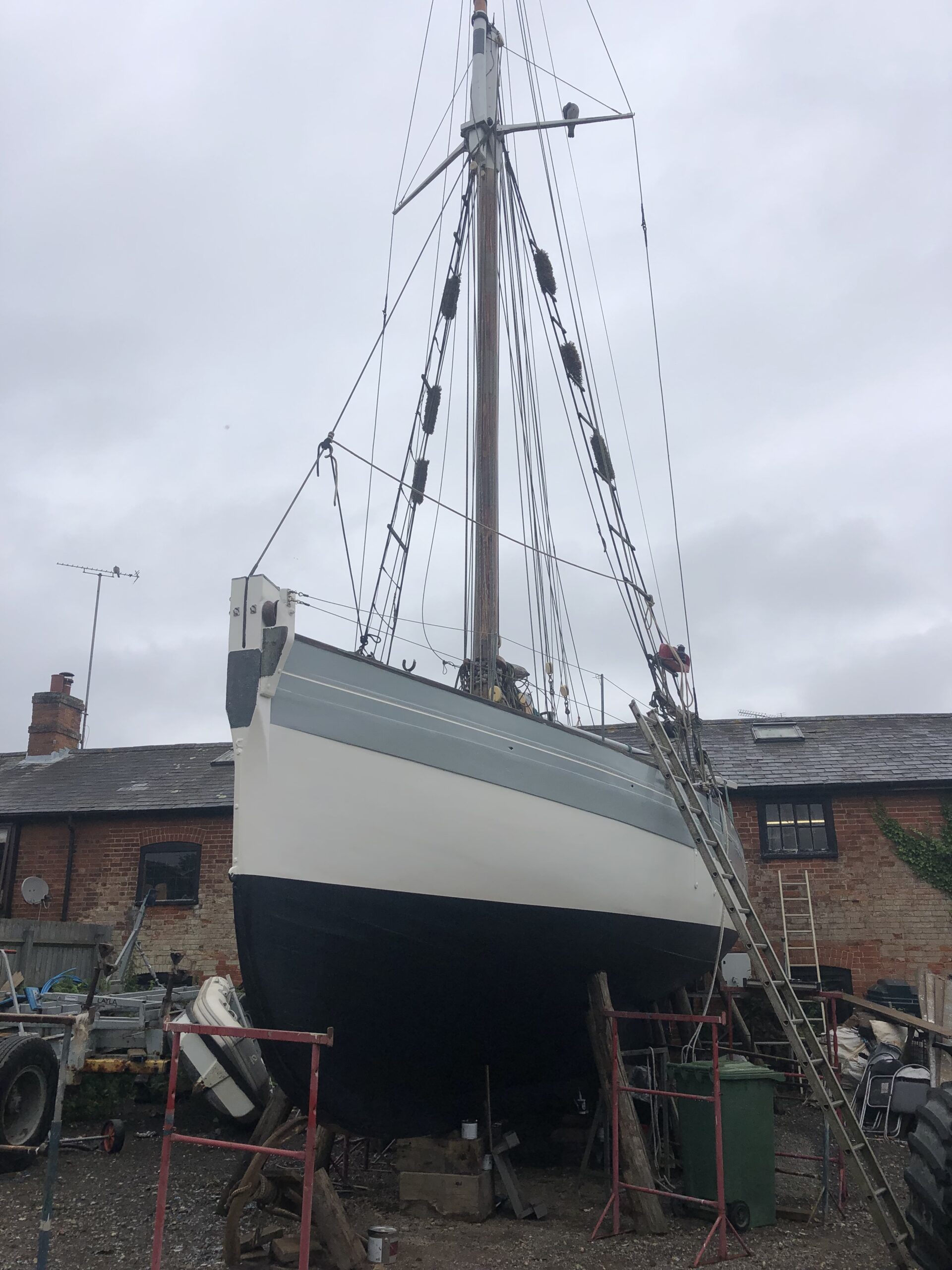
A large bawley set up ashore in a Pin Mill yard.
The vessel above is set in keel blocks as well as props to maintain her upright composure. Very often these days keel boats are placed in custom frames or a set provided by a yard.
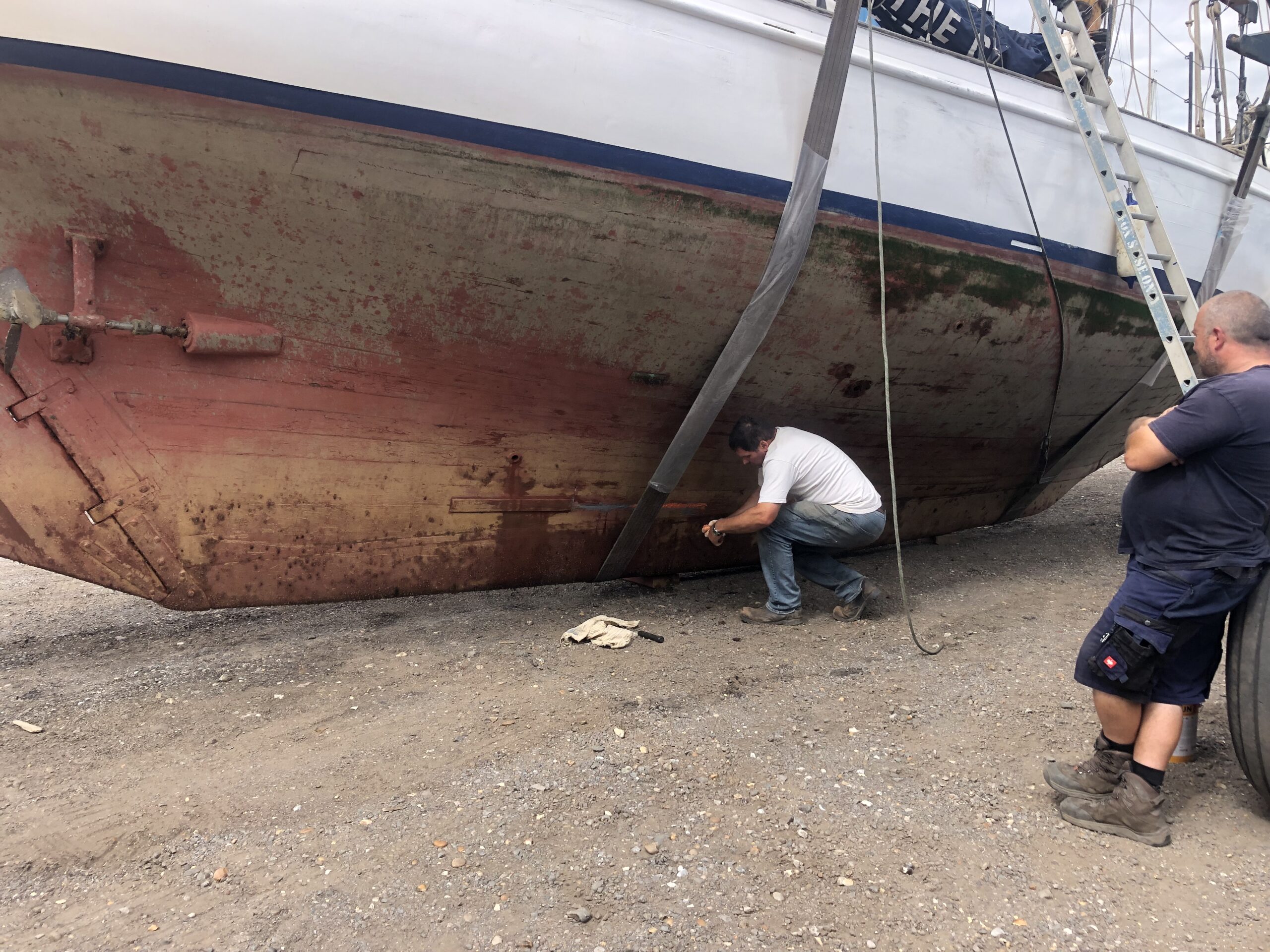
The Cirdan Trust’s Duet out for an emergency leak repair at Fox’s Marina in August 2025 – note she is not chocked but fully supported in slings and just touched down.
Interestingly, I chatted to the two crew (not in picture) and neither were particularly interested in the procedure taking place – recaulking, leading and fitting of a light batten over a seam. The young mate, a wisp of a girl looked astonished at a comment I made about careening on a bank to do the job – I said, ‘Well you might have had to…’ As the skipper smiled wryly! These are jobs that boat owners should have knowledge of.
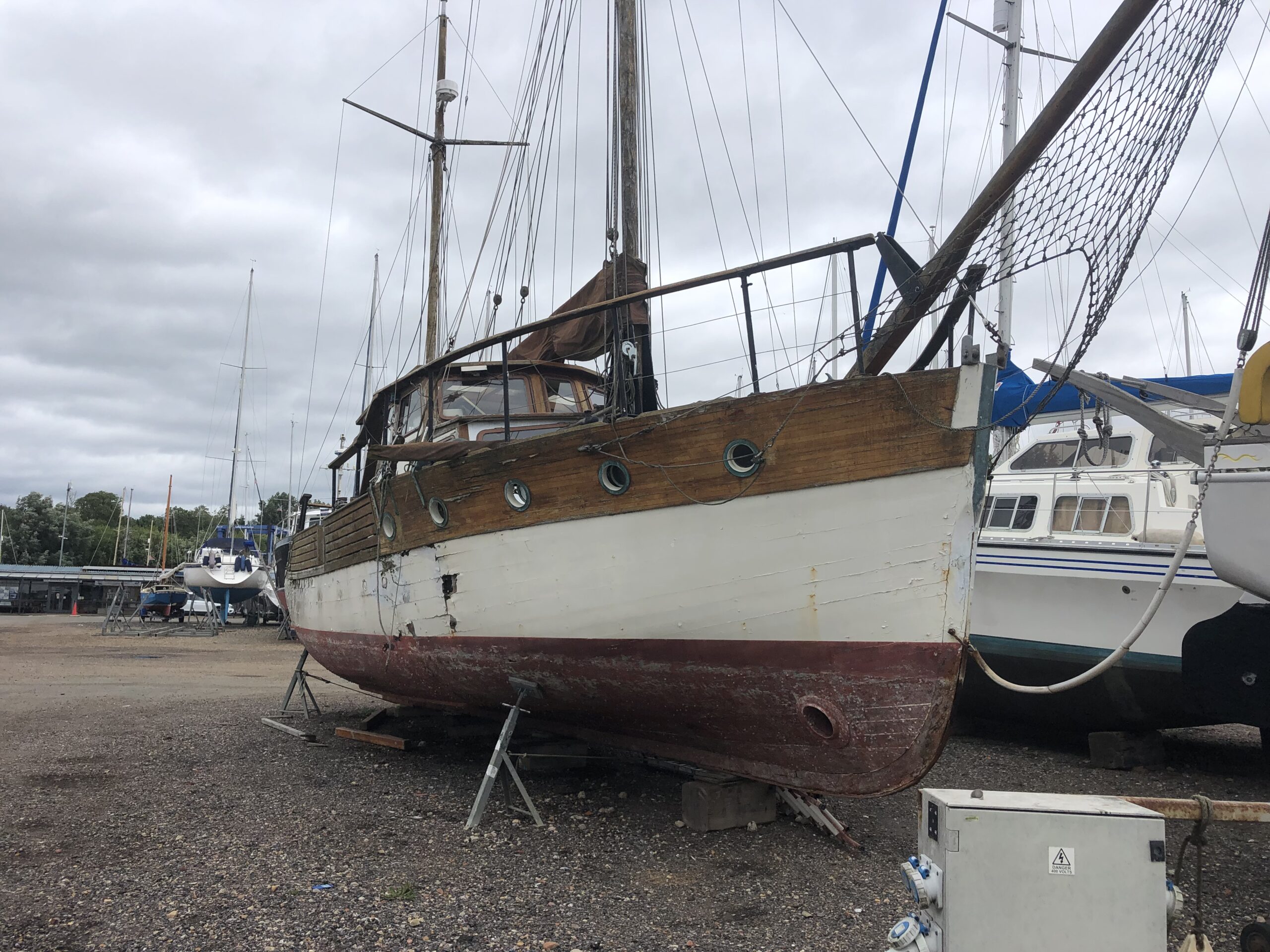
A large motor-sailor chocked up at Suffolk Yacht Harbour.
Youngsters are not being attracted into the industry for whatever reason. May be the mind set of today is wrongly wired. Expectations are too high. That dirty job is not for me syndrome, and so on…
One thing is certain, the situation is likely to progressively worsen as time goes by.
Food for thought, eh…