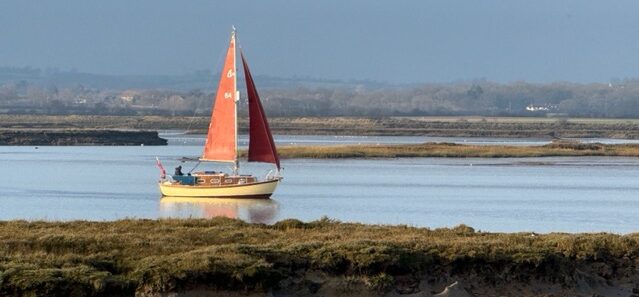
Some many years ago we fitted a carpet into the main cabin aboard Whimbrel – it was something we did after I read in one of Francis B. Cooke’s books about ‘comfort afloat of an evening…’ In any case, it is almost a common sense action. Cooke believed in carpet slippers too!
A carpet makes such a difference below and we would not do without one now. We tend to wear ‘below’ shoes after the day’s passage has been made and movement is largely between cabin and cockpit.
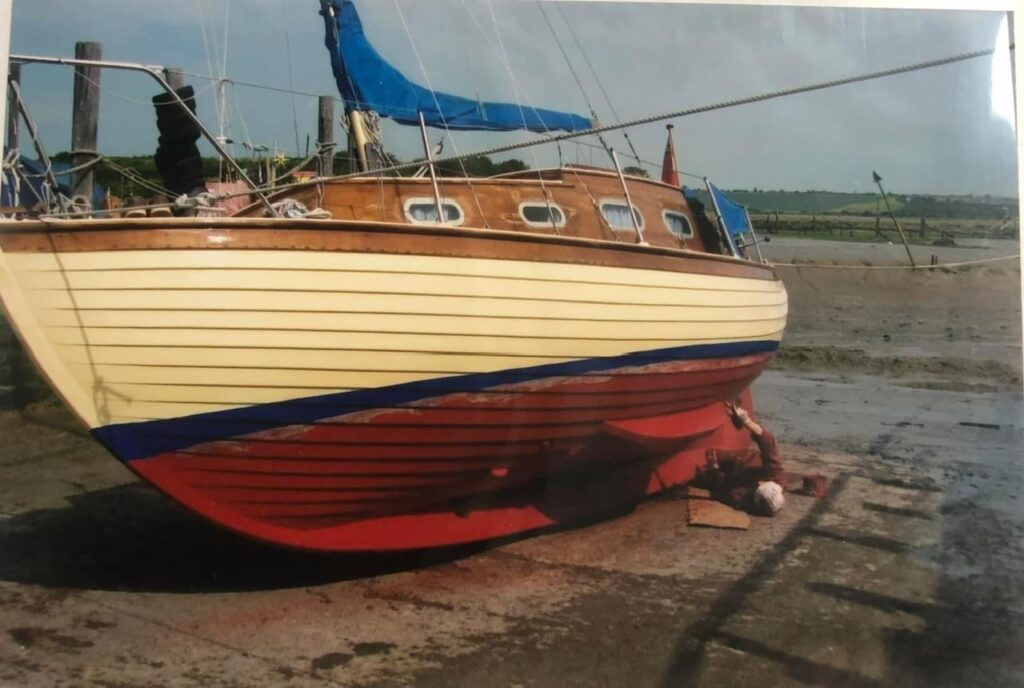
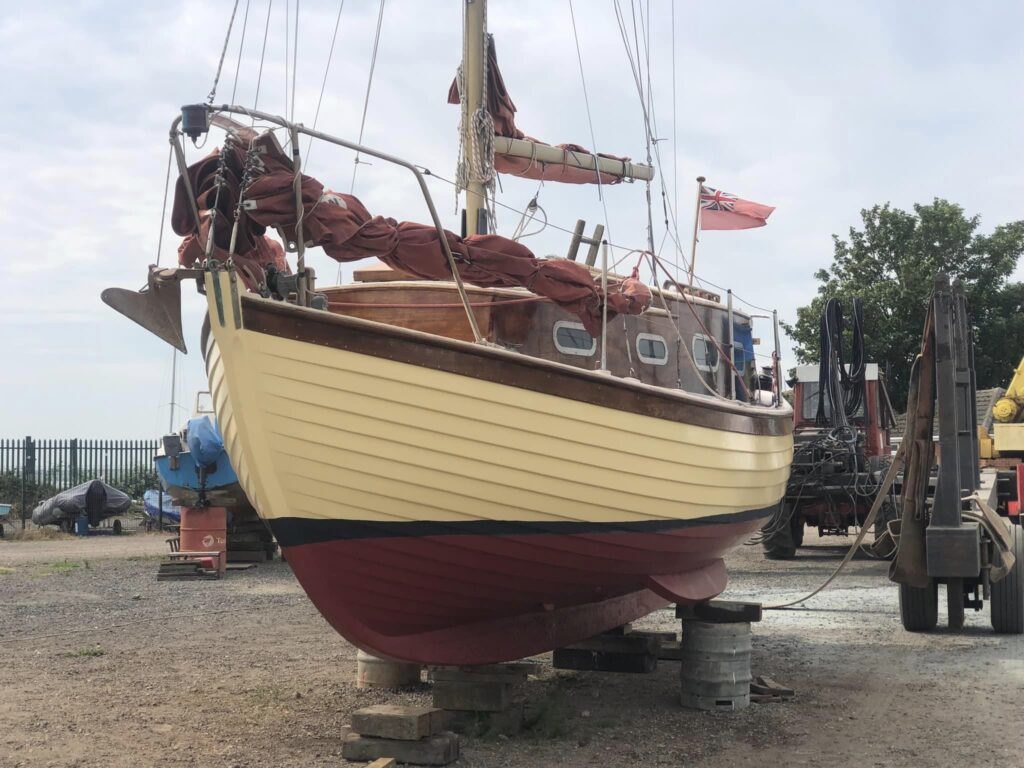
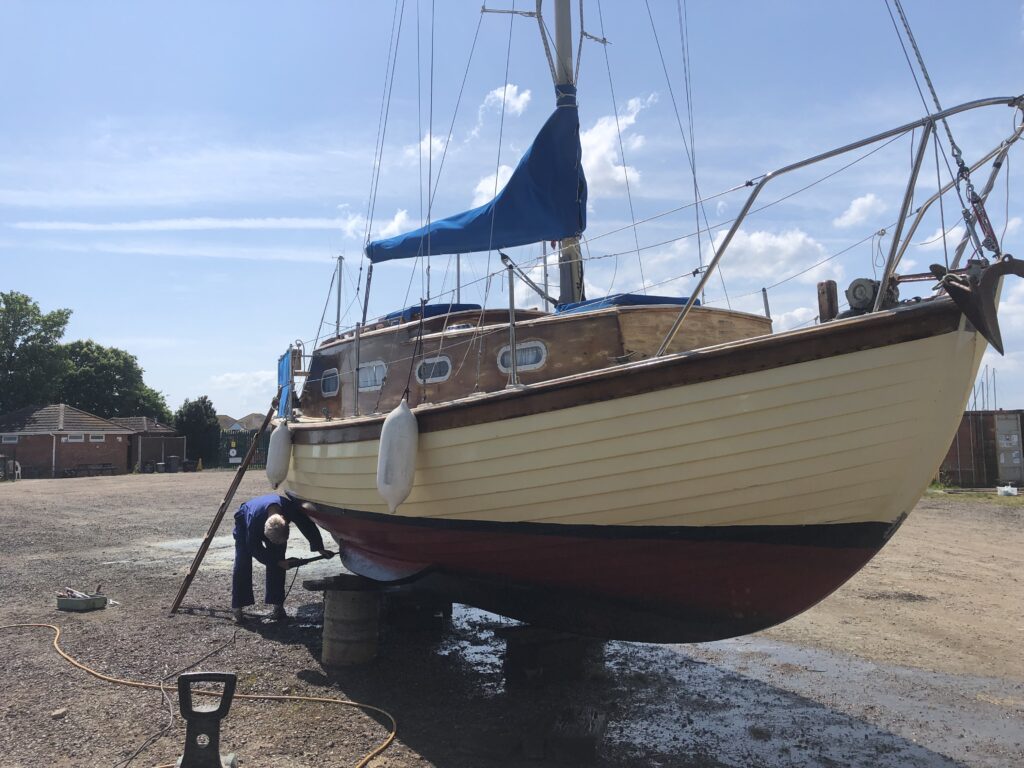
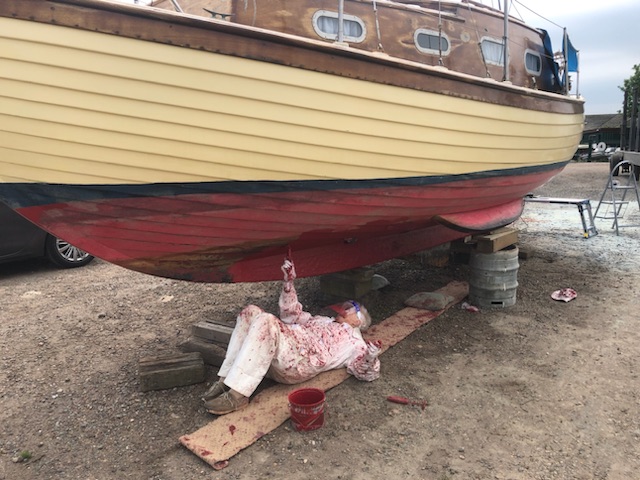
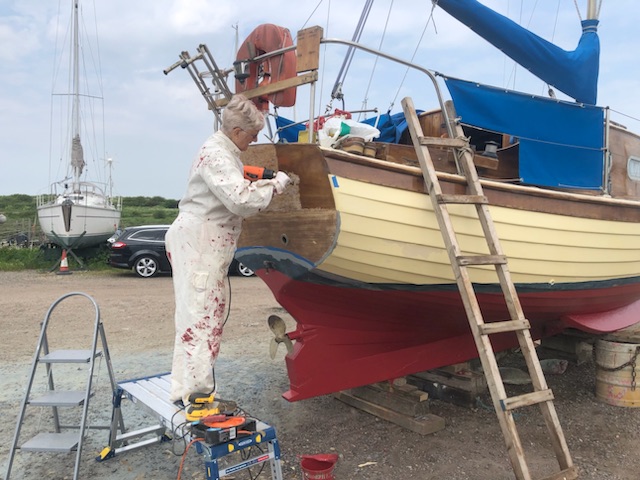
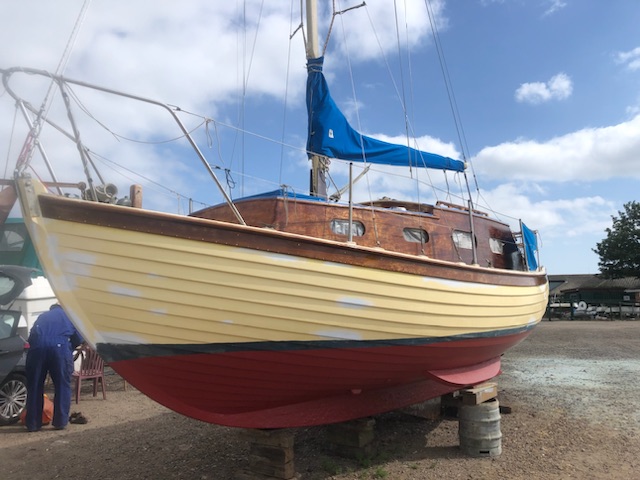
The first carpet was cut out of an offcut from a piece we had ‘loafing’ about. It was the wrong type, but sufficed for a few seasons. It and another length are used by the mate when working under the boat, antifouling…
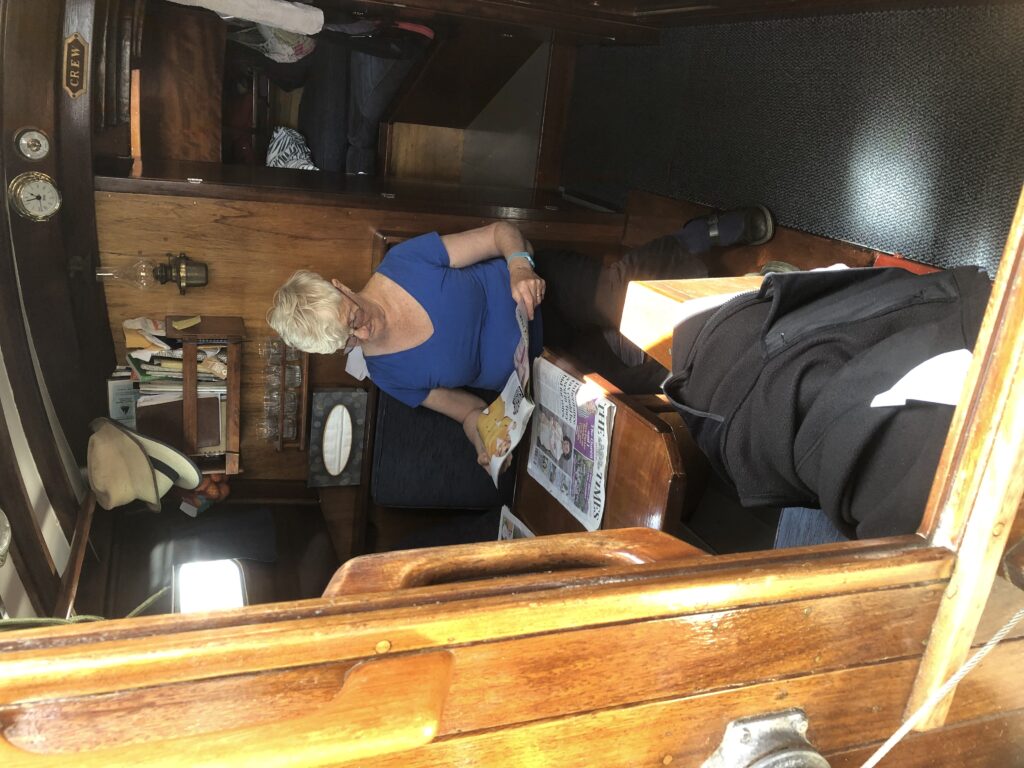
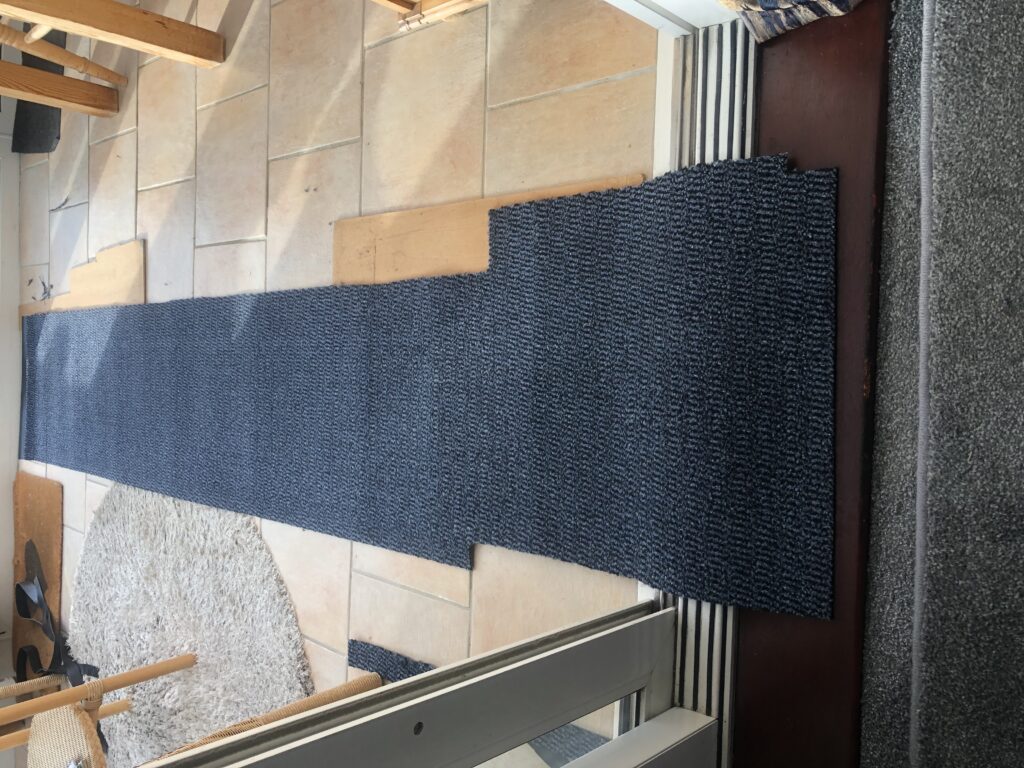
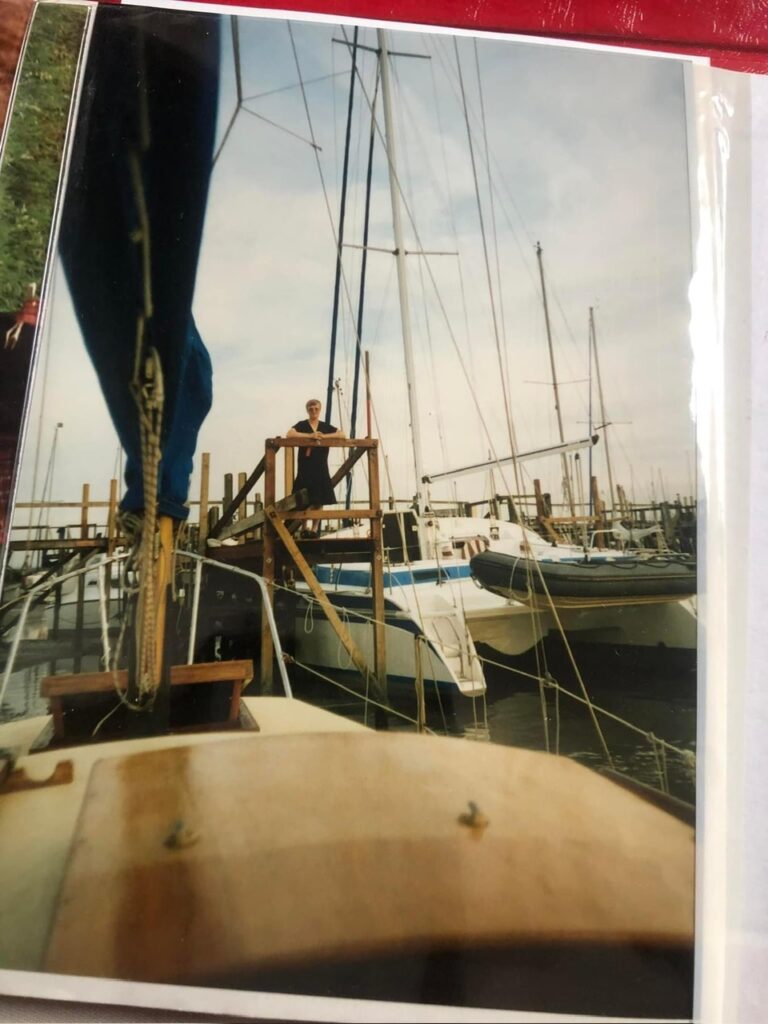
Current main cabin carpet. Christobel is reading the Times – so we must have been in a harbour somewhere…
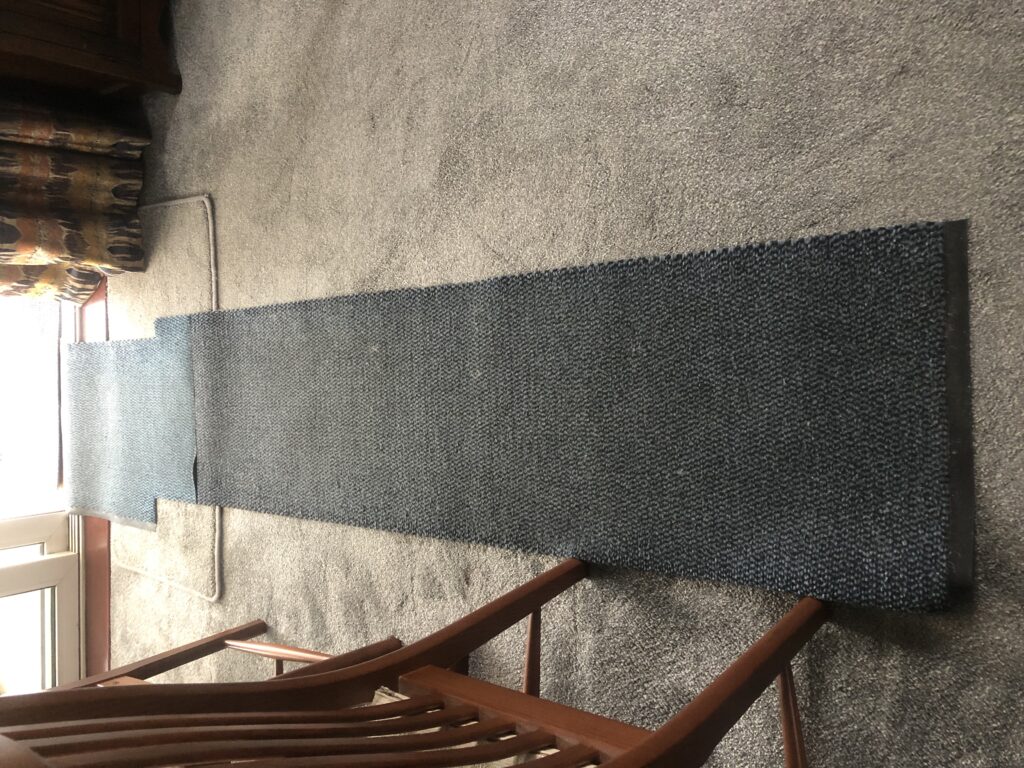
The current covering is made from floor runner rubber backed carpet – in two pieces for when main run done, I couldn’t find a longer piece. The join has been lifting and caused a number of tripping moments this last season – indicating time for action.
Next season’s comfort could not be jeopardised!
After carrying out a prolonged search, I found a company that sold ‘cut to length’ pieces. The only catch was a piece with a greater width than needed. Hey, but what the heck, it would do the job.
Old pieces of carpet laid out after being given a good vacuum at home.
On a visit to Whimbrel this last weekend to do a couple of jobs, the old carpet was rolled up and brought home. (The bilge was vacuumed out too…)
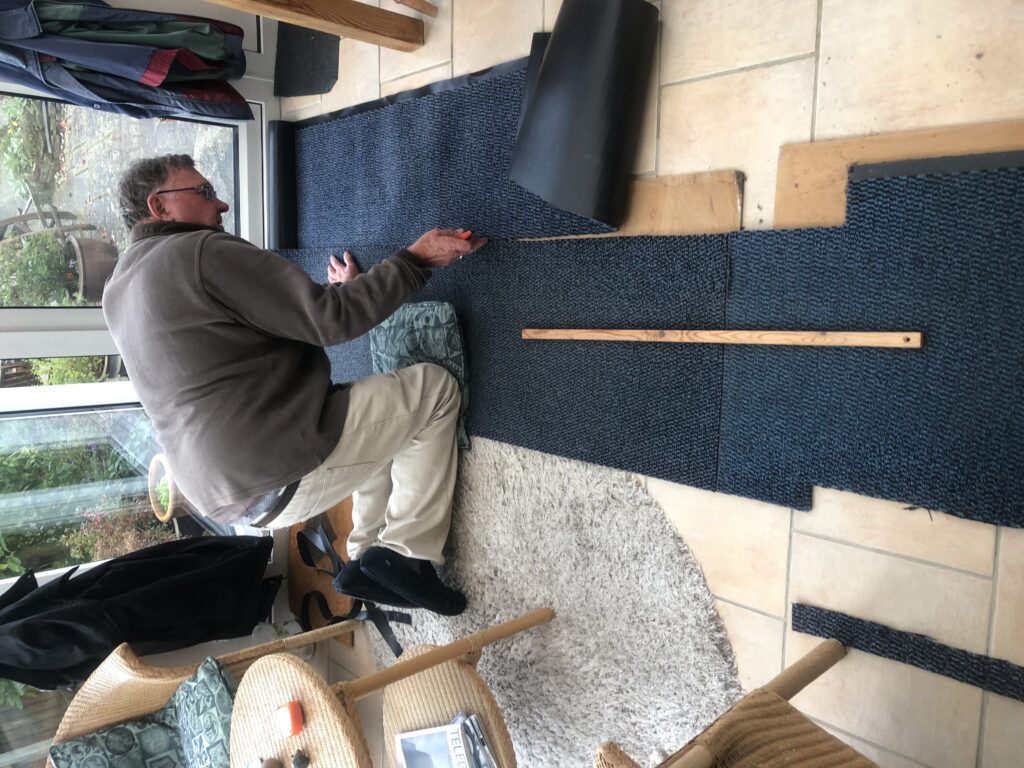
I began the cutting to shape process by removing the rubber edge from the carpet. Then carefully laying the old as a pattern on the new, trimming was carried out…
The mate caught me on camera trimming to shape…
On my next boat visit, the new will be checked for fit and trimmed if needed, then returned home for winter storage.
The carpet ready to be checked aboard Whimbrel before winter storage.
The old carpet is likely to go back aboard for it helps to keep the cabin floor clean, needing a vacuum from time to time.
At the end of a season, we have always washed the carpet – it being actually machine washable – however, hand scrubbing and rinsing is best, I have found, it being my job!
Last year when on a road passage between Arundel and Devizes, we passed through Midhurst, a delightful little town situated in the West Sussex National Park.
Investigating later, it was discovered to be not so far from Jane Austen’s childhood home. Bingo: a place both myself and the mate have wanted to visit…
So, a year on.
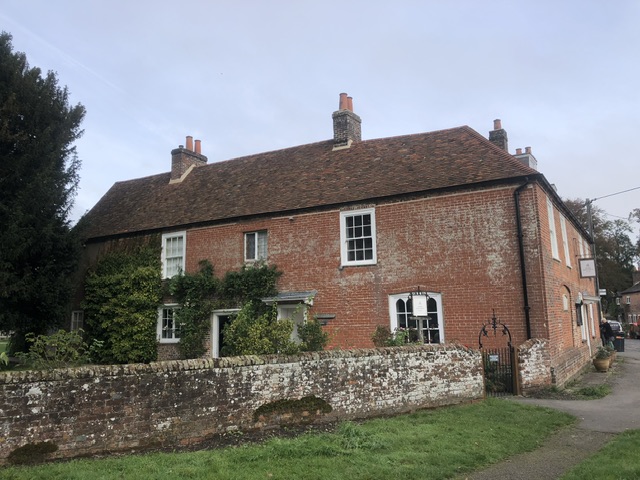
The Austen family home after the death of the father.
The family was uprooted and moved to Bath by their father after he retired, however in a short time he died leaving all his females at the mercy of his sons. One especially: Edward having been adopted by the Knight’s of Chawton house (relatives by marriage) was extremely rich – as rich as Darcy in Pride & Prejudice…
It was at this house where Jane was able to settle into her writing. She recomposed her earlier works before getting them published.
In the house Jane had her own corner in the front parlour where she could write whilst watching the outside world move around her…
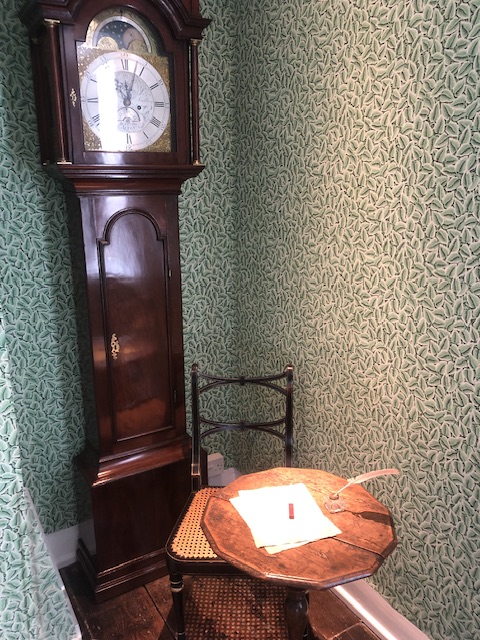
Jane’s writing corner… From it, she had a street view.
Her writing table is so small, a mere ‘Sherry glass’ affair. It was a good job, apparently, that Jane was a tidy and efficient worker.
I wondered what she would have made of a laptop…
We also took in Chawton House, where Jane and her sister Casandra often visited. Both were active aunts to their brother’s brood, especially after his wife died.
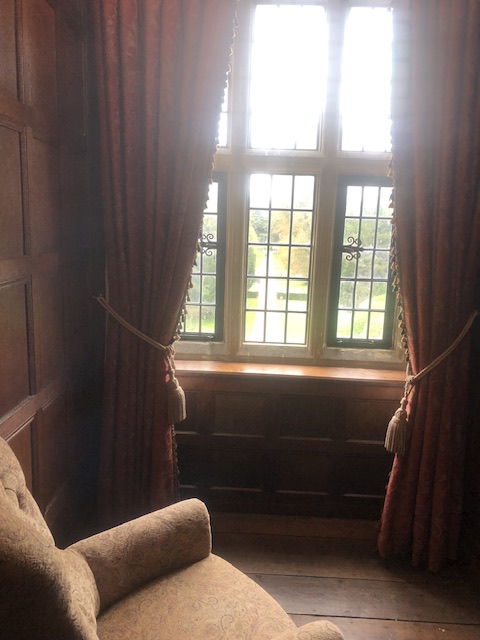
Jane’s favourite place to sit and read when at Chawton. The window overlooks the drive up to the house.
Chawton is on long lease from the Knight family to a charity foundation digging into the history of women writers. Fascinating stuff…
It was quite moving to stand close to her desk and look out of windows she herself had, long ago, developing her ideas as life went on around her…
It put me aboard Whimbrel, sailing along a salting edge, gazing at some all but non existent time rotted stumps of a vessel or wharf, wondering…
Autumn marks the end of the sailing season for most boaters. Others stay active. For many years now since my enforced early retirement from sea, Whimbrel and her crew fall into the latter category.
After my return from taking my youngest brother and a cousin away for a great late summer early autumn weekend on the River Blackwater, I have been giving the tender, Twitch, a bit of a going over. The poor girl has had a bit of a bashing this last season. Extraordinarily, the little tender will be thirty years old next year!
It takes me a bit of time to move through the season of summer and get autumn inside my head. It has been especially difficult this year due to the ‘second summer’ we’ve enjoyed in Essex’s corner of Britain.
But, the autumnal jobs have to be progressed … the summer’s damage to the tender’s gunnels has been sanded back and coats topped up. The thwarts too. Then all was overcoated.
Slipping out of our new base at the Blackwater Marina, Maylandsea.
In between times the mate and I enjoyed a sail out on the tide, followed by a recent weekend away during a very unseasonable warm period. Before leaving though, we took Whimbrel’s mainsail off and fitted her old one: all three sails are due a make-over and wash at Wilkinsons Sails in Faversham.
Tide’s were later afternoon, so we dropped out to the area of Lawling Creek where one can comfortably sit at anchor protected from virtually all directions.
As we dropped anchor, the sun began to set…
There was little breeze left towards the end of the day, a bit of a blowy one at that, but as forecasted it died! Barely a lap against the lands of the boat’s clinker planks was heard overnight…
The morning was quite like it should be in summer. Blazing sunshine, temperatures towards the middle 20’s and NO wind! We managed to more or less sail (drift) out of Lawling then puttered down towards the sea.
A little after passing the Tollesbury Pier cardinal, a breeze filled in from the South-east. Great, we were sailing properly and tacked out to clear of Sales Point.
There were quite a lot of water-borne activity with several barges seen too.
Coming back up the R. Blackwater towards the end of the afternoon.
After a sublime evening in Lawling again, we made our way back to our berth on the Monday morning, breakfasting on bacon rolls after berthing…
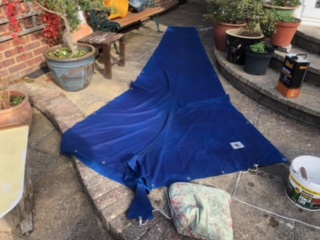
So, home came the newer sail cover for a wash and coat of waterproofing.
Cover, cleaned and reproofed…
The tender’s floor boards, rudder, dagger board and oars came home too: they were in foe a treat…
Dagger board refurbishment in progress.
The dagger board was easy. Scuffing’s were sanded and touch up coats applied before a final overcoat of varnish/paint.
The rudder needed a little more attention…
Rudder receiving coat after coat to bared areas…
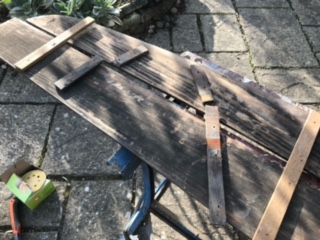
The floor boards were hard sanded with an orbital sander and a thinned coat applied. Meanwhile, with a couple of broken board battens, these were made up ready to replace.
Temporary screws were used to secure until proper copper nails could be obtained…
Broken battens on one set of floor boards being renewed… View looks odd, but I was looking down onto it!
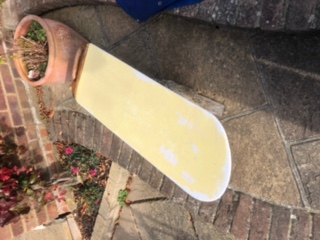
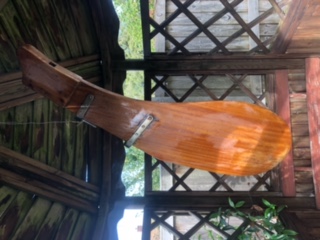
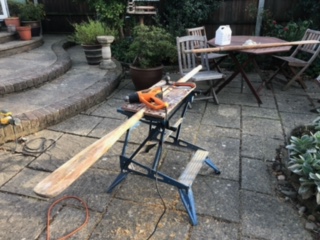
In between times, the oars were stripped back to bare and sanded, before coat after coat was applied…
Stripping to bare wood of the oars…
Currently, all parts a refinished except for a final coat to the oars. Last week was perfect for the sun shone every day with temperatures around 22-24 deg C, meaning a thinned coat was overcoated later in the day.
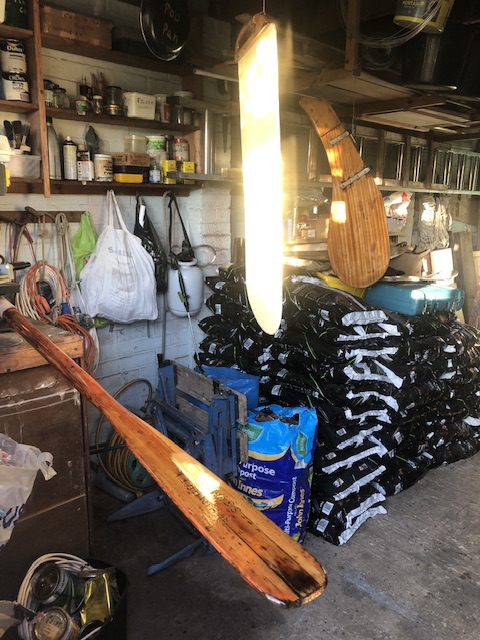
My ‘shed’ has bits of dinghy spread about…
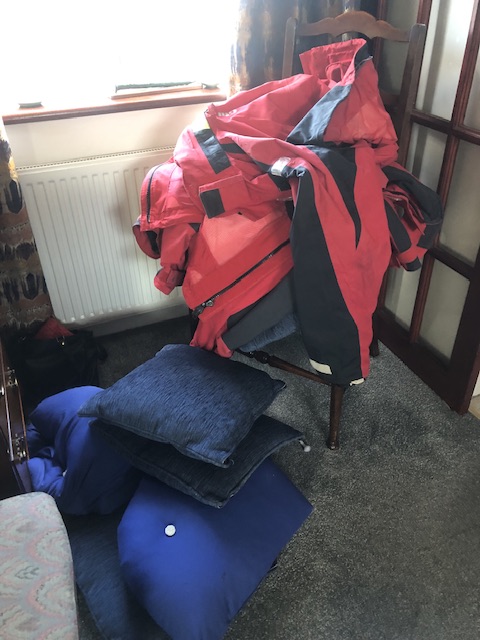
Popping aboard Whimbrel after walking near to her mooring, all the cushions, oilies and coats were transported home for their winter washing. Cushions for storage, but we always put the oilies back aboard for the boat is regularly used during the colder months…
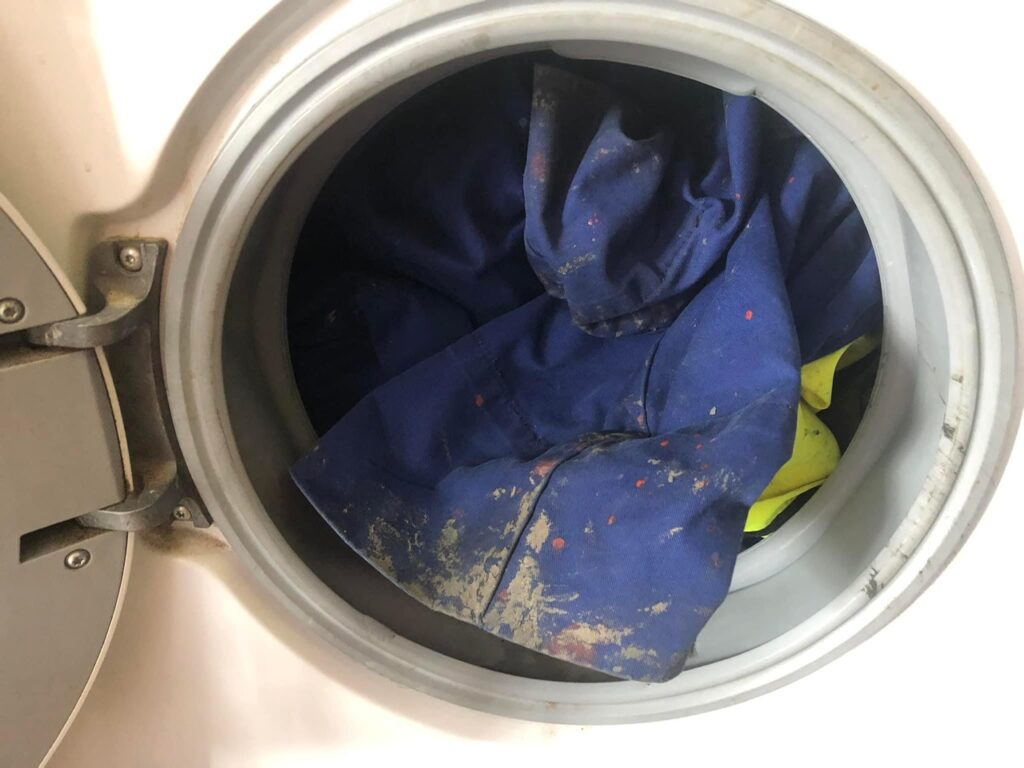
Coats already in the washer … the rest awaits a turn!
I have been looking quite hard at the varnish work carried out to Whimbrel during her refurbishment – May/June this year – and have found no signs of any breakdown. Early days, but good news. The coating seems to be pretty tough too (Le Tonkinois No. 1 varnish). This will all get a hard sand in the spring and given two coats.
So, here we are in mid-October. Supposedly the season of mists and mellow fruitfulness. The hedgerows are full of berries – blackberries long past their best, sloes, not so good in our parts for it has been too dry, but lots of them. It is said if the hawthorn and rosehip fruits are good then we are in for a hard winter – hope not!
Tomorrow, I am planning on a lone sail from the mooring for a few hours on the tide. It’ll be my first alone from our new mooring…
At long last, I can ‘release’ the title to you: it is out there in the wider world of book sales.
The publisher said in their letter when accepting the book and offering a contract:
‘…your submission was found to be a powerful, poignant memoir, an admirable chronicle of overcoming extraordinary odds…’
‘…keen to comment on your masterful way with words and your remarkable ability to pull the audience into the text, to the point that it often felt like the reader was right there reliving he memories alongside you.’
‘comment(ed) on your engaging writing style and applaud the time and passion you’ve taken … we believe it to be a worthwhile addition to the genre…’
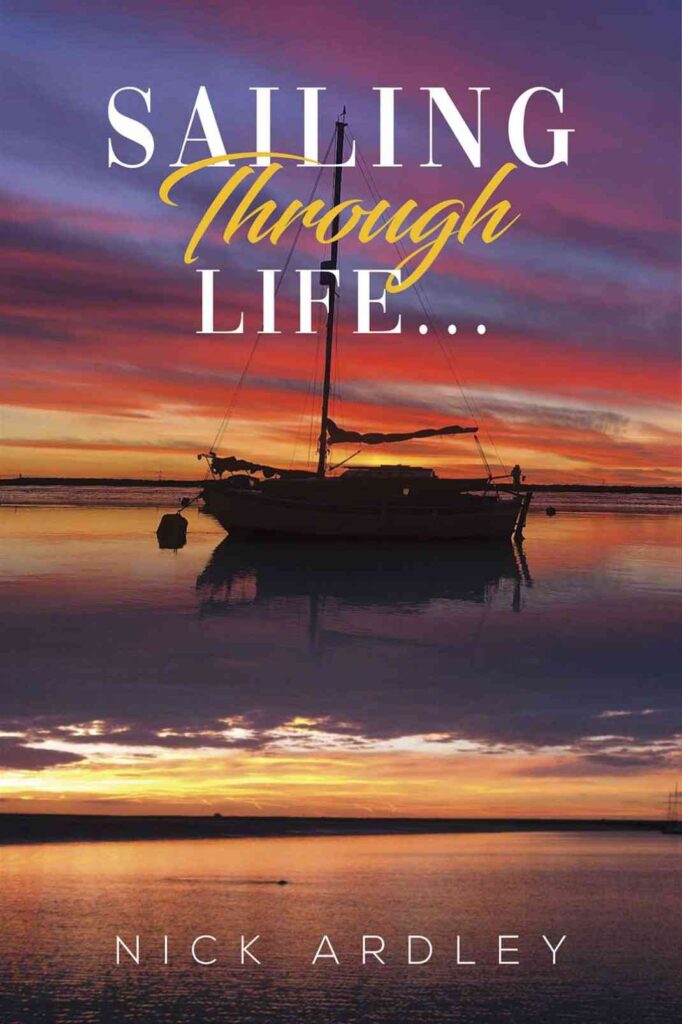
The book’s title is: Sailing through life…
Front cover of book.
Austin Macauley, my current publisher, has just released their sales pitch for the book and, I believe, it is on Amazon now too. Other sites will appear. But your local bookshop would surely love you to pop in…
As said in an earlier post, the release date is Friday 10th November 2023.
There are 80 colour plates and a front piece map.
The book comes in three formats:
Hard Back: ISBN: 9781398481343 @ £25.99
Soft Back: ISBN: 9781398481336 @ £18.99
EPub: ISBN: 9781398481350 @ £3.50
Blurb:
When Nick Ardley asked for a prostate specific antigen (PSA) test, the aftershocks of a prostate cancer diagnosis were momentous. Frightened, he said he was too young to die. Petrified, he understandably broke down. But all was not lost: his family and the boat shared with his wife were soon at work repairing his life.
A life-long sailor, the salt marsh fringed waters of the greater Thames estuary had always enthralled, and it was to them he went for healing. It’s a place where in the free flow of a saline breeze his mind cleared, and he began treating it all as just another little illness. Like a cold, he said, knowing full well it wasn’t! Sailing up the River Thames, he announced to his wife his choice of the medical directions offered. Later, after mooring off Gravesend, both cried together.
Ardley’s treatment overlapped the COVID-19 pandemic. Fortunately, the serious stuff was done and dusted. The pandemic brought new trials. The couple were frighteningly threatened by a fellow yachtsman who disliked an Ardley web blog … the horror of that summer has remained fresh.
Throughout the telling of Ardley’s tales, his story, sailing with family and friends, country walking and living life, he has maintained a normality. Perhaps a familiar story, but it comes with a warning: Men, get yourselves tested before it’s too late!
This project has seemingly just meandered atrociously from one edit to the next at a pace that can only be described as snail-like.
I have reached ‘final edit’ so many times, I’ve almost approached despair. The edit was returned some while ago, corrected, I was told, but absolutely nothing had actually been done. There were only a half dozen or so items … I had a major rant at editorial.
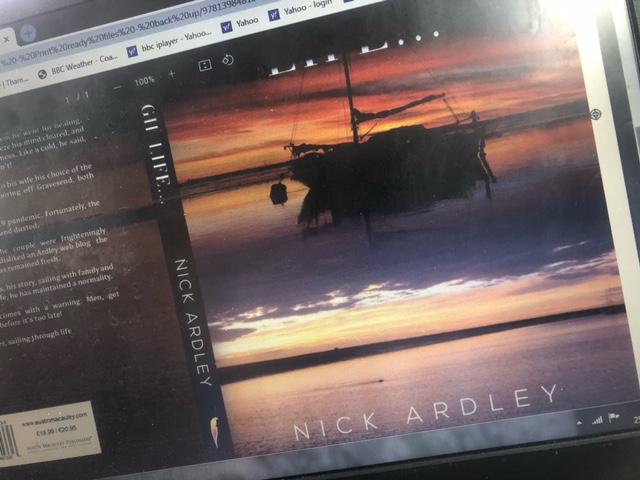
Recently, I received the document for checking with all cover work done. It had to be signed off that day to reach a publishing date in September. I sent a letter back apologising, but I could not deal with at a moments notice, late on an afternoon.
Part view of cover.
I sent everything off in just three days … that was a month and half ago!
I have been informed that the errors have been dealt with but QA found some anomalies (I had spotted one or two and told them, and they’re the experts and should not have been present…).
When, a complete check has been made, I will be sent all for reviewing and signing off. Publishing happens within two months of that point.
The end result though will be a well honed book, with much interest for a varied cross section of people…
It will also carry a very important message to men.
Update:
Well, I never, the files finally arrive back in my email box, however, only one out of six deficiencies had been done.
I ‘exploded’ verbally, to the editorial contact. Amazingly it came back within a day, corrected, with a qualifier that the editorial coordinator had personally checked – what blazes are they for…
I have now signed it off. A publishing date will soon be known, plus advertising details.
I have visited the Nottage Institute once before. It was some years ago when sailing with my sister and two other friends as crew. We’d come up on the tide for some stores.
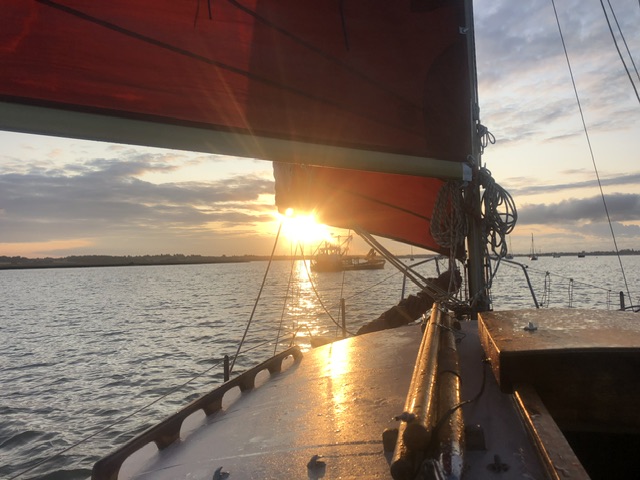
We enjoyed an early morning sail up to Wivenhoe on the last of the flood and managed to get into one of the two moorings kept for visitors by the Wivenhoe Sailing Club – a generous act: no charge is made. They also provide a card to access showers…
Sailing up to Wivenhoe on the last of the early flood.
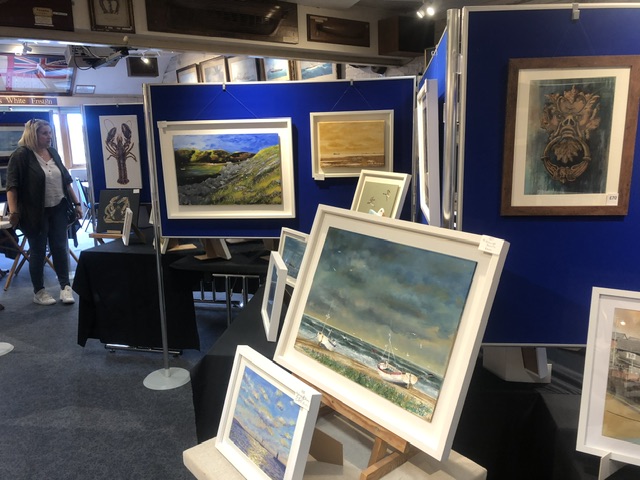
Passing, Christobel spotted a sign for an art exhibition upstairs, so in we went. The works were by local artists.
Part of the display.
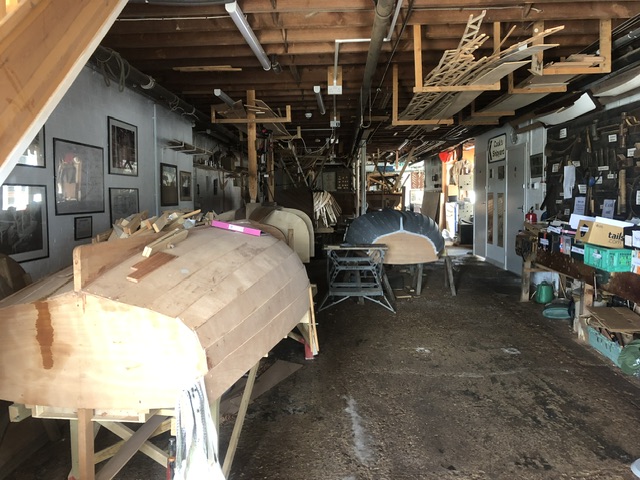
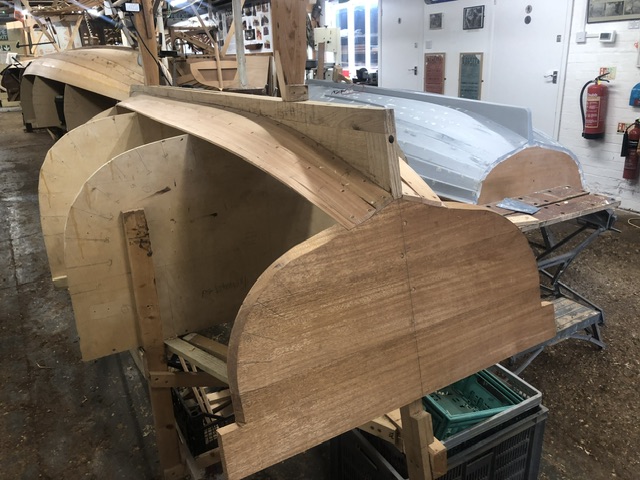
For me though, the real art was below in the boat shed where I could see a number of dinghies under construction.
Looking into the shed before it opened to visitors…
The Nottage Institute was set up as an education base by a Captain Charles Nottage in 1896 for fisher folk and ‘Colnesiders’. In time it spread its wings into educating men and women in boat crafts such as boat building (dinghies) and navigation learning. It is now an affiliated RYA training centre.
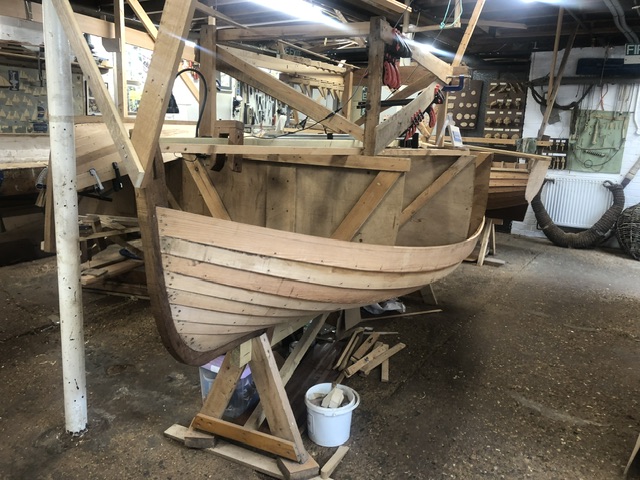
A dinghy nears completion while beyond another is in early stags of planking.
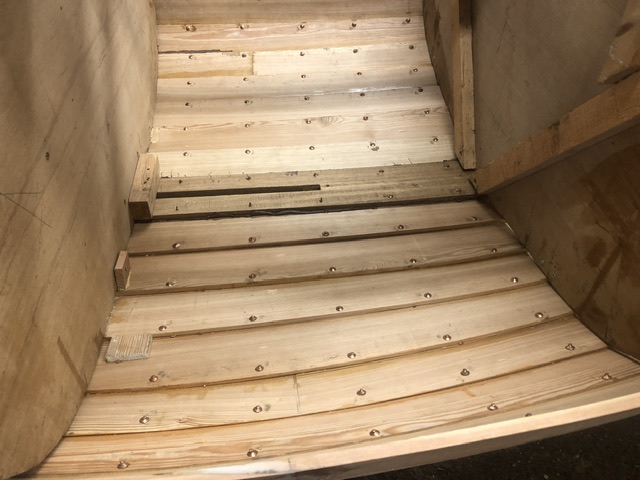
All the dinghies being built are by amateurs under the guidance of a tutor boatbuilder. The workmanship, even to my untrained eyes, looked to be very good.
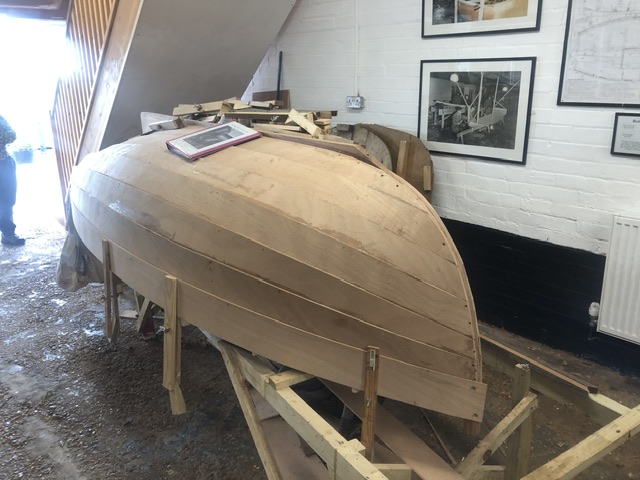
Planking up nears completionThe standard of riveting over the nail roves was acceptable – there were a few that would catch a stocking…
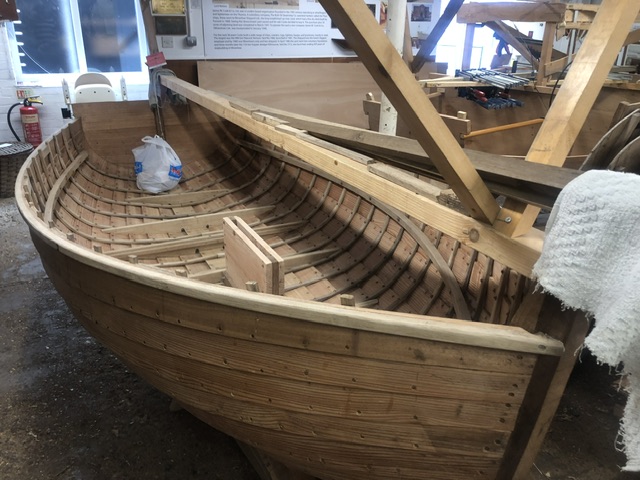
The dinghy below has reached the fitting out stage. The rubbing band and internal stringer which will support the thwarts are fitted. A centre plate case is under construction – a multi-purpose dinghy which can be sailed makes a classic tender or a boat for enjoyment.
Fitting out a fully planked hull.
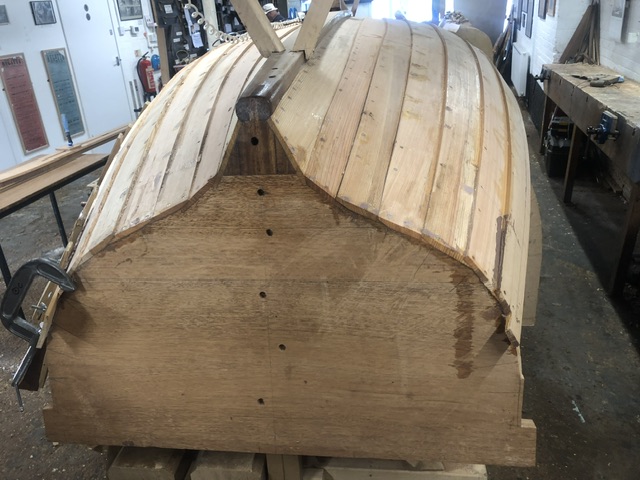
Look closely at the illustration below to see how well the plank ends fit to the transom.
Another plank has been clamped into place. The planking appears to be larch.
Below is a dinghy in the early stages of planking. Note the moulds over which the planks will follow. The fore and aft edges have been rebated to take the next plank overlap.
Early stage of planking, with garboard and next fitted.
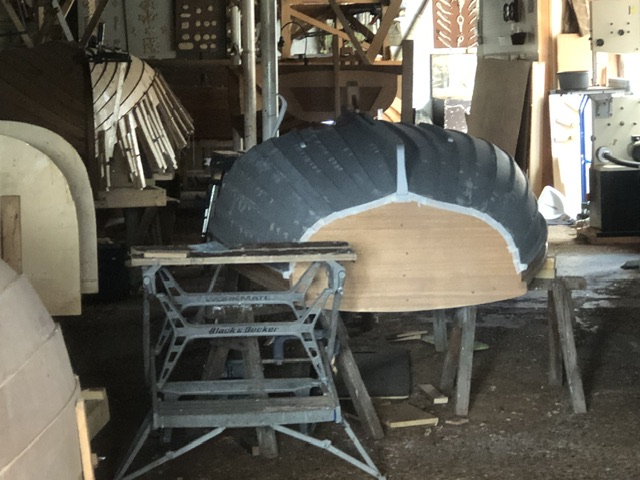
My final illustration is of a a dinghy that looks like a dinghy I once pursued myself. Ca’t remember the designers name but they are light-weight and strong.
My simulated clinker GRP dinghy is great but quite heavy – it has stood the test of time though for she is thirty this autumn!
A light-weight plywood and epoxy built hull.
The plywood and epoxy method of construction allows the builder to dispense with the internal transverse ribs for the epoxy fillet that seals and fills the planking runs acts as longitudinal ribs. Some internal transverse timbers will be fitted though to support floor boards and such.
A centre plate slot was evident in keel timber of this little boat.
Yes, I enjoyed my walk round the little ‘boat shed’ and too the paintings upstairs where the walls are decorated by hundreds of half models of vessels built at the village’s sizeable shipyard until it closed in early 1980’s.
For more information about the institute visit their web site.
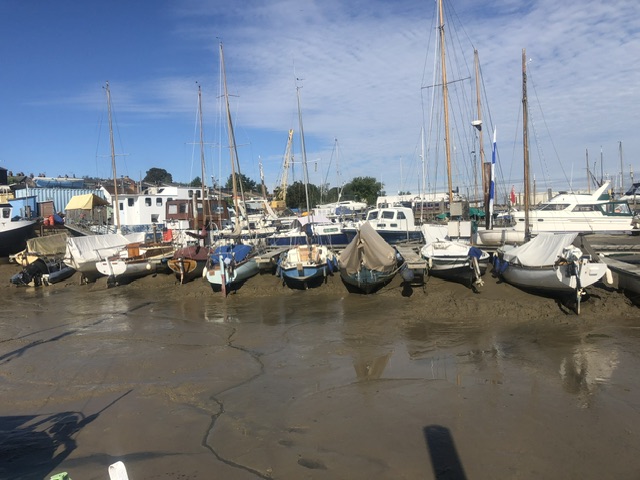
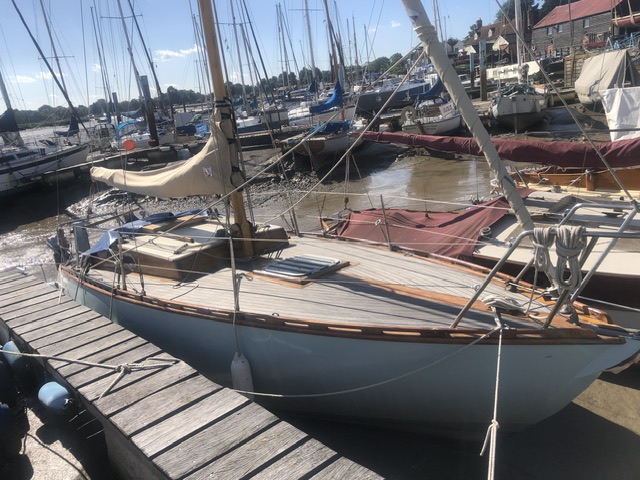
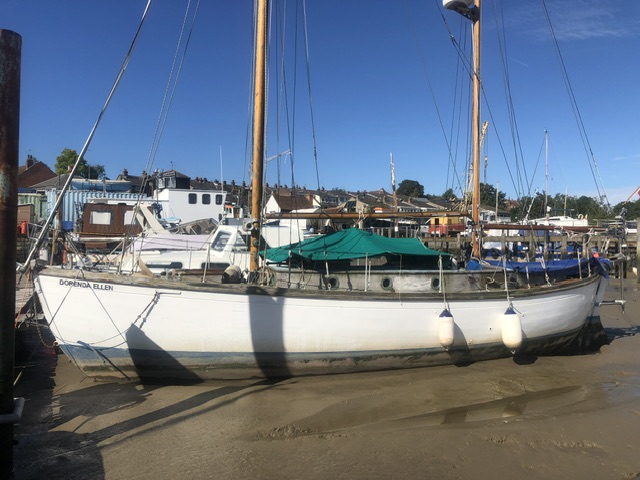
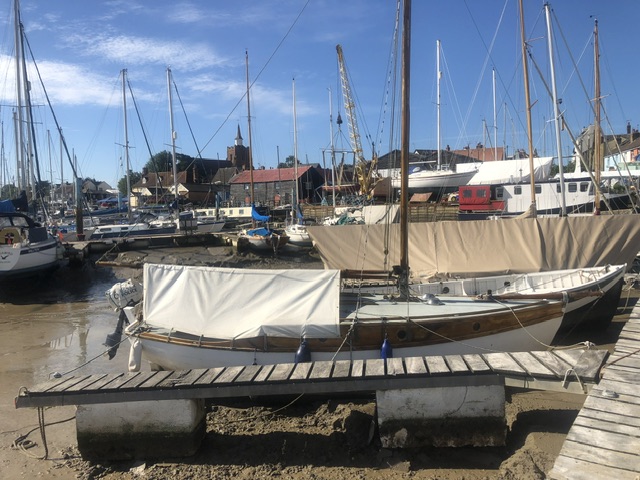
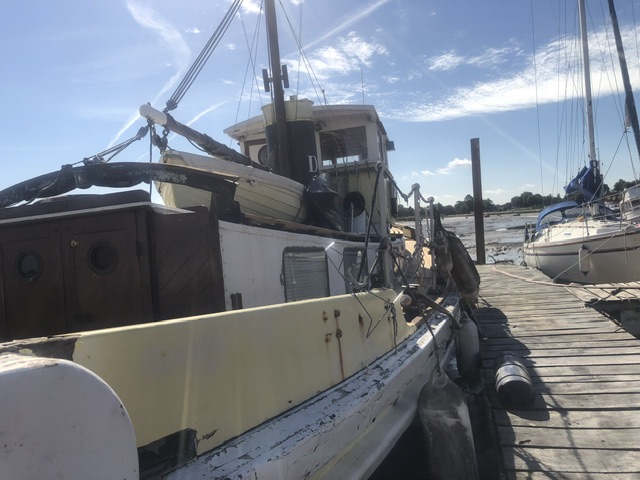
We have had a couple of visits to Maldon by water so far this summer, but on our last, we berthed at the mud marina and yard which is part of the Marine Store empire.
There is a relatively decent loo and shower facility available and a very friendly and helpful team ashore..
I soon spotted an abundance of wooden craft here and quickly introduced myself to a neighbour who had taken the stern line. But it was Whimbrel that ‘trembled’for she was in seventh heaven among so much wood…
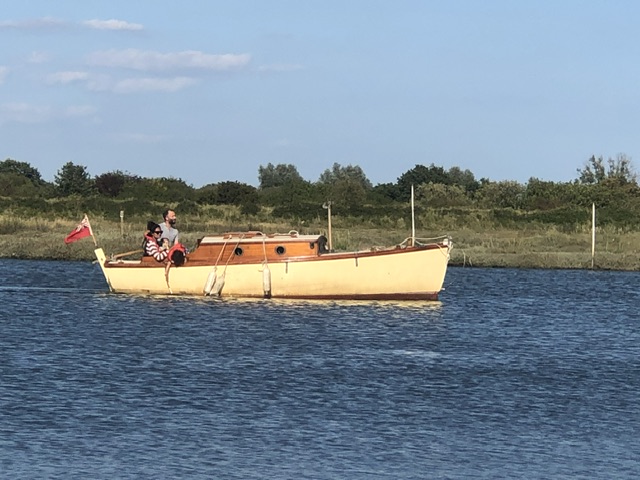
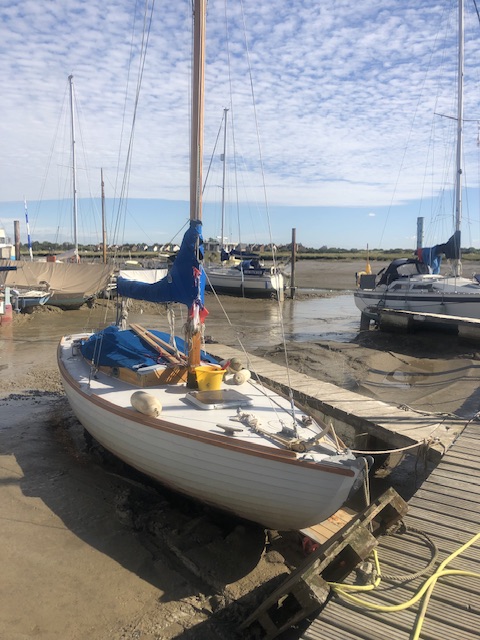
A rare Johnson & Jago 1934 4 1/2 ton cutter.
Berthed beside us was a rare little pocket cruiser from the past. A Johnson & Jago 4 1/2-tonner (Thames measure) dating, the owner told me, from around 1934. She was found propped up at the back of the yard in a forlorn state. The chap has owned wooden boats going back down the decades and he decided, like himself, there was a life to live…
The hull, he said, was in good condition being of pitch pine and with a couple of years work, she was back afloat… Toe rails and rubbing bands were renewed.
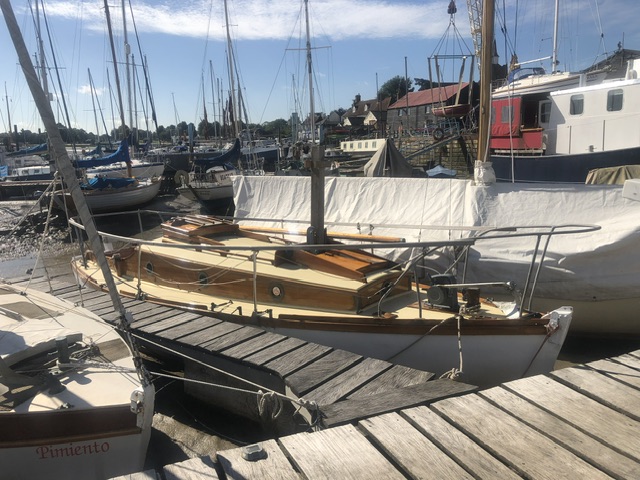
A Deben 4 tonner
On one of the tides, I spotted a very similar boat from the same era – this though was built in large numbers up in Suffolk. The Deben 4-tonner.
These designs were produced in a couple of sizes to suit the pocket of the ‘average man’ giving opportunity to get afloat for around the same price as a little car. They were nicknamed ‘pocket cruisers’ and served well.
The Blackwater Sloop was another of the pocket cruisers, built up river from this yard by Dan Webb & Feasey whose old yard buildings are now offices. The tiny docks still sit along the water’s edge…
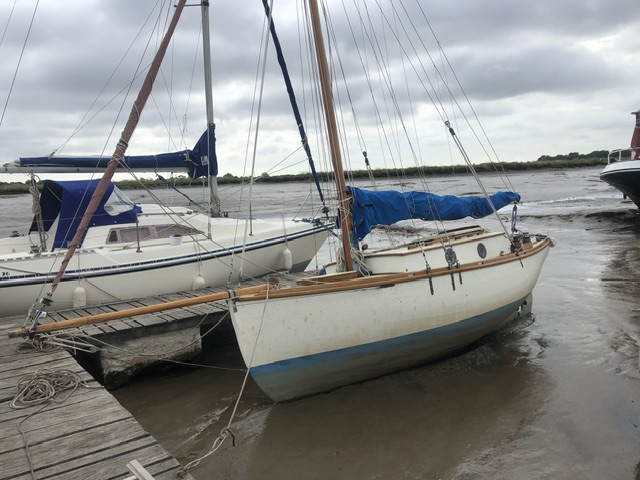
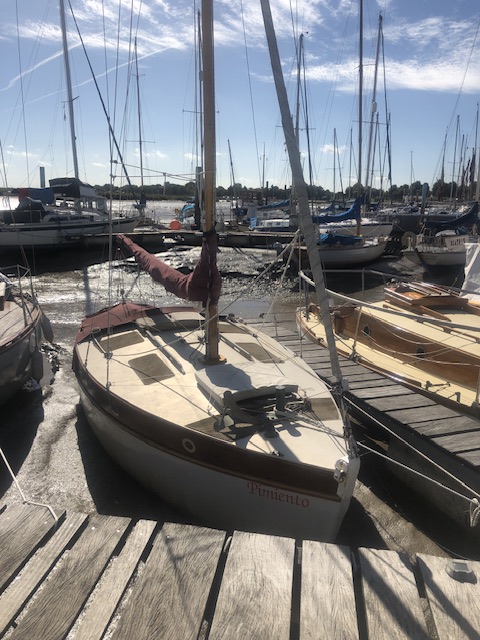
Whimbrel gazes at a host of wooded buttocks…
I ambled around the yard and its pontoons looking at well kept boats and some not so well preserved.
Most I just haven’t a clue as to their class or build. They were all different and caught the eye – something plastic hardly ever does.
A well kept Folk boat.A pretty sloop – has the look of a ‘grown-u’ Deben class or similar.A raised fore-deck sloop which does away with a cabin side/roof structure. Headroom would remain limited…
This one below particularly caught the eye for she has a grandeur of a much larger yacht. The reverse shear is sweet and aligned with the small cabin structure – almost dog-house-like – she is uncluttered.
A sweet reverse shear sloop.
I then back tracked to look under the covers of a few and at this one below. She has the look of a Hilyard ketch, however, her bright work has all but disintegrated to bare wood.
A sad but fine looking ketch falling gradually into disrepair?Another raised deck sloop of similar but different design to previous.
At the outer end of one pontoon was an old naval dockyard TSD. These vessels have all but disappeared. They were resident at every dockyard or naval base used by the Royal Navy and probably predate the second world war. They were diagonal planked – in teak, I believe, and had substantial scantlings and outer protective ribbands.
They were used for ferry purpose in the main but could be utilised a storing vessels too. Years ago, when on a Royal Fleet Auxiliary vessel berthed in Mombasa, there were examples of these craft still in use.
An old naval work horse (TSD).
The one seen above seemed to be sound, but is in dire need of a ‘paint job’ soon…
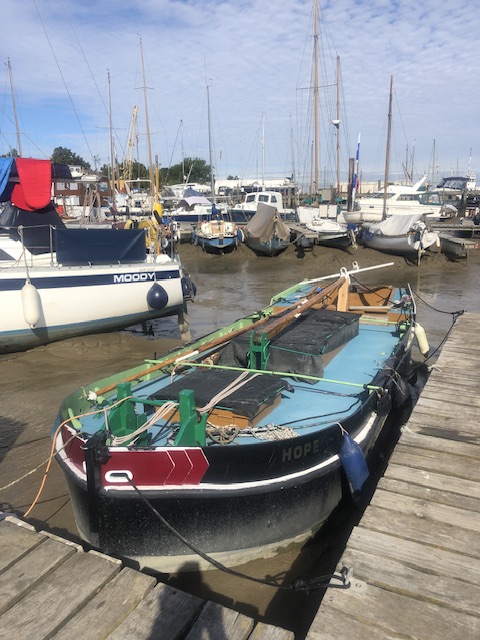
Then I alighted on this little ‘model’ barge, built once heard, of plywood. I saw her out many years ago with two chaps aboard going down past the Hythe. It looked odd for she is little bigger than a large day boat.
A ‘model’ barge (yacht) – she’s called Hope. The last time I saw her she was rigged. She’s seemingly in or had a refit…
So, yes, our Whimbrel has been in cahoots with many wooden sisters…
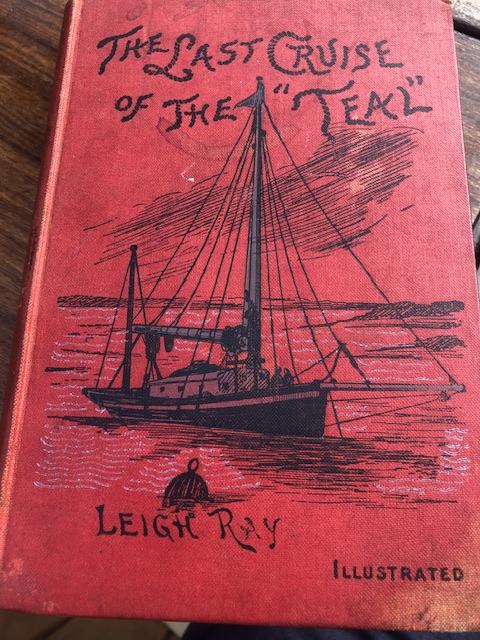
Of course, Leigh Ray a pen name and it is widely thought to be the lead author of ‘Swin, Swale & Swatchway’, Herbert Lewis Jones, actually co-written with Charles Barrett Lockwood.
The book’s aged cover.
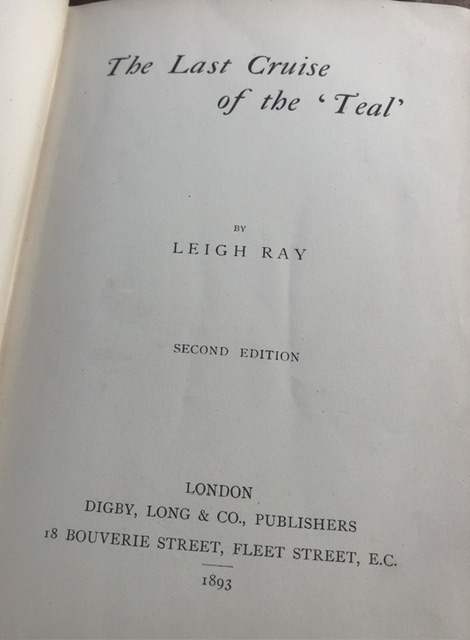
Ray Leigh, as many old sailing hands will know, often wrote articles for early issues of Yachting Monthly magazine.
Second edition from before 1900.
Interestingly if one does a search of the two men, their medical biographies pop up but little else. In Jones’s case, sailing is mentioned as a hobby having been brought u o the banks of the River Medway. Lockwood’s biog n the other hand contains absolutely no mention of sailing… Both were doctors of some repute and died during the early years of the 1st World War.
The book was recommended by a sailing friend and I added it to a list which the mate uses for those yearly special days, and yes, it was in my birthday bag during June!
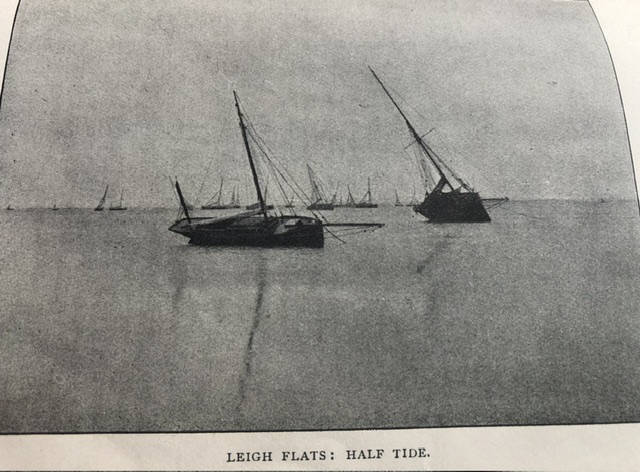
The Teal on the Leigh Flats.
The book begins in a normal enough sort of way. The Teal’s owner gathers together a friend who often sailed aboard and his younger brother. The owner has just completed his finals to become a doctor.
Embarking aboard the Teal they set off on an east coast cruise taking in the River Medway, Havengore, Burnham, The Rays’n to Maldon then up to Harwich.
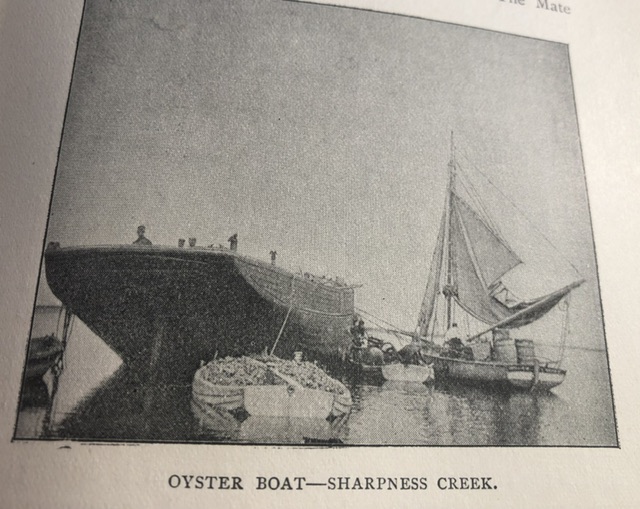
On the River Medway they cut through ‘marsh islands from ‘Sharpfleet’ Creek to investigate the oyster fishery in Sharpness Creek – now just an inlet.
Yes, oysters on the Medway. Sharpness Creek is just an inlet now.
From Harwich, the Teal then sets off, ostensibly to go either to the Deben or the Ore.
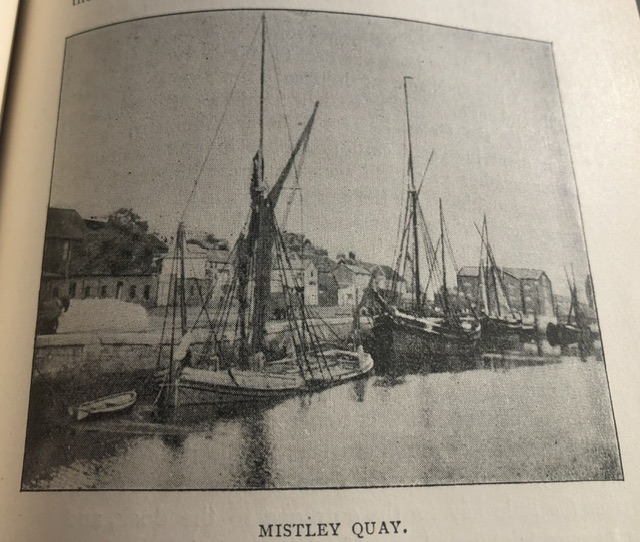
Mistley Quay visited o the cruise.
I went back several times to try and find the reason for their’ change of plan, to no avail – I clearly missed something!
The wind gets up and they are well clear of land.
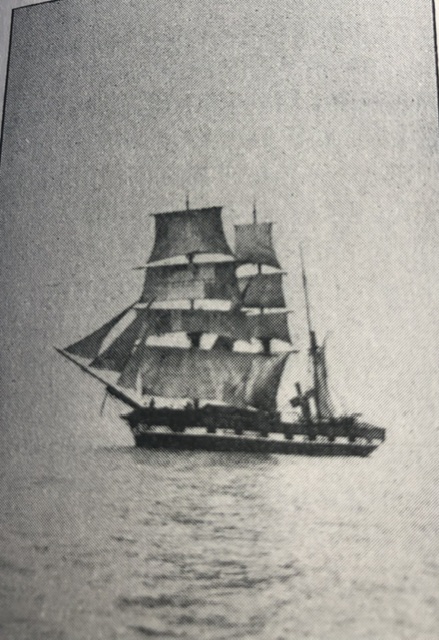
A burning sailng ship is spotted> they sail closer, close enough to see that she is unmanned. Two masts are down and they see the foremast tumble, sails ablaze…
The stricken ship?
The wind increases. The compass is broken. A full gale rages … an old sail is cut up to make a cockpit well screen and sea anchor. The story has apparently gone past he ‘informative narrative’ to pure hokum…
They are driven before the gale. The skipper was using his watch to get a kind of directional drift – it gets broken…
This goes on for what seems like days. They realise that their drift has not been as expected: they would have been cast p on an east coast shore long before!
Surf is heard. The lead is cast. Nothing. Fifteen fathom. Less. Then less again. Then more, but calmer, until an unseen sheer cliff gives protection.
The anchor is pitched over…
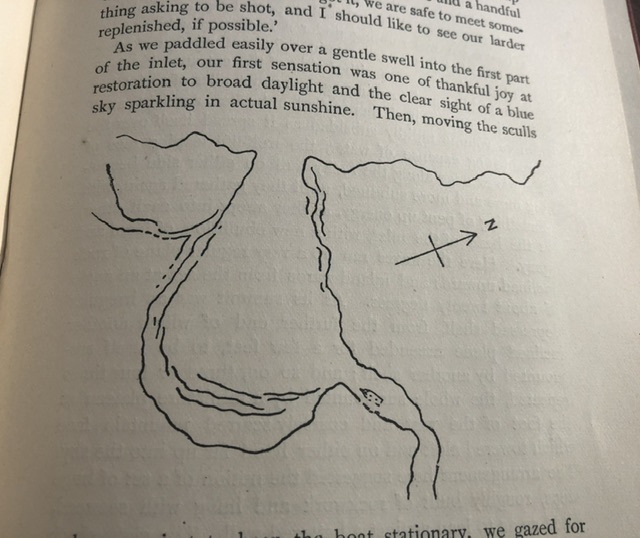
There seems to be around 25% of book exploring the cove they find themselves trapped within. A huge sailing ship wreck dominates one shore. The cove disappears into the cliff, literally, in a stream in a cave.
Making an attempt to get out of the cove, they lose anchors and are swept back, into the cave and find themselves hurtling on the ‘flood tide’ deeper inside the rock. The rock they had already discovered to be salt rock…
Sketch map of where the Teal ended up after the storm…
An amazing ‘slalom ride’ ensues, the water turning from salt to ‘fresh’. Masts are cut away … the Teal is all but wrecked and finally they beach. Their dinghy takes them out, eventually, into fresh air.
Finally, the dinghy could float no more. They set off walking living off the land and find a village. The tongue is alien to all three educated young men.
I’ve had enough …
From the village they are sent by various means of transport to Trieste and a ship home!!!
Now, anyone with a modicum of geography knows that for them to have ‘come ashore’ with Trieste as a port of releases must wonder how they got into the Baltic: that is what I perceive.I finished the book, but blimey, it was gung ho ‘boys own’ stuff.
There are some superb black and white illustrations in the first half, but after ‘the ship’ there are none. The story line says there weren’t anymore for equipment was damaged. A batch of plates were boxed and sent ashore at Harwich, apparently…
Did I enjoy it?
Well, yes. It wasn’t as expected and would make a good read for most people…
Thank you for the recommendation, John, and to my mate for its ‘expensive’ purchase…
During last autumn, I came across a book about the ‘lost’ route to Portsmouth from the R. Thames.
The Wey and Arun navigations formed the backbone of this route from the ‘east and west’ respectively (although it was almost north-south). The route was effectively closed around the time of the trip made and problems were encountered. Sections remain navigable today, but the central link has been lost.
I then alighted on a short tale by J B Dashwood in which the chap describes a holiday cruise from the River Thames along the ‘lost’ route to the sea via the River Arun, then a coast passage to home on the Solent shores…
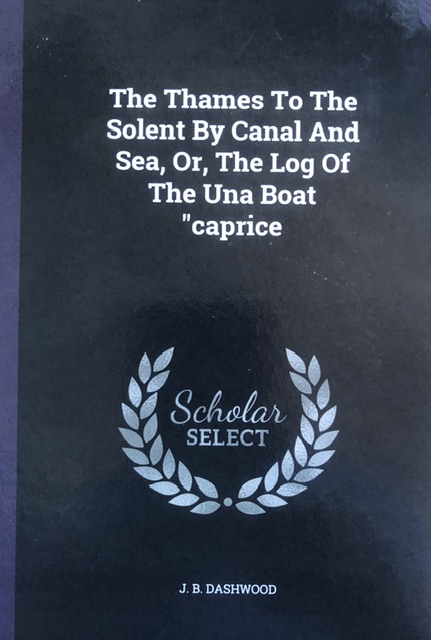
The book is a reprint edition.
The reprint cover.
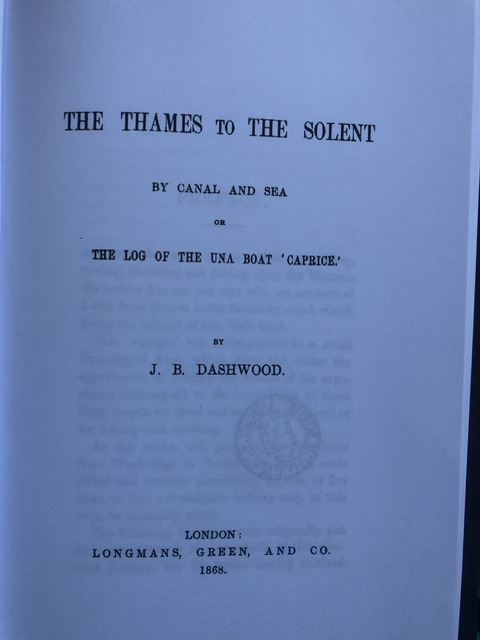
The book was first published in 1865, at the insistence of Dashwood’s friends!
The original title page.
It is striking for one major reason: his mate for the trip is his wife who seems to have been of hardy stuff.
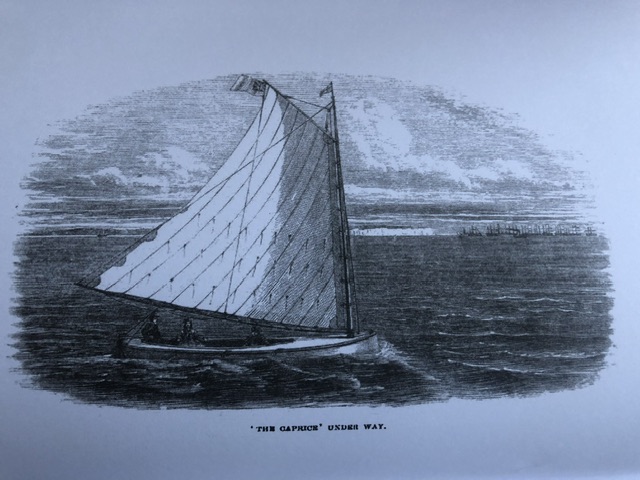
Their craft is a Una-rigged sailing canoe. It was built for sailing the upper reaches of the Thames and for sheltered coastal hops.
Towards the end of the book, Dashwood describes the trip round Selsey Bill and another covers her suitability for coastal waters and alterations made.
The Caprice in full flow…
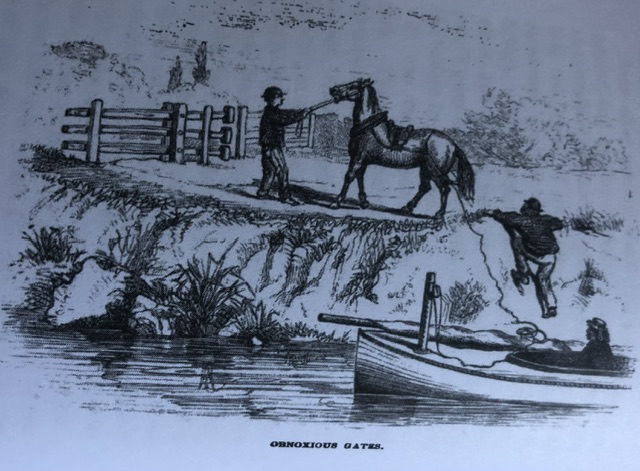
The Dashwood’s hired a pony to tow the boat and a canal man to manage the towing. That did not mean the holiday couple sat back. No, they played their parts fully.
The nights were spent at wayside inns along the route.
An author sketch of working the towing pony.
For me, I just loved the way the journey is described. The wild-life, fauna and his little injections of local history. Diversions, on foot, to ruins or the many large houses. It was so reminiscent of many of my own books.
Completing the journey with the Dashwood’s, I dearly wanted to stop and chat to them…
A lovely read. If you can find a copy, I thoroughly recommend it.
Some weeks before the early days of August 1983 we had cycled from Canvey Island, up Benfleet Hill and along a leafy lane cutting through extensive woodland to the yard of A F Platt Ltd, based in its own woodland paradise on the Daws Heath/Hadleigh border.
Our son did the trip too, at a little over a year old he was snuggled up to mum in a baby carrier!
The story is told about at the beginning of a large chapter in my book, The Jottings of a Thames Estuary Ditch-crawler which is available from bookshops on line, where I detail the Alan Platt boat yard story.
Our visit was to cast a serious look at several boats that were currently in the Platt’s yard. There were three Finesse 24s in for various reasons among a couple of 21s too. It was only the ‘24’ we were interested in.
Our first boat, a Yachting World People’s Boat, was on the market and we felt she was about to be sold away to the Burnham river. The signs were very promising…
Although we had viewed these lovely twenty-four footers afloat while sailing, it all depended on whether the mate was happy with what she saw…
There were just three tick boxes!
Standing head room.
A flushing loo.
Decent auxiliary engine.
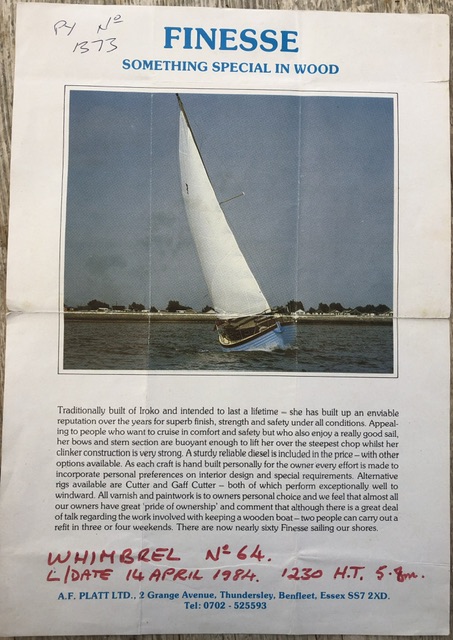
Front of sakes sheet.
We also studied the sales sheets and discussed our possible requirements with both Alan and Shirley Platt.
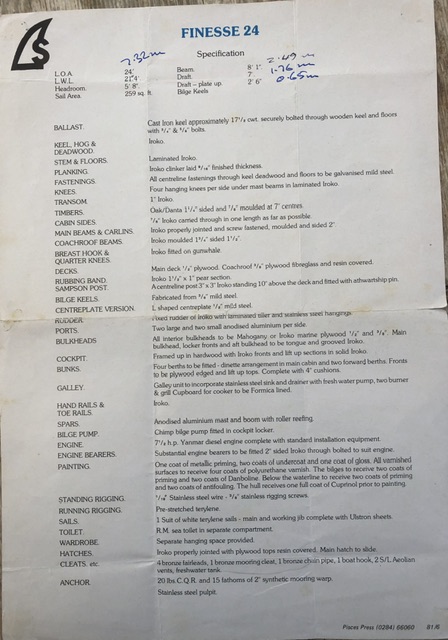
Back of sales sheet giving build details.
We went away with a plethora of details a whirl in our heads. Back home we made plans, we couldn’t avoid it: we were truly smitten.
We even had the un-ordered boat’s name ready…
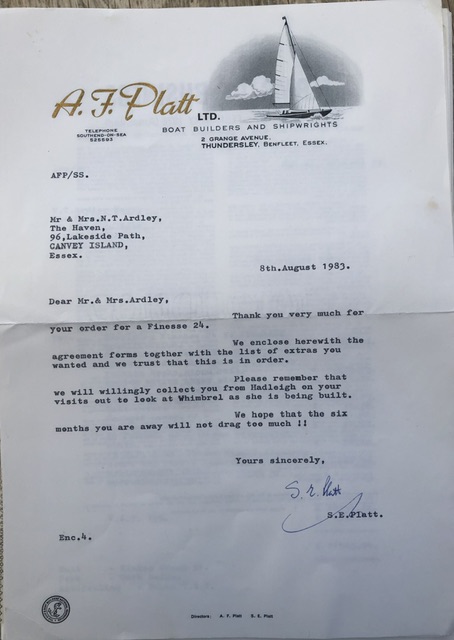
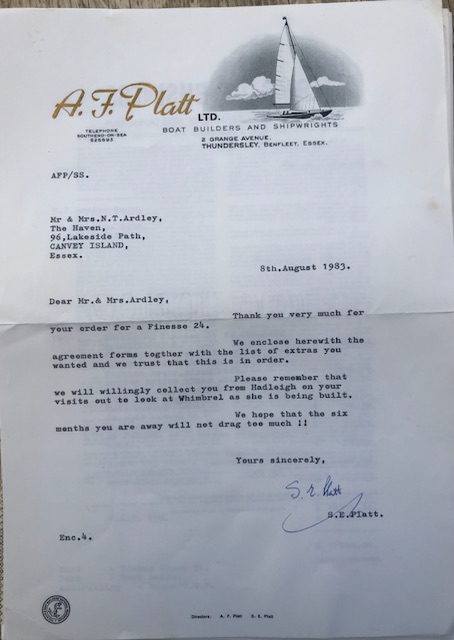
The letter of 8th August 1983.
So we did it!
We had a whole list of ‘extras’ as they are known in the ship and boat building world. The major of these was upgrading to a two-cylinder engine, a Yanmar 2GM, from the basic one-cylinder model. The unit lasted us until 2011 when we again upgraded to a fresh water cooled Yanmar 2YM.
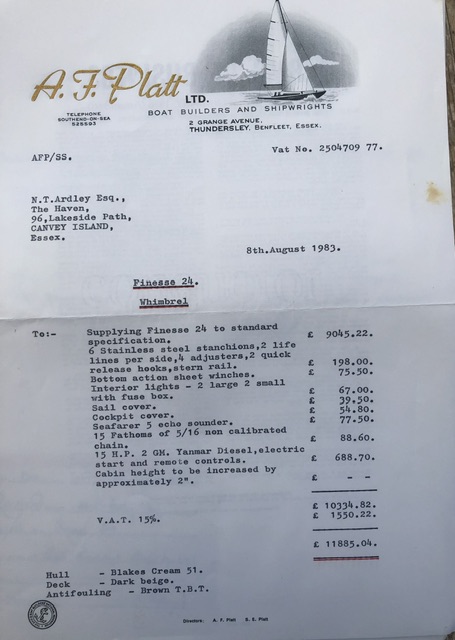
The build and additional costs to suit our requirements.
More letters were to follow…
Clinching a marine mortgage, laying of the keel – a major, planking up etc…
Sadly, I was soon back at sea on a ship pootling around Caribbean waters working with an EU and USA fleet of warships on drug patrols, so consequently, I did not see any of the build processes – this was all left to co-owner, Christobel, the mate who wrote enthusiastically about her visits to view ‘chunks’ of wood…
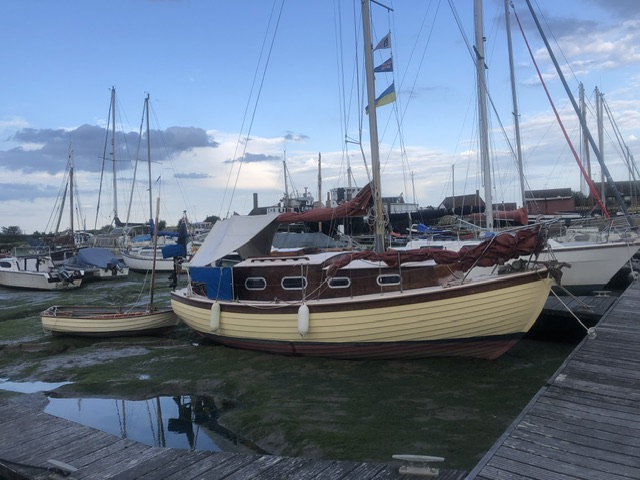
Whimbrel at the Blackwater Marina in July 2023 looking as good as the day she was launched.
My first view was of the completed boat at the end of March 1984, sitting ready for launching. One of our requirements discussed prior to my return to sea…
The ship’s good mate insists on there being another person in our long marriage – yes, she alludes to a mistress – but as I always point out, it is Christobel’s name on the ship’s papers!
However, more of that as the ‘build’progresses…
So, if ‘Ownership’ can be dated to the date of our order, yes, it is a day to celebrate with a huge dose of pride in a little ship that has served us well.
Thank you Alan, Shirley and all who worked on her.
After much thought we have at last made the break with the Island Yacht Club, Canvey Island.
An incident over the Bank Holiday weekend in August 2019 is at the root of this decision, which I will publicly discuss further down, but has been further driven by other more recent events.
The final straw came after we submitted a complaint about the way club members/visitors treated ‘us’ whilst Whimbrel was under going her fortieth anniversary refit.
Vehicles were being driven fast past boat by around 25% of drivers with no regard for the dust and debris being showered over varnish or paint being applied. Cones and a sign were routinely ignored…
We jointly made a complaint about this with a few specific cases and the club’s response was to call just me in to a session in front of the flag officers to explain ourselves.
Just what needed to be explained?
No where was there an apology and let’s talk about this. Just a straight in and be whipped demand.
Now, the leaders of this club are the very same people who assaulted’ us back in 2019 and since the end of that affair, they have been looking for a way to get revenge.
So, we decided enough was enough and have departed.
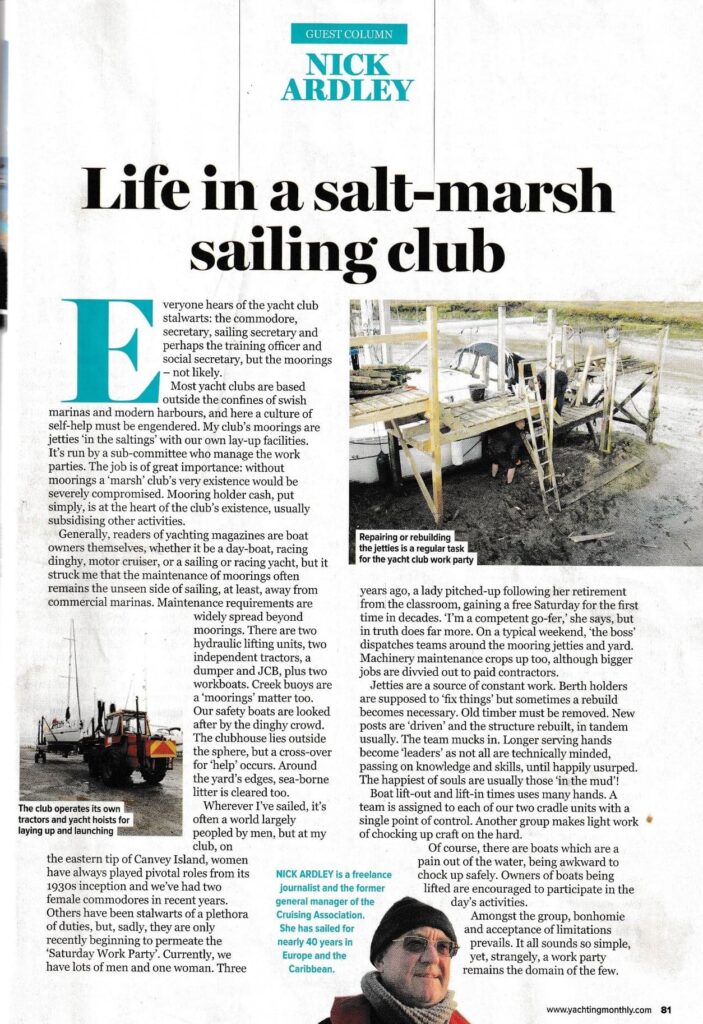
Some while ago I wrote about life in a marsh-land yacht club and how ‘we’ looked after our moorings and club infra-structure.
A copy of the Yachting Monthly article.
There pervades at the club I have departed from, like many organisations oft heard in the news media, a problem with institutional bullying. It is led by people who still ‘live in the school playground’ and if one is not ‘in the set’ life can be precarious. These people have broken the club and made it a toxic and an uncomfortable place to be part of.
In that respect, both Christobel and I have, since the infamous RIB incident, been circumspect with lodging any official complaint about anything, which in itself has been a travesty: the bully won.
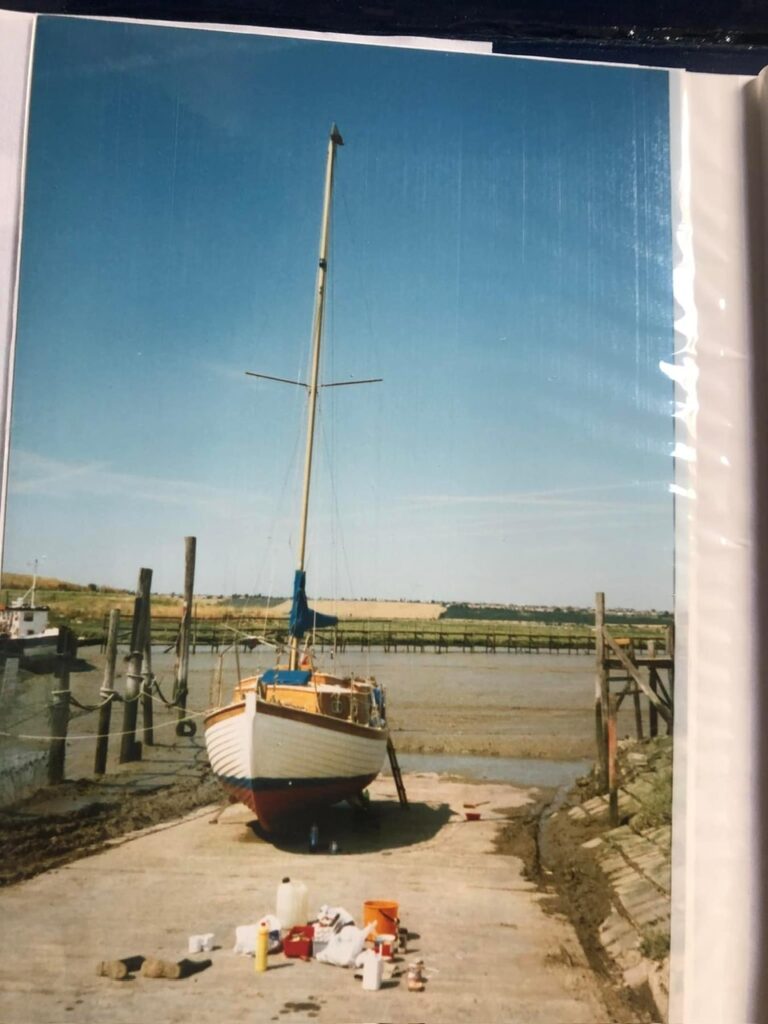
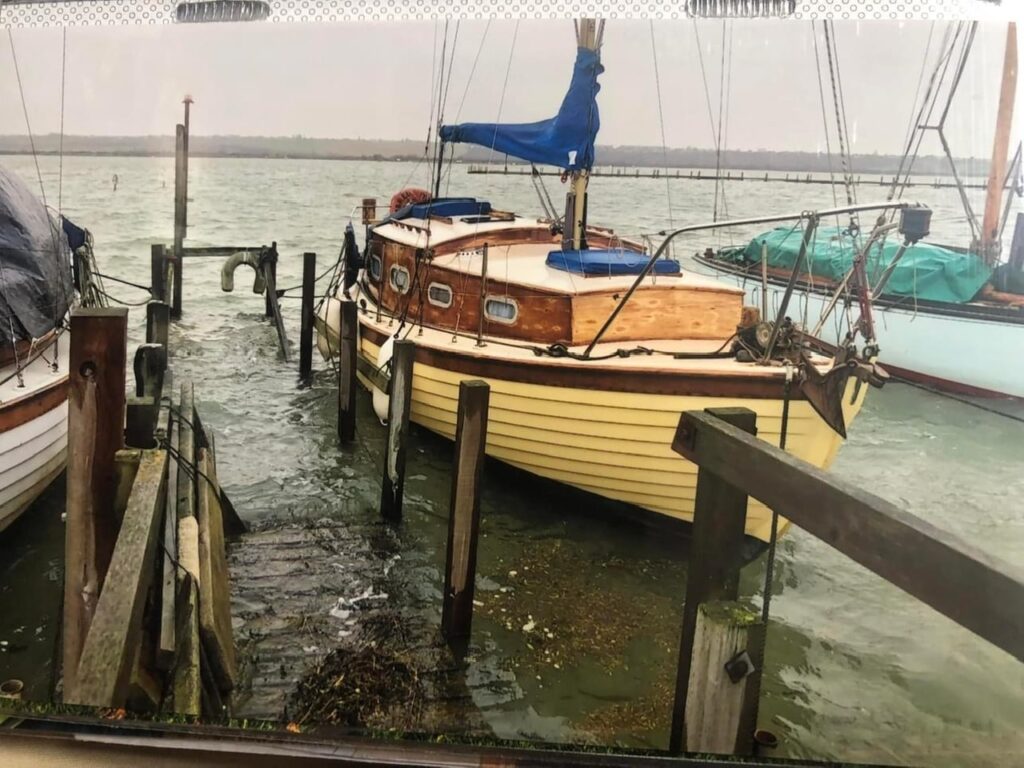
Whimbrel on the IYC slip in her early life. The slipway was later widened – I drew up the drawing (later digitised) for retrospective planning.
The RIB incident if 30 August 2019 will be documented in the files of the Port of London Authority. These are probably available if one wanted access – freedom of information.
It was over the bank holiday and an open cat event was being hosted by the Island YC.
So, the incident which has lived with me, in particular:
Christobel and I were making Whimbrel ready to depart our mooring to represent the Finesse class and club at Queenborough’s classic festival.
A club RIB (Furtherwick) came up the creek leaving a giant wash crashing through the moorings. I was on our fore deck clearing mooring lines. Although still aground, the boat lifted and surfed against her springs.
Meanwhile Christobel had called out, ‘Slow down.’ She was responded to with a single finger salute, which as most know, means: tickle your c—t or up your c—t. She was extremely upset.
We called the club’s commodore who said he was on way to club and would deal with.
We departed.
Nearing the outer creek, we rounded into the breeze (sw3) clear of the buoyed channel to hoist the mainsail. The boom was loosened ready. I was about to hoist when I spotted the same RIB exiting the club’s moorings.
It left the buoyed channel and came straight at us across the shallows increasing to a ‘displacement speed’ resulting in a huge wash. Christobel held her course with engine on tick-over.
I shouted ‘watch out’ and flung my arms around the slating boom as the RIB roared down our port side done 2-4 m off.
The boat dropped and then went ballistic with violent rolls back and forth. I felt the boat hit bottom.
I held on. I do not remember how I stayed aboard, but wished afterwards I’d gone overboard: it would have made what followed, easier…
Christobel was thrown across the cockpit, all but incapacitated in the corner. She eventually picked herself up and got the boat back under control.
I received wrenched leg and arm joints and Christobel a raft of bruises.
The RIB sped away rounding Canvey Point where a few cats were tuning up, then off east where others were doing the same… no one seemed to be in trouble.
Once under sail we made a further call to the club’s commodore – he fully understood the situation for I was shaking badly as I talked. Again, we got, I’ll sort it. That was the last I heard from him.
In the end after around two weeks, I filled in a Port of London incident report.
The proverbial hit the fan.
The upshot was that the perpetrators manufactured a defence (they got times wrong) and forced all discussion out of club minutes.
The outcome from the Port of London was that the club was reprimanded and reminded of how they operated etc, etc, and the driver was given a written warning. (All of this is held on file)
Whilst this sage was ongoing, I was coping with a huge lack of energy after completing radio therapy a couple months earlier and was on a programme of tablet chemo medication for prostate cancer.
The ‘three’ and cohorts didn’t give a stuff about that…
Early in the saga’s follow up, I had a call on my mobile from the chief perpetrator at around 2000 one evening. I asked where number had been obtained – commodore was the reply. I terminated the call.
On file with all paperwork of case, is an email from club’s vice commodore of time, stating that the phone incident broke club rules and national law regarding passing information.
I said it would be reported to authorities unless an apology was received. Time went by – nil response.
Towards the end of the year, a committee meeting was due and I had a call from our son relaying a message from a fellow committee member that ‘the three’ were engineering an ‘instant dismissal’ from club action against us both … unless we withdrew … because we were threatening a member…
After some thought, and with my energy problems, we wrote, saying due to my lack of energy and my mental ability coping with cancer that we weren’t able to continue … it was apparently accepted.
But, as we later found out, blood was wanting to be spilled.
For us though it wasn’t the end: whenever anything untoward occurred, I suffered from night-time ‘reliving’ of events returned with them cycling round and round with growing anxiety.
So, as said, over last few years we kept our heads low…
The pictures within the blog show a flash of our forty-years as Island YC members.
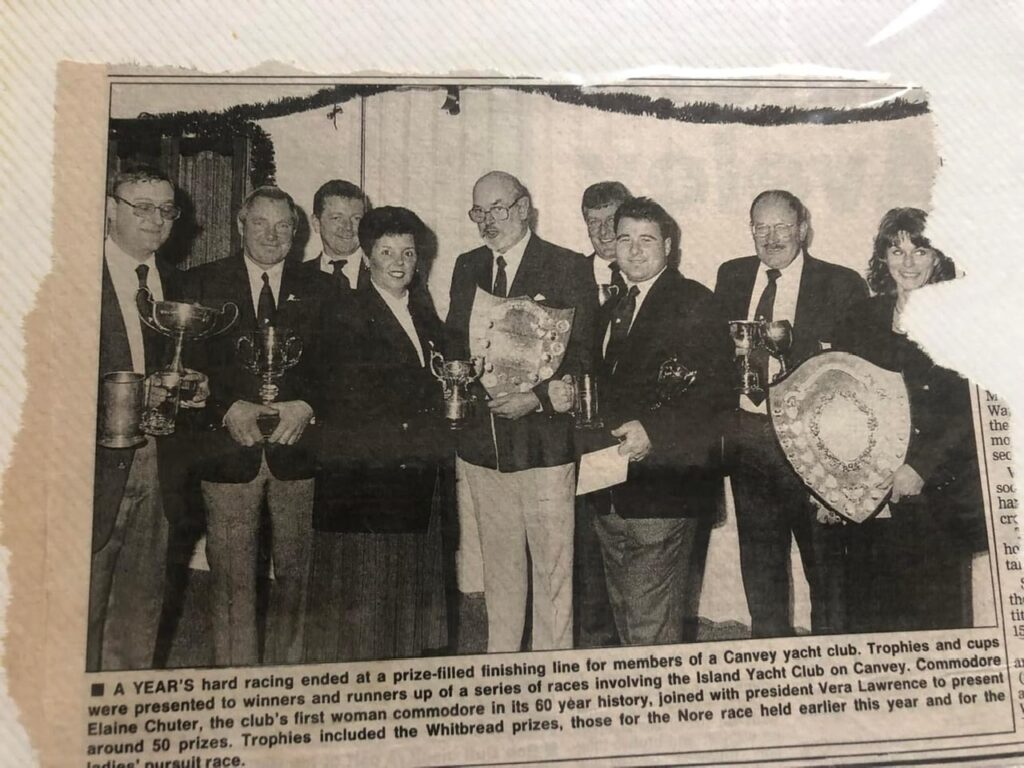
Collecting club silver ware during better days
We raced with success for a decade or so. I was a work party member for thirty-three years and Christobel for a decade since retiring from teaching.
Christobel ensconced beneath Whimbrel’s bottom applying antifouling around 1990.
The projects, personal and joint/team, have been numerous. I looked after the creek buoys for twelve years or so. There was walling and concreting the edges of slipway, doubling its width.
Returning to our berth held and maintained for thirty-three years, probably again around 1990.
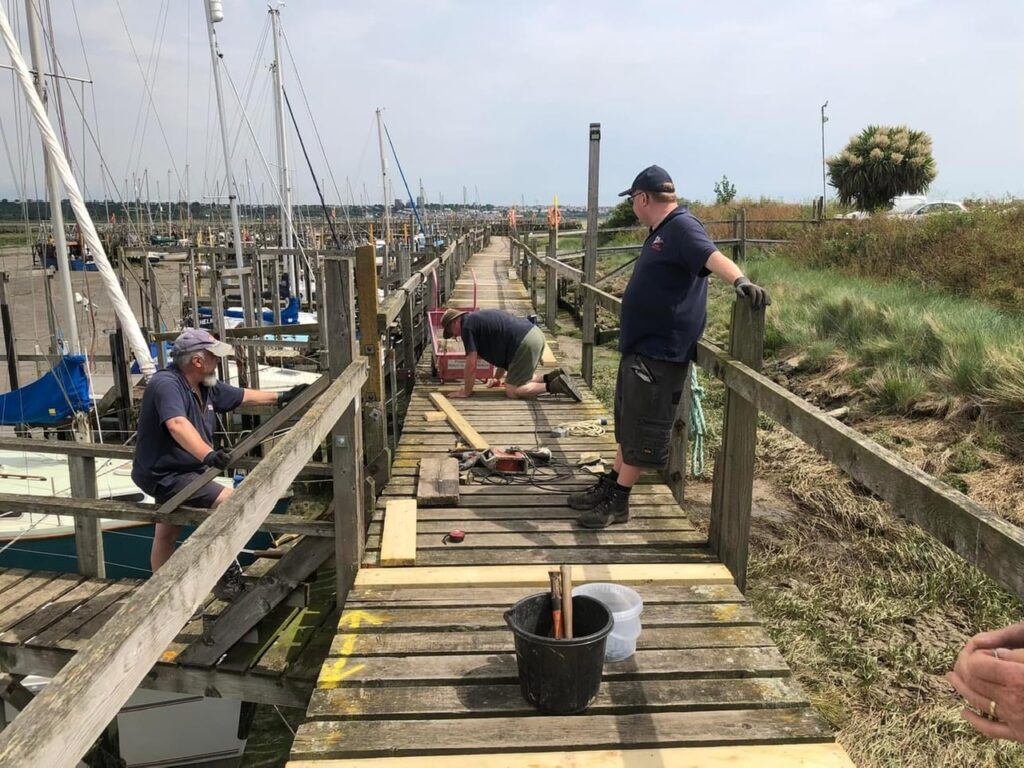
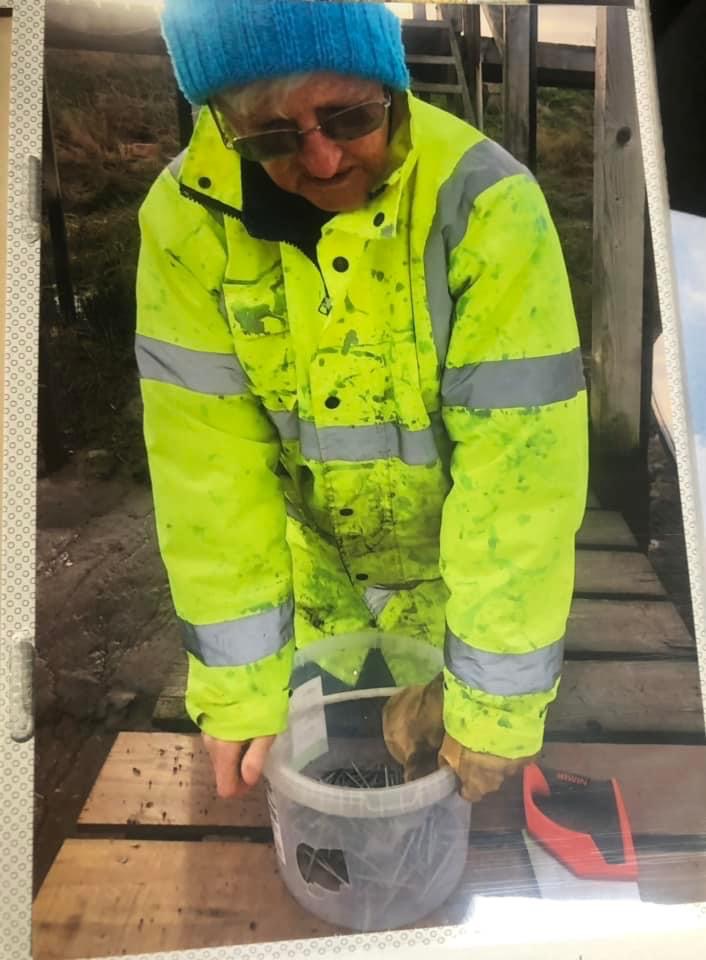
During Covid, as we were a ‘bubble couple’ we replaced hundreds of walkway boards.
Carrying out walkway maintenance.
During the early 1990s the club’s compound was extended over rough infilled land, with layers of crushed building refuse and street asphalt scrapings. We were both part of a small team doing this midweek.
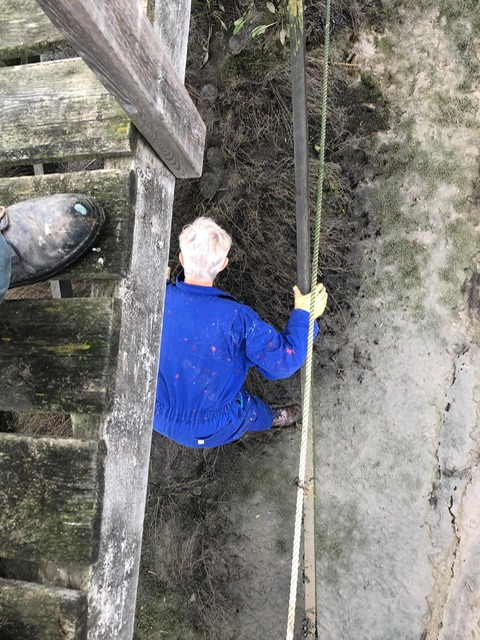
Christobel working in the ‘below gang’ during 2022.
Laying of water and electricity around the extended yard…
Water services round the walkways was laid on…
Another Saturday afternoon washing machine load
Not forgetting, years and years of mooring and walkway repairs/renewals.
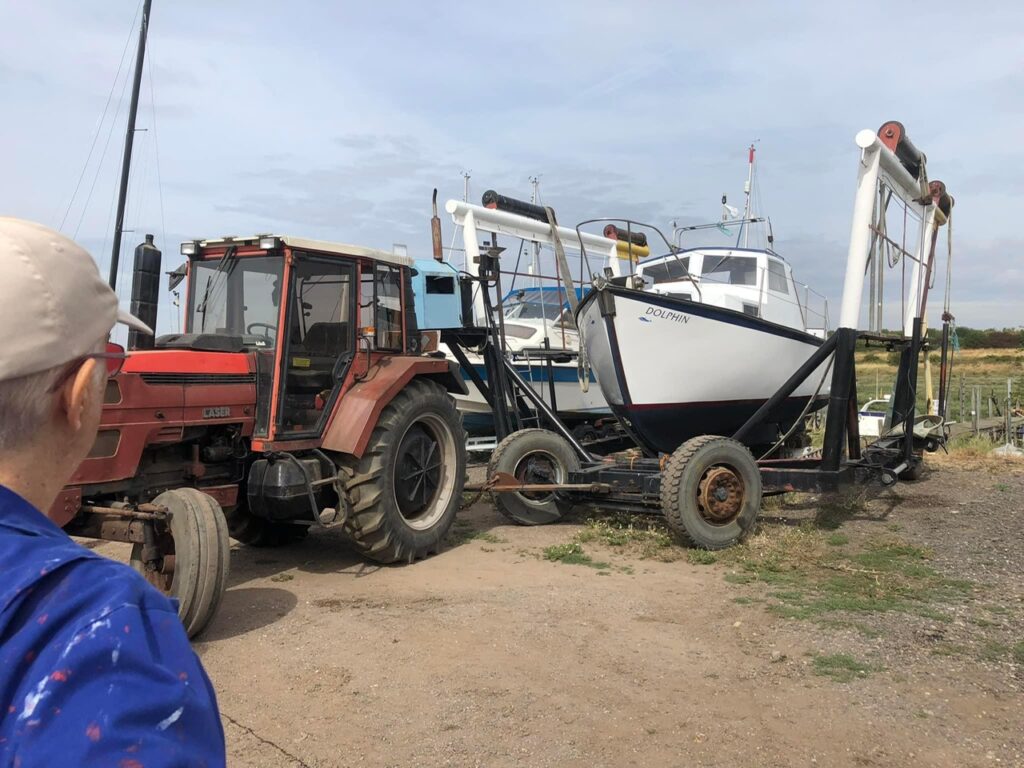
Boat launching with what became No.2 rig. The rig was originally fitted with chain blocks, needing four bodies. It was converted to hydraulic lifting which was initially messed up. I took on the project and had it all stripped by contractor, cleaned, reassembled and tested to statutory requirements. The only time I ever received a formal thank you…
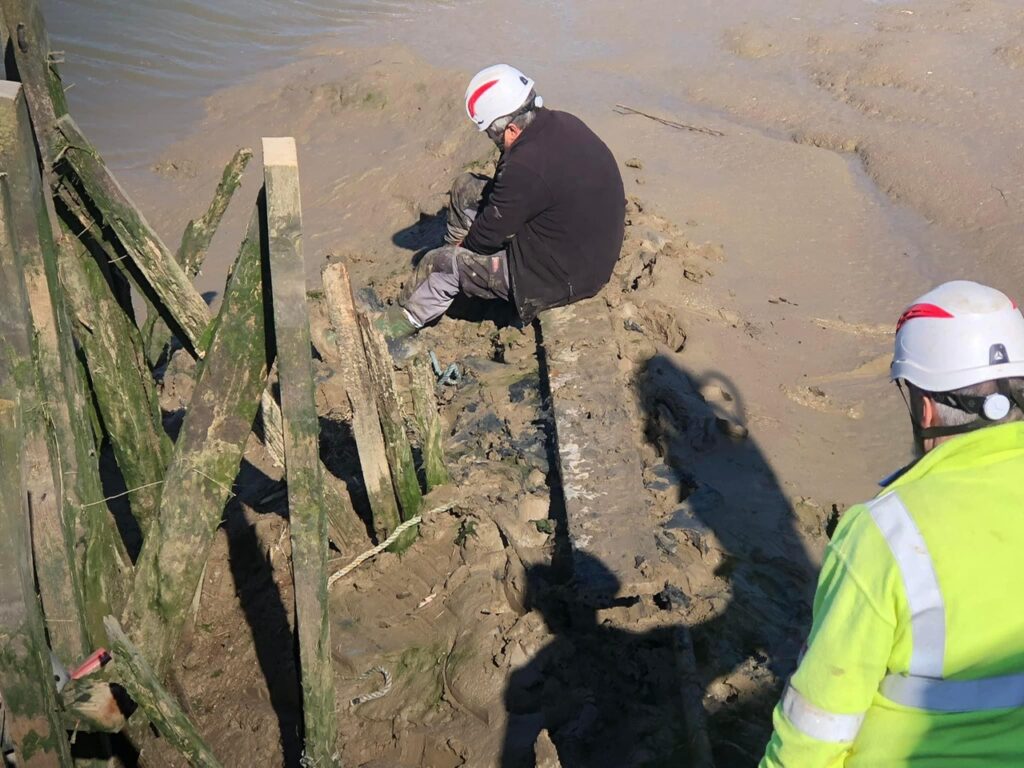
Sometimes it was very a very muddy experience enjoying ourselves in this marsh-land yacht club…
Sometimes it is a very muddy form of enjoyment…
There were good moments afloat too. Early morning winter sails. Later winter afternoon arrivals back after a gentle potter.
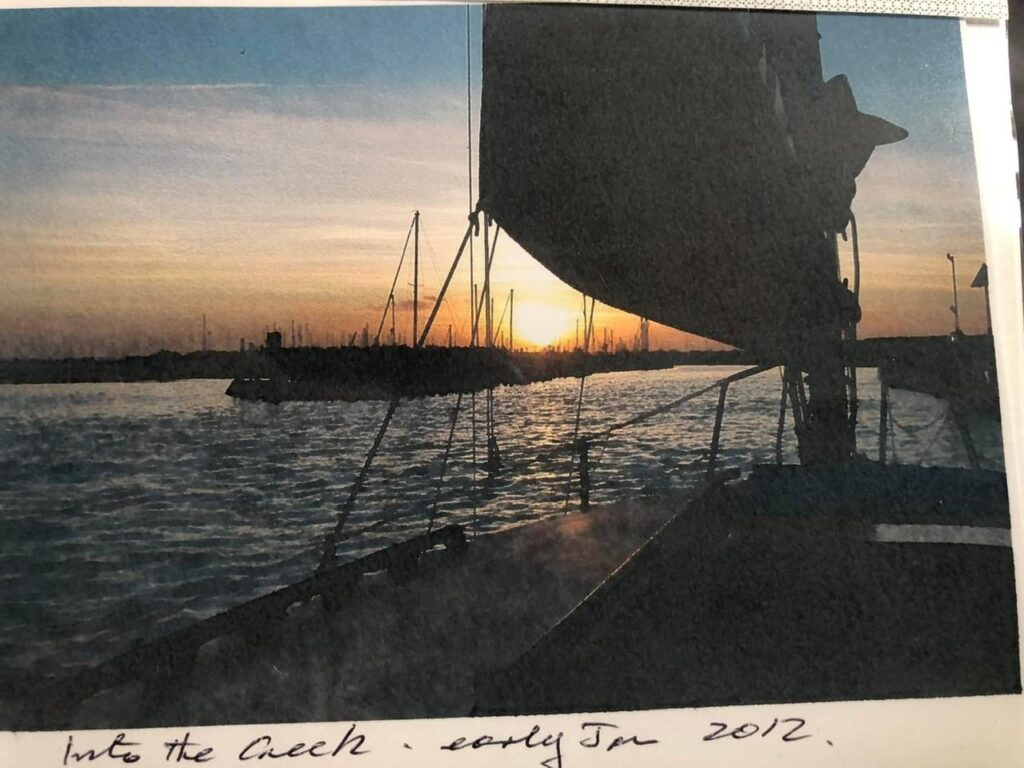
Creeping back into Smallgains Creek after an afternoon sail,
Taking a cue from an ‘old boy’ now long departed, did I need one after being brought up afloat, I made visits to the boat’s mooring to check during high tides – checking and saving many another boat too at the same time.
A high tide … on mooring watch. Many a time trouble with members boats has been avoided by direct action!.
During the last few years following the RIB incident, the mood within the club changed for the worse. Actions of the club’s hierarchy was causing angst – certainly among the club’s do-ers of the working parties – and the atmosphere was becoming toxic.
It was becoming ‘not a nice place to be’ and I silently began looking for alternatives, should that day dawn.
During Covid, Christobel and I worked as a cohesive team replacing hundreds of walkway planks. Often almost being ‘kicked aside’ by other members frustrated at having to wait. One chap said, during the period, ‘without people like you, we’d struggle to get to our boats…’
So, following the lodging of our complaint while away for a week at the end of June we decided to throw in the towel and make the final break.
Once our resignation letter had been sent, my anxiety cycles began to wain and a resemblance of a normal sleep pattern returned. Praise be.
Now we are gone!
Our open letter to the club’s members is unlikely to be honoured, but it is gradually making its way around via various routes from people who have supported us.
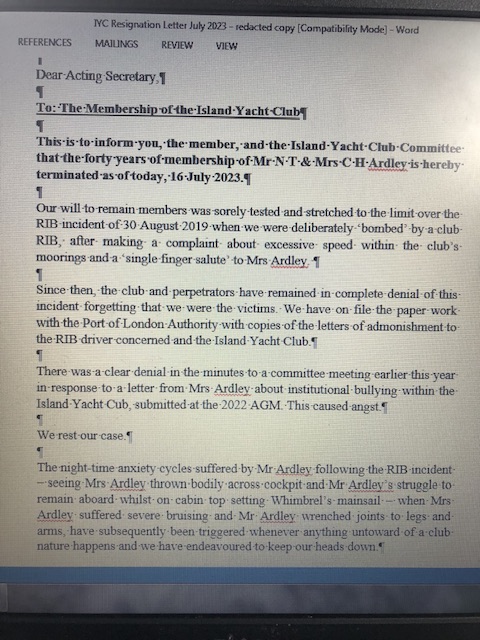
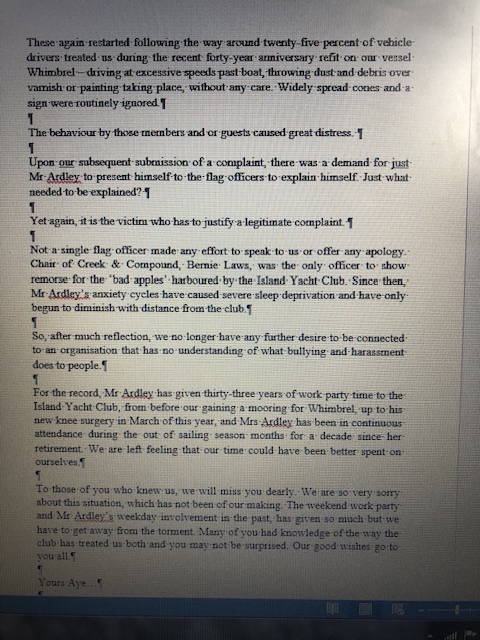
So, below is our letter. We don’t care who reads it: the hierarchy of the Island Yacht Club do not deserve any reserve…
First page of my open letter to members, which….Second page of letter…
A third page was directly to the Island Yacht Club committee and remains private.
So, farewell friends.
Some of you we will see afloat from time to time, others, well, we will both miss you. You gave us so much whilst members of a job, project, or just nattering over a piece of cake at tea time…
Thank you to all who we have been honoured to work with.
But seriously, this is a boat that had everything going for her. She is in a bit of a state now, but could be refurbished with a little time and effort.
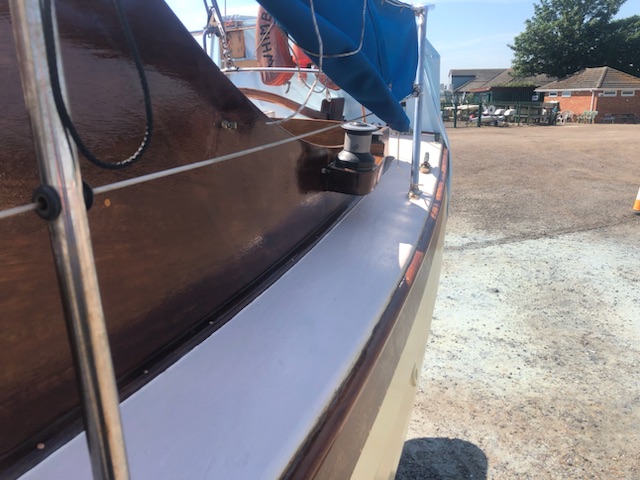
In just four weeks my mate and I completed a 40 year refurbishment to Whimbrel’s brightwork. All it takes is applied time and effort. Taking back to bare is something not done before, boy has it been a worthwhile exercise.
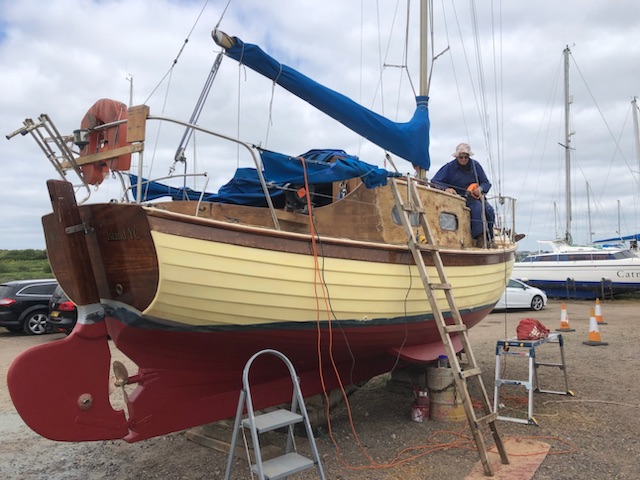
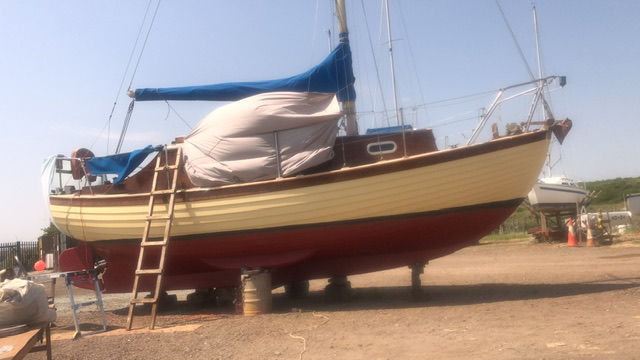
Our Finesse 24 Whimbrel built in 1983-4 ready for the water after four weeks ashore to strip varnish to bare and build requisite number of new coats. Hull was dished and overcoated, as well as bottom doing, of course..
Last year we’d decided that it was time to strip off all the boat’s varnished surfaces to bare wood and start again.
The last time she’d been ‘naked’ in these areas was prior to her first coats in the autumn of 1983!
Whimbrel’s varnished areas include the rudder, transom, sheer strakes and entire cabin sides.
During last autumn a ‘spanner’ was thrown into the plans. I was booked into a hospital for a new right knee – I went in a week early on our 45th wedding anniversary on 27th March!
The Mate pressure washing ‘her’ bottom…
After my knee operation, I worked hard at the physio exercises and was walking up to a 1km at the end of first week.
Out walking…
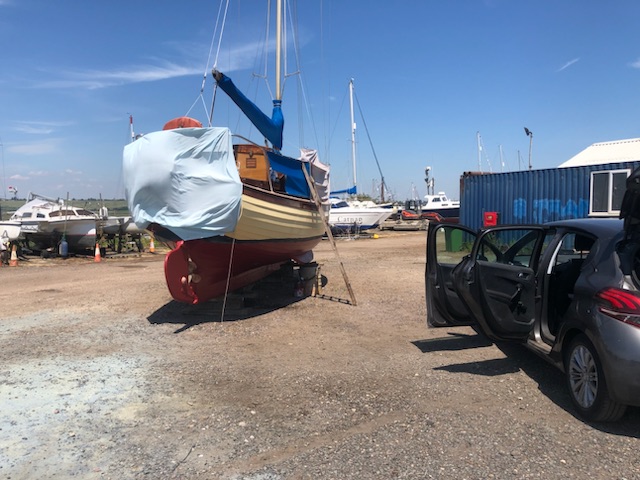
Whimbrel’s lift was duly booked for Saturday 20th May.
Christobel applying antifouling…
Before lift out I was able to enjoy two sessions sailing with The Boy and the Mate aboard, which was a great tonic.
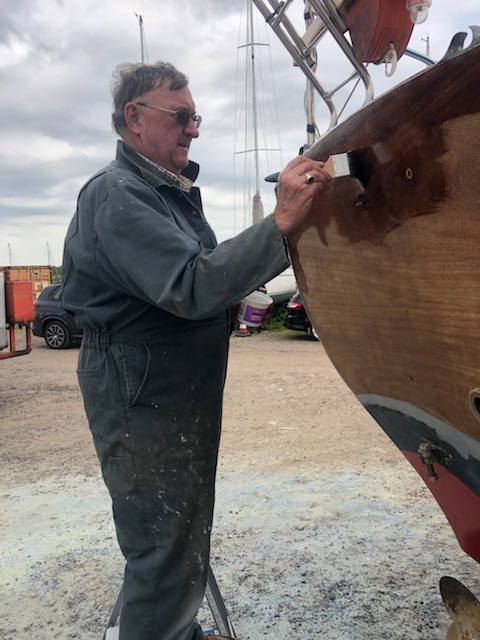
And here, stripping varnish off the transom.
It wasn’t long before the first fresh coats were being applied, starting with the transom and then the rudder.
Transom – first coat…
I had chosen to use Le Tonkinois No.1 which is a semi man made concoction which I had winessed on several craft.
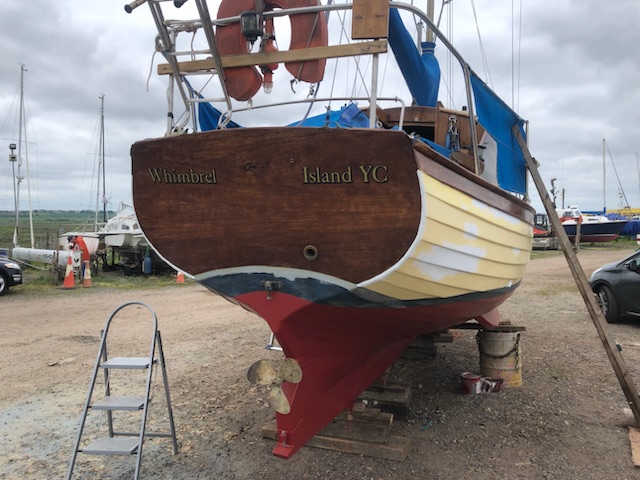
Transom completed with name buried under the last of two of nine coats.
The rudder also was given nine coats!
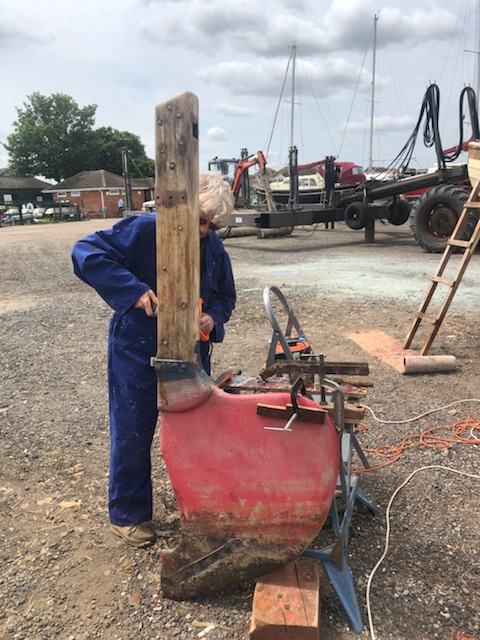
Rudder stripping in hand.
A glitch occurred during the second week- my GP had decided I needed an additional blood pressure control tablet. They made me exceedingly sick. I lost appetite for any food, was nauseas and had blinding head aches, finally I couldn’t eat at all!
I took myself off and got an appointment. A sensible clinical pharmacist agreed. I was retching by then and had lost over a stone in two weeks…
I saw the chap after a week and he confirmed that I did not need the new tablets – it took that time for near normality to return!
The Queen of strippers nears the finish line. Note rudder refitted. I got a fellow club member to make up two new fitted pintles which has taken out ‘rudder knock’…
As areas were stripped and sanded, varnish coating began. Pencil tick list to eight for each!
The port side ready for window fitting.
In between times, the hull was prepared. An all over sand, repairs as required going through the use of primer, undercoats and stripe coating with top coat. Leaving the final coat for when ready.
The bilge gets chicken pox!
Having completed stripping for England and sanding for the World the mate morphed into Bilge Babe…
The Bilge Babe strikes off another milestone…
During the whole time ashore we had to cope with a generally easterly wind pattern and with the very dry conditions the club’s yard was a veritable dust bowl.
The majority of drivers passing us acknowledged this and passed by slowly, however, a significant minority gaily traversed the yard at a speed well above the posted 5 mph. I had to remonstrate with some.
After a ‘bad day’ we got hold of a collection of cones to screen the boat and made up a big sign saying ‘Slow’…
The cones and signs had no effect on many of the minority! One driver actually sped up followed by a white van. I shouted in frustration as I slammed brush down to fetch white spirit and cloths… a lady came back and apologised…
Several times lengths of varnish had to be wiped and redone – when going sheer strakes mainly. It was frustrating and annoying.
While away sailing for a week after the boat was launched and upon reflection, because we have never had a comfortable time with the club’s hierarchy, I made a formal complaint. It took several emails to get an acknowledgement … typically showing the club’s institutional attitude.
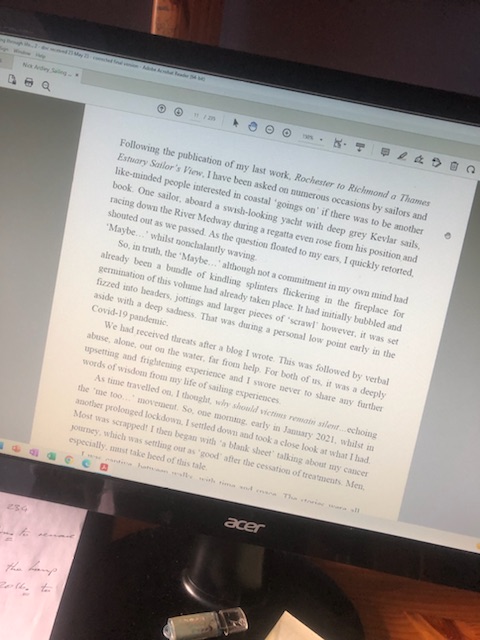
Another ‘bug-bear’ was the arrival of an email from my publisher with the final corrected book draft.
The next stage is a QA check and conversion to print files, when I will see the whole book together with covers…
Tired as I was, the job had to be done. I was still sick too, but checking against corrections had been the easiest of this publisher’s processes… Hey Ho!
A snippet of the front piece…
My birthday – 68th – came round and because we could not be away sailing aboard Whimbrel, Christobel had organised a wonderful day aboard the spritsail barge Hydrogen, following the Blackwater & Smack matches.
It was a wonderfully relaxing day.
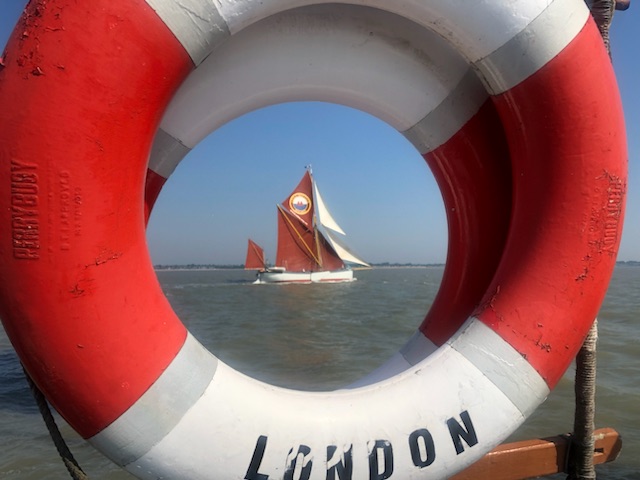
The Blue Mermaid captured through a life buoy…
The ‘holiday’ over, it was back to work. Even on my actual birthday day, we went down early to re-coat all areas needing them!
The rest of the day was then ours to enjoy together…
Topsides painted and boot top cut in.
With time moving on, I judged we would be ready for a launching this coming weekend and duly booked with the head of our club’s compound and moorings team.
The side deck painting bears completion.
All varnishing having been completed, the side and poop decks were prepared, meanwhile Christobel had graduated to supreme chief cleaner, working her way through the boat…
Today, we jointly finished our respective tasks!
The cabin returns to normality!
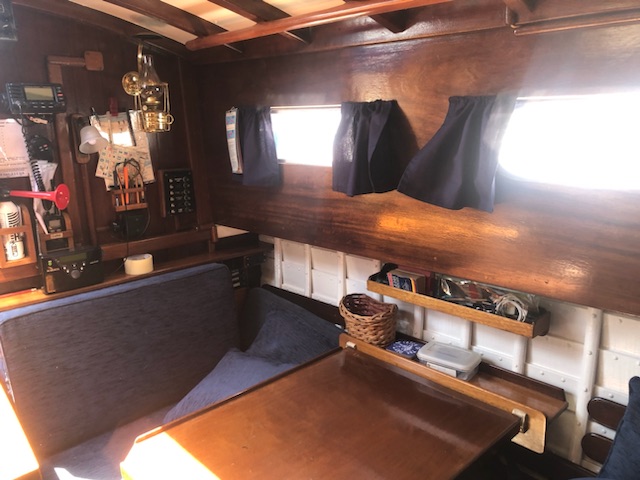
The inside has had various areas of varnish redone. The loo compartment had been completed the week before my knee op … and Christobel’s home-sewn curtains are a treat, matching the berth and cushion colour beautifully!
Ready for the water…
So, on Saturday 17th June, just four calendar weeks after lift out, Whimbrel looked as good as the day she left Alan & Shirley Platt’s yard in the Daws Heath woodland paradise that surrounds our home on the northern edge of Hadleigh.
I am sure they and the family would be proud.
Forty years on from ordering Whimbrel, we are exceptionally happy…
That was early in my knee replacement rehabilitation. Having since reached the boat, been for a sail even and completed a job of tensioning the engine belts, my mate in escort mode, carted all our life jackets and charts ashore for checking/correcting.
Upon perusing the Imray web site I soon discovered that my set of charts would need to be replaced, as edition was no longer supported. There were changes that I considered important.
I initially contacted a chandler regularly used – they failed to respond to calls and messages … great!
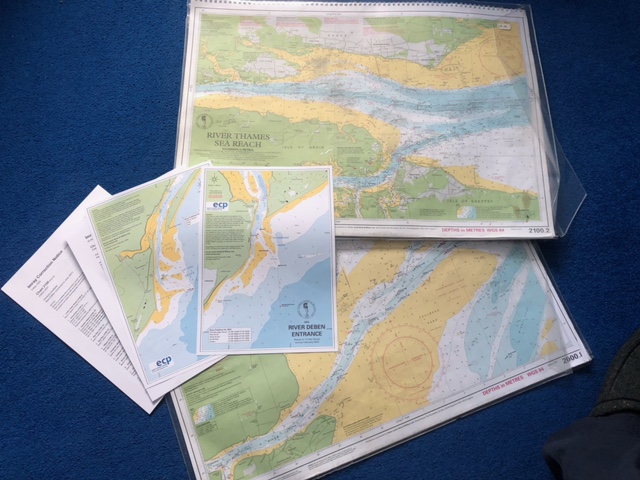
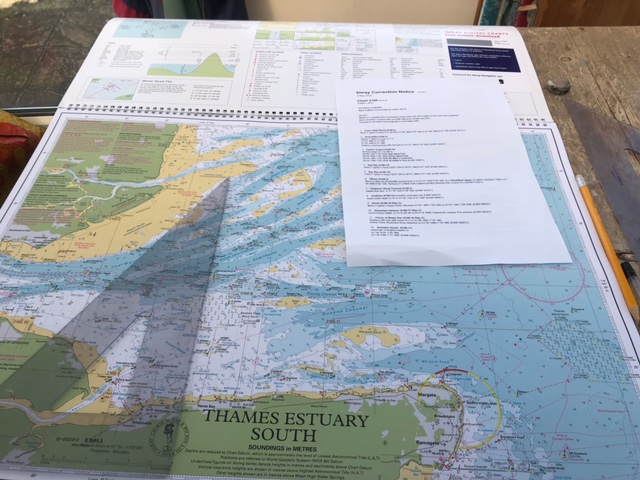
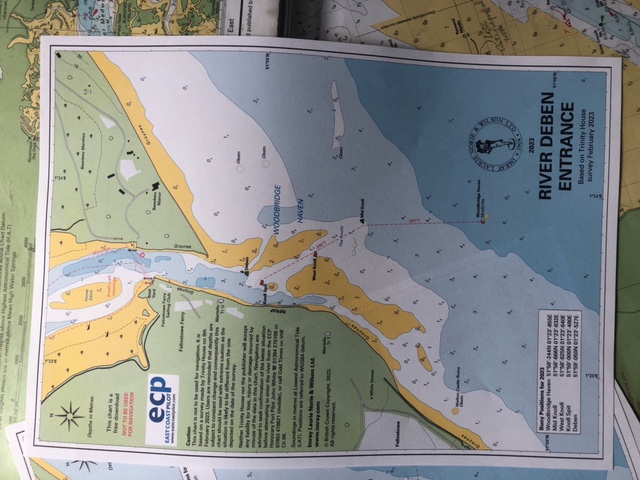
Old sets of chart (not very old!) with corrections to new editions and Deben/Alde entrance chartlets.
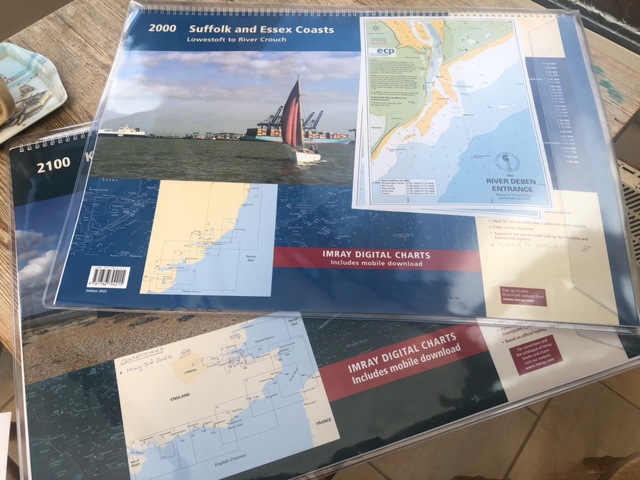
Series 2000 and 2100 were duly ordered direct from Imray. They were delivered one hour before I passed the front door of the chandlery the following day in Maldon!
They were probably cheaper than those from a chandlers, and nil postage was charged. Thank you Imray.
New chart packs!
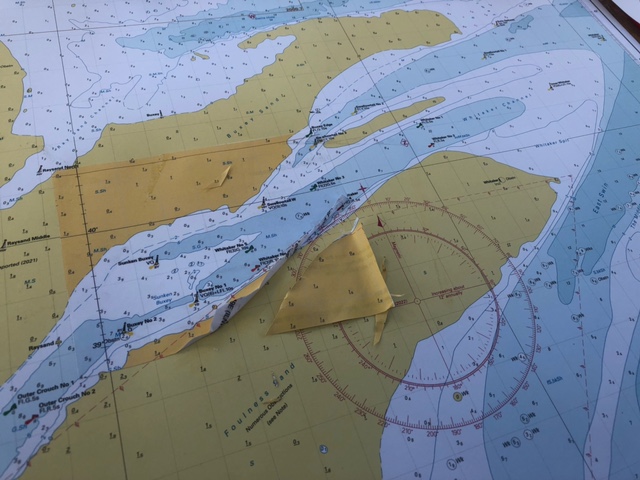
Then, of course, there was the little matter of correcting those ‘new’ charts.
Corrections in hand…There was a patch correction for the R. Crouch – note the chunk I had to cut away to avoid covering that all important compass rose! New R. Deben entrance!
One of the major changes to have taken place over the winter is the route of the River Deben’s access to and from the sea. For a number of years it has been close in and then a long run along the shingle banks in a NNE direction, turning northwards further in.
Now, it has burst through a swatch that has been growing in prominence south of Bawdsey land point. I discussed this with a brother and a cousin crewing last year as the cousin took Whimbrel into the river for the very first time. Not sure if the helm took it all in, but I was more than relaxed about his competence, watched by my brother…
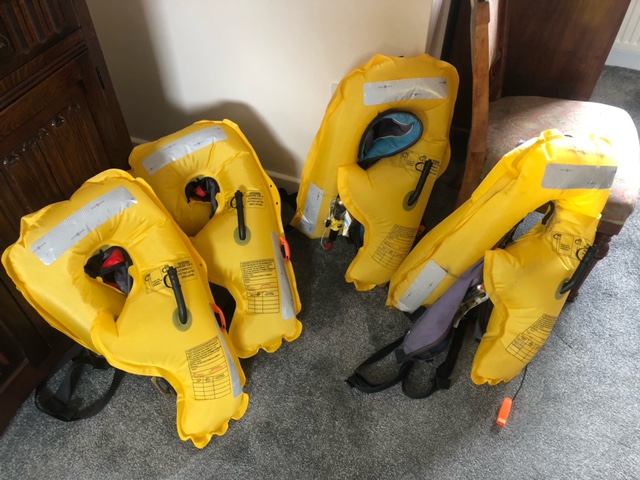
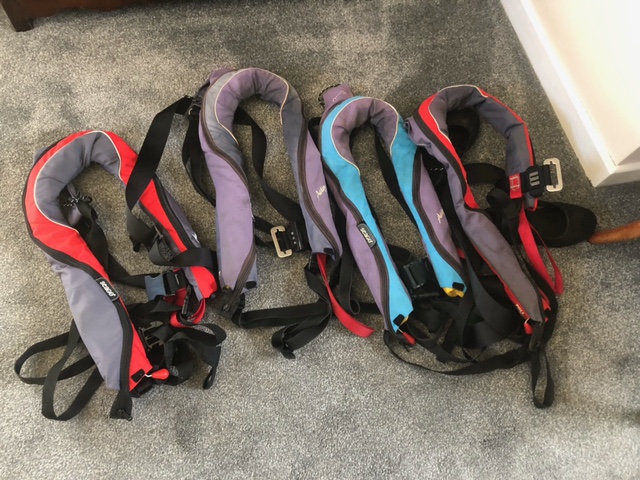
So, with the charts corrected and out of the way, the life jackets were opened out and inspected. Dates and condition of firing units and gas cylinders, creases etc, etc, carried out before all were inflated.
Inflated jackets!Cleaned and repacked.
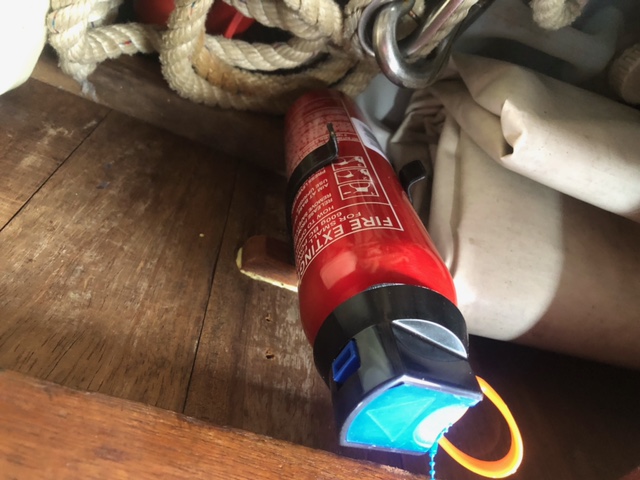
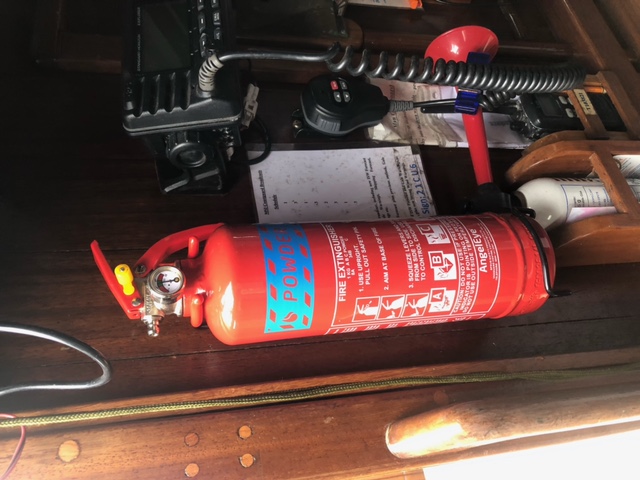
Then there were the fire extinguishers (including the one at the home galley!) to be changed for newly purchased units!
Rarely are these extinguishers renewed where they can be clipped to the brackets already fitted. With my cockpit unit, I fitted a ‘universal’ bracket some time ago: provided diameter is similar, it is a straight swop.
Unit kept in a cockpit locker.
This wasn’t the case in the cabin at a unit located by the companionway entrance. One of the bracket screw holes was different – making a hole filling, sanding and a varnish touch-up before job completion!
Companionway entrance unit.
I fired off a couple of the old ones – both worked!
All of these jobs are necessary, whether replacement or inspections, during a boat’s annual ‘servicing’ – they are not onerous and give peace of mind.
I take various family members and friends sailing aboard Whimbrel so I feel such things should not be put off: it is a responsibility and a duty of care…
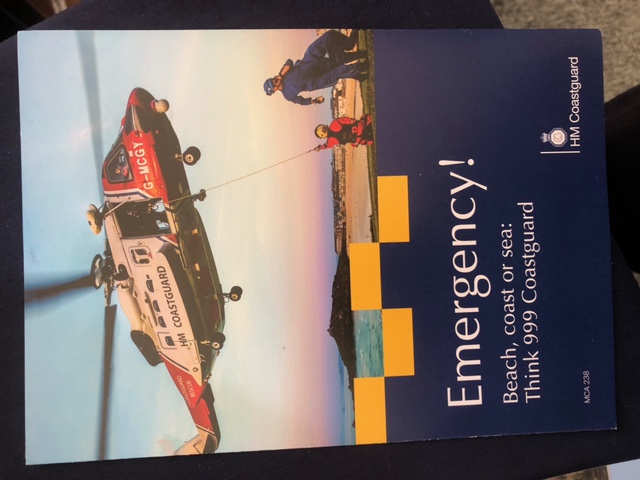
Not many people know much about the history of the Coastguard. It was formed in 1822 by the amalgamation of three services set up to prevent smuggling. Often the individual services were acting against one another in effect assisting the smuggling gangs.
As boaters, we are all mostly aware of the presence of the Coastguard at various times, listening to the forecasts, perhaps seeing their cutters in the distance and the rather smaller RIB type vessels closer up. Marinas are often used for mooring…
Since the 1820 professionalisation the service has been saving lives along the UK coast and at sea, as well as coordinating rescues for those in distress in international waters.
With the advent of the telephone a 999 emergency system came into being in 1937. A caller had only to call the operator and ask for whatever service needed or just state the emergency and operator directed…
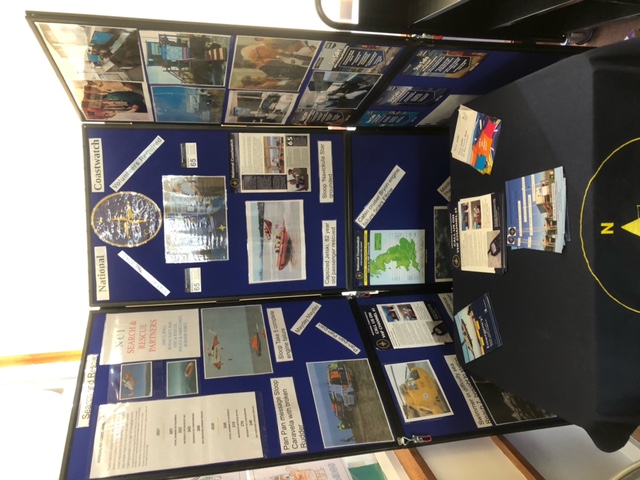
From a display in my local library, Hadleigh, Essex.
However, public knowledge has been on the wain so back in 2018 a campaign was launched, based around a seaside cartoon type postcard couple…
Item from as far back as 2018 regarding a campaign using old techniques…
Clearly, the lack of awareness has continued to spiral downwards. It has been said that around 50% of people living in the UK don not understand this system or service, or even have any knowledge of it.
For seafarers this is a damning as it could mean literally life or death…
Now, I have been one who ’caused’ a call to be made, but it was made by a person who didn’t understand what we were doing. I had sailed Whimbrel onto a bank. It being shallow, jumped overboard to push boat’s bow round – I succeeded, but the tide still left us high and dry. A lady ashore (On Mistley Quay) called the Police/Coastguard – a life boat pitched up…
Told about in an article published by Yachting Monthly and retold in full in my forthcoming new book…
We were not in any danger.
The coastguard duty officer in discussion with my good mate (a local sailor himself and professed to grounding more than once) gave some excellent advice: If you go aground and are not in danger, let the Coastguard know so that if reports come in they can stop unwanted dispatch of emergency services…
They had this conversation at around 0100 the following morning as we reported floating and clearing away…
But the 50% figure has caused and a new website has been launched to promote awareness of the 999 service.
When the Maritime and Coastguard Agency slimmed down its shore stations in a fit of modernisation with a centralised centre ‘somewhere in Hampshire’ from where experts , we are assured, will know a dinky little creek off a tidal waterway anywhere … many of the old CG Stations were taken over by an organisation called the National Coastwatch Institution. Many ex MCA staff transferred upon retirement – it is a volunteer organisation.
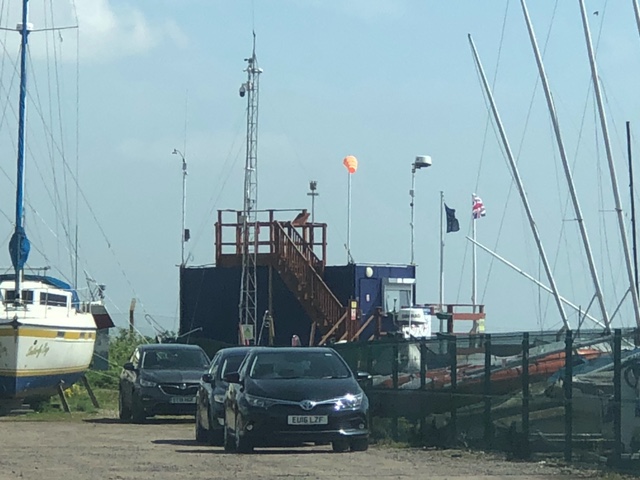
A branch opened at Holehaven – a singularly dire choice where other than big ships travelling by, little happened! They talked there way into hiring a chunk of the Island Yacht Club hardstanding, out on its south-eastern corner. A much more appropriate spot to gaze over the areas used by the general public.
The National Coastwatch look out at the Island YC.
The display I saw at my local library appears to be in conjunction with the new MCA initiative.
The Hadleigh library display.
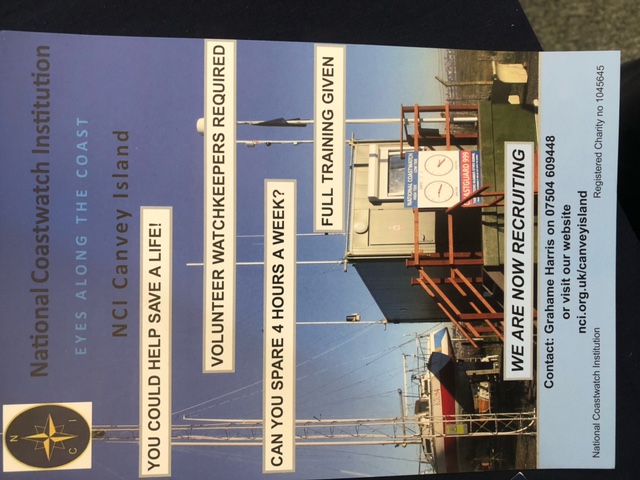
Like may organisations, the National Coastwatch are after your sevices!
So, if interested, look them up in your area and there may well be a local station.
Your ‘country’s coastline’ needs you!
Now this leads me onto the helping hand that has, by tradition, been freely given by one seafarer to another, for generations – the lore of the sea…
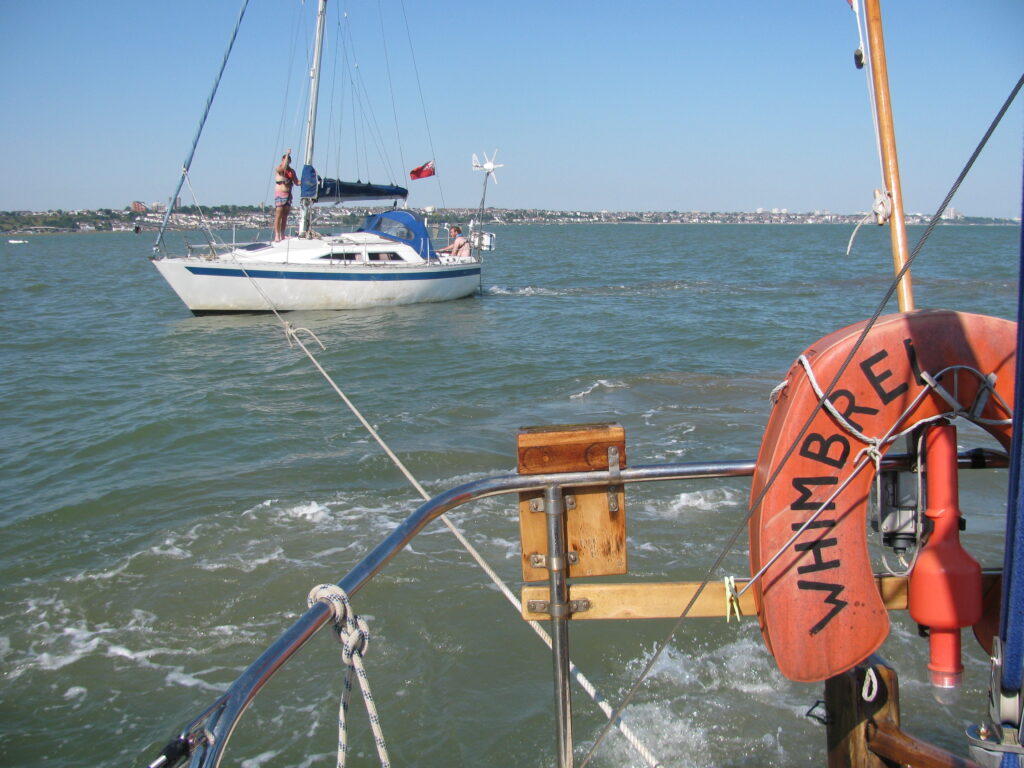
Whimbrel attempting to tow a vessel from the Benfleet YC from a mud bank in the Ray Channel in 2020. We failed to shift her!I advised the boat’s crew to appraise the RNLI – we had already called the Port of London VTS. The RNLI later took the crew ashore. The boat sat on the bank for a couple of months while the boat’s club did nothing.
The above attempt to tow a ‘stricken’ vessel was made in 2020 during the Covid spring, when sailing was granted. The tow rope was my quickly joined mooring warps – dropped by our club workboat when they arrived to try and help. I never got the warps back from the Benfleet YC boat – it is told about in forthcoming book!
Sailing alone on a fine day with a good sailing breeze I was gazing at a little cabin cruiser going along when her mast folded at the hounds and collapsed.
There were many powered craft zipping about and a fair spread of sailing vessels. Other than myself, NOT a single one took any notice!
I sailed over to ask if they were okay and if their prop was clear. With their assurances, I left them puttering back towards leigh – all told about in my forthcoming book.
A few weeks later, I passed by and had a closed look. Looks like a typical splintered wooden spar!
Now, recently, I heard, a vessel from my own club had run aground on a mud bank in Hadleigh Ray. They were returning to the Island YC after being ashore elsewhere. The bank, Bird Island, sits in the Ray Channel abreast of Two Tree Island and Marks Marsh Island.
I named it years ago and it was taken up be a chap at the Benfleet YC who surveyed the waterway from Benfleet YC to the Leigh Buoy – see BYC web site. I also produced a chartlet years beforehand marking where the buoys sit in relation to creek banks/gut way. It remains on the Island YC web site.
I have been monitoring the growth of this island fro a couple of decades and wrote to the PLA about it. The PLA denied its existence, but would look when next survey carried out!
Bird Island – Ray Channel abreast of Two Tree Island. Note: clump of cord grass to rhs.
I have sailed regularly up towards the BYC for decades and eventually ‘mapped’ the route from the seawall. There is a dished and fairly deep swatch to the north of Bird Island and Two Tree Island which is wide enough to tack through. The deeper and narrow channel runs to the south with hard steep banks.
The boat that grounded, fortunately ‘fell’ the right way, otherwise she’d likely to have suffered sinkage. The crew were taken off by the RNLI. A boat from the Island YC went out and plucked her off that night. Self-help at work.
Self-help does not appear to be the norm now though: I heard from a sailing friend about his problems with a folding propeller – leaving his mooring he found to his horror that the prop was thrashing about beneath the water not doing a lot!
‘I was drifting sideways up the creek…’ he said, ‘and called to people ashore at the Island to fetch a dinghy…’ The blokes stood and watched, doing nothing…
It was a passing kayaker who turned and sped up-stream to fetch out the boatyard boatman … my friend was taken in hand, lifted, sticky prop freed and greased and sent back on his way. Probably cost him, but help could have come from closer to home.
But I was dumbfounded by the lack of help from my own club members.
Shame on them!
It wasn’t a RNLI or Coastguard situation, just a simple within creek incident that was ignored by ignorance and a ‘don’t care attitude’ which I find extremely sad.
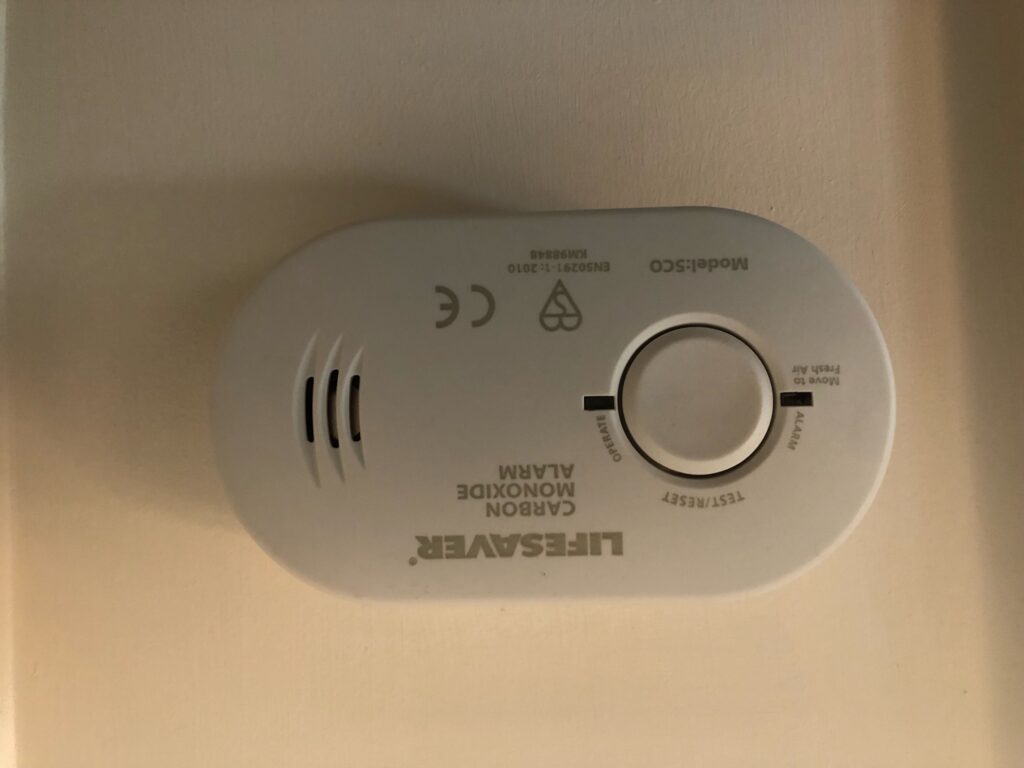
Deaths due to carbon monoxide (CO) poisoning is something to be feared, either in the home, a rented holiday pad, caravan, motorhome or aboard one’s treasured little ship, which is this post’s perspective.
A typical carbon monoxide (CO) monitoring alarm unit.
Many years ago, when Whimbrel was new, I retrofitted ‘gas’ alarms beneath the drinks rack seen in the cabin view below. They were rather expensive marine units that were wired into the boat’s electrical system. They both failed – twice – before I went looking for different units.
In time I found that the best source for such items was the caravan and motorhome world. For CO units, the world wide web has a plethora of battery operated units that have a designed life-span of around seven years. An alarm sounds when battery is flat – besides, a lack of the tell-tale winking light is a damned good sign!
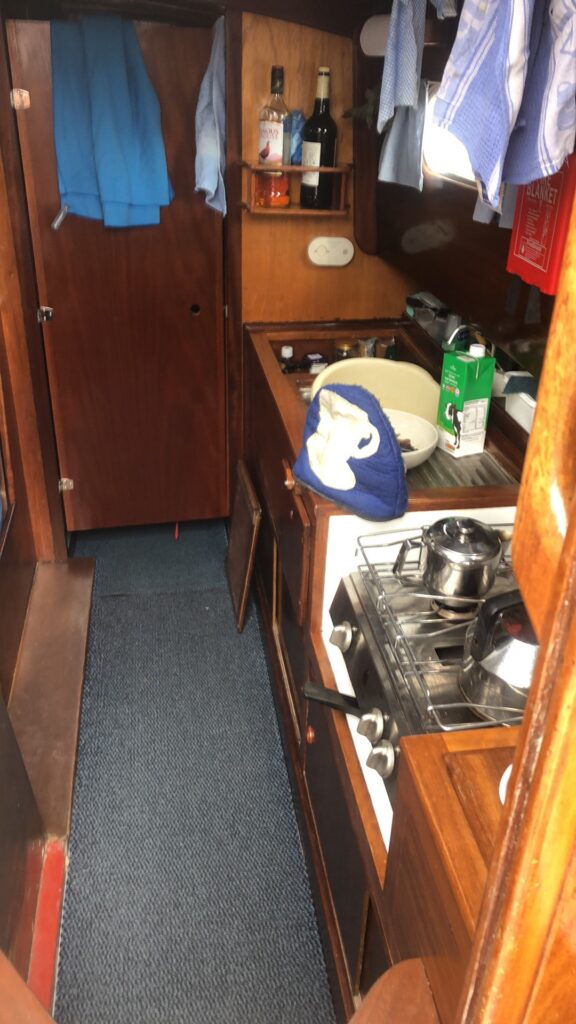
Looking into Whimbrel’s main cabin – note CO alarm on bulkhead under bottle rack.
I have a gas alarm fitted low down under the step into the cockpit to tell of any butane/propane gas leakage. Incidentally, we have found that both will operate under ‘test’ should the mate’s underarm spray reach a sensor!
I was aghast to read in a marine industry editorial about the deaths of two boating folk in a Southampton Marina earlier this year. They were on a winter weekend. They had run the engine, a petrol unit, to charge batteries and get everything in order for a day afloat the next day.
However, during the evening/night, bothe passed away…
The report came up with the probable reason and, the fact that no alarm to monito carbon monoxide had been fitted.
The number of deaths investigated by the Marine Accident Investigation Branch (MAIB) of the Maritime & Coastguard Agency (MCA) has rapidly risen giving cause for concern.
On inland waterways craft, they are a necessity for a licence…
The most tragic side of this is the fact that a unit can be obtained online for a pittance – £15 – buys a unit lasting seven years and operates independently of the boats power system.
Be warned, if you do not have a carbon monoxide alarm, fit one. Funeral costs a darned sight more than the fifteen quid for a little box of electronics…
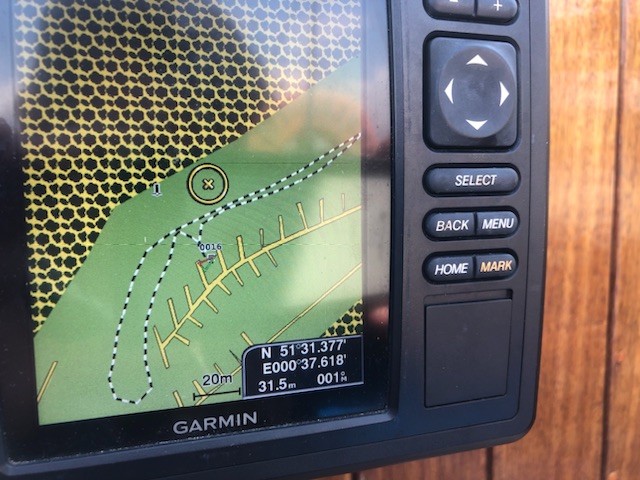
So, I thought, it’s about time the satnav carried aboard Whimbrel was updated while I had the time.
The unit, a Garmin GPS Map 557, was purchased back in 2014 and it has served alongside the traditional charts carried aboard, kept updated annually (Which reminds me!) for I have never relied upon the electronic unit alone.
Last season, I finally decided that the update was necessary for there had been a number of changes which were of importance, even though I use it for cockpit observation on the whole.
I had the unit updated a few years back now some while after some major buoy position changes made in the Swin Channel, including a movement of the Maplin Sands firing range boundary eastwards. That was a waste of money!
Last summer, sailing with my youngest brother, we strayed over the line. We were steering for a green ‘dot’ away beyond the bow. A fast launch was seen astern. It was clear that it was curving our way.
The vessel morphed into the Firing Range Patrol!
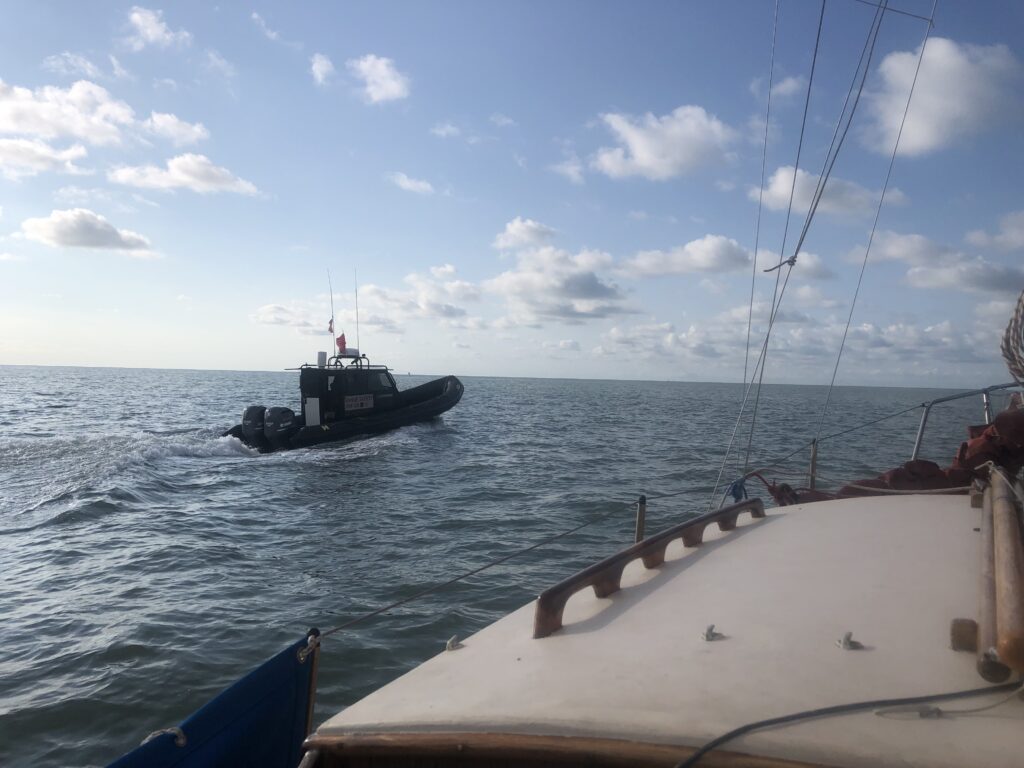
Range Patrol ‘upsetting’ the quiet of our morning!
‘Are you aware yo are fifty metres inside the range…’ a call floated across the gap.
‘Well yes..’ I said, adding, ‘I am on course for the Maplin Middle…’
‘You know you need to keep outside the Maplin Bell…’ the caller said.
My crew and I looked at one another. ‘Been sailing this passage for over forty years,’ I called, grinning, and adding, ‘so, yes!’
I got a wave … then the launch careered away…
While laid up nursing my new knee I have settled to dealing with all sorts. One being this update.
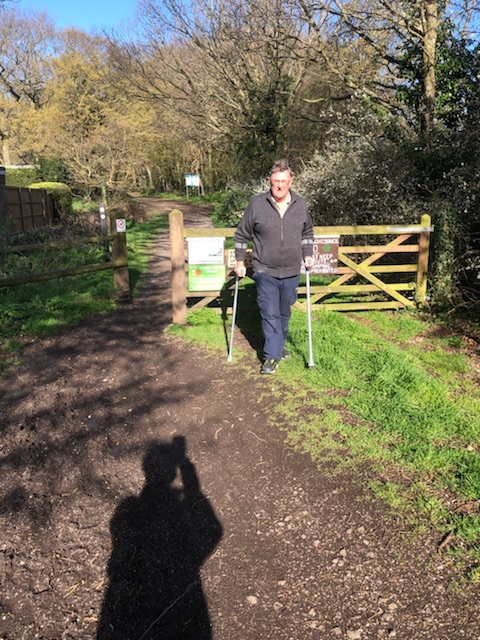
Out on a walking exercise…
Easy, one would think. NO!
I trawled around and kept finding that the unit had been discontinued and was no longer supported. Garmin searches kept directing me to the ‘American’ web site.
I remembered I had a Garmin log on, and surprisingly I got on after many years of non use. Again, I saw the ‘557’ was no longer available.
All very strange as units were clearly still on sale!
I eventually alighted on a company based in Peterborough, Active GPS, which seemed to have what was required.
An email discussion with James at customer services confirmed that the 2022 (current) update was available and he gave me details of Garmin UK based in Southampton, to check on the quality level of the update.
Email: marinesupport.europe@garmin.com
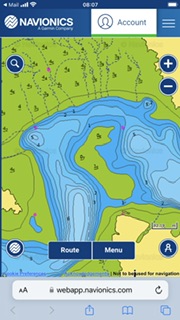
An email produced a telephone number and a very nice chap, Rob, confirmed that all chart corrections up to when sd cards were updated in 2022 were included. With that came a navionics link to the charts loaded onto the new card.
Section showing Sharfleet off Stangate Creek. I straight away noticed the clear loss of a ‘bay’ along the north mud edge.
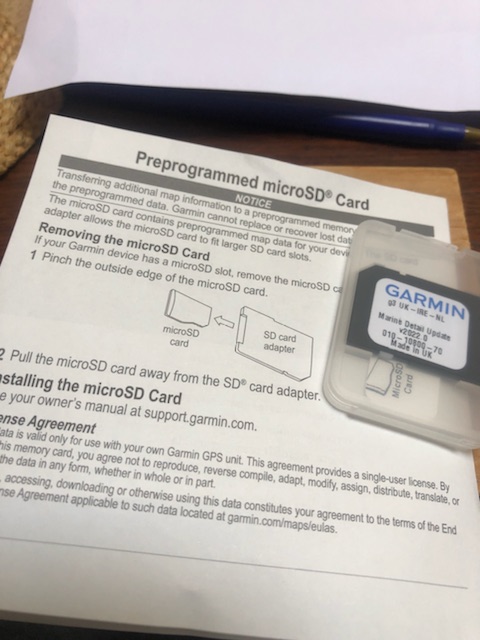
I ordered a new card from the very helpful Peterborough firm. Within a couple of days it duly arrived.
Garmin sd update card.
This last Saturday was a fine day with an early afternoon tide allowing me to comfortably board Whimbrel with my good mate in attendance.
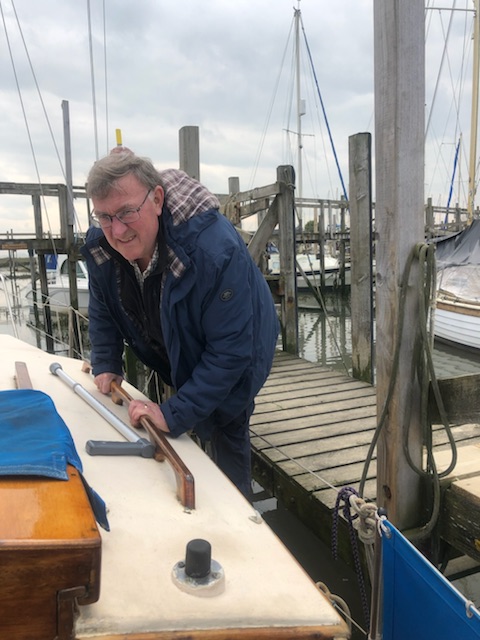
Aboard… Note down to a single walking stick by twenty days after op!
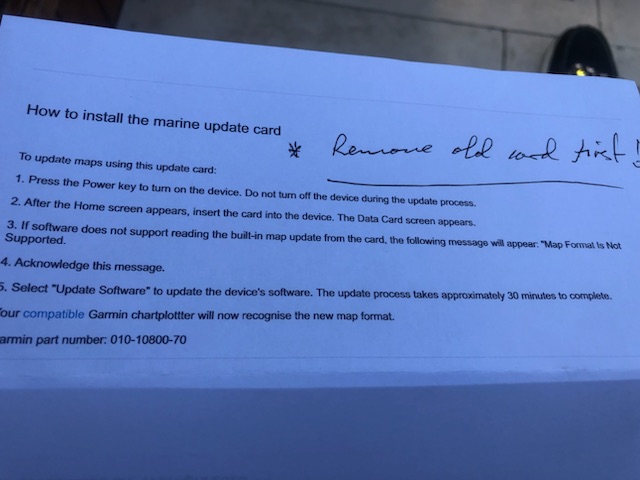
The update instructions are short and sweet. The sheet stated it would take up to thirty minutes … in actuality, it was all done in less than ten.
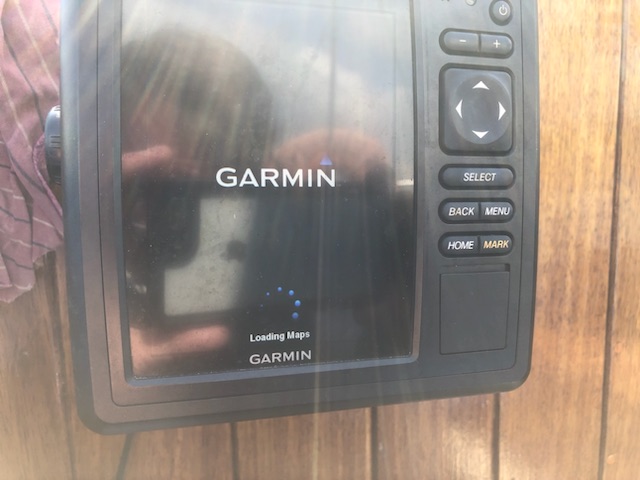
SD Card update instructions.Doing its stuff!
While the machine whirred internally, I was able to sit back and enjoy the ambiance of being afloat on the dear old girl…
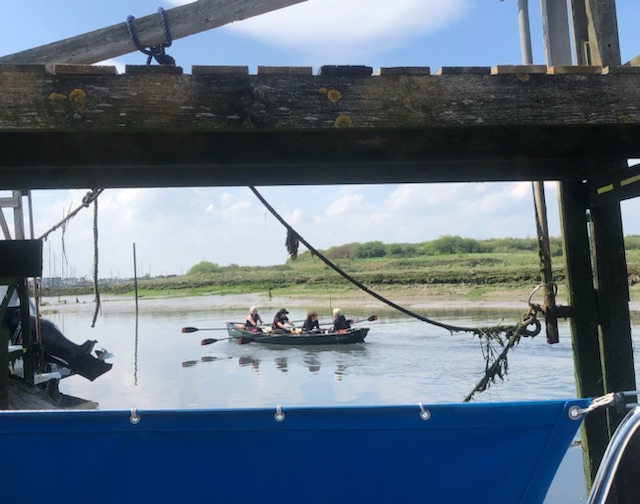
Three separate four-oared skiffs rowed past, bound, I assume for the Island YC, something I know they do from time to time. There are three rowing clubs in the Lower Thames. I didn’t see which.
The third of the three skiffs framed by boat and my mooring jetty.
I was handed a mug of coffee and sandwiches as the GPS screen went to start up – all done.
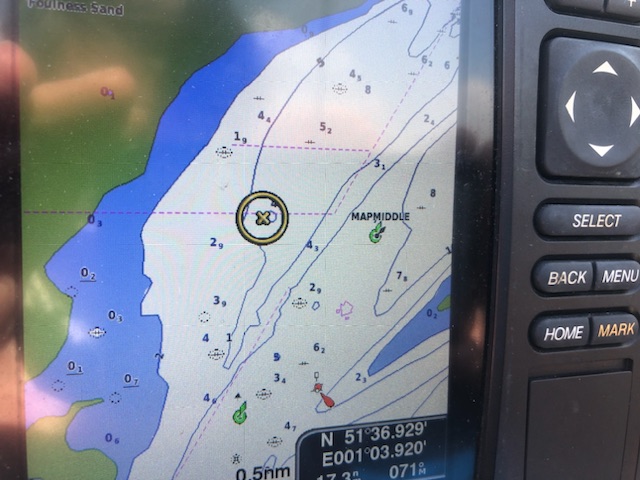
A few clicks, while sipping and munching and I was checking the Swin Channel…
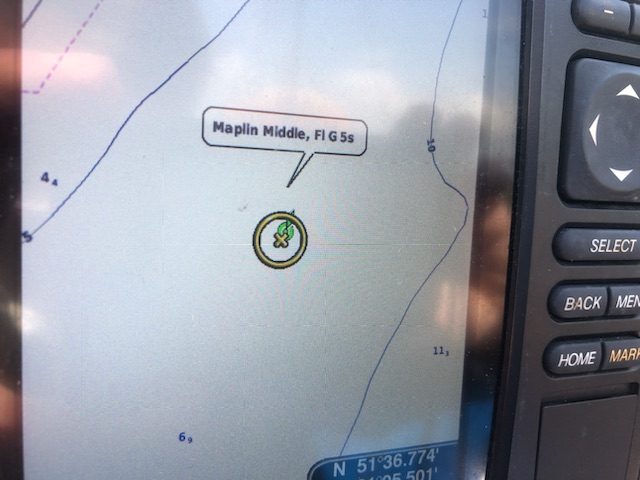
Swin around the Mapli Middle – note black mark – this was marked by a New Zealander who was crewing with me a few years back, as we passed closely. Bang on!
A bouy marked up years ago was bang on the current charted position. I deleted the ‘mark’ for it is no longer relevant. There are others to delete as time progresses.
Buoy with ‘mark’ deleted.
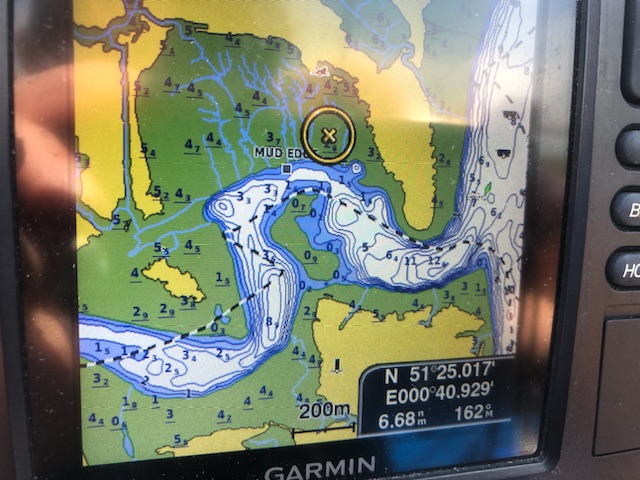
I then went to an area where I knew there had been a pretty drastic change to the position of the low tide mud edge over the past decade – Sharfleet Creek, which is off Stangate Creek on the River Medway system.
Note ‘mark’ – ‘Mud Edge’…
Last summer, after a ‘brush’ with the mud in Sharfleet, I marked the edge while enjoying a coffee and waiting for the tide to lift us…
It is clearly as good as bang on!
Lastly, upon returning to current position, the Garmin actually showed me to be sitting in the correct mooring (ignoring orientation!)
Home mooring!
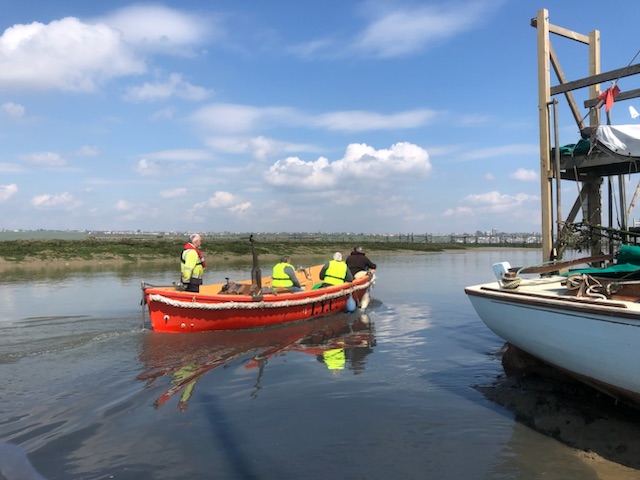
One of my club’s work boats on the way to a task on the fine afternoon.
The ‘little’ work boat.
So, now all there is to do is get out there and use the darn thing. When? Well, I’m looking to get afloat for a sail at six weeks post op, on a quiet day…
My sincere thanks to James at Active GPS in Peterborough and to Rob at Garmin UK in Southampton.
It was just so great to get such positive helpful advice. Priceless. Bless you both.
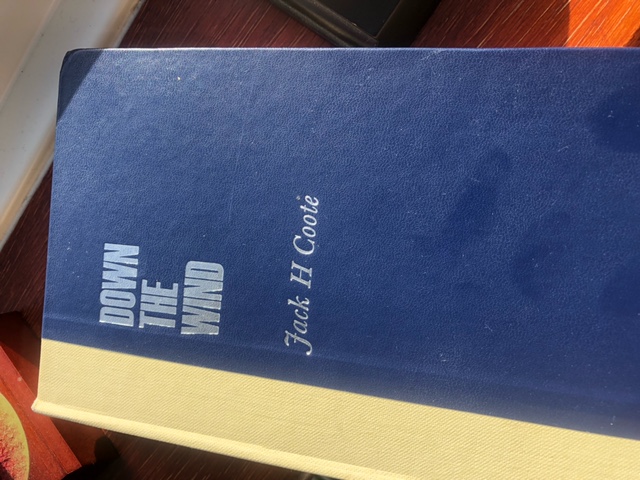
Down the Wind appeared from beneath the Christmas tree some months back – kind of Father Christmas, I thought at the time. So, I took it into hospital with me to give sailing succour when disabled with a new knee!
Have I read it before? Not sure: couldn’t find a copy on my well stocked shelves, but may have done a very long time ago.
Down the Wind was published by Hodder & Stoughton in 1966, and is a compilation of articles from varying magazines from the obscure club type to the public and excerpts from books dating back to the germination years of sail cruising with the likes of R T McMullen, Claud Worth, Sir Alker Tripp amongst others. Many pieces are by authors from club annuals, such as the Royal Cruising Club and the Clyde Cruising Club etc.
The book begins with excerpts from sailing fiction. Few will know that the Hammond Innes yarn, The Mary Deare, was spawned from an encounter at sea in real life… whilst most sailors of a broad reading spectrum will know, We Didn’t mean to go to Sea, by the inimitable story teller, Arthur Ransome – the excerpt covers the ‘realisation’ of their situation after losing the anchor and being swept out of Harwich Harbour…
There are two sections of yachts in action pictures – mostly in a bit of a blow! A few are of the tranquil ‘normal’ type…
The cover – did it once have a dust jacket?
The first thing that is clear is that it is a ‘man’ book for women are barely mentioned. There is the odd piece where a woman features, apart from the couple written by women. Racing off-shore features heavily, in conditions in which the majority would avoid or not contemplate to cruise in.
A touching piece comes at the end of an excerpt from, A White Boat from England, pub 1951, by George Millar. he and his wife depart in the hours before dawn, quietly down the Lymington River (before the advent of plastic and massed marinas) bound across channel to France. It was a good passage but with rising wind they slipped into the Pointrieux River to anchor in seclusion above a village.
After discussing differing passages, good a anchorage, warmth and comfort below, the author says, ‘It is to enhance such contrasts with the sea and the wind that the truly wise yachtsman sails in the company of a beautiful or intelligent woman- it may be his wife.’
Setting aside a tendency towards misogynism, indeed. It is the reason I have always tried to ensure the cruising comfort of my mate, not overtaxing her, that I have a dear mate still sailing with me.
How many wives/partners actually sail? Not many…
Women writers or otherwise don’t feature greatly apart from two writers in pieces from from a novel by E Arnot Robinson, The Regatta, a great yarn based around Pin Mill on the River Orwell in Suffolk.
The other, Felicity Ann in New York by Ann Davison ‘laughing’ about chauvinistic attitudes of men discussing her boat and whether or not it could be sailed across the Atlantic and certainly not with the author, a woman, who had…
Just once are children mentioned – in Dawn at Crinan by ‘TEW’ where the author has spent a lazy half-hour watching the dawn while his crew get up, commenting on the chattering excitement of two young boys with their father heading towards the anchorage and their dinghy…
Then, as he re-boarded his boat with the waft of bacon emanating from the hatch, he pauses to watch as two, ‘little girls exploded out of the fore-hatch of a boat lying three out astern of us, shouting with laughter and calling to each other…’ they scrambled ashore and raced to the sea lock.
A scattering of line sketches throughout by artist Paul Sharp livens the book.
An excerpt ‘Fitting Out‘ from, A Capful of Wind, by Aubrey de Selincourt, 1948 struck a chord. An owner is fitting out with a friend who is clearly of more robust stature and probably younger. He discusses fitting out done by owners and those tasks left to a yard. A paragraph about antifouling too…
‘Now scrubbing and antifouling a yachts bottom … is hard work. It has to be done against time, to get the paint on before the tide is up again.. The composition works extremely stiff, and certain parts of the boat’s bottom are difficult to reach. The work gives one a crick in the neck, an aching back and a numb wrist.’
I bless my dear mate: she has for so long done most of ours, leaving me to cut in and do boot top…
Most owners thee days antifoul in the boat or club’s yard, but many still use a slipway, or even the beach.
So, did I enjoy the read. Yes, I did.
Like may books in this genre, dating back to over a hundred years ago, and less, the language can be ‘old fashioned’ and, don’t be surprised to find sexism or views of a misogynistic tendency. We’re ‘better’ people now, hopefully, in inclusivity…
If you have a copy lurking on your book shelf, give it another airing. If never read, well, you’re missing out on a myriad of sailing mignons, which may set you off on finding the books from which the pieces have been taken…
The Calor Saga has developed a little, but don’t become euphoric: it remains bad news.
I began to ‘worry’ about this nearly two years ago now and contacted the Royal Yachting Association (waste of space) and the marine leisure press – only one outlet initially interested the story – and eventually decided I had but one choice.
I looked at diesel cookers – problematic in fitting of a flu, and briefly considered old fashioned paraffin and even methylated spirit – sorry, but these on a boat used for long periods of the summer are not suitable.
So, a Facebook post from a sailing friend popped up with news from the Boat Safety Scheme people(BSS) in which is an announcement from Calor of a suspension of their original public statement, however, the small 4.5/3.9 kg cylinder will be going, but in a phased manner as cylinders reach life-time limit.
The BSS main statement is copied below.
‘Our advice to boaters is to take advantage of this new Calor position and use the opportunity it affords to, if changes are necessary, find competent expertise in local boats yards or through the Gas Safe Register www.gassaferegister.co.uk/find-an-engineer-or-check-the-register/ and ensure any changes are safe and compliant with boat LPG Codes of Practice and BSS Requirements.’
I just love the bit, ‘ find competent expertise in local boats yards…’ presumably this would be for redesign and changes to locker access and the like.
As said in my original posts, for many wooden boat owners, a complete redesign of cockpit/locker arrangements would be required associated with problems in maintaining locker bottom drainage…
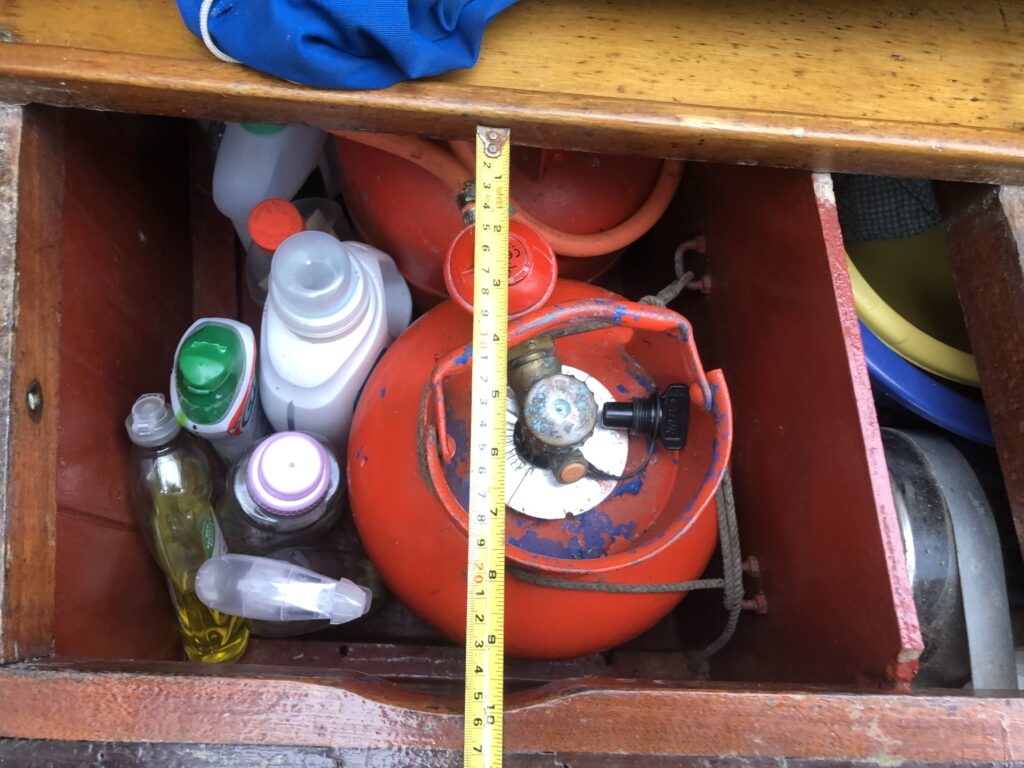
Access made ‘just’ wide enough to slip a 250mm diameter cylinder in. The locker floor has a drain, but when well heeled it ‘floods’!
So, a major cockpit reconstruction. Are Calor going to pay for this?
This changes absolutely nothing for so many people in the boating and caravanning world, as the only alternative remains changing to Campingaz. That is a 2.72 kg butane cylinder at twice the price of Calor’s 4.5/3.9 kg butane/propane exchange prices.
Many east coast sailors know and love the pretty little marina at the head of Woodrolfe Creek at Tollesbury. But, how many realise that just up the road, a little beyond the tide line, sits a world beating innovative company.
I didn’t, but I have known of Tollesbury’s connection to the wider maritime world in a communications company and a ‘control’ engineering company going back to my time at sea.
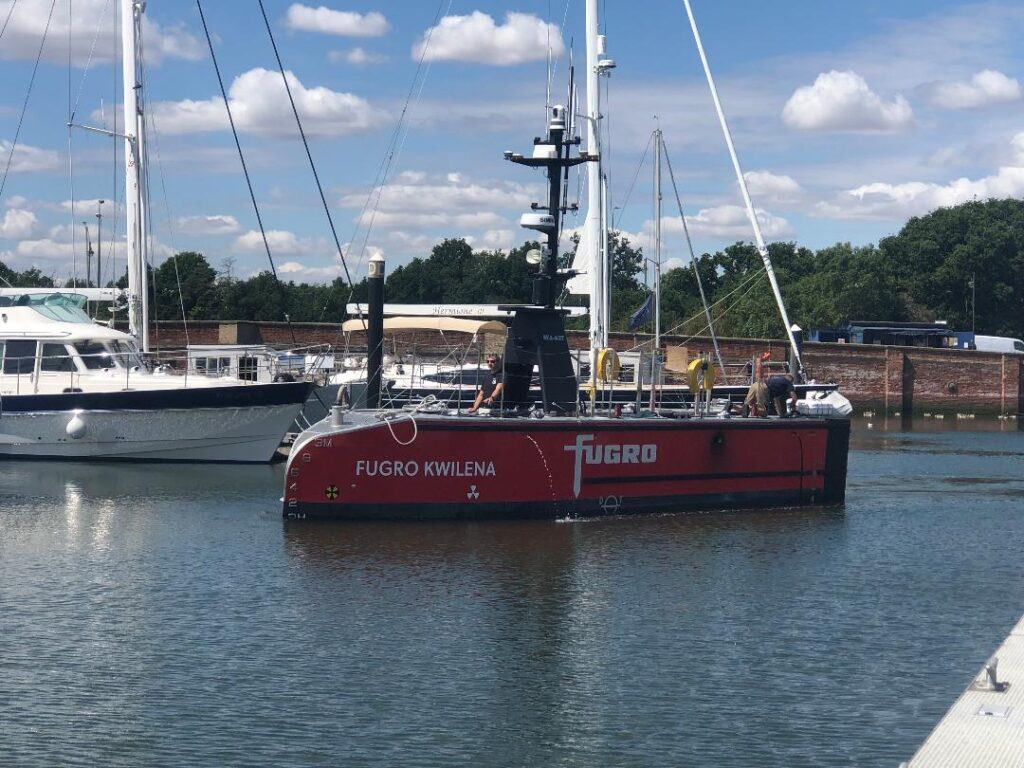
Last summer while we were berthed aboard Whimbrel in Fox’s Marina, I spotted a strange looking vessel.
Upon talking to the harbour master, I discovered that it was an autonomous boat built in Essex for ocean exploration and survey work. ‘Down the coast…’ he said, presumably not knowing where.
The little ship under manned way!
I later found the company on a web search. It is based in Tollesbury, Essex, just up from the old fishermen’s sheds.
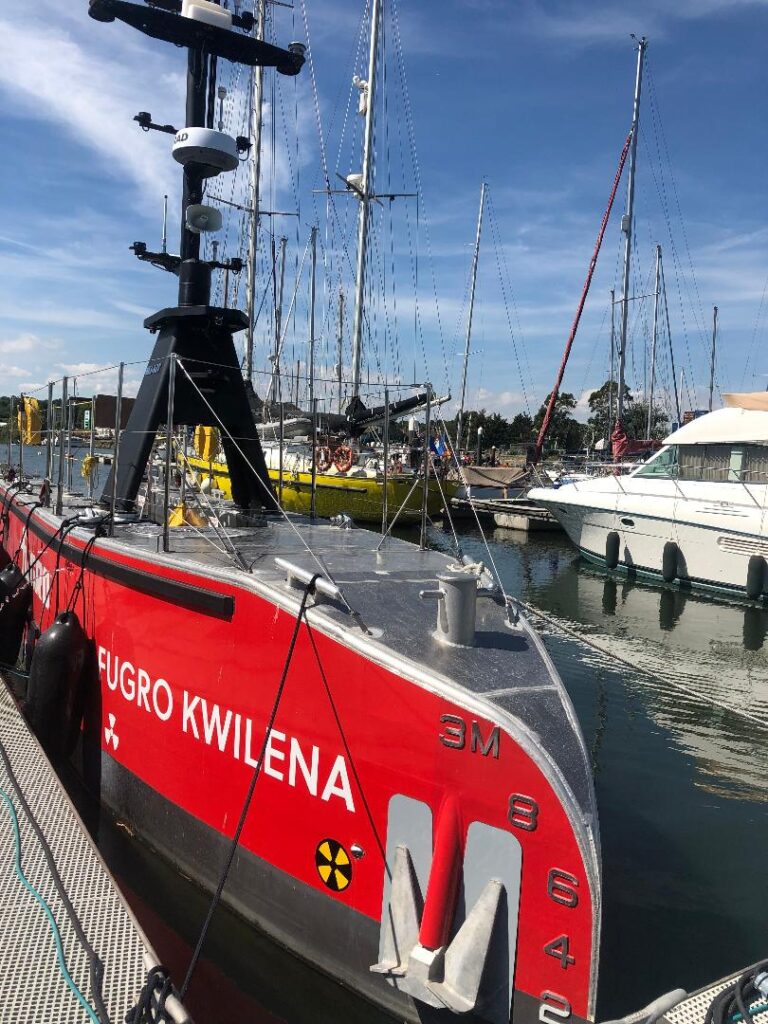
Alongside the dock. Vessel appears to be a sister to boat in press release.
The company manufactures these craft to exacting parameters which enables the oceanographic scientists to do their jobs…
I ‘forgot’ all about the event, however, reading a recent copy my Marine Engineering Society magazine – Marine Scientist – I alighted on an article about the autonomous survey of one of the world’s undersea volcanoes in action – described as the biggest eruption man has witnessed or recorded.
The eruption was near the Pacific island of Tonga.
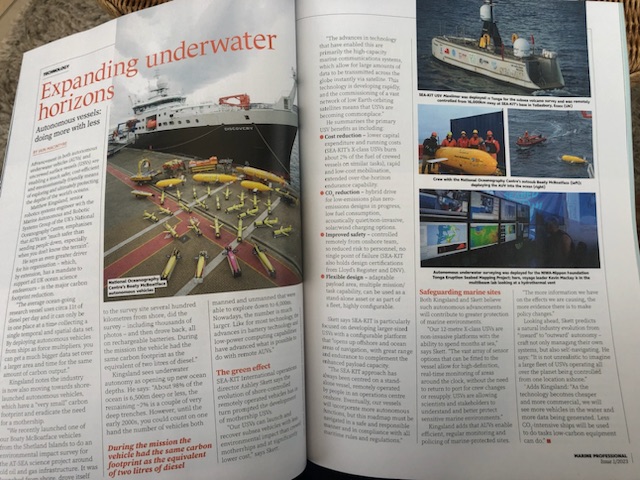
The Marine Scientist in which I read the article.
Sadly, for me, the article was light on detail of aspects I thought should have been expanded upon.
Close up of an array of craft carried by the British Survey Vessel Discovery. Courtesy: Marine Scientist.
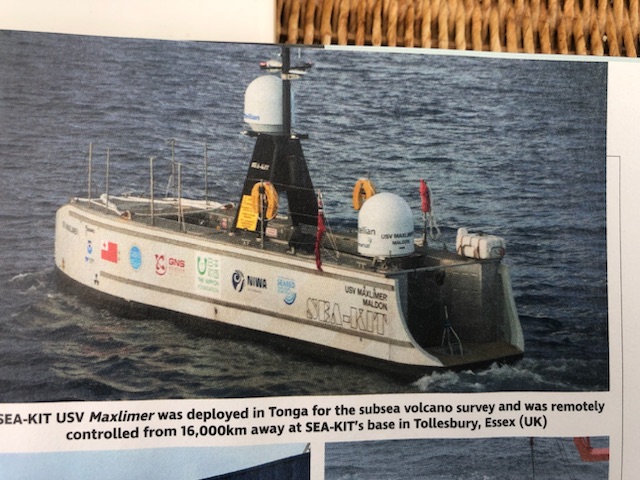
The Tollesbury Company has been expanding its output to cope with an increased demand for autonomous survey vessels. See Sea Kit’s press release.
Close up of a sister to the vessel I saw in Fox’s Marina during August 2022.
So, the next time you pop into Tollesbury, remember that this is not a sleepy little Essex waterside mud-hole, but a place at the heart of the Tech Community, controlling autonomous vessels on the other side of the world, built metres from the mud…
Fascinating and fantastic to learn that a marshland ancient centre for boat building, repair and fishing is still producing craft.