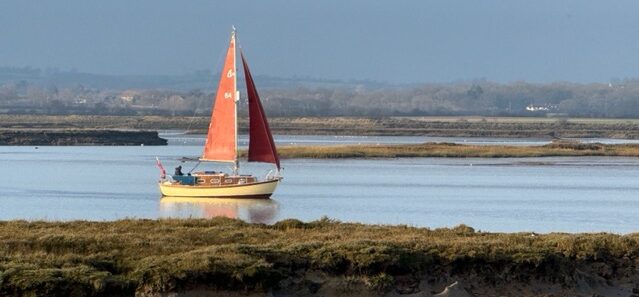
While berthed at the Tide Mill Yacht Harbour in Woodbridge this summer, I took the opportunity to have a look at the archaeological replica of the ship found at Sutton Hoo on the cusp of World War Two. The ship is as near as it can be to the original, however, apart from iron rivets there was only the ship’s imprint left.
Interestingly, there is to be (possibly started) a new dig on the site to open it up for a ‘modern’ look at what was covered over after the excavations that took place at the end of WW2.
I visited the yard where the new ship is being constructed in the summer of 2022. At that time the team were building a midship section as a construction trial.
Earlier post from 2022.
The vessel is in a shed on the site of Whisstocks Yard close by the Tide Mill where there are now eateries, cocktail lounges, ice cream parlours and an open space commemorating the yard. But, one shed was reserved for some form of waterfront activity and this is where the Sutton Hoo Ship’s Company was set up some years ago.
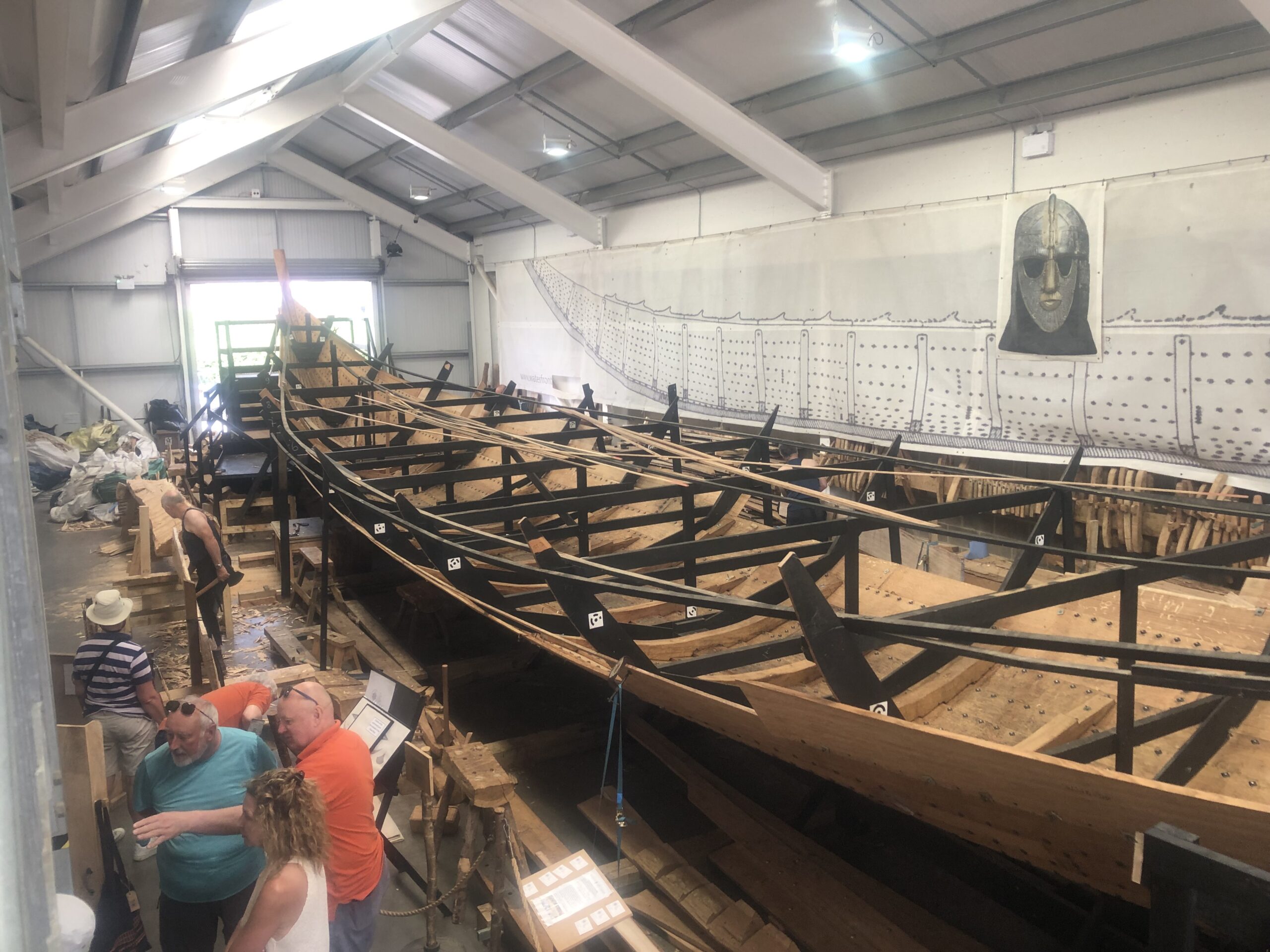
Above is a general view of the ship under construction.
While I was in the shed an archaeological shipwright was using a faring axe to fine down a plank which had been split from a log a few days previously.
I chatted to a chap who was either sweeping shavings or ensuring visitors kept within their allotted space – I said that the construction was unchanged in its main essentials to this day: my own vessel was of clinker construction. Chap said that wasn’t possibly the case … I tried to explain, but got no further, moving on muttering quietly…
I then chatted to another member of the day’s team and that person understood!
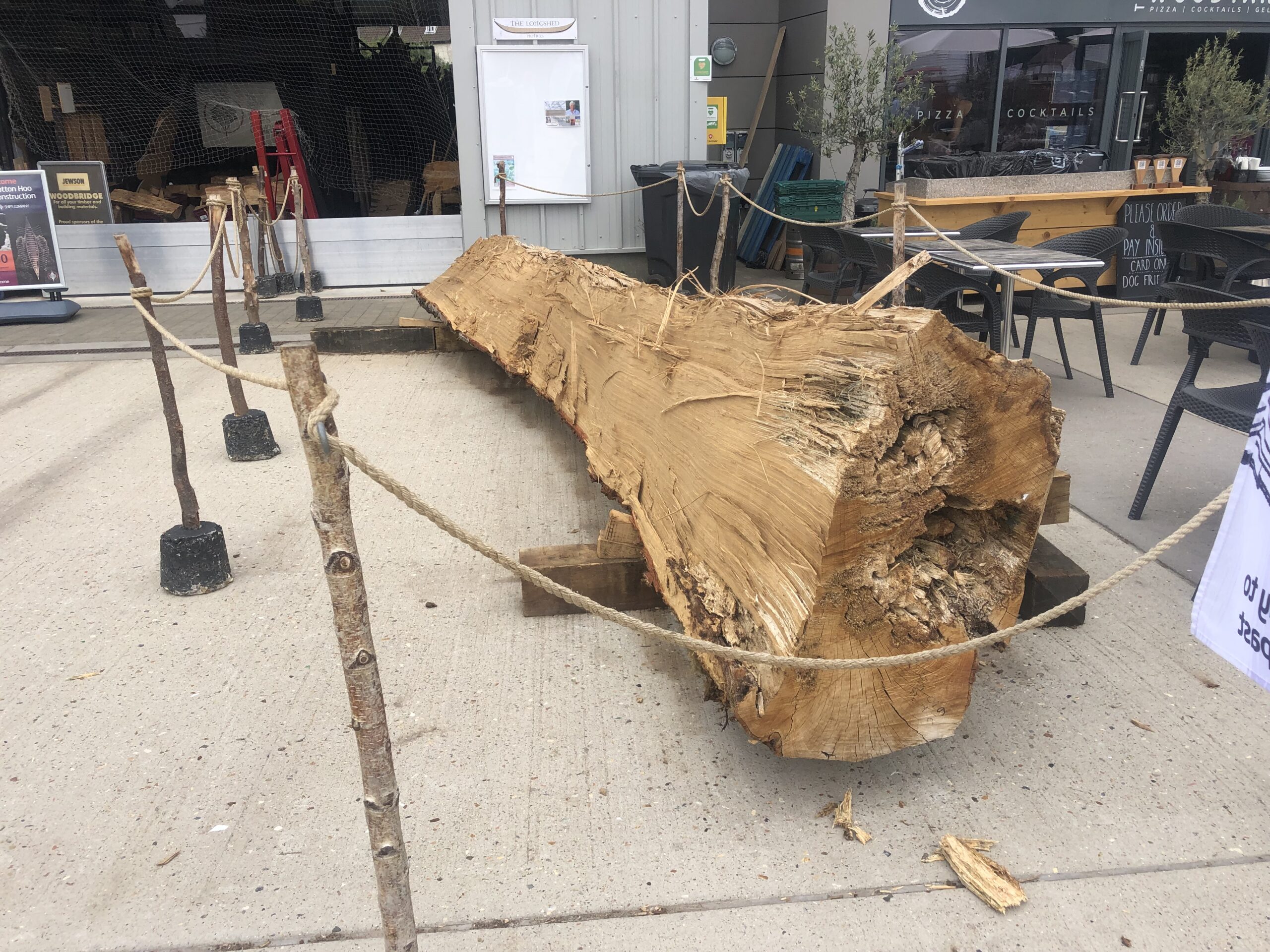
Log outside the build shed which was being used to split off planks.
There has been a raft of articles in the yachting press about the project and one, I remember, had a discussion about whether or not the vessel had a mast all those hundreds of years ago. Many of the experts believed not. Others believe she must have, which is where I fall: she would have been expected to travel long distances and what is the point of rowing when a fair wind and sail could do so at leisure. No signs of a mast were found at the initial dig.
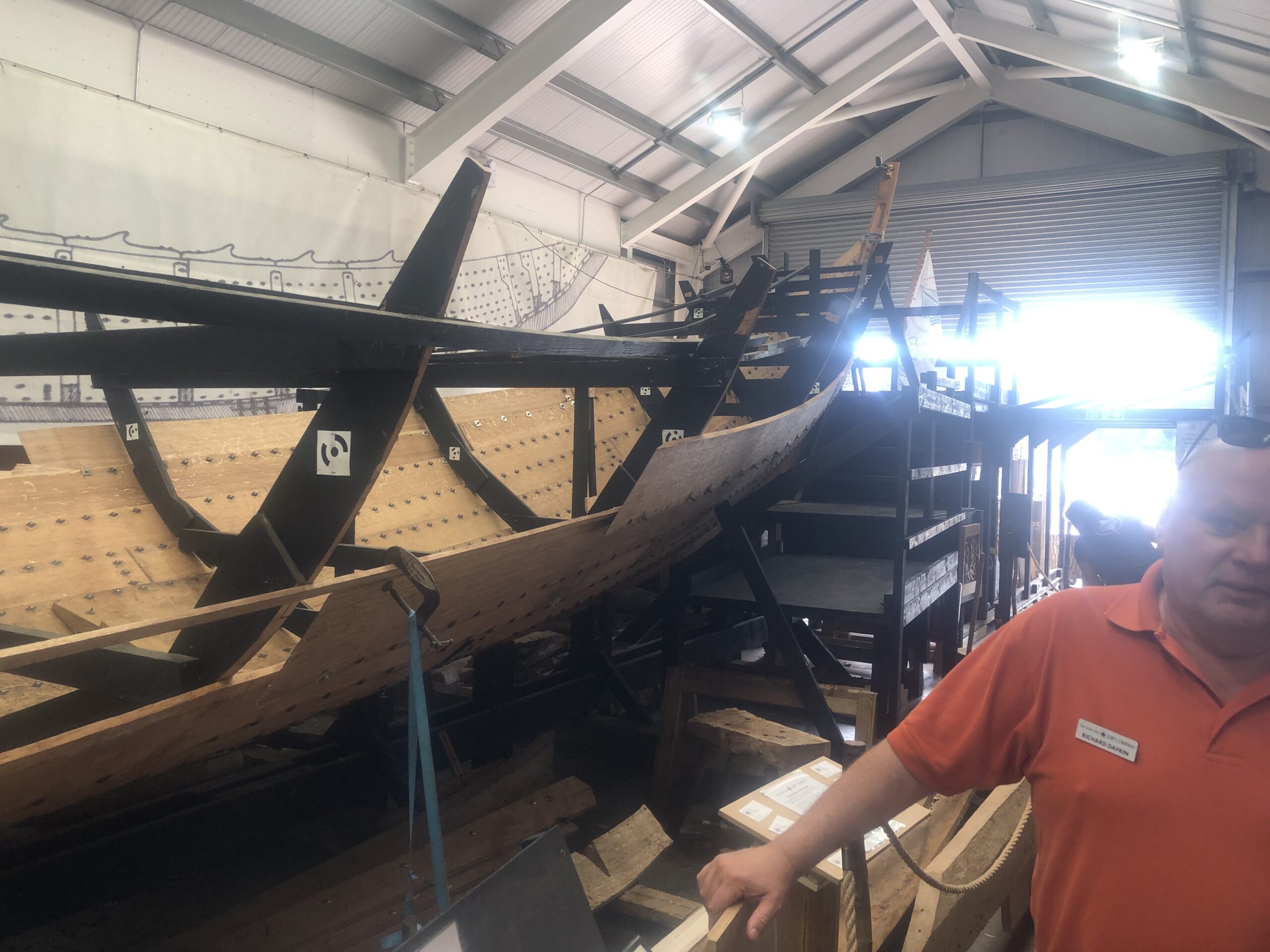
A closer look at the planking up. Note: although an archaeological construction, temporary fastenings were being used to secure planks until the iron nails and roves were fitted.
I found myself eventually talking to one of the more senior project team. I asked what the immediate post construction plans were for the vessel, I then asked what then, and, on into the future.
I was told that initially they would learn how to operate the ship under oars – I hope they talk to other such groups, gig rowers and even the Gloriana Royal Barge project (on the Thames).
As to the future, there seemed no definite plan: health & Safety precludes the taking out of ‘passengers’ and such.
Were they going to fit a mast? No definitive answer there either.
I shall follow this interesting project more closely as the build nears completion and will surely be on the River Deben again soon to see her.
I just hope that she doesn’t just end up as a statice exhibit, soaking up fresh rain water, setting rot to work away at her…
It was a fascinating visit and to watch precise work with tools that are still recognisable for what they are. I’ve used a ‘modern’ adze, chisels and spokeshaves. Those distant shipbuilders would recognise our tools for what they are – not sure about routers and electric planes!
Go and look before she is completed. Woodbridge is good for a day out!